Hector's work
About Hector
I believe design carries responsibility.
Everything we create has an impact: on people, on communities, and on the planet, and it's our job as designers to understand and control that impact.
I approach design through the Double Diamond framework.
Every project starts with a problem, which means starting with research.
I look at what others have already attempted.
In parallel, I go directly to the people involved. I interview experts, I talk to the communities affected, I spend time in the environment the project inhabits. To truly understand a problem, I try to become part of that environment.
Throughout this process, I document everything because the details matter.
Once I've collected enough of the story, I work to understand it and formulate the right questions to find the answer that solves the problem. Those questions become my North Star to follow. This phase is often the hardest part of the work. The right direction is rarely obvious at first. I've learned to treat uncertainty as part of the process rather than something to fear. I test different directions, discard what doesn't hold up, and iterate until something genuinely feels right.
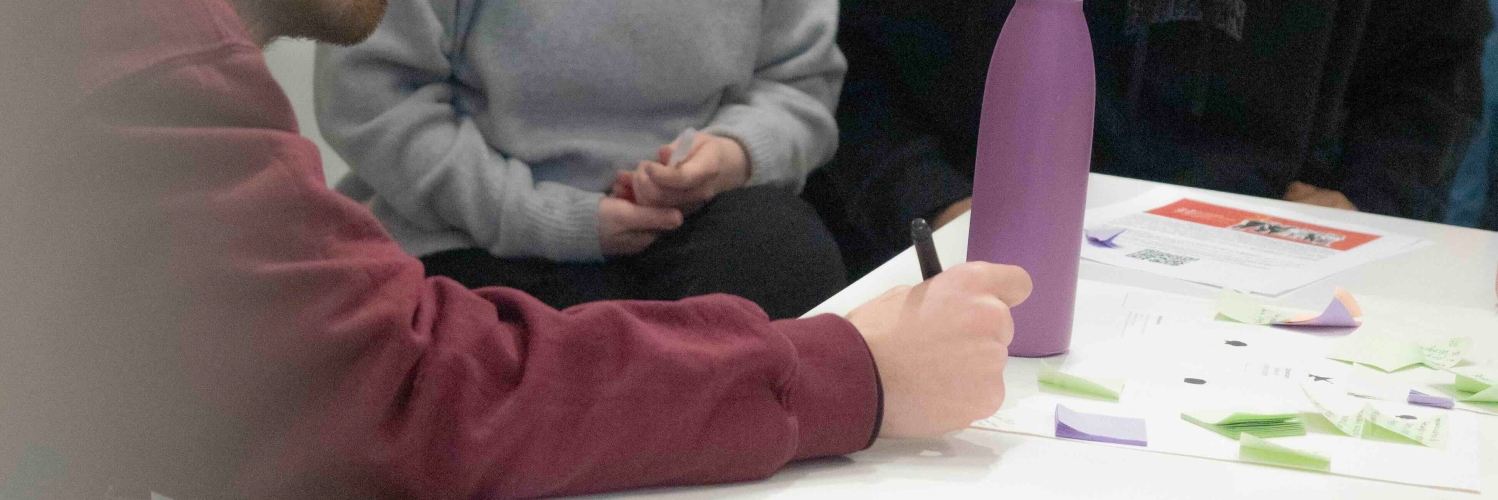
When it's time to generate solutions, I brainstorm widely, guided always by those research questions. But I don't do this alone. I think working with a cohesive, multidisciplinary team is essential to achieve a complex and robust project. I surround myself with people who think differently than I do, bring broader perspectives, and push the work further.
I use tools like the Project Canvas, User Personas, or a Life-Centered Design approach to understand my users' needs, and I work with frameworks like the Analytic Hierarchy Process (AHP) to compare options rigorously.
The final phase is about making ideas real and testing them in the world. A Minimum Viable Product (MVP) lets me validate the most critical assumptions about a project. It helps me control the testing process, gather real feedback, and iterate based on what I actually learn rather than what I assumed.
Communication and distribution are part of the design itself because work that doesn't reach the people it's meant for hasn't fully succeeded.
Some projects need physical products, some need digital applications, and others need services.
Every job means discovering something new; learning and changing are part of progress for both the project and the designer.
Everything we create has an impact: on people, on communities, and on the planet, and it's our job as designers to understand and control that impact.
I approach design through the Double Diamond framework.
Every project starts with a problem, which means starting with research.
I look at what others have already attempted.
In parallel, I go directly to the people involved. I interview experts, I talk to the communities affected, I spend time in the environment the project inhabits. To truly understand a problem, I try to become part of that environment.
Throughout this process, I document everything because the details matter.
Once I've collected enough of the story, I work to understand it and formulate the right questions to find the answer that solves the problem. Those questions become my North Star to follow. This phase is often the hardest part of the work. The right direction is rarely obvious at first. I've learned to treat uncertainty as part of the process rather than something to fear. I test different directions, discard what doesn't hold up, and iterate until something genuinely feels right.
When it's time to generate solutions, I brainstorm widely, guided always by those research questions. But I don't do this alone. I think working with a cohesive, multidisciplinary team is essential to achieve a complex and robust project. I surround myself with people who think differently than I do, bring broader perspectives, and push the work further.
I use tools like the Project Canvas, User Personas, or a Life-Centered Design approach to understand my users' needs, and I work with frameworks like the Analytic Hierarchy Process (AHP) to compare options rigorously.
The final phase is about making ideas real and testing them in the world. A Minimum Viable Product (MVP) lets me validate the most critical assumptions about a project. It helps me control the testing process, gather real feedback, and iterate based on what I actually learn rather than what I assumed.
Communication and distribution are part of the design itself because work that doesn't reach the people it's meant for hasn't fully succeeded.
Some projects need physical products, some need digital applications, and others need services.
Every job means discovering something new; learning and changing are part of progress for both the project and the designer.