

The retail landscape is more challenging and complicated than ever. With the influx of new and exciting digital direct-to-consumer retail channels, physical retail environments are working harder to create desirable lifestyle orientated, multi sensorial destinations that connect with their brands core equities and positioning. Now, when we do go out to shop, we expect more and more from every experience. Physical stores need to either offer customers the same immediacy and convenience they can get online or else they need to create a different type of environment, one where people want to spend their time. As we embark on the festive season, it is a great time to explore some of the ways retailers and brands are increasing physical in-store desirability.
Personalised purchases
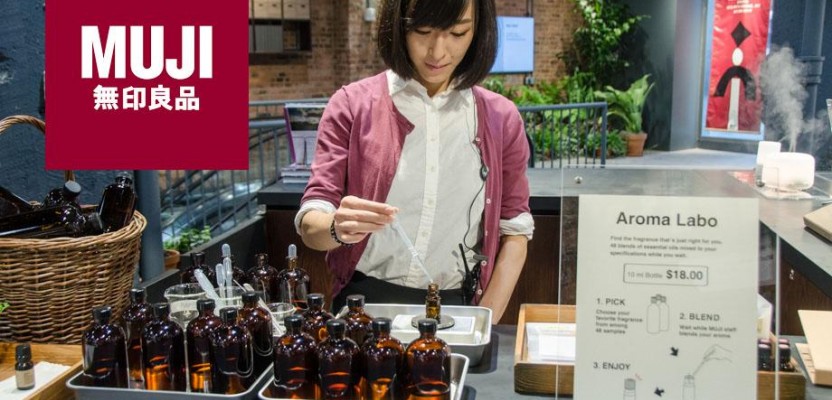
We are seeing more and more retailers allowing customers to creatively curate what they buy based on our own unique preferences. Selfridge’s Fragrance Lab concept offers a profiling experience, which allows customers to identify a signature scent. Muji’s new New York flagship includes an embroidery station where you can choose from 100 different designs that you can add to your textile based purchase. Customers can also design a custom bag for the goods they buy. This individual curation will continue to impact the in-store environment.
Technology driven in-store experiences
In time for Black Friday, Macy’s recently teamed up with design agency The Science Project in order to create the shop of the future. Floating mirrors delivered responsive brand content through the use of proximity sensors, LED custom hardware provide a modern storytelling platform, with three separate sections to give shoppers the opportunity to engage in extended digital interaction. This is a great example of a store using technology rather than sales representatives to communicate information and content.
Lifestyle retail environments that offer transparency rewarding experiences.
As brands tap into the shift of corporations to communities, with consumers trusting peers over companies, we are seeing retailers wanting to connect with consumers on a deeper level, offering integrity and transparency. Starbuck’s new London store aims to offer a ‘theatrical’ dining experience and open plan transparency. The open plan design mingles kitchen and seating areas together so customers can see how their drinks and food is made. Similarly, there is interaction between the customers and people who work there, all being front of house with the aim to build trust.
Curated brand showcases
The in-store retail environment continues to provide a fantastic opportunity for brands to communicate their values. This is especially the case as brands wish to sell a lifestyle as much as they want to sell their products. Again in New York, an elevated News Stand is aiming to reinvent the NYC subway commute. This physical retail shop offers energy bars instead of candy bars, headphones, collapsible bike helmets and more. The Newstand has magnetic walls that can be stripped and shifted depending on footfall and an accompanying app, a content discovery platform. It's is a great example of a modern retail experience which also provides exciting new advertising opportunities.
Physical retail environments are becoming styled exhibitions of a brands values, providing a window that enables consumers to understand the brand on a number of different levels. Importantly, retailers must be shopper centric and we must understand people’s emotional and rational need-states as we demand different things from our retailers at different times. Although our multi-channel world of retail will continue to diversify, the physical destination is still going strong.