


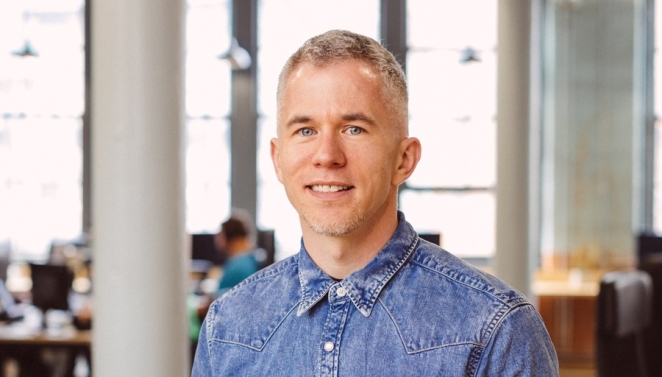
Matt Brannick, Deputy Creative Director at Dinosaur, has spent the past year navigating the noise, promise, and pitfalls of AI in the advertising world. Here, Matt unpacks what AI really offers agencies (speed, scale, automation) and where its limits are clearest.
He explores why creativity is inherently human, how judgement and cultural nuance can’t be automated, and why agencies must decide whether AI becomes a shortcut to mediocrity or a power tool that frees creatives to focus on originality, resonance, and brand equity.
If you work in the creative industries, you’ve probably heard the sermon: AI is coming for your job. Adapt or die. Survival of the fittest. It sounds like a slightly daunting, Darwinian moment to get on board or it’s game over.
In advertising, that noise seems louder. Our role as agencies is to keep client’s future facing and up to date with current channels, trends and techniques and to judge what’s useful for their business. This means we lead and don’t just keep up. We’re the eyes and ears, separating signals from hype, so clients know which tools are worth their time, where ROI will come from, and how brand equity will grow.
And being an AI evangelist is easy. Over the last year it’s felt like alchemy at our fingertips. We’re all trialling different platforms and, yes, many deliver real gains - scale, speed and automation. They can imitate multiple styles, they’re fast, and they’re often “good enough”. Barriers to entry are low. With budgets under pressure, shortcuts can look like smart choices.
But all AI isn’t equal - there’s AI, and then there’s ‘AI’. The landscape is already overwhelming, with every tool demanding its own prompts, settings and workarounds. Creativity, meanwhile, is not a smooth-running machine. It’s lumpy and unpredictable sometimes. It loops back. It changes direction halfway through. Tools that thrive on pattern and prediction can struggle when the brief is to surprise, provoke or invent a new reference point.
Humans are hardwired for humans. We want connection, context and cues that feel true. Walk through a market, a concert or a festival and you’ll see it: we’re drawn to each other. That matters for brands because trust is emotional before it’s rational.
Great creatives are tastemakers and truth-finders. We spot what’s dull long before the data catches up. We chase originality and cultural resonance, not “looks like”. We know when a detail feels off, when a character’s motivation doesn’t land, when a line reads clever but cold. That judgement, part experience and part intuition, isn’t a dataset, it’s a lifetime lived.
And it’s key to be mindful that not all creatives are using AI the same way. Right now, some are using AI to extend their vision - building music, films and immersive experiences that tap culture and then add something breathtaking to it. Others are, frankly, turning themselves into action figures (because why not). The difference isn’t the software - it’s the intent and the craft. Some are solving real problems and becoming true experts. Others feel over-faced, which is understandable. The gap will widen between those who wield AI as a creative power tool and those who let it set the brief.
Agencies' role is to build awareness, relevance and distinctive power. Used badly, AI can flatten difference and drag work towards the median. Used well, it protects the special stuff while taking the drudge away. A simple rule of thumb: if a tool makes your brand feel more generic, it’s a false economy. If it frees you to push the idea, sharpen the story and sweat the details that only you can see then it’s adding value.
There is no denying AI does some things well - accelerating the low-value tasks versions, cropping, transcription and first-pass research, but it needs the human call to say which version will work. Humans need to oversee the tone - that’s where equity is made (or lost).
Ultimately, AI didn’t appear from nowhere; it’s a tool shaped by human imagination. It doesn’t think, feel or rationalise. It predicts. The creative vision still comes from people, our lived context, our ethics, our appetite for risk, our sense of humour.
So, while humans choose the destination, we can let the machines pull the heavy cart.