Dan Cox
Creative Director
ABOUT
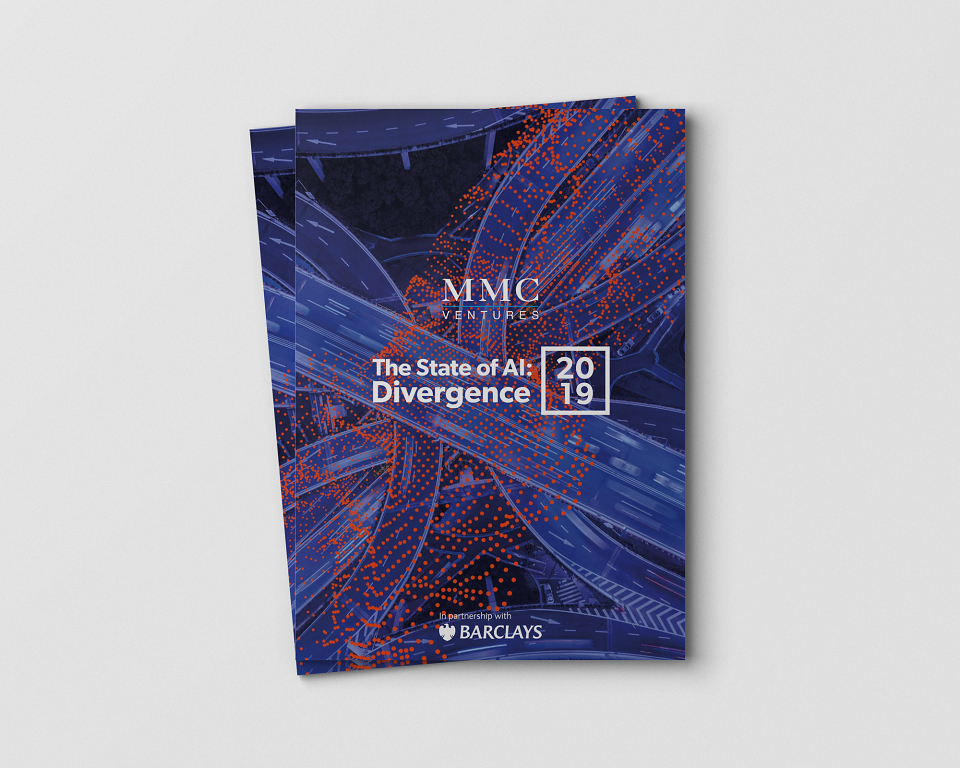
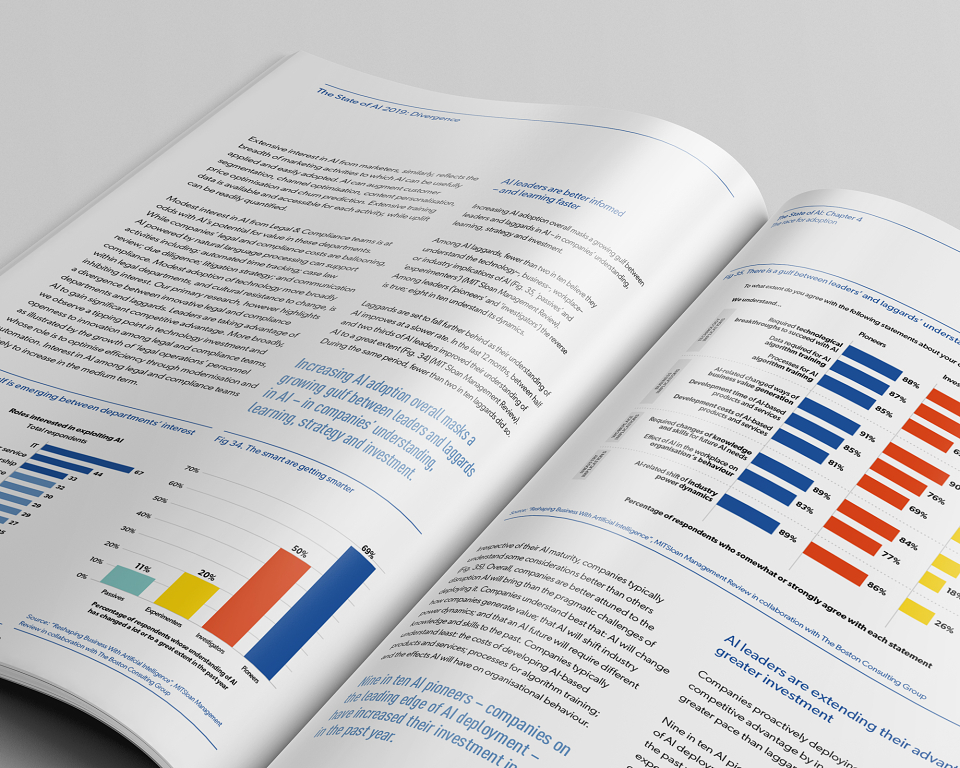
The State of AI 2019: Divergence is the second report from MMC Ventures on everything to do with Artificial Intelligence. Aimed at informing and empowering corporate executives, entrepreneurs and investors, the report goes beyond the hype to explain the reality of AI today, what is to come and how to take advantage.
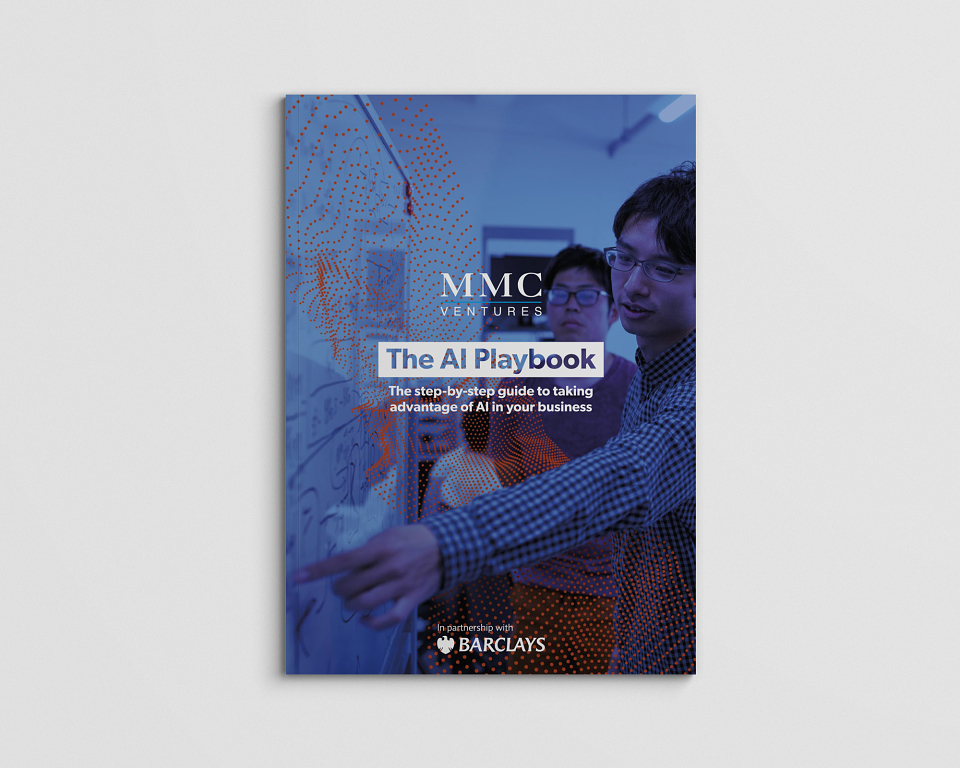
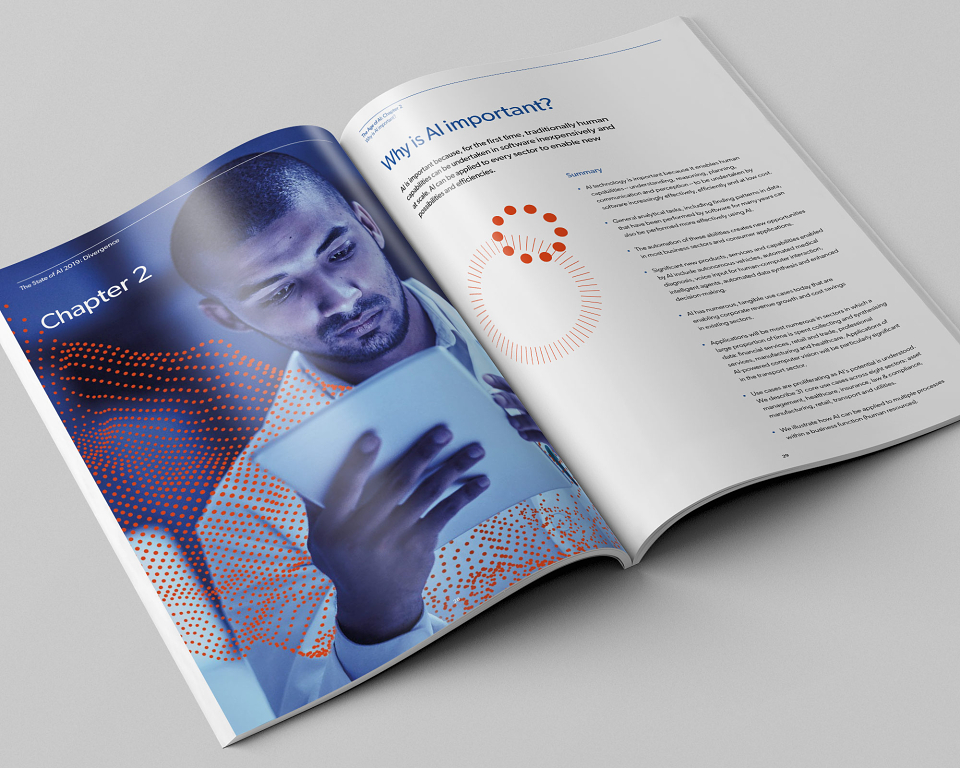
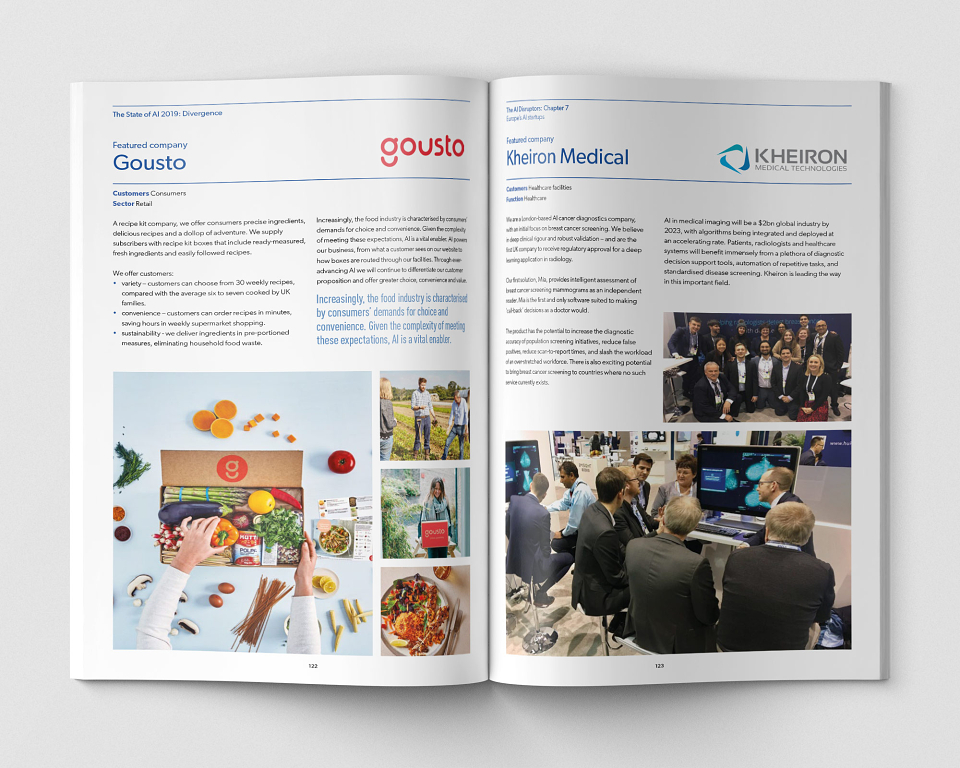
MMC Ventures briefed me to produce their second report into AI, which included the 152 page 'The State of AI 2019: Divergence' and a 92 page companion report titled 'The AI Playbook: The step-by-step guide to taking advantage of AI in your business', which was a self-contained guide to taking advantage of AI for startups, scale-ups and enterprises.
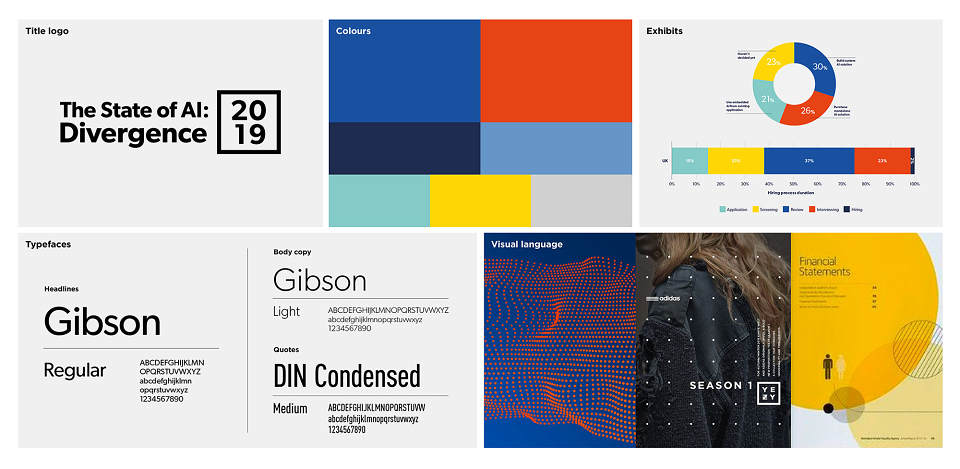
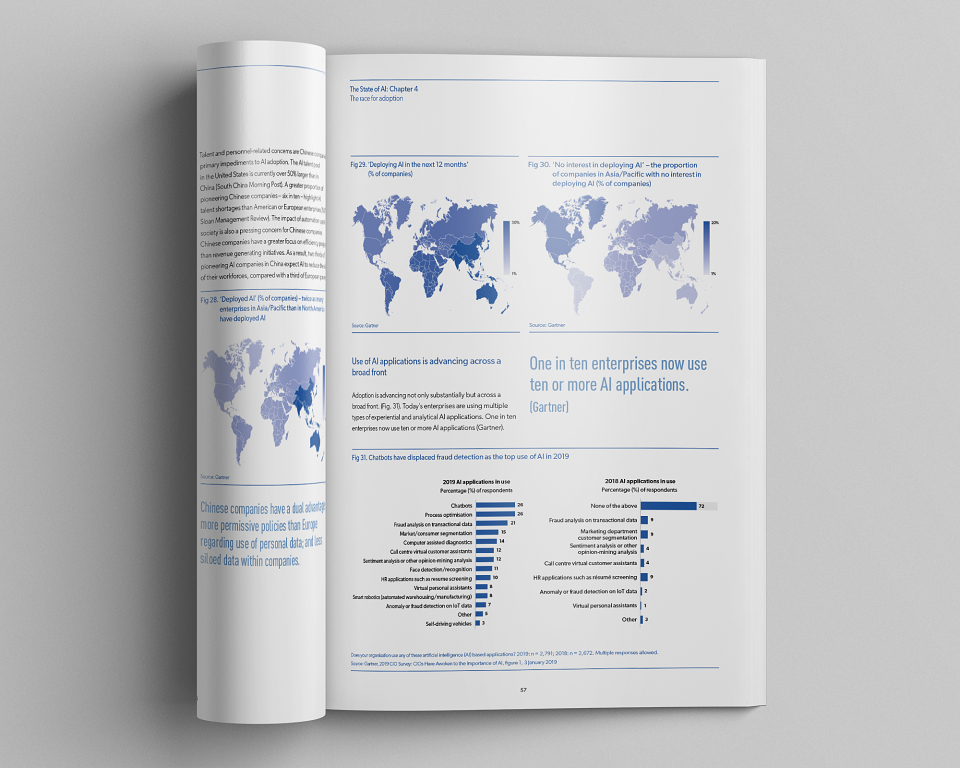
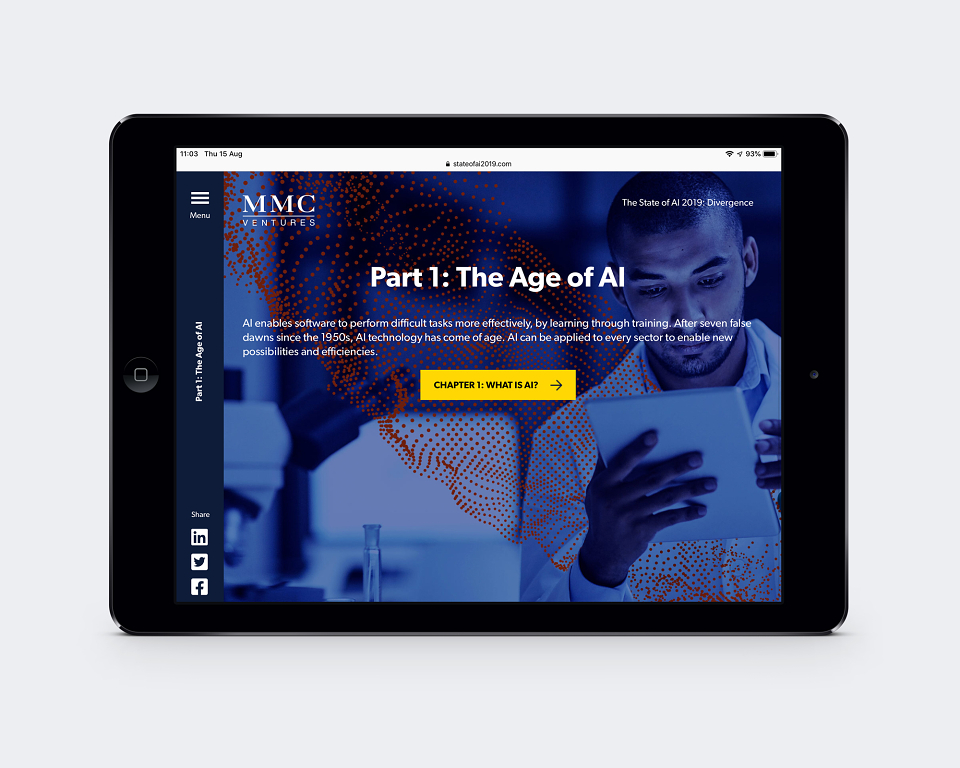
I initially developed a shared visual identity for the two reports, building on the best bits from the 2017 version. This included type styles for headlines, quotes and figures, an updated colour palette, a consistent style for charts and exhibits, and a treated photographic style.
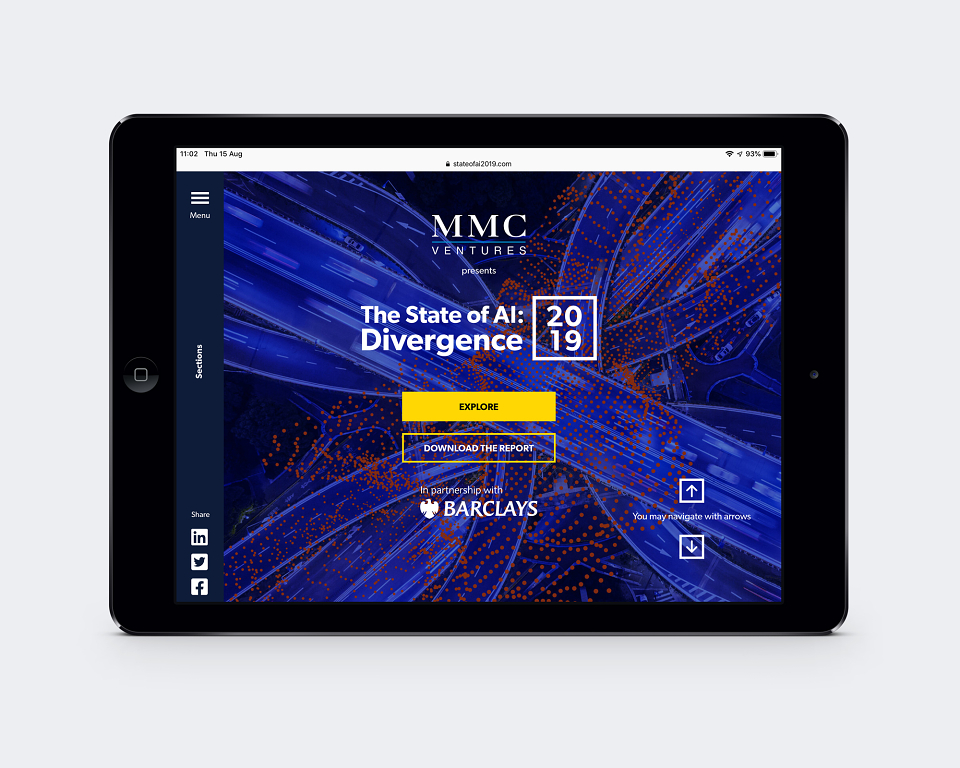
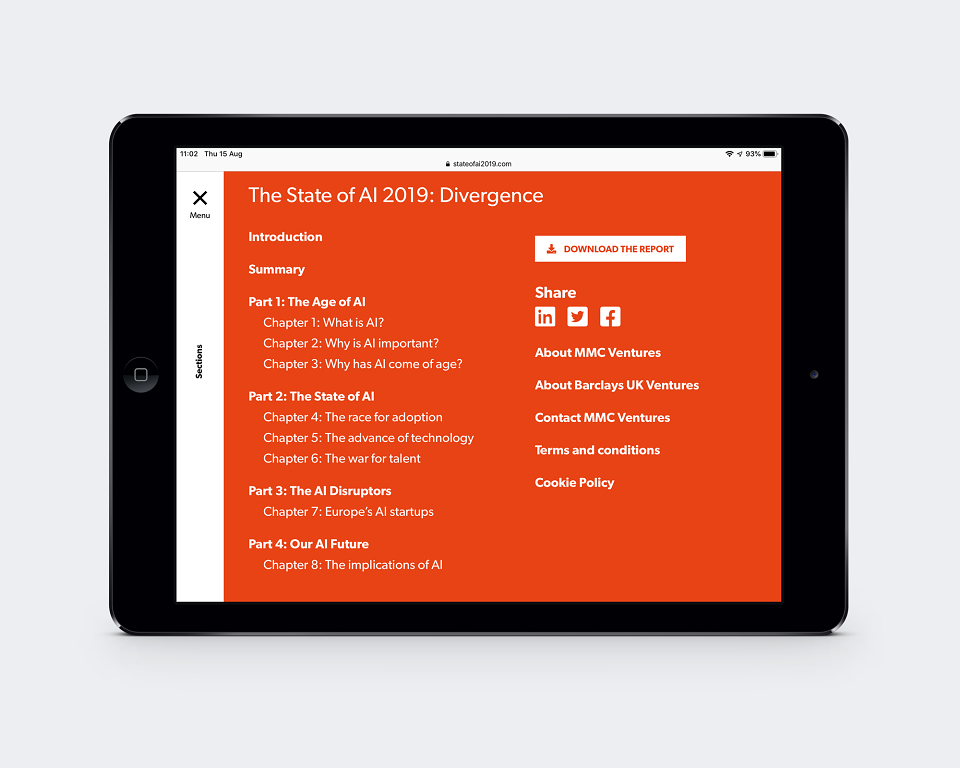
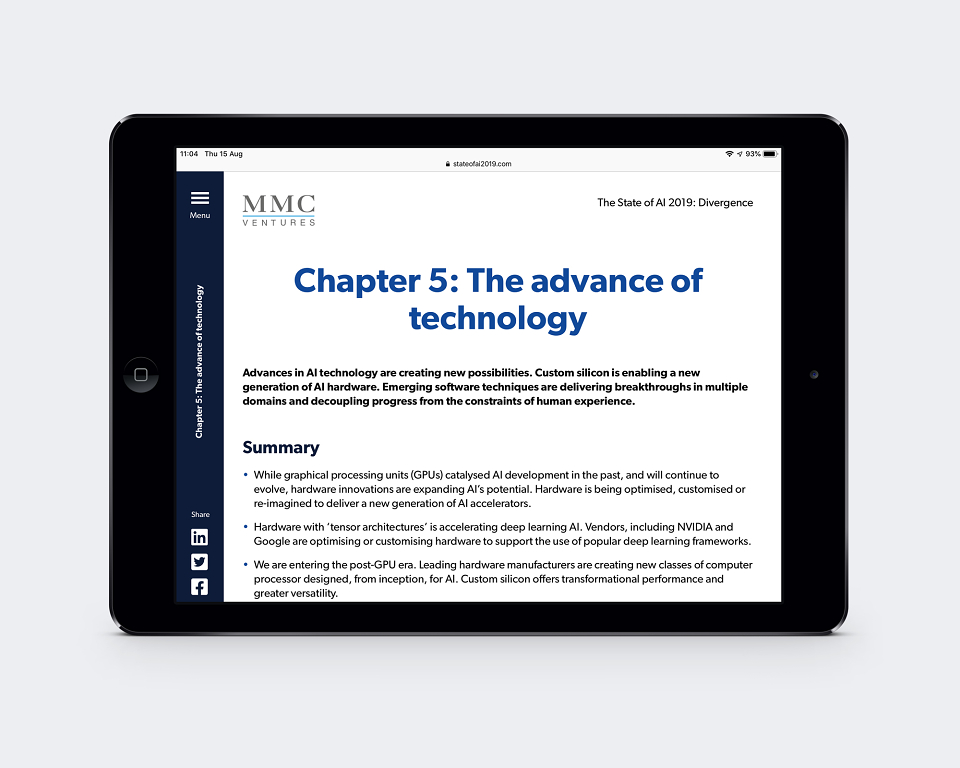
To accompany the printed report and playbook, I worked with my web development partner to built two bespoke responsive websites, so the full content of each printed document could be viewed online. Both The State of AI site and The AI Playbook site were built using a React based framework, with a WordPress back-end to simplify uploading and managing the content.
The framework was a static site generator, which meant the site would load much faster than a traditional website (where pages are dynamically built on each visit) and was much more stable and scalable. Our framework meant that the site pages were served as static files (html, css, javascript), so much faster and putting significantly less strain on the server.
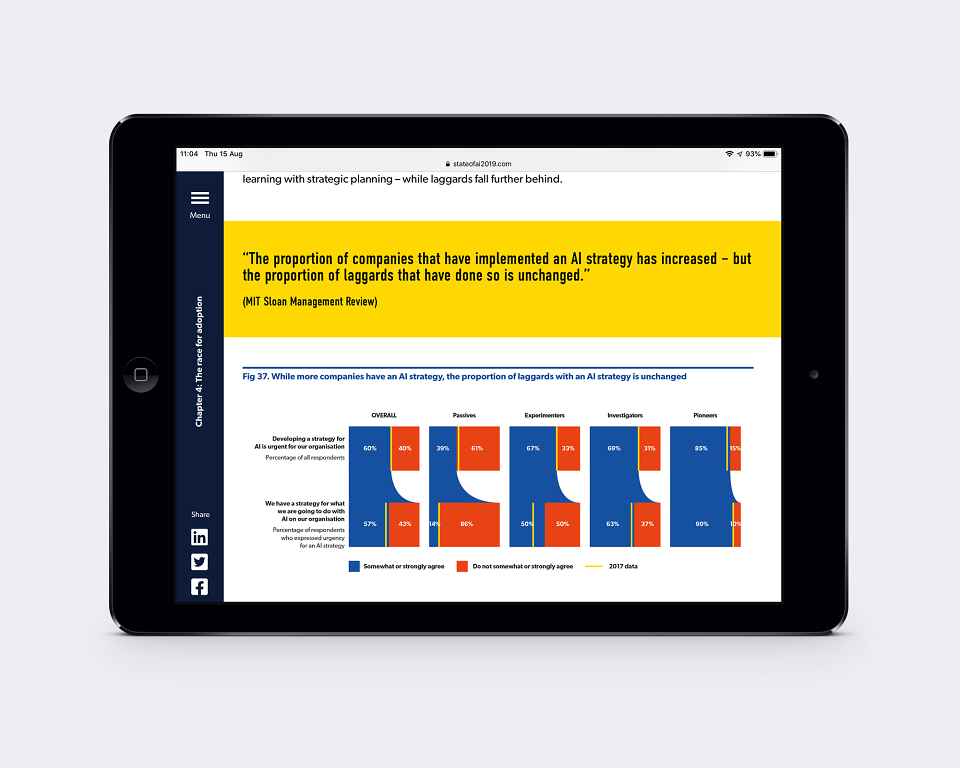
The sites made use of the same visual assets from the printed reports to maintain consistency, while 90% of the charts and diagrams were dynamically built using Google charts, which enabled them to have an added interactive element.
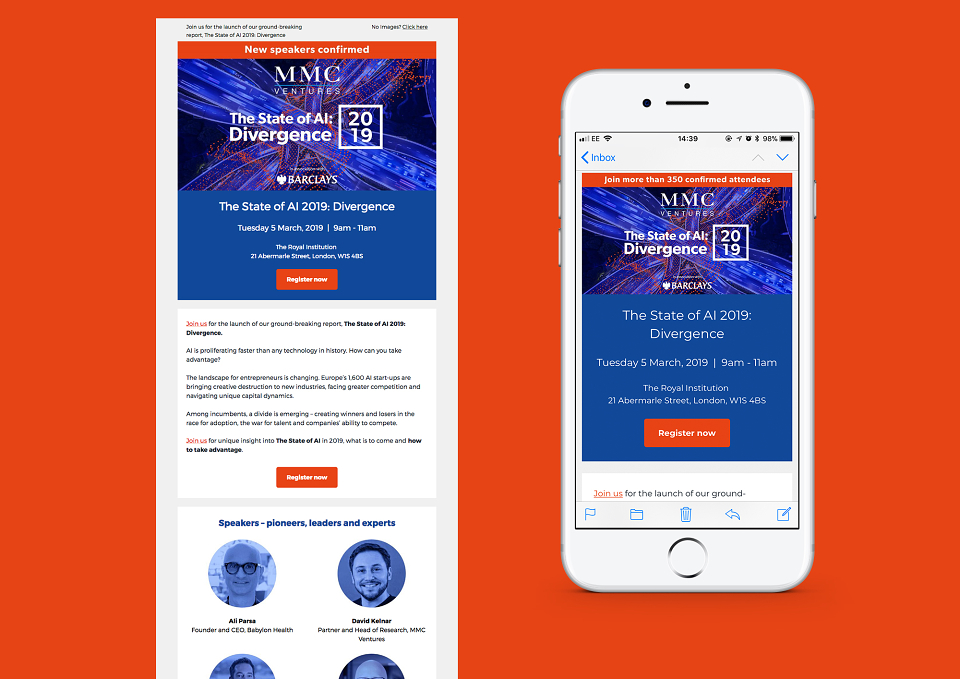
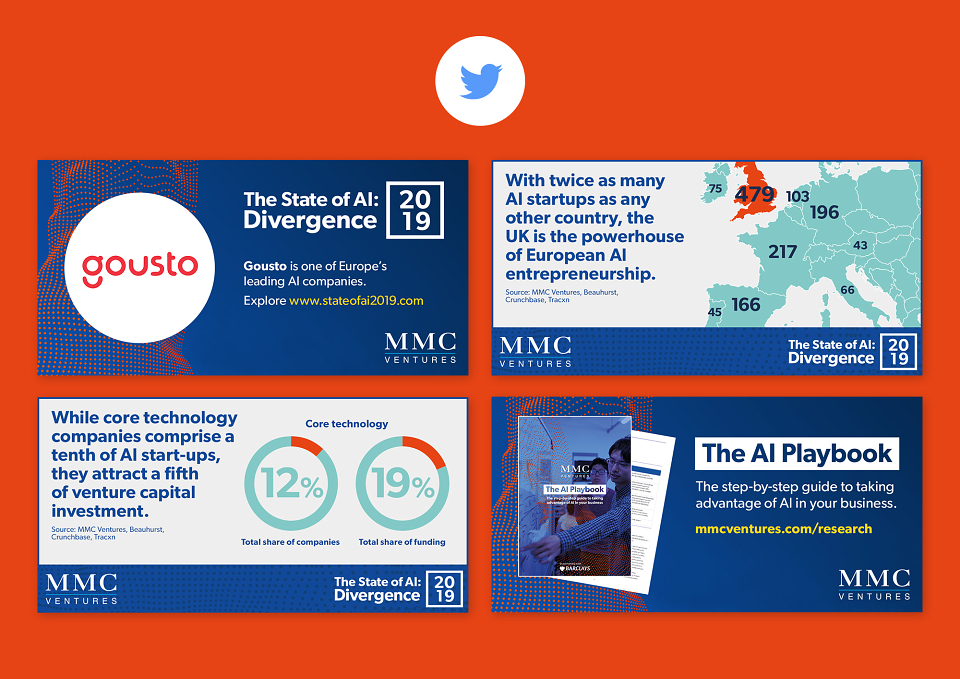
In addition to the report, I produced other key pieces of communication to help MMC Ventures launch the report at their unique event at The Royal Institution. including a series of HTML email invitations in the build up to the event.
The Report, and associated media, had a huge impact and went viral; it was featured on 180 websites in 20+ countries, from the front page of the Financial Times to Forbes and CNN, and was read by over 100,000 people in the weeks following its launch.