

In just a few years, ROCANI has evolved from a one-person freelance operation into a multidisciplinary creative studio delivering brand identities, digital experiences, CGI visuals, and spatial design from its base in Berlin. Founded by Creative Director Romano Casellini, the studio's growth has been driven by a commitment to craft, creative ownership, and a willingness to continually adapt as new opportunities emerge.
In this interview, Romano reflects on the milestones that shaped ROCANI's identity, the challenges of scaling a creative business, and the value of bringing diverse disciplines together under one roof. He also shares his thoughts on creative culture, industry trends, and why genuine craftsmanship will remain essential in an increasingly AI-driven world.
How was your company born and where are you based?
 ROCANI was founded in 2021 in Berlin — out of necessity, not a grand plan. I’ve freelanced for more than a decade, and when the workload became too much for me to handle alone, I brought on my first developer. Five years later, we'd outgrown the dev-shop model entirely and built a full creative studio: brand identity, digital experiences, CGI visuals, and spatial. The vision grew with the work.
What was the biggest challenge to the growth of your company?
Early on, I hired remote talent — it was more accessible and easier to scale quickly. But when we met as a team for the first time, something clicked. It was the first moment I felt like I was actually running a studio. People behind screens don't give you that sense of scale.
Over time, the team shifted naturally. People moved on, and each gap became an opportunity to hire locally. Now we're fully on-site in Berlin — and it makes all the difference.
Which was the first huge success that you can remember?
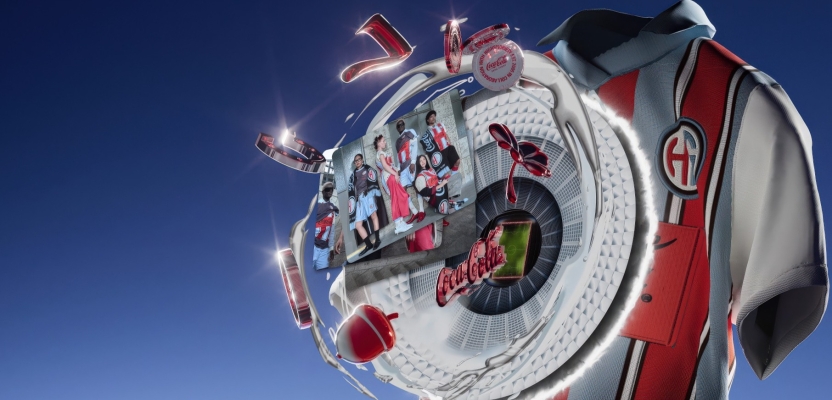
Our first real signal came at LeBook in Berlin. We had a smaller stand than most; we weren't the most prepared in the room, but people were queuing to try our AR experience for Highsnobiety x Coca-Cola. That was the moment I understood that what we were building was something people genuinely wanted. That feeling of fascination in the room was hard to ignore.
What’s the biggest opportunity for you and your company in the next year?
 We're speaking at the Forward Festival in Berlin this year, and I hope some other festivals will follow. At the same time, we've deepened our focus on brand identity as a core offering. The opportunity we see is in the full picture: from brand to digital experience to CGI to spatial. Few studios can hold all of that with genuine craft at each layer. When a client comes to us, they don't need to stitch together four different partners. That completeness is increasingly rare — and increasingly valuable.
Can you explain your team’s creative process? What makes it unique?
Our process starts with open exploration. Everyone on the team has the freedom to push in their own direction first. We don't funnel creativity too early. Then we come together, present our thinking, and as a team decide where to take it. That collective moment is where the work really takes shape.
What makes it work is the room's range. Our team spans brand, motion, 3D, development, and sound, so exploration happens across disciplines simultaneously rather than in sequence. We need people who are okay being challenged — and who are willing to go the extra mile. The results always speak for themselves.
How does your team remain inspired and motivated?
Berlin does a lot of the work. It's a city full of culture, history, and innovation, and we try to use it. We get the team out to talks, into communities, through museums. Inspiration rarely comes from sitting at a desk. The city that surrounds us is one of our best resources.
How has COVID-19 affected your company?
There was no ROCANI yet.
Which agencies do you gain inspiration from? Do you have any heroes in the industry?
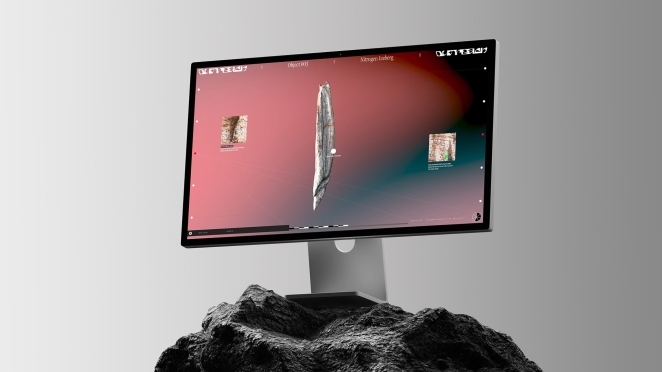 Inspiration comes from the broader creative community more than any single studio or name. We go to festivals, we meet people, we follow work across disciplines. The range is deliberately wide. Design, cinema, architecture, performance — we draw from all of it. Heroes are limiting. Curiosity isn't.
What is one tip that you would give to other agencies looking to grow?
Don't build something you can't escape. We scaled quickly early on and had to pull back. That correction was natural, but it cost time and energy. Grow with intention. Know what kind of studio you want to run before you run it.
How do you go about finding new clients/business? (Pitching, work with retainers, etc.)
The best leads are inbound, so a lot of our energy goes into making the work visible. At the same time, we do cold outreach because being proactive matters. Pitching is on the list for this year. We've also worked on retainers, which we believe in — though the lesson there is to be selective. A retainer is only as good as the relationship behind it.
What’s your one big hope for the future of the industry?
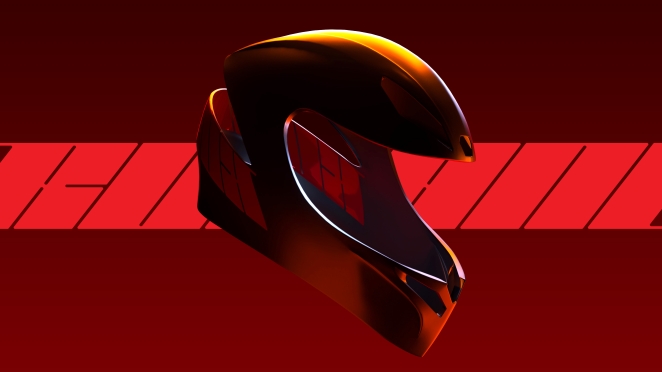 Every bubble bursts. AI is no exception. We use it in our process, but I hope what follows the hype is a renewed appreciation for digital craft. When companies start failing because the novelty wears off and the work underneath isn't there, people will remember what quality feels like. That's the future I'm working toward.
Can you share a defining moment in your company's journey that shaped its identity or direction?
While pushing for full creative ownership, we hired our first designer. And I remember the moment we bought a Figma license, thinking, "Yes, we are a creative studio now.” Small things mark big shifts.
How do you foster a culture of innovation and experimentation within your team?
We deliberately protect downtime between projects. I'd rather take on fewer, bigger scopes than fill the calendar with small ones. That space gives everyone room to experiment freely — no brief, no client, no pressure. New aesthetics emerge, technical skills deepen, and the studio's own creative voice stays sharp. Investing in our own development is just as important as investing in a client’s.
What measures do you take to ensure diversity and inclusion are prioritised within your company?
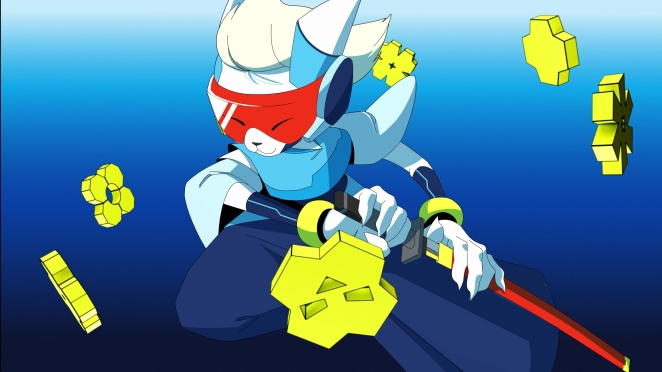 With a small team, you hire for talent first. That's the reality. We've found it genuinely difficult to build diversity at this scale — finding the right people is hard enough without narrowing the pool further. What I can say is that we're conscious of it. We recently hired our first female creative designer, and that matters. A small studio needs the right talent, in whatever form it comes.
How do you balance maintaining your company's unique creative voice while meeting the diverse needs of clients?
Honestly, it's not something we struggle with. Clients come to us for our aesthetic — that trust is already built into the relationship. At the same time, we always design for the client first, not for ourselves. But with this much creative voice in the room, the work will always look like ROCANI. That's not something we force. It just happens.
Can you share a memorable client success story that exemplifies your company's approach and impact?
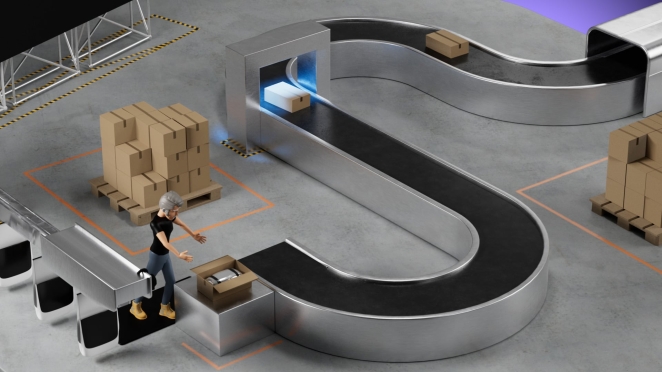
Some of the most rewarding moments come from clients who arrive with a vision they can't yet fully articulate. The ZEOS project for Zalando is a good example. The person who brought us in had a genuine passion for it — she wanted to do something that hadn't been done before in logistics. With AR and VR, clients often can't fully grasp what's possible until they're inside it. We executed her vision, it landed beyond expectations, and it stood out across the industry as something genuinely new. Seeing a client's dream fulfilled — and then recognised — is why we do this.
Can you discuss a time when your company had to pivot or innovate in response to unforeseen challenges, and what lessons did you learn from that experience?
 We're five years old, and we've never stopped pivoting. From dev shop to creative studio, from execution to ownership, from remote to on-site. The world changes fast and so do we. I started as a developer, and that background taught me early that adaptation isn't a crisis — it's just the job. ROCANI will keep shifting shape. That's not a weakness. It's how we stay relevant.
Do you have any websites, books or resources that you would recommend?
Run Studio Run by Eli Altmann
Herding Tigers: Be the Leader That Creative People Need by Todd Henry