
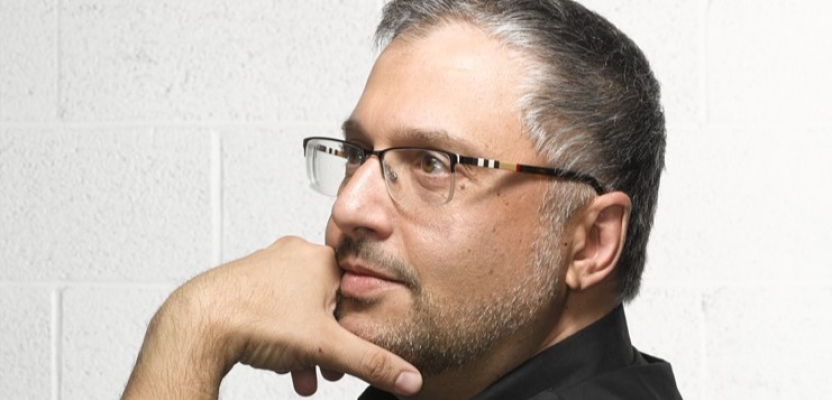

As a Creative Director with a diverse career spanning top roles at Sid Lee, Ubisoft, and his own ventures, George Giampuranis has mastered the craft of making people feel—whether through an ad, a website, or a gaming experience.
His philosophy is simple but powerful: it’s not what you say that people remember; it’s how you make them feel. In this exclusive interview, George shares his creative journey, the process behind his most memorable projects, and the wisdom he’s gained from years of pushing the boundaries of design and storytelling.
How did you first get into the industry?
I studied to become an Industrial Designer, but my path took a different turn. I met a small group of people who wanted to apply my blend of technical and creative skills elsewhere. Creating websites and interactive CDROMS. That was many moons ago. This small group of talented people grew, and we eventually formed the digital arm of Sid Lee.
Where are you based now and who do you work for?
I am based in Montreal and work primarily from my home studio.
What is your personal background and what role did it play in your career?
As first-generation immigrants, my parents understood success stemmed from being in the restaurant business, a doctor or lawyer. Although they never really understood what I wanted to do, they always supported me.
Support from such important people in your life is for me the biggest contributor. To this day however, if you asked my dad what I do, he’d probably say “he’s in computers”, and that’s OK for me.
If you weren’t in your current industry, what would you be doing?
A Formula 1 World Champion. Which didn’t work out. So perhaps a Sim Racing World Champion (which isn’t quite working out either). This said, I have so many interests outside of the industry it’s hard to pick but I gravitate to an aerodynamicist. I’ve always been drawn to challenges that merge science and design.
Can you explain your creative process? What makes it unique?
I don’t know if my process is unique, but it usually begins with my “inspiration folder”. This folder is both on my laptop and in my mind. It’s filled with ads, trailers, title sequences, websites, film clips, music videos, books, name it. I separate the inspiration into 3 categories: Boohoo, Haha and Wow. I believe to engage an audience that doesn’t really want to hear what you have to say, you need to speak to their heart first.

The above three categories are emotions that evoke a truly, memorable moment. Think about some of your favourite ads. Chances are they either made your laugh, blew your mind or touched you. Upon reviewing a brief, this is where I start - emotion as the carrier of the message. If one of these carriers can create an opportunity for the brand, then I deep dive into the relevant folder and draw inspiration. Any example that “sticks” I’ll use for myself or share with my teams and clients to inspire them.
How would you describe your style?
I wouldn’t say I have a particular signature style, but I do believe in the quest to find what I call a unique “Postal Code” for each creative asset I work on. The first three characters of the postal code to me signify the distinctiveness of the idea while the second set signifies the distinctiveness of the execution. While I may not always be able to achieve a breakthrough in both, sometimes all it takes is a fresh idea, executed in a tried-and-true direction or visa-versa to achieve the unique Postal Code.
Hollywood does the later all the time. How many classic Heroes’ Journeys have they told and retold over the decades? They all follow closely Joseph Campbell’s recipe. Yet change the execution with a new setting and style (think Pixar) and you have something fresh. The unique postal code is something I challenge myself with and I encourage my teams to at least think about seeing their work this way.
Which individuals do you gain inspiration from? Do you have any heroes in the industry?
The first that comes to mind is Jonathan Glazer. He is an excellent storyteller in his early advertising work and of course in his films. In the end of the day, I believe we all are storytellers in this industry so its fitting for me to be inspired by some of the best.
Michel Gondry, Wes Aderson and Neil Druckmann are all examples that have created unforgettable moments of Boohoo, Haha, or Wow (see above). To these creative geniuses, and many more, you have a precious place in my inspiration folder.
What tips would you give to aspiring creatives looking for work?
Make AI your friend, keep your portfolio up to date and keep your best work up front. Even if it’s a personal project. Note to self: follow your own advice!
What tips would you give to other professionals to get more clients?
Care. Like, really give a shit about your client’s business and challenges. Most clients are empowered with data and work within the data day-in and day-out to understand their truths. For us as “outsiders” to be relevant, we have to be in their game to be able to their third eye that sees and seizes opportunities that may not be obvious to them. The level of care we give, for me is the one of the best ways professionals can compete for clients.
Can you share a memorable experience from your career journey that shaped your approach to creativity?
It’s some of the earlier experiences that shaped my approach. One that had a big impact was the creative process behind the official website for MGM Grand in Las Vegas. Since the average stay at the hotel was 2.5 days, we wanted to show visitors to the site what that could feel like in an exciting interactive experience (the “wow” factor). Art Director Nicolas Saint-Cyr, Director and VFX supervisor Marc Coté and I went down to the MGM Grand with a blank slate, brainstormed and storyboarded the whole thing on location.
Idea and execution working in tandem. I don’t think the result would have been the same if we separated the process like we normally see. The website itself went on to win all sorts of awards including Cannes, which was nice but for me the takeaway was the realization that breaking a few process molds was what it took to do something amazing. I’ll always be grateful to those that handed us the proverbial hammer to do so.
What kind of tools/kit/software could you not do without?
A fine tipped Sharpie and a sketch pad.
What’s your secret to staying inspired and motivated?
Seeing work that makes me jealous. So, I try to see as much new work as I can.
What’s the work achievement you’re most proud of?
In 2013 I made a switch to the Gaming industry as Brand Director of Watch_Dogs. Any gamers out there? You may have heard of Watch_Dogs or have your opinions about the game. The internet sure does. Games like this are played and invested-in by millions of gamers across the world and developers feel that weight.
As rewarding as it is, triple A game development can be very tough. In my role, a small roll considering the hundreds of people working years to bring this game to market, I’m proud have played my part.
As someone with experience in the industry, what trends do you foresee shaping the future of creativity?
While I was at Sid Lee, our creative creed was “No Borders”. It was a mantra that spoke to our ambition as well as a process that enabled teams from across disciplines and locations to collaborate on global projects in a silo-free environment. An individual was both a specialist in their trained craft but also expected to be a generalist when gathered at the brainstorm. Yes, a project manager could in fact have THE idea drop.
While digging for creative “nuggets”, the process was truly borderless. I believe, with the normalization of AI in our workflows, the accessibility of diverse global talent thx to the normalization of remote work, that experiment we tinkered with 15 years ago is on its way to becoming, normal.
What do you think sets apart truly exceptional creatives from the rest of the pack?
It depends on where you are in your career but if I where to draw a red thread that spans across a career, I would say it’s good judgement. Tools, processes, and markets are in constant flux and mastering those is par for the course.
But a truly objective critical mind that can make a judgment call on the output, whether it be their own, a team member or AI for that matter, will always have value. The better judgement you have, the more value you bring to any creative endeavour.
How do you think technology has influenced the creative industries and how have you adapted to these changes?
I jumped into the industry at the time when the Internet was shaking up everything, so I was born into disruption. What I’ve learned is to never grow roots or overinvest in one area because eventually, new technology will disrupt that too. In the end I see the influence of tech as a positive.
Anything that allows ambitious ideas to come to life more efficiently is empowering. I don’t overthink the impact of any given tech to the point of paralysis. I’d rather take the jump and see first-hand how it can empower me. Then I pass on the learnings.
What is the one thing that you would change about the industry?
There are many things I would change, but if I could change one thing only it would be to lighten the workload and expectations on creatives. Particularly the multiple-project-always-in-meetings-no-time-to-actually-do-the-work reality. I understand the business reality of advertising, but I have a hunch that the higher than average turnover rate in our industry may be an indicator that we are doing something wrong.
Any websites, books or resources you would recommend?
There are a few.
Title sequences serve as a transition from our world to the storyteller’s world. Its amazing to see the craftsmanship that goes into these.
I mentioned a creative expression’s unique postal code. This to me is a resource that helps inspire the last three characters in the code: execution. Execution that doesn’t rely on actors to tell a story.
Sometimes when you need to share a vision for a particular filmic approach, it’s always better to share by example. You’re welcome ????
The Art of Looking Sideways by Alan Fletcher
It is a book that I like to open randomly and read a few pages just to kickstart my brain or clear it if it gets to cluttered.