
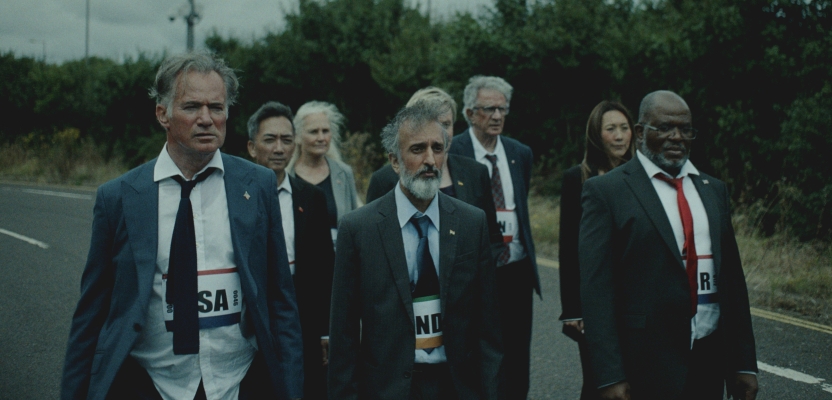

Greenpeace’s latest campaign, Plastic Free Future, brings an urgent message with a uniquely positive twist. At the heart of this campaign is a call for big brands, oil giants, and world leaders to address the global plastic pollution crisis, which has become so dire that it prompted the United Nations to negotiate the Global Plastics Treaty.
Set against the backdrop of the upcoming "plastic-free" Paris 2024 Olympics, this campaign leverages the spirit of unity and achievement associated with the Games to rally global support and push for change.
In this interview, we go behind the scenes with the creative minds at We Are Social and speak to Head of Studios Dan Keefe to explore how they crafted a memorable, humour-filled campaign that not only aligns with Greenpeace’s activism but also inspires people to join the movement for a cleaner, sustainable future.
What was the brief?
Greenpeace's Plastic Free Future campaign demands that brands and big oil stop the growing plastic pollution crisis by phasing out single use plastic and investing in innovative alternative solutions.
Plastic pollution has become a global crisis so severe that the United Nations has mandated countries to agree on a solution: the Global Plastics Treaty - a once-in-a-generation opportunity to deliver a cleaner, safer planet, with the fifth and final meeting being in Busan in November 2024. The brief for this piece was to grow public support on social, increase petition signatures and put pressure on world leaders.
With the Paris 2024 Olympics declaring themselves ‘plastic free’, this presented an opportunity for the global Plastic Free Future team to build momentum and support. As such, by harnessing the shared excitement and aspirational atmosphere of the Olympics, the piece needed to reflect the spirit of the event with humour and good grace, without attempting to cause any controversy or negative sentiment - an unusual proposition for activism comms.
How did the initial pitch/brainstorming phase go?
There was a lot to communicate in this brief. With each iteration of the script we tried to find the right balance and condense it into something more singular. It needed to present an upsetting, complex and misunderstood issue in an engaging and easy to understand way, whilst also delivering some very specific information, being visually arresting, good humoured and positive.
It had to link somehow to the first ‘plastic free’ Olympics, but not in a way that touched on greenwashing or risked claims of undue association by actually mentioning the Olympics. The film needed to encourage and support politicians, one of the least popular groups of people in society. And on top of all that, we had a shoestring budget to work with.
What was the process behind ideating the concept?
It was clear from the start that we couldn't use the full service agency process on this one, so we decided the most effective way to work would be to form a tiny team, remove all of the linear processes and collaborate directly with our clients as a production team through We Are Social Studios.
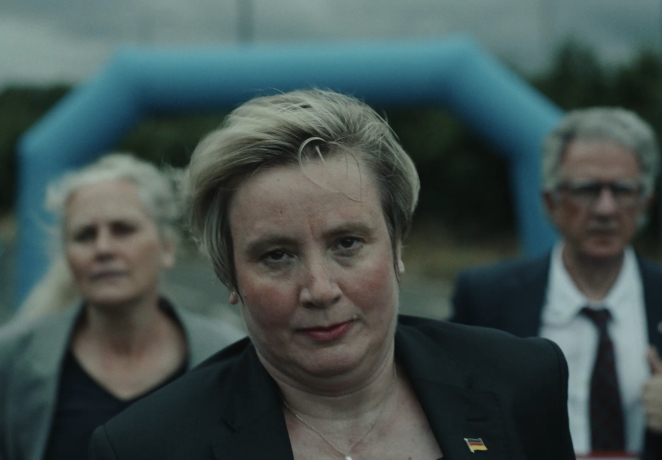
In a reversal of the traditional process, we appointed Jon E Price as director and made him part of the creative process from the beginning, borrowing one creative and some time with our ECD from the main agency. We moved at speed and were fortunate enough to receive really specific and productive feedback from the Greenpeace team live in the room, throughout the process.
What was the production process like?
When you're committing to challenging budgets and timelines, the only way you can make the process work is with high levels of trust throughout the team - including your client. You're trying to pull off something that isn't technically possible, powered solely by will power and brute force.
That lack of contingency or ability to offer guarantees requires everyone's good grace and understanding because you're essentially attempting to over-deliver at every stage of the process, relying more heavily on luck than feels comfortable. Greenpeace were the ideal clients in this respect and came along for the bumpy ride with us in the knowledge that we were pushing for the best.
What was the biggest challenge during production? How did you overcome it?
The biggest challenge we faced was ourselves. We could have made our lives easy and done something more budget-appropriate, but instead we decided to punch above our weight and give our producer Luke Mortimer an imposing wall of challenges that he dealt with amazingly well.
Working with Greenpeace presented a unique creative opportunity, as did the importance of the issue and their track record of amazing work demanded a more ambitious approach, especially since we were relying on the support of so many partners & crew who wanted to make great work for an important cause.
What is one funny or notable thing that happened during production?
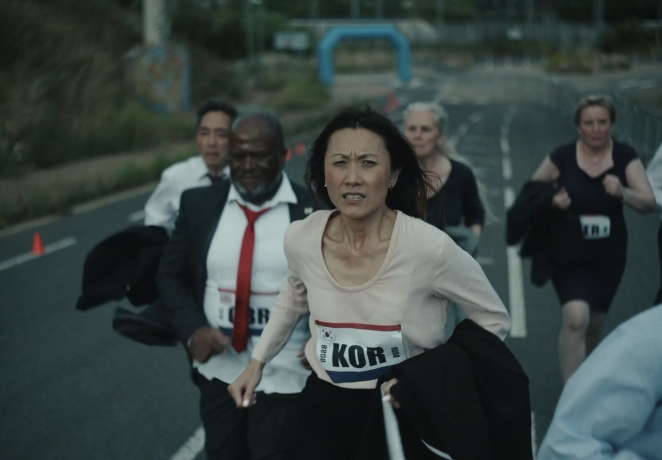
I was pretty amazed at the ability of our cast to run in high heels - by the end we didn't need to apply any fake sweat to their faces. Covering our Big Oil character in black goo in the middle of a bleak, abandoned road was also one of those "what am I doing here" moments for everyone involved.
What’s the main message of this project and why does it matter?
For me the eye-opening thing about this brief was the idea of diverting focus away from plastic as being a waste issue to something that is much bigger. The petrochemical industry, corporations and governments love to be challenged on the waste narrative because it sounds solvable, like littering.
They can also make themselves look like they're helping by performatively contributing to ocean clean up, for example, which enables plastic production to continue. The fact that 99% of plastic is made from oil and gas, further fuelling the climate crisis, is far more severe an issue that is surprisingly absent from public discourse.
Were there any alternative concepts or ideas considered during the ideation phase? If so, what led to the selection of the final concept?
We originally had this concept of 'Taking The Plunge' where an Olympic diver jumped off the top board and landed in a plastic-filled pool, entering into an ocean-like world under the surface.
We opted against this idea in the end as it was too focussed on marine waste, which was an area Greenpeace were keen to steer away from. So we had to develop a way of using a different sport as the metaphor, making it feel more global and bringing in world leaders.
When we decided on running, it then became difficult to navigate how to represent the logic in this metaphor. Are they racing each other? Or together, and against who? What's the finish line, and how does it start? Is it a relay? Sprint or marathon? What about the global crowd, how do we show that? How do we deliver the essential information in the VO without being too literal?
We decided to create our own imagined world in order to make sense of these decisions and free ourselves from logic. This new approach also cracked the problem of how you do activism without shock value, cheering on politicians whilst simultaneously criticising them - the answer being the use of deadpan humour.
How did you ensure that the concept remained innovative and stood out in a crowded marketplace?
I think our smaller and more agile team, unusual production model and having clients who are really creatively literate allowed us to make some decisions that made the piece feel very different to all of the heavily saturated, buzzy content from lifestyle and sports brands filling up our feeds during the 'summer of sport'.
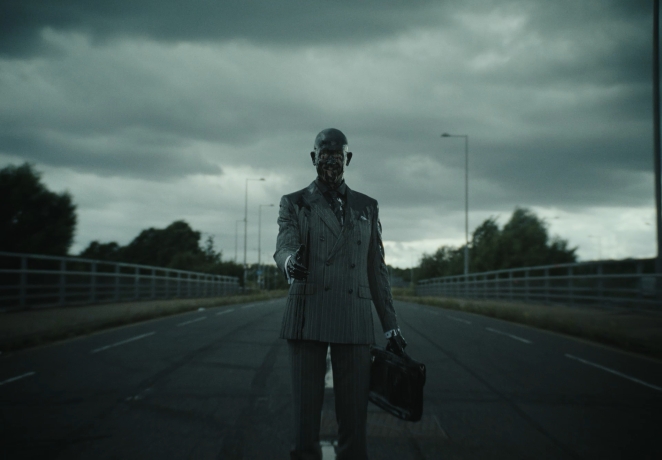
We wanted to disrupt the programming with minimal and odd-feeling storytelling with unusual visual references. Since we couldn't show a real race in a full stadium, we had to go the other way and rely on a metaphorical, liminal space that felt somewhat like a fever dream and allowed us to explore the really deadpan comedy of filmmakers like Aki Kaurismäki and Yorgos Lanthimos.
What do you hope it achieves for the brand?
I hope it changes the nuances of the discourse on plastic, and contributes to an agreement that cuts plastic production and ends single-use plastics.
Credit list for the work?
Client: Greenpeace
Creative Agency: We Are Social
Simon Richings: Executive Creative Director
Lauren Ashton, Creative
Production: We Are Social Studios
Dan Keefe: Executive Producer
Luke Mortimer: Senior Producer
Isabelle Ramsden: Production Manager
Janice Puati: Production Assistant
Other
Director: Jon E Price
Director of Photography: David Bird
Casting: Des Hamilton & Jo Harris
Edit: Final Cut
Editor: Kit Wells
Post Production: Electric Theatre Collective
Colourist: Jason Wallis
Online / VFX: Brad Cocksesdge
Sound: Machine
Sound Design: Alex Bingham & Patch Rowland
Music: Kase Prince