

Born from a midlife pivot and a passion for purposeful storytelling, MadLow Studio is proof that bold moves and quiet confidence can shape something extraordinary. Founder and Creative Director Vicente Tristão left behind the comfort of freelancing to build more than a studio—he built a mindset.
With a foundation rooted in empathy, curiosity, and creative rigor, MadLow has already crossed continents and industries, producing visual experiences that connect on a deeper level. From virtual restorations to film title design, this Edinburgh-based one-man band is turning thoughtful risk into resonant reward.
How was your company born and where are you based?
The short answer? Midlife crisis. (and a leap of faith) :)
The longer answer: After more than 15 years working closely with architects and designers on projects all over the world - both as a freelancer and within other studios - starting MadLow felt like a natural and inevitable next step in my creative journey.
As my big 40th approached last year, that familiar question kept circling in my mind - "if not now, then when?"
At the time, I was leading a small team of younger 3D artists and found myself at a crossroads. I realised I wanted more than ‘just create beautiful imagery’. I wanted to express my own creative voice, shape meaningful stories, and build something that could inspire others along the way.
In my experience, creativity really comes alive when we push beyond our comfort zones, explore new territories and embrace a new challenge - and frankly, there’s nothing more challenging (or terrifying!) than leaving a stable job to build something of your own.
So, I took the leap and launched MadLow Studio - a way to position myself as a genuine creative partner, helping clients bring bold ideas to life and tell stories through visual experiences that not only showcase their projects, but connect with audiences on a deeper level.
Right now, MadLow is very much a ‘one-man band’, operating from my home office just outside Edinburgh. But despite being in its early days, within the first four months alone I’ve already had the opportunity to collaborate on projects spanning the UK, US, Brazil and China.
It’s been an exciting (and slightly surreal) start and I’m looking forward to seeing where this journey takes me next!
What was the biggest challenge to the growth of your company?
The biggest challenge at the start was shifting my mindset.
Moving from freelancing - where work often feels quite transactional - to running my own studio as a creative collaborator was a big adjustment. I wasn’t just delivering visuals anymore - I needed to become a true partner in the creative process, helping clients find the best solution for their projects, not just the quickest or most obvious one. That shift took some time (and quite a few deep breaths).
Of course, with any big challenge, self-doubt likes to creep in.
Staying confident, especially when you're doing everything solo, can be tough some days. From finance to marketing, social media to networking (and somehow still creating the actual work!), wearing every hat means accepting that not everything will be perfect.
But honestly? That’s also part of what makes it exciting. Being a new company means every win feels fresh and energising. Even on the busiest days, there’s this real sense of momentum - of learning, evolving, and moving forward.
Once you accept that you are doing your best and focus on being a little better than yesterday, growth starts to compound. And for me, that’s what keeps it all going.
Which was the first huge success that you can remember?
I wouldn’t call it huge in the grand scheme of things, but the first real sense of success definitely came from issuing my first invoice as MadLow Studio (and getting it paid).
Success, for me, isn’t always about big, flashy moments. It’s about setting clear and realistic goals, and more importantly, being able to recognise and celebrate the small wins along the way. Sometimes, those small milestones turn out to be the most meaningful of all.
What’s the biggest opportunity for you and your company in the next year?
The next year is shaping up to be super exciting for MadLow Studio. I’m getting involved in some fantastic projects within the Tourism and Arts & Culture sectors - both of which offer amazing opportunities to experiment, learn, and push my creativity into new territories.
One project involves helping with the digital restoration and virtual tours of historical buildings in VR, which is a brilliant mix of technology, storytelling, and preserving heritage.
The other is something completely different (and a little surreal, in the best way): A collaboration to create the titles for a new film.
Both projects are giving me the chance to stretch creatively and work with new tools - and for me, that’s the real opportunity. It’s about continuing to grow, staying curious, and exploring new ways to bring ideas to life.
Can you explain your team’s creative process? What makes it unique?
I think what makes MadLow’s creative process unique is how fluid and adaptable it is. There’s never a one-size-fits-all approach for me - every project is a new opportunity to learn, explore, and communicate something meaningful in a way that feels specific to that client and context.
What drives it all is a genuine sense of curiosity - about the people I’m working with, their project, their goals, and what really matters to them.
I always begin by gathering as much insight as possible and asking the right questions. Sometimes it’s about helping clients uncover things they hadn’t fully considered yet. Questions like "Who is this really for?" or "What emotions should this evoke?" often bring real clarity to the brief and helps us set a strong creative direction from the start.
It’s also a deeply collaborative journey. Clients aren’t just spectators - they’re very much part of the process. Their voice, their vision, and their knowledge of the project are vital. I make sure they feel heard and involved at every stage.
Of course, there are times when opinions differ - that’s part of any creative process. But I see those moments as valuable. My role is to guide, advise, and occasionally challenge decisions, always with the same goal in mind: doing what’s best for the project!
How does your team remain inspired and motivated?
Inspiration is a funny thing. For years, I thought it was some magical force reserved for a select few - until I realised it’s actually about discipline and staying open to the world around you.
Sometimes, inspiration shows up when I least expect it - out walking my dog, chatting to a stranger, or just noticing the little things in everyday life. But I also make a point of creating space to actively seek it out - in films, documentaries, books and music.
It comes from really listening to the world around me and staying curious: What do I think of this? How does it make me feel? Do I have anything to say about it? Those small reflections often spark the most interesting ideas.
When it comes to motivation, there are two things I try to keep in mind. First, I remind myself not to compare my work (or my journey) to anyone else’s. Everyone’s version of success looks different, and comparison tends to drain motivation rather than fuel it.
The second thing is learning to stay present, especially when working on large or complex projects. Instead of thinking too far ahead, I break things down into smaller, manageable steps. That simple shift makes everything feel more achievable - and a lot less overwhelming.
Which agencies do you gain inspiration from? Do you have any heroes in the industry?
There are so many brilliant studios out there doing inspiring work, and I’m constantly discovering new ones online. But if I had to name two that consistently blow me away, it would be MIR and ManvsMachine.
MIR (mir.no) for their jaw-dropping technical skills, attention to atmosphere, and the sheer realism they bring to their work - it's almost poetic. And then ManvsMachine (mvsm.com) for their boundary-pushing creativity, bold concepts and beautiful execution. Every time they release something new, it feels fresh, surprising, and incredibly well-crafted.
They operate in very different visual worlds, but both remind me why I love doing what I do.
What is one tip that you would give to other agencies looking to grow?
This is one of those moments where imposter syndrome creeps in - a recently launched one-man studio giving advice on growth?
But I’ll answer it anyway, because I really believe we can all learn from each other, no matter where we are on the journey. And what I’m about to share is genuinely what I apply to MadLow every day.
My biggest tip - especially for freelance artists just starting out or anyone hearing that little voice telling them to start their own studio - is this: get really clear on what growth actually means to you. Is it building a team? Having a bigger office? Working with bigger clients or gaining more recognition? Is it about charging more - or simply having more creative freedom?
If you don’t know what growth looks like for you, it’s basically impossible to plan how to get there - or even recognise it when you do.
Once you have that clearly defined, it becomes a matter of consistency. By showing up day after day and building resilience, the results will follow!
How do you go about finding new clients/business? (Pitching, work with retainers, etc.)
Finding new clients is hands down one of the hardest parts of running a new business - especially in the creative industry, where there's so much amazing talent out there and competition is fierce.
What I’ve learned is that while a strong portfolio matters, it’s only part of the picture. The real key lies in building and nurturing relationships. It’s about the people. (Insert Michael Scott meme here.)
Honestly though… it comes down to listening, being genuinely curious, and showing up with the intention to help, not just to sell. People remember how you made them feel - not just what you showed them.
I spend time connecting with people in a way that feels natural and meaningful – in events, through LinkedIn conversations, community groups, referrals, and simply staying in touch with past collaborators. It’s not a quick-win strategy, but it builds a strong network over time - one based on real connection and trust, not pure interest.
What’s your one big hope for the future of the industry?
My biggest hope for the future of the industry is that we learn to truly value and prioritise human connection - that we stop making so many decisions based purely on profit and start leading with empathy, respect, and integrity.
Too often, I see larger studios and agencies exploiting young talent in ways that feel short-sighted and, frankly, unfair. There’s a real lack of recognition for both group effort and individual contribution - and that can take a serious toll on people’s confidence and mental health.
I don’t believe success should come at the cost of someone else’s wellbeing or reputation. We can do better than that!
I’d love to see a stronger sense of community in the industry - one where we lift each other up, share knowledge generously, and create space for everyone to thrive.
That’s a big part of why I started MadLow in the first place - to do things differently, in a way that feels more human, and to become the change I wanted to see.
Can you share a defining moment in your company's journey that shaped its identity or direction?
Before starting MadLow, I took a mini sabbatical - a much-needed pause where I genuinely wasn’t sure whether I wanted to continue working in the industry or change paths entirely. I felt stuck. I had no control over the kind of projects or clients I was working with, and I couldn’t fully express my creative voice.
Stepping away from the tools gave me the space to reflect. Through a mix of books, seminars, TED talks, long chats with friends and ex-colleagues, I slowly began to rebuild my confidence and reignite my passion for 3D. What initially felt like a crisis gradually became an opportunity.
I started asking myself some tough but important questions: Why am I still doing this after all this time? What do I actually value personally and professionally? And how can I be part of the change I want to see in the industry?
That period of clarity shaped everything that followed. Once I knew what I wanted to build - and why - things didn’t necessarily get easier, but they became more meaningful. Every project since then has felt more intentional, more connected to who I am and what MadLow stands for.
For me, it’s not about being in control - it’s about being comfortable with uncertainty and trusting the process. That mindset has become a big part of MadLow’s identity and attitude.
How do you foster a culture of innovation and experimentation within your team?
Although I don’t currently have a team working with me at MadLow, I’ve led teams before, and I firmly believe that fostering innovation starts with leading by example. It’s about creating space where people feel safe to experiment, try new tools, explore new processes, and yes - sometimes fail.
You can’t expect innovation to flourish if your systems are too rigid or if there’s no time carved out for exploration. Experimentation needs room to breathe.
At MadLow, R&D is a core part of the studio’s culture. In an industry where technology evolves constantly and the pressure to deliver fast, affordable results is very real, it’s essential to stay curious and open to new ways of working.
Sometimes, the outcome is a better workflow. Sometimes, it’s a fresh perspective or a bit of unexpected knowledge. And every now and then, those “happy accidents” become the spark for something totally unique - like a personal project or an entirely new idea.
What measures do you take to ensure diversity and inclusion are prioritised within your company?
Right now, MadLow is a one-person studio, yes - but that doesn’t mean diversity and inclusion aren’t already central to how I think and operate.
I truly believe that different perspectives, backgrounds, and lived experiences are what make creative work stronger and more meaningful. Diversity enriches problem-solving, storytelling, and ultimately, the end result. And on a human level, having your voice heard and your ideas valued is incredibly powerful - it builds confidence and creates space for people to thrive and for business to succeed.
While I don’t yet have a team, I make conscious choices about who I collaborate with, whose work I amplify, and how I stay open to ideas that challenge my own. And when the time comes for MadLow to grow, building an inclusive and diverse culture won’t be an afterthought - it will be a core principle from day one.
Can you describe a project that challenged your team creatively and how you overcame any obstacles?
A recent project I worked on came with some interesting creative challenges - which, to be honest, was quite exciting!
The brief was to produce a couple of technical animations showing how the client’s product worked and how it stood out from competitors. The tricky part? One sequence needed to show chemical particles being filtered on a microscopic level - something the client couldn’t fully visualise themselves, and for which there were no real-world references to draw from.
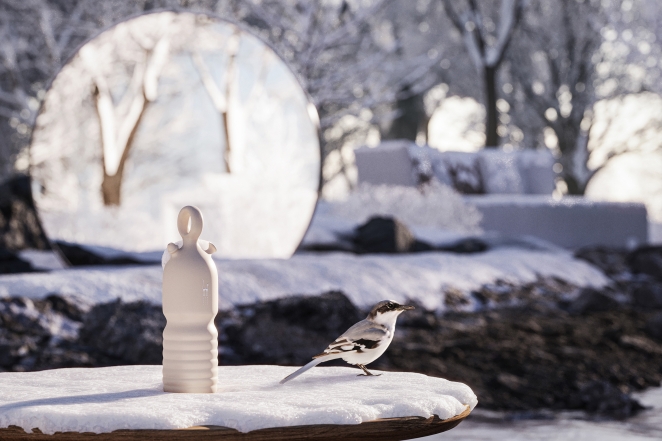
Without going into too much detail (it’s still under NDA), I suggested we lean into abstraction and take a bit of creative licence. After a full day of focused R&D, I developed a set of style frames that felt both informative and visually engaging.
The process was highly collaborative. I set up a Miro board so the client could follow my creative thinking as it evolved - that transparency really helped. Because I was upfront about the challenges from the beginning, I earned their trust early on - and in the end, we got final approval without a single revision.
How do you balance maintaining your company's unique creative voice while meeting the diverse needs of clients?
When a relationship is built on trust, mutual respect, and open communication, it becomes clear from the start that we’re working towards the same goal - usually, to tell a story that resonates emotionally through strong visual communication.
I don’t let ego get in the way. If a client isn’t connecting with an idea, I won’t fight to keep it just for the sake of it. Instead, I focus on finding a solution that meets their needs and brings my creative thinking to the table. By actively listening and involving clients throughout the process, the result always feels like a true collaboration - not just “my” work, but our work.
And on the rare occasions where I feel the final direction doesn’t fully reflect my vision, I’ll often rework the idea later, just for myself - either as a personal project, or something to explore further for my portfolio. That way, nothing feels lost - it just finds a new purpose!
What strategies do you employ to adapt to changes and trends in the industry while staying true to your company's values?
Before jumping into any trend or adopting new technology, I take time to do proper research and ask: What real value does this bring? How will it improve the work or the client experience - and does it align with what I stand for?
The whole generative AI “revolution” is a good example. I’ve been experimenting with AI tools for quite a while now, testing how they might integrate into my workflow in ways that enhance creativity and efficiency - while staying transparent with clients and protecting the integrity of the work.
I think it’s important to stay curious and aware of what’s happening in the industry, but that doesn’t mean jumping on every new tool that pops up. If anything, I prefer to challenge trends - even resist them - until I’m confident they truly align with my values and purpose and offer tangible benefits.
Can you share a memorable client success story that exemplifies your company's approach and impact?
One of my most memorable projects was with an interior design agency who approached me to produce CG images for a flat renovation in London. At first glance, it seemed like a straightforward brief - but there was an extra challenge to it: Their client wasn’t convinced by the furniture layout and felt the space would end up feeling cramped.
After visiting the property, it became clear to me that the scale and openness of the space weren’t coming through in photos or plans. The design intent was getting lost in translation. So, I suggested a different approach: recreating the space using 360° panoramas that could be experienced through a VR headset. This would give their client a much more immersive experience and a better understanding of how the space would actually feel.
We started with a test - just one bedroom. The result? Their client was not only convinced, but super excited. They extended the scope of the project to include the entire apartment using the same VR approach.
For me, this project really captures what MadLow is all about: approaching every brief with curiosity, empathy, and a genuine desire to solve problems creatively. It’s not just about rendering nice images - it’s about combining technology and visual storytelling to communicate ideas in the most effective and compelling way.
In what ways do you invest in the professional development and growth of your team members?
I’m constantly looking for ways to learn, evolve, and challenge myself - whether that’s through books, podcasts, online courses, or simply through conversations and shared knowledge with other creatives. I genuinely believe that curiosity and self-reflection are the two most powerful tools for growth - both professionally and personally.
Even though it’s just me at the moment, that mindset is baked into the DNA of MadLow. So, when the time comes to grow the team, I want to create a culture where learning, sharing and experimenting are supported and encouraged - where people feel safe to ask questions, take creative risks and develop their own voice.
The goal isn’t just to build a thriving studio - it’s to create an environment that supports and invests in individual growth and inspires the next generation of creatives.
How do you approach sustainability and ethical practices within your company's operations and projects?
As a one-person studio, I might not have a massive operational footprint - but I believe sustainability and ethics should be part of the conversation from the very beginning, not something you only think about once you’ve scaled up.
For me, it starts with being intentional. I try to collaborate with clients who share similar values, and I keep my workflow as efficient and streamlined as possible. That means reducing unnecessary rendering and energy waste, whilst being mindful of the tools and platforms I use.
There’s always more to learn and improve - and as MadLow grows, sustainability will remain part of the conversation. Not as a box to tick, but as an ongoing responsibility I genuinely care about.
At the heart of it all is integrity. I try to lead with honesty, transparency, and respect - in both the work I create and the relationships I build.
Do you have any websites, books or resources that you would recommend?
I love getting recommendations - whether it’s a great book, podcast, film, or series - and I’m always happy to share things that resonate with me creatively or personally.
At the moment, I’m reading Creativity, Inc. by Ed Catmull (co-founder of Pixar), and even though I’m only a couple of chapters in, it’s already packed with inspiring insights on leadership, storytelling, and building a strong creative culture.
Another book that had a big impact on me is Atomic Habits by James Clear. Even if you don’t agree with everything in it, there are so many useful takeaways when it comes to self-development, discipline, and creative momentum - it’s definitely worth a read.
I’m also a big fan of a good podcast, especially when I’m out walking my dog. One I found recently and really connected with is Positioning with April Dunford. She comes from a tech background, but her ideas around positioning, vision, and strategy translate surprisingly well to the creative world.
And finally, Extraordinary Creatives by Ceri Hand is another brilliant listen. It features conversations with artists and creative leaders who share honest, often vulnerable stories about their journeys - I’ve found it really inspiring and grounding.