

Emanuele Perilli is a multidisciplinary creative designer, illustrator, and music producer whose work is rooted in an organic and deeply personal approach to creativity. Based in Italy and working as a freelancer, he collaborates with agencies across a range of industries, bringing together traditional artistic foundations with modern digital techniques. His journey into the creative world began early, shaped by growing up in an artist family where creativity was part of everyday life.
In this interview, Emanuele shares insights into his creative process, the importance of building a strong portfolio, and how he navigates trends without losing his individuality. From his thoughts on AI in the creative industry to the value of staying curious and grounded, he offers practical advice for aspiring creatives and professionals looking to grow, attract clients, and develop a distinctive creative voice.
How did you first get into the industry?
 I come from an artist family, so in a way I’ve been surrounded by creativity since I was born; colours, pencils, and brushes were among my earliest memories. I actually started working on small art and music projects during high school.
Where are you based now and who do you work for?
I’m based in Abruzzo, right in the heart of Italy. I work as a freelancer, collaborating with various agencies across different sectors. This flexibility lets me take on diverse projects and keeps my creative practice stimulating and varied.
What is your personal background and what role did it play in you career?
Coming from an artist family was truly defining. Creativity wasn’t something I discovered later in life, it was part of my upbringing. Having access to art supplies from the very beginning made creating feel completely natural, never forced.
If you weren’t in your current industry, what would you be doing?
 Almost certainly architecture. I actually started studying it at university before deciding to pursue music instead, while keeping my love for art and design. Looking back, the two paths aren’t that different; both deal with shaping form, space, and experience. I guess that architectural eye never really left me.
Can you explain your creative process? What makes it unique?
It varies depending on the brief, but it almost always begins with a simple idea that I allow to breathe and grow. I sketch by hand first, then move to digital and refine the work. I often describe it as a sculptural process: rather than building up from nothing, I'm gradually removing the excess to reveal what's already there.
How would you describe your style?
Organic. That’s the word I always come back to. It comes from my classical art background, contemporary drawing and composition styles, and from working across different media over the years, all mixed together and distilled into something personal.
Which individuals do you gain inspiration from? Do you have any heroes in the industry?
 My academic background definitely plays a role, but over the years I’ve come across many artists and designers who have influenced me in different ways. I wouldn’t single anyone out. What matters most to me is staying curious and keeping up with what’s happening now. Inspiration is everywhere if you’re paying attention.
What tips would you give to aspiring creatives looking for work?
Build a strong portfolio. Work hard, learn from everyone around you, and never assume you’ve “arrived.” The creatives who grow are the ones who treat every project, no matter how small, as an opportunity to get better.
What tips would you give to other professionals to get more clients?
A solid portfolio is essential, but beyond the work itself, network actively and be proactive. Relationships matter a lot in this industry. Put yourself out there, be genuinely interested in people and their projects,
Can you share a memorable experience from your career journey that shaped your approach to creativity?
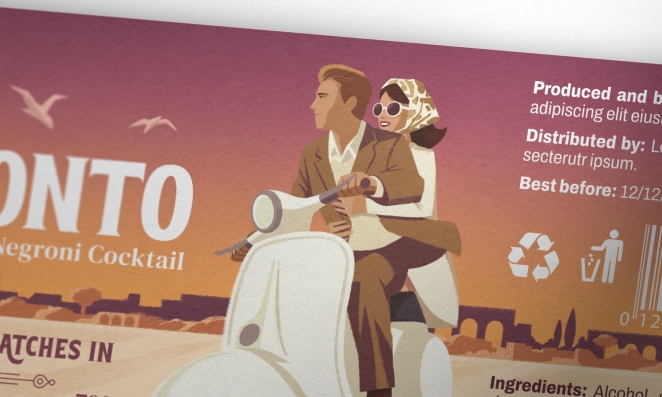 There isn’t one specific moment I can point to. Each project, each challenge, each collaboration adds a layer. There have certainly been larger, more visible projects, but I've come to see the whole thing as one continuous, organic process, still very much in motion. The journey itself is the experience.
What kind of tools/kit/software could you not do without?
Pencil, eraser and paper. That will never change :)
Beyond that, I’ve become a hardcore Affinity user. Of course I also use the standard software every designer needs to know. But in the end everything still starts analogue.
What’s your secret to staying inspired and motivated?
Curiosity, above all. Then daily movement, meditation, music and art. It sounds simple because it is, but those small habits keep me grounded, open and connected to the world around me. That’s where inspiration usually shows up.
What’s the work achievement you’re most proud of?
 Every time a client says “great job” and genuinely means it :)
Big projects are nice, but the real reward is when someone you’ve worked hard for truly appreciates what you’ve done. That’s the moment that reminds me why I do this.
As someone with experience in the industry, what trends do you foresee shaping the future of creativity?
Well, creativity and trends are always evolving, that’s their nature. What matters is how an artist responds: not by chasing every trend, but by staying aware and growing on your own terms. AI is obviously a big part of the moment, and I do use it as an assistant, never the source. The human touch is what gives the work a special value, and clients increasingly recognise that. The demand for something genuinely human-made, I believe is constantly growing.
What do you think sets apart truly exceptional creatives from the rest of the pack?
Not constantly chasing trends, but creating them, or at least giving them a personal twist so your work could never be mistaken for anyone else’s. That’s the goal.
How do you think technology has influenced the creative industries and how have you adapted to these changes?
 I’m a bit of a tech-nerd, so I’ve always leaned in rather than resisted. The tools available to creatives today are powerful; what once required a full studio can now be done by one person with the right setup.
But technology can make people lazy, and relying too heavily on AI risks flattening the very thing that makes creative work worth experiencing. That’s why keeping the human side of creativity is essential.
What is the one thing that you would change about the industry?
I’d change the fast-food mentality that has been creeping into the creative field. Creativity needs room to breathe; it needs time to grow and evolve. When artists are given the space to explore ideas properly, the results are better, more meaningful and ultimately more valuable for clients just as much as for the creatives themselves.
Any websites, books or resources you would recommend?
I honestly suggest making regular visits to museums and galleries, whether modern, classical or anything in between. Go, be there in person. Stand in front of the work. Breathe it in. Let it hit you in a way a screen never will. There’s no digital substitute for the presence of great art. Never trade away the real-world experience, the part that makes art feel alive.