
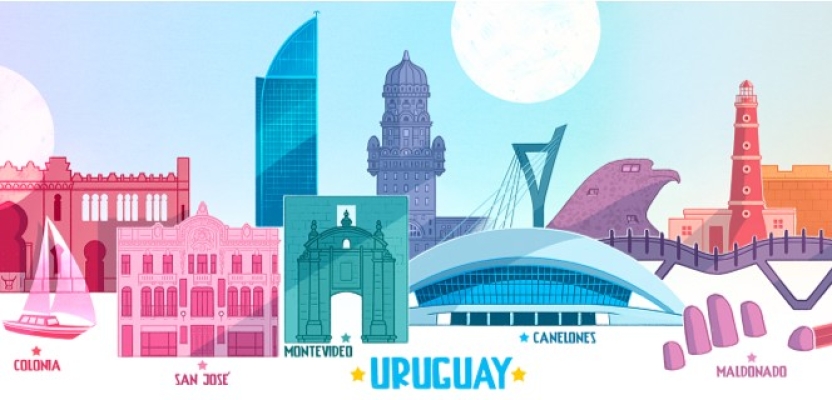

Based in Montevideo, illustrator and character designer Alfonso Rosso has built a career rooted in experimentation, persistence and a deep love for visual storytelling. From taking on every type of freelance project imaginable in his early days, from logos and toy design to children’s books and medical illustration, Rosso developed a versatile creative foundation that helped shape his distinctive style: textured, vibrant and full of life.
In this interview, Rosso reflects on the importance of consistency, developing a personal visual voice and why handcrafted creativity still matters in an increasingly AI-driven world. He also shares insights into his process, the value of personal projects and the lessons he’s learned navigating the realities of freelance illustration while staying true to his craft.
How did you first get into the industry?
 I started my freelance career around 2012, taking on small local illustration jobs, also through freelance platforms, especially Upwork (formerly oDesk). At that time, I took on everything: logos, character design, toy design, medical illustrations, video games, children's books... That really toughened me up and gave me a broad perspective on the world of illustration. I didn't limit myself to just one area. Later in my career, I started to let go of things that weren't as fun or didn't quite fit my style.
Where are you based now and who do you work for?
I live in Montevideo, Uruguay, South America.
I'm a freelancer and I work for brands, companies, agencies and design/animation studios, helping them to visually express their ideas and concepts.
What is your personal background and what role did it play in your career?
I'm a pretty reserved person; which is why I love drawing alone in my studio-cave, ha! On the other hand, I've also always been very athletic. I've competed in swimming, karate, athletics and I still play football and surf!
I really believe that our illustrations and style are always a reflection of who we are as people, how we see the world and what we're passionate about.
If you weren’t in your current industry, what would you be doing?
 I have a degree in Industrial Design (a career which I still love), and illustration is heavily involved in the profession, so I would probably be working as an Industrial Designer. I love product and furniture design.
Can you explain your creative process? What makes it unique?
My process isn't really unique... but it is a reflection of who I am.
It's an organized process with stages: searching for inspiration, references and color palettes. Then I like to do a fairly detailed sketch, but always with a gray background and black lines. I never add color unless requested. Once the sketch is approved, I move on to color.
The coloring stage is the one I enjoy the most, and that's where I have some flexibility to modify the sketch if needed and add details that help the image stand out. The feeling of creating something new and original is the most important part of this work, even more so than meeting the client's requirements.
In the end, we're creatives and that's what we're hired for!
How would you describe your style?
My style is a mix of stylized and textured shapes, bright colors and life. I don't use many lines, just the needed ones. A synthesis between realism and caricature. I'm also always looking to simplify it, trying to limit my color palettes and now aiming for a more adult audience.
Which individuals do you gain inspiration from? Do you have any heroes in the industry?
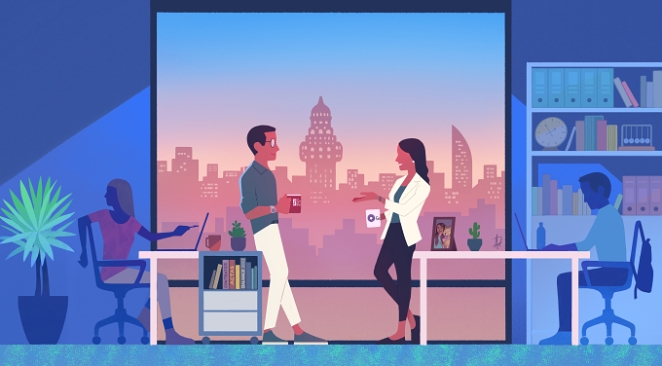 I definitely have them! And they are a huge pack. I'm even doing a personal series called "Illustrated Illustrators", which is exactly that: I draw portraits of the illustrators who inspire me! To find out who they are, I invite you to see them on my Creativepool profile.
What tips would you give to aspiring creatives looking for work?
Without a doubt, draw a lot, learn the basics and the theory. There's time to break the rules later, but I see many illustrators with significant technical limitations.
On the other hand, finding your own visual voice and making it your own is probably the most difficult thing, and can take a whole career. But through experimentation and repetition, you discover things that satisfy you and motivate you to continue working in this area of creativity.
I also don't think style has to be rigid; you should always be willing to evolve and keep learning different ways of approaching image creation.
How boring would it be to work for 50 years doing exactly the same thing!
What tips would you give to other professionals to get more clients?
That's our struggle every day. Especially now, when there's a huge supply and not as much demand.
Focusing on one area and being very good at it helps you stand out from the rest.
Overcome fear and put yourself out there, sell yourself. We're not strictly artists; what we offer as illustrators is a service, and we have to promote it as such. Showcase your work and knock on every door possible; you never know where your next job might come from.
Specifically, sending emails to agencies, publishers, art/creative directors, uploading your work to social media, having a polished and easily accessible website, contacting and building connections with real people, stepping outside the virtual world a bit—all of that helps. And never stop trying, perseverance pays off.
Can you share a memorable experience from your career journey that shaped your approach to creativity?
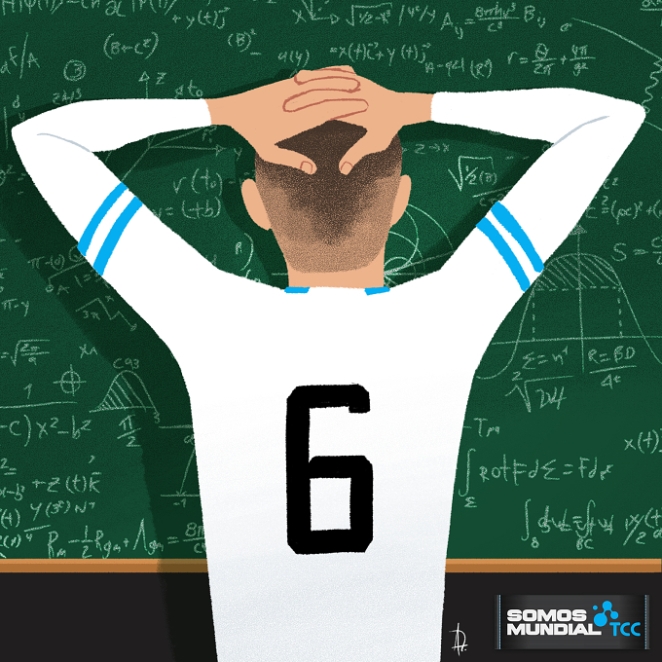 Not quite about creativity, but I remember the first time I saw a digital painting video on youtube, it blew my mind! It was quite a while before I started my career as an illustrator. I'd never seen the possibilities that digital painting offered, and it had a huge impact on me.
My commercial work has always been 100% digital, although I also try to practice traditionally with watercolors and gouache, just for myself.
What kind of tools/kit/software could you not do without?
Definitely Photoshop. I'm not saying it's the best tool (and I strongly disagree with the current policy of adding AI to it...) but it's the one I'm very used to, I've been using it for a long time, it's very complete and it would be hard for me to change it.
Also, my brush pack that I have set up, I don't use more than 5/6 but they allow me to do everything I want.
What’s your secret to staying inspired and motivated?
Always having personal projects on the side. Even when there's a lot of commercial work, having something personal keeps you inspired and allows you to shift your focus and stay fresh.
What’s the work achievement you’re most proud of?
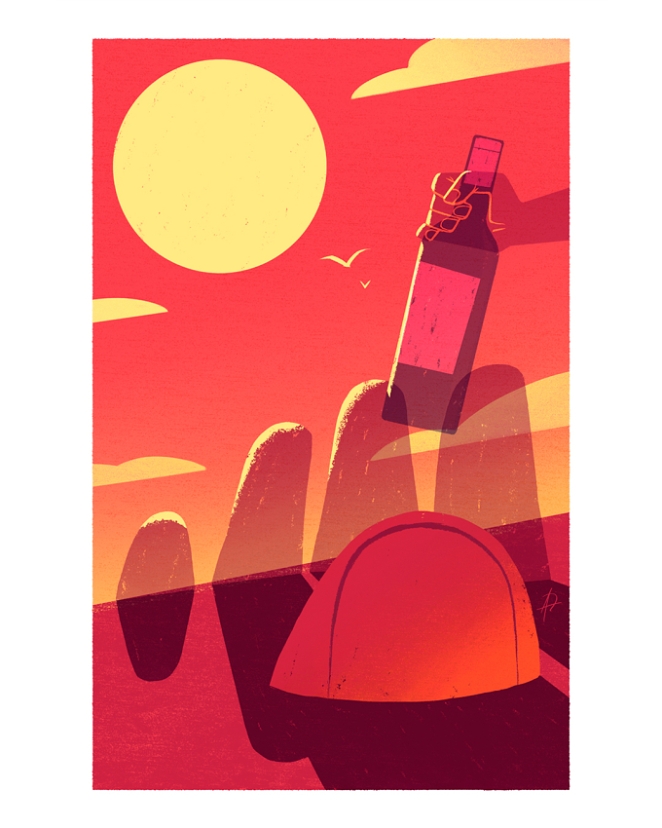
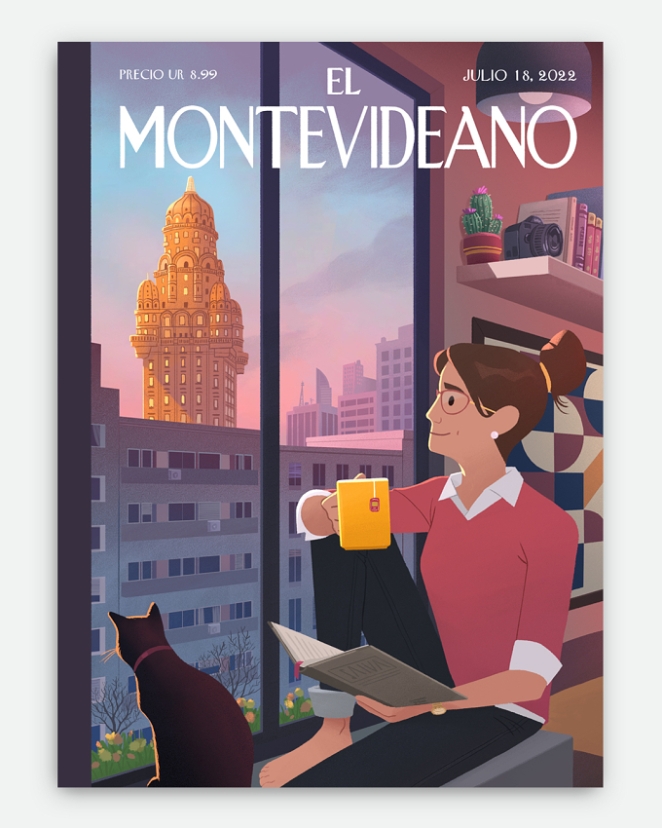
 My series "El Montevideano" was a turning point in my career. It helped me gain recognition in the local art scene and made me a household name in my city. At the same time, those illustrations hold a lot of personal and nostalgic significance for me. They portray my city, its people and the places where I grew up, in a kinder and more colorful way than we as a society tend to think of it. I believe that's why people fell in love with that series.
Furthermore, since it was a personal project, it proved to myself and reinforced my confidence that what I was doing wasn't that bad...
As someone with experience in the industry, what trends do you foresee shaping the future of creativity?
There is a lot of uncertainty right now, but I believe, and many others would agree, that handcrafted and tactile work will become much more relevant and valued, in a world increasingly saturated with meaningless and soulless AI images.
What do you think sets apart truly exceptional creatives from the rest of the pack?
I truly believe that consistency and the desire to learn and evolve every day are what separate the good from the exceptional. Never stagnate, always show up. And I don't believe in natural talent; absolutely everything is practiced and improved.
Where there's a will, there's a way.
How do you think technology has influenced the creative industries and how have you adapted to these changes?
 Technology changes very quickly and you definitely have to adapt some things, but I always try to keep my stuff as simple as possible. From the software I use, my workspace, I don't even have a wallpaper in my PC (just black color XD)... so I can focus solely on my craft.
I don't care much about emerging technologies; I prefer old, robust things I can trust. And the truth is, you don't need that much technology to draw; a pencil and paper can be enough.
What is the one thing that you would change about the industry?
That people would take it more seriously. Art and good design applied to our daily environment improve our perception and ultimately our lives. I believe it's undervalued and under-invested, and a lot of time the creative process isn't respected. These days, everything has to be immediate, and then it evaporates; everything is ephemeral.
But that's our world today, so no matter how much we don't like it, we always, always have to do the best we can.
Any websites, books or resources you would recommend?
I found this website that I love: livlily blogspot which works as a huge digital library of visual development of most animated films. You'll find character designs, backgrounds, pencil tests, turnarounds, and much more. It's more about the animation industry than illustration, but a real gem and a lot to learn about!