
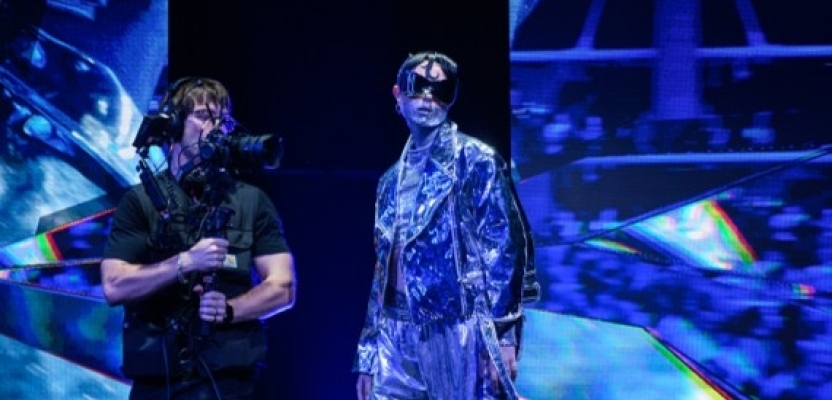

When a brand like L’Oréal sets the stage, the world expects brilliance. For the annual L’Oréal Colour Trophy Awards, the challenge wasn’t just to impress, it was to reinvent magic within the same iconic venue for a second year running. Tasked with transforming London’s Old Billingsgate into an unforgettable spectacle, Experience, led by Founder and Creative Director Chris Rhodes, delivered a masterclass in experiential event design. The result was a show that celebrated innovation, artistry, and the transformative power of colour.
Under the theme of “illumination”, the creative team blended cutting-edge visuals, AI-enhanced content, choreography, and stagecraft to create a seamless sensory experience. Every element, from light and layout to music and motion, was carefully orchestrated to capture L’Oréal’s core values of creativity and excellence. The event not only celebrated the industry’s best but also reinforced L’Oréal’s position as a true leader in colour innovation and live brand storytelling.

What was the brief?
The brief was to deliver the annual L’Oréal Colour Trophy Awards. The venue, Old Billingsgate, was already secured under a two year contract, so our role was to bring it to life in a new and unexpected way for the second year in a row.
The repeat brief presents a particular challenge. Once you have cracked a great solution the first time around, with audience flow, layout, and visual impact all working, reinventing it for the same space requires a fresh take that still feels relevant and exciting. So the brief became: how do we deliver something entirely new, within the same four walls, for an audience who have seen us do it before?
How did the initial pitch/brainstorming phase go?
We kicked things off with a working session at L’Oréal’s head office in White City. In the room was our creative team at Experience, the team from Clockwise who develop visual content, and Gareth Walker, who directs and choreographs the show. Between us, there’s not only a lot of experience on this specific event, but also a real willingness to push things creatively.
Everyone shared their thoughts on industry trends, brand direction, and what felt exciting this year. With so many creative directors in one room, there is always a moment of waiting to see who speaks first. I ended up diving in. Together, we landed on the idea of “illumination” as a theme, which aligned well with L’Oréal’s messaging and gave us a rich creative springboard.
What was the process behind ideating the concept?
After establishing the core idea of illumination and light, we returned to the studio to explore how it could come to life. We immersed ourselves in mood imagery, drew on past references, and brainstormed how the theme could manifest spatially.
As part of that process, we spent time inside the venue. While the production team checked power sources, vinyl compatibility and logistical details, I sketched in the space, considering audience flow, surprise entrances, and how we could use the environment to deliver moments of magic. That combination of grounded production insight and creative instinct is what shapes our approach.
What was the production process like?
With the creative direction approved, the next phase was structured and detailed. We moved into 3D visualisation, floor plans, motion content planning and activation design. The tight turnaround meant the team had to be completely focused.
David Quigley led production on our side, managing judging logistics, rehearsal time and schedules around limited venue access. At the same time, Gareth choreographed the live show elements, collaborating closely with Clockwise to ensure visuals and motion graphics aligned perfectly with stage performance. Everything ran to a detailed Gantt chart to keep progress tight and on track.

What was the biggest challenge during production? How did you overcome it?
Time. Always time.
With a short window to build, rehearse and deliver, the margin for error was small. Careful planning was essential, but even then, we hit an unexpected delay with a power issue that meant rethinking some of the sequence timings on the fly. The only way through is experience and calm problem solving. Have great people who know what they are doing and know how to react fast when needed.
What kit/tools/software were used to create the project?
We used a suite of 3D design and visualisation tools in pre production. Clockwise brought some cutting edge AI workflows to the table to generate dynamic show content that was both time efficient and visually spectacular.
On site, we had multiple content layers played back across a number of LED screens in the venue. We mixed camera shots and added live visual effects, adding energy and variation during the show itself.
What is one funny or notable thing that happened during production?
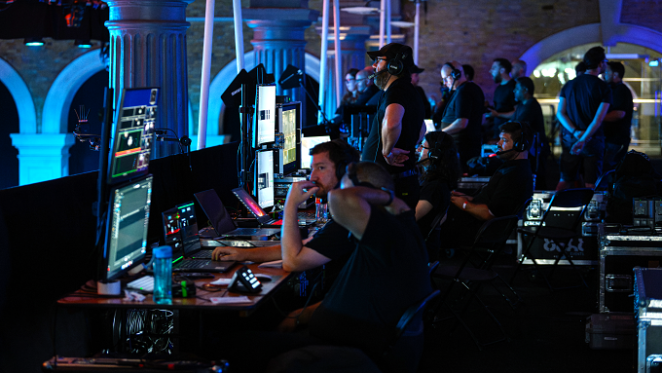
Our control position was boxed in between the temporary kitchen and a model changing area. Chefs were not happy about techs walking through with cables, and the models were not thrilled either. But the only other route involved hiring in a staircase. It is a weird corner of events that few people think about, but that is where some of the best stories live.
What’s the main message of this project and why does it matter?
It is a Cinderella story. Over 100 contestants arrive with their models and no clear favourite. The work they produce that day decides everything. So it is all to play for.
Our job is to elevate that journey, making the space feel magical, exciting, and reflective of L’Oréal’s position at the forefront of the industry. They are innovators in colour and styling, and this show is their opportunity to prove that in front of peers, clients and rising talent.

How long did it take from inception to delivery?
Nine months in total. There is a short lull after the previous show, and then by around six months out we are deep into planning, creative and delivery.
Can you describe the creative spark or inspiration behind the initial concept? Was there a specific moment or insight that ignited the idea?
It started from the idea of colour and illusion. We wanted to bring theatre, light and surprise to the space, playing with old school stagecraft, clever entrances and exits, reflections and reveal moments. It just felt like a fun and appropriate way to celebrate transformation, creativity, and showmanship.
How did you ensure that the concept aligned with the brand's values, goals, and target audience?
L’Oréal is a global powerhouse in colour. They want to inspire their audience while staying firmly at the top of the game. We aligned our creative direction with those ambitions and kept close to the brand throughout, sharing thinking and iterating together.
Were there any alternative concepts or ideas considered during the ideation phase? If so, what led to the selection of the final concept?
No. It was one of those rare projects where the first idea landed with both feet. Everyone got it. Everyone was excited.
Can you discuss any collaborative or interdisciplinary aspects of the ideation process, such as working with other departments or external partners?
Absolutely. Clockwise was incredible, not just in terms of creative direction, but in execution too. Their AI led workflows meant we got more visual power for less time. Gareth Walker brought serious creative energy to the choreography and music choices, which inspired parts of the design too.
And of course, L’Oréal themselves came with a clear vision and a willingness to work collaboratively, which always makes the job easier.
What role did consumer research or market analysis play in shaping the concept and its execution?
We always keep an eye on what is happening across the industry. Awards season, competing shows, brand messaging, it all feeds in. There was not any formal research shared with us, but instinct and awareness of the market help shape how we move forward.
Can you discuss any unique or unconventional production techniques or approaches used to bring the idea to life?
Not so much unconventional as tight and well run. It was an ambitious show with many moving parts, and live judging on the day adds an unpredictable layer.
How did you ensure that the concept remained innovative and stood out in a crowded marketplace?
We do not assume anything is innovative until the audience tells us so.
What we know is that we came with a solid idea, delivered it with care and intent, and left the audience buzzing. When you are watching them pour out of the venue with huge smiles, still talking about the moments you designed, that is your answer.
What do you hope it achieves for the brand?
To keep L’Oréal top of mind when their audience is making their own creative decisions. And to drive buzz and ticket sales ahead of next year, which will be the 70th anniversary of the Colour Trophy. That is a big moment, and we want people queuing up to be part of it.
Credit list for the work?
Event Design: Experience
Visual Content: Clockwise
Choreography and Show Direction: Gareth Walker
Production: David Quigley, Experience
Client: L’Oréal Professionnel