

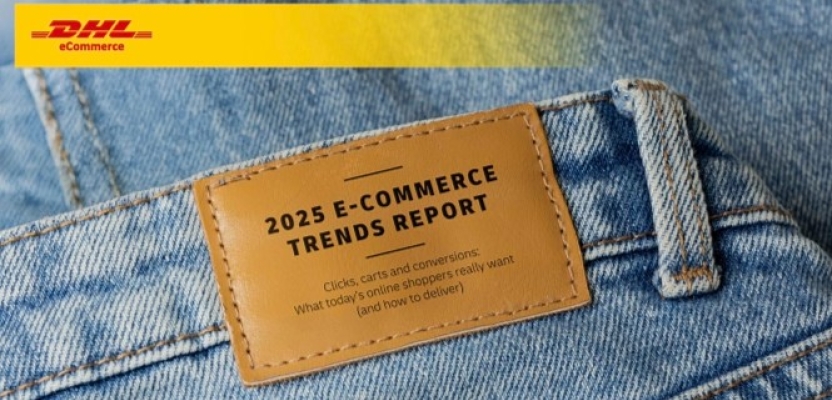

Rebecca Catlin, Content Manager at Something Big, led the content development of two insight-driven reports for DHL eCommerce, transforming large-scale global research into practical resources for e-commerce businesses. Built from extensive surveys of shoppers and businesses across multiple markets, the Shopper Edit and Business Edit were designed to help SMEs understand evolving customer expectations and make more informed commercial decisions.
Rather than overwhelming readers with data, Rebecca and the team used strategic storytelling, intuitive data visualisation and user-focused design to make complex insights easy to understand and apply. The result was a pair of engaging reports that delivered actionable e-commerce trends, strengthened DHL eCommerce's thought leadership credentials and provided valuable tools for customer conversations across global markets.
What was the brief?
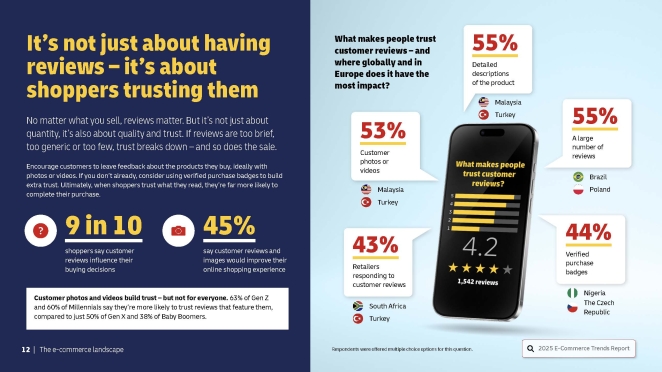 DHL eCommerce had commissioned two large-scale global research surveys to understand not only how people shop, but also how businesses are responding to changing customer needs.
Our role was to turn this complex data into two distinct but connected reports, the Shopper Edit and the Business Edit, designed to help small and medium-sized e-commerce businesses understand what is changing and what they should do about it.
The ambition was not simply to publish findings, but to position DHL as a trusted voice in the industry, provide genuinely useful insight for businesses and create a tool that could support commercial conversations and lead generation across global markets.
How did the initial pitch/brainstorming phase go?
This grew out of an existing relationship with DHL eCommerce, following our work on the previous year’s E-Commerce Trends report. That gave us a strong starting point but also set a clear expectation to take our thinking further.
Instead of a traditional pitch process, both reports began with collaborative working sessions with the client. These sessions focused on setting the narrative early, agreeing what the data needed to say and exploring how the reports could become more than information pieces and become genuinely useful commercial tools.
From the start, the focus was on moving beyond simply presenting data and towards insight that could support better decision-making.
What was the process behind ideating the concept?
There was a huge volume of valuable data, but the intended audience did not have the time or capacity to interpret it.
Our approach was to treat the data as the foundation of a narrative, not the output. That meant identifying what really matters within the dataset and translating it into clear, insight-led stories that could be understood at a glance.
We built the concept around three principles:
- Lead with insight, not information
- Connect insight to action
- Position DHL within the solution
This created a report that sits between thought leadership and practical guidance, helping businesses understand not just what is happening, but what it means and what to do next.
What was the production process like?
 The production process began with two large, segmented datasets covering thousands of shoppers and e-commerce businesses across multiple markets. From there, our role was to filter, structure and translate that data into a clear report.
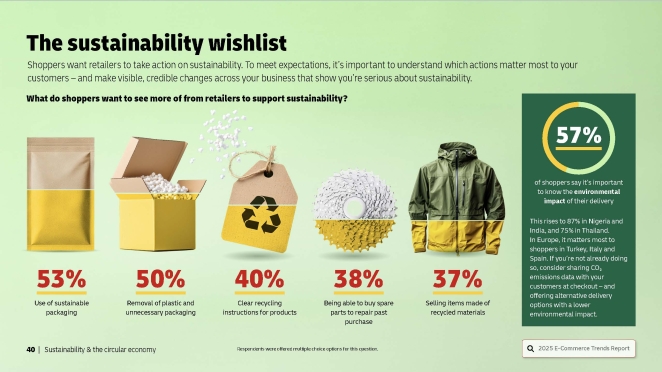
We grouped insights into key themes such as social commerce, delivery, returns and sustainability, then built each page around a single, clear takeaway. Headlines were designed to communicate the insight immediately, supported by concise context explaining why it matters.
Design played a central role. Data was visualised in ways that felt familiar and intuitive, using recognisable objects, interfaces and scenarios from the world of e-commerce. Layout, hierarchy and colour were used to guide readers through complex content quickly.
The two reports were developed with distinct audiences in mind. The Shopper Edit focused on accessibility and engagement, while the Business Edit introduced a more refined, commercially focused tone to reflect senior decision-makers.
Beyond the reports themselves, the insight was extended into web content, mini country reports and sales materials to ensure it could be used in real conversations.
What was the biggest challenge during production? How did you overcome it?
The biggest challenge was the scale and complexity of the data. With extensive segmentation across markets, demographics and behaviours, there was a risk of overwhelming the audience.
We addressed this by being selective about the findings we would include. Not everything made it into the report, and we focused on identifying the most meaningful insights, the non-negotiables for customers and the patterns businesses needed to act on.
By structuring the content so that every page delivered a clear takeaway, we reduced the need for readers to interpret the data themselves. This ensured the reports remained practical, relevant and easy to use.
What kit/tools/software were used to create the project?
The reports were developed using a combination of:
- Adobe InDesign, Illustrator and Photoshop for layout, visualisation and imagery
- PowerPoint for supporting sales and presentation materials
- Excel and data sheets for analysing and structuring the datasets
- AI-assisted tools for data analysis and the creation of bespoke imagery to help visualise insights
What is one funny or notable thing that happened during production?
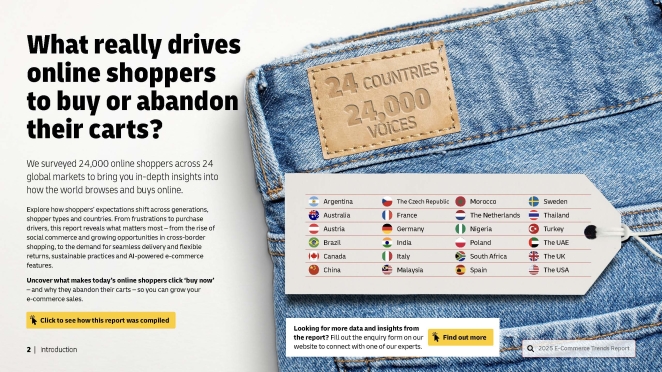 One notable part of production was the amount of “data slicing” that happened behind the scenes. The research gave us a rich picture of e-commerce businesses, but the real craft was deciding which cuts of the data created the strongest story.
We looked at the findings through multiple lenses including business size, market behaviour, sales channels, delivery expectations, cross-border activity and alignment with shopper trends. Not every stat made the final report, and that was an important part of the process. The team had to be disciplined about what deserved space, what worked better as supporting detail and what could distract from the main narrative.
That process helped turn a complex research dataset into a report that felt clear, readable and insight-led, rather than a document trying to show every number simply because it was there.
What’s the main message of this project and why does it matter?
The main message is that insight only has value if it can be understood and used.
In the e-commerce industry, businesses are dealing with changing customer expectations and increasing operational pressure. They do not need more data, they need a clear understanding of what matters and what to do next.
This project bridges that gap. It turns complex global research into something practical, helping businesses make more informed decisions while reinforcing DHL’s role as a trusted partner.
How long did it take from inception to delivery?
Shopper Edit: We started initial planning and strategy based on 2024 report findings in December 2024. The project officially kicked off mid-March 2025 and was delivered for the beginning of June.
Business Edit: Briefed mid-June 2025 and delivered early October 2025
Can you describe the creative spark or inspiration behind the initial concept? Was there a specific moment or insight that ignited the idea?
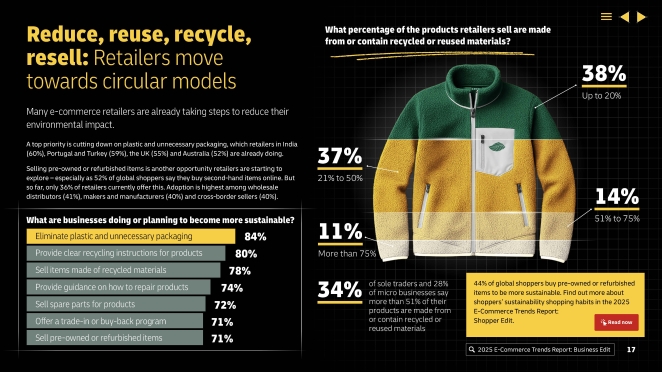 The creative spark came from recognising that the challenge wasn’t the data itself, it was how people experience it.
We were working with rich, complex datasets, but most readers don’t have the time to interpret charts or connect multiple data points together. The idea was to remove that effort entirely by using design to do the thinking for them.
That led to a visual approach where data wasn’t just displayed, it was turned into something instinctive and recognisable. We used familiar objects and formats from everyday e-commerce and retail such as product labels, packaging, mobile interfaces and delivery journeys to anchor the insight in real-world context.
Statistics became part of those environments, helping readers immediately understand what they were looking at and why it matters.
We also used strong visual hierarchy and bold, insight-led headlines so readers could grasp the key message instantly, even when skim-reading. Each page combines headline, visual and data point to deliver a single, clear takeaway.
The result is that readers don’t need to interpret the data themselves. They can see it, understand it and apply it immediately. That shift from presenting data to making it intuitive became the defining creative idea behind the reports.
How did you ensure that the concept aligned with the brand's values, goals, and target audience?
The concept was closely aligned to DHL eCommerce’s ambition to be seen as a trusted, expert voice in the industry.
By focusing on practical, actionable insight, the reports delivered real value to SMEs while reinforcing DHL’s expertise in areas such as delivery, returns and cross-border logistics.
We also integrated DHL’s services naturally into the narrative, positioning them as relevant solutions to the challenges highlighted in the data. This ensured the content remained commercially useful without becoming overly promotional.
Were there any alternative concepts or ideas considered during the ideation phase? If so, what led to the selection of the final concept?
A more traditional route would have been to present the data in full and allow the audience to interpret it themselves. However, this would have reduced the usability of the content, particularly for time-poor SMEs.
The final concept was selected because it prioritised clarity, relevance and action, ensuring the insight could be used in real business decisions and conversations.
Can you discuss any collaborative or interdisciplinary aspects of the ideation process, such as working with other departments or external partners?
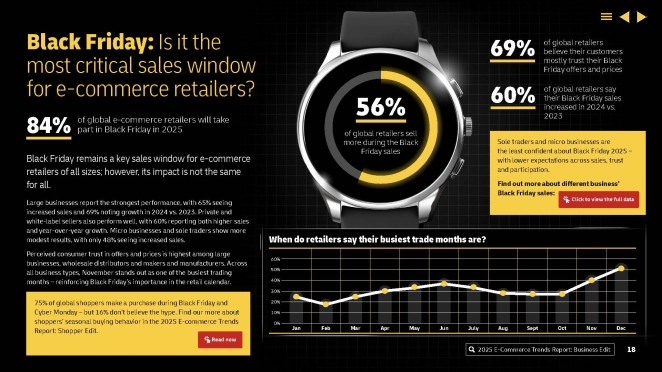 The project was highly collaborative with DHL eCommerce teams, particularly in shaping the narrative and ensuring the insights aligned with business priorities and commercial goals.
Working closely with the client allowed us to sense-check which insights would be most valuable in real customer conversations, ensuring the final output was both credible and genuinely useful in practice.
What role did consumer research or market analysis play in shaping the concept and its execution?
Consumer and business research was the foundation of the entire project.
The datasets provided real perspectives from thousands of shoppers and businesses across multiple markets, giving the reports credibility and relevance.
Our role was to translate that research into insight, identifying patterns, priorities and shifts in behaviour that businesses could act on. The concept and execution were built around making that research accessible and meaningful.
Can you discuss any unique or unconventional production techniques or approaches used to bring the idea to life?
A key approach was using design as a tool for interpretation, not just presentation.
By embedding data within familiar objects, interfaces and real-world scenarios, we made complex insights feel intuitive and immediately relevant.
We also designed each page to function independently, allowing the reports to be used flexibly in presentations, conversations and different markets without losing their meaning.
How did you ensure that the concept remained innovative and stood out in a crowded marketplace?
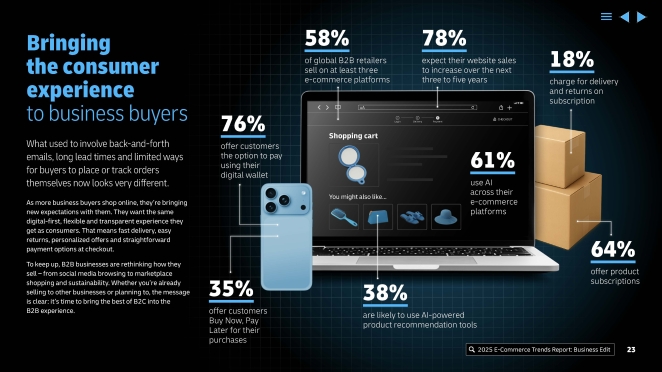 We focused on usefulness as the differentiator.
Many reports compete on volume of data or visual style. We focused on making the insight genuinely usable, ensuring every page delivered a clear, confident takeaway.
This balance of strong data, clear storytelling and practical application helped the reports stand out as both credible and actionable.
What do you hope it achieves for the brand?
We hope it continues to strengthen DHL eCommerce’s position as a trusted voice in the industry, not just through visibility, but through genuine usefulness.
The ambition is for the reports to be actively used, supporting more informed customer conversations, helping businesses make better decisions and enabling DHL teams to engage in more consultative, insight-led discussions.
That impact is already being recognised internally, with the report described by the client as the strongest report produced for DHL eCommerce to date.
Credit list for the work?
Client: DHL eCommerce
Something Big: Strategy, insight development, copywriting, design and data storytelling
(r)evolution: Research and data collection
eight&four: Social media agency