
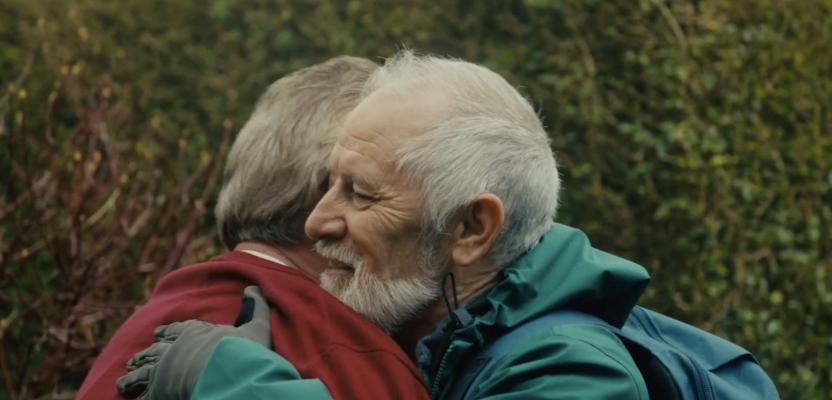

When a dementia diagnosis enters someone’s life, friends and family often withdraw, not out of neglect, but from a fear of causing unintentional harm or distress. Richard Thomson, Deputy Client Services Director at Leith, shares how their latest campaign with the Scottish Government tackles this very misconception.
With a focus on the person rather than the diagnosis, Thomson and his team created a campaign that dismantles stigma and encourages continued connection. Through rich storytelling and powerful visuals, they remind us of the transformative impact of presence and understanding, showing how even small acts of support can uplift those living with dementia.
What was the brief?
To address the problem that when someone is diagnosed with dementia, their friends and social life can evaporate overnight, leaving them lonely and isolated.
How did the initial pitch/brainstorming phase go?
At the start of the project, we discovered that many people on the client and agency team had experience of dementia within their families. This created a strong personal as well as professional desire to help make a positive difference.
What was the process behind ideating the concept?
Leith’s planners started by running focus groups with people across Scotland to understand what thoughts and feelings were influencing the way people might respond if someone close to them was diagnosed, and identify where a Scottish Government marketing campaign could make the biggest difference.
This revealed deep, multi-faceted fears about interacting with people with dementia, and showed people can rationalise reduced contact as a form of kindness, protecting the person from possible harm or distress. We needed to show the opposite is true, that the kindest thing you can do is help people stay connected and keep enjoying life.
We also worked closely with the Scottish Government’s lived experience panel - a group of people living with dementia who advise on the Scottish Government’s Dementia Strategy. This was an invaluable part of our process.
It forced us to confront some of our own fears and assumptions about collaborating with people who have dementia; and hearing the panel members describe how people responded when they were first diagnosed, and how they did and didn’t want to campaign to portray people with dementia, had a direct impact on our creative ideas.
What was the production process like?
Ewan Fletcher was a stand-out choice of director for the film as he instantly connected with the script, the creative team and the client. With the casting, we had to be very careful not to stray into cliched territory around who you might expect to have been recently diagnosed.
The ad was shot over two days - but once the cast and locations were set there were no big logistical challenges and the Scottish weather played its part in the closing scenes
What was the biggest challenge during production? How did you overcome it?
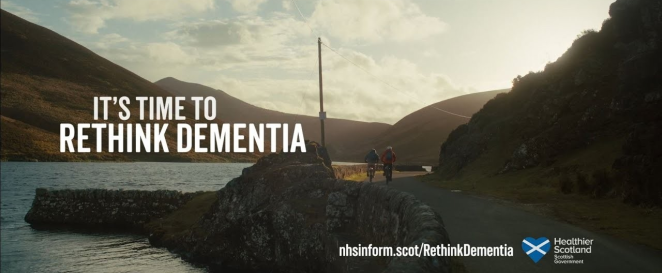
The biggest challenge was really around making sure we represented those who have been recently diagnosed correctly in the film. For example, how we treated the scene where the two friends go for a cycle together, was incredibly important to get right.
We could have implied things that were not safe or encouraged behaviours we did not mean to by making the wrong assumptions or showing the wrong things. The whole process of creating this campaign was so carefully managed from that perspective that one small error would have been picked up straight away.
What is one funny or notable thing that happened during production?
I suppose the abiding memory of this whole process was the number of people you talked to throughout the development - whether in the agency, with the client, the cast or crew of the production - that have had personal experience of the disease. The impact of this is that everyone really pulls together and wants to do the best possible job.
What’s the main message of this project and why does it matter?
Main message: People with earlier-stage dementia can do more than you probably think.
They just need our support and understanding.
Why it matters: Those recently diagnosed can see their friends and social life evaporate overnight, leaving them lonely and isolated, which can contribute to depression, which exacerbates problems with memory, thinking, mood, sleep and appetite.
How long did it take from inception to delivery?
Approximately 12 months.
Can you describe the creative spark or inspiration behind the initial concept? Was there a specific moment or insight that ignited the idea?
Listening to the experiences of people with dementia, we were struck by the way friends and family struggled to see the person behind the label of ‘dementia’. How friends would phone the person’s partner to see how they were, but stopped phoning them directly.
Or how family would make plans on their behalf, but not involve them in the plans. These experiences sowed the seed of highlighting the word ‘me’ within the word ‘dementia’.
How did you ensure that the concept aligned with the brand's values, goals, and target audience?
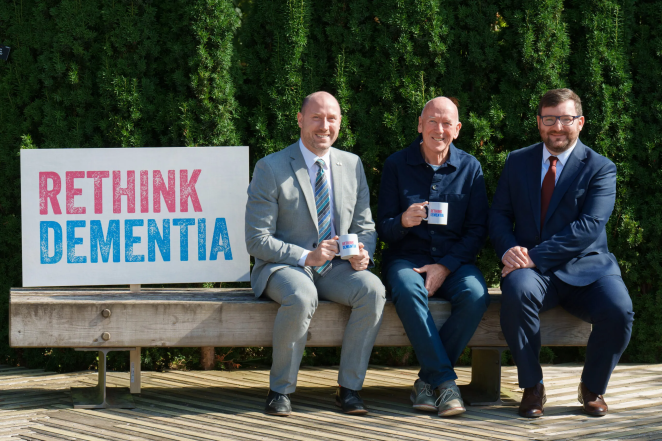
We worked closely with the lived experience panel, to make sure the campaign reflected their diverse experiences of living with dementia, and what they wanted people to think and do differently as a result of the campaign.
Were there any alternative concepts or ideas considered during the ideation phase? If so, what led to the selection of the final concept?
We used creative testing research with the campaign’s target audience, to explore which of the early creative ideas we developed had the most potential to achieve the Scottish Government’s campaign objectives.
The idea we developed challenged misconceptions about what people with a recent diagnosis of dementia are able to do and enjoy, while making it clear that friends and family have an active role to play in supporting this.
Can you discuss any collaborative or interdisciplinary aspects of the ideation process, such as working with other departments or external partners?
Leith worked closely with Republic of Media to make sure the core thought played to the strengths of different channels, and with Stripe PR to underpin the paid media with real-life stories and amplify reach through partner support.
What role did consumer research or market analysis play in shaping the concept and its execution?
The Scottish Government’s Strategy and Insight team did some brilliant desk research at the start of the project, which helped get everyone off the starting blocks fast. Leith’s qualitative research provided actionable insight around the underlying fears and misperceptions that can cause friends and family to reduce contact when someone they know is diagnosed.
Collaborating with the lived experience panel meant the experiences and opinions of people with dementia were incorporated at every stage of campaign development. Creative testing research helped us fine-tune some of the visual and verbal nuances. The campaign is being evaluated against its SMART objectives using ‘pre and post’ quantitative research with the target audience and through channel-specific metrics.
How did you ensure that the concept remained innovative and stood out in a crowded marketplace?
Most of the marketing campaigns people see on the topic of dementia are designed to raise funds for charities. As a result, they tend to emphasise the ‘tragedy’ of dementia, for the person affected, and the toll on their loved ones.
While this approach may be effective for fundraising, it can have the unintended consequence of fuelling fear and stigma around dementia. We saw an opportunity (endorsed by members of the lived experience panel), to focus on what people with dementia can do, not what they can’t. This was a side of dementia that hadn’t been represented in marketing until now.
What do you hope it achieves for the brand?
When someone is diagnosed with dementia, we want friends and family to help them stay connected and live life to the full - not to allow fear or misconceptions to get in the way of this.
Credit list for the work?
Becky Inglis, Natalie Neilsen, Claire Daverin - Client
Thea McGovern - Agency Strategic Director
Jim Swan and Neil MacKinnon - Agency Creatives - Film
Chris Watson and Rufus Wedderburn - Agency Creatives - Print
Steve Milne, Claire Lovie - Artwork
Sarah Kenny, Amber Hooker and Jill Mitchell - Agency Producers
Aimee Wood, Richard Thomson - Client Services
Ewan Fletcher - Film Director
Laurence Winram - Photographer