

George Katralis has always believed that creativity is less about following rules and more about embracing curiosity. From sketching as a kid in Sydney to shaping the identity of some of London’s most iconic pubs, his career journey reflects both passion and persistence. Today, as Head of Creative at Urban Pubs & Bars, George brings a timeless approach to design, one that values craft, heritage, and storytelling over fleeting trends.
What makes George stand out is not just his design expertise but his openness to the unexpected turns of the creative process. Whether it’s finding inspiration in classic cartoons, rethinking what it means to have a “style,” or navigating the evolving role of technology, he continues to show that great design is as much about problem-solving as it is about aesthetics. His story is a reminder that creativity thrives when curiosity leads the way.
How did you first get into the industry?
I was always an artistic kid, but had no idea that you could do it for a living.
After a chance encounter at a school careers evening, my Mum got talking to a design university who encouraged me to put my name down for an entrance exam, and before I knew it I was awarded a scholarship to study Graphic Design.
I learned a lot about the history of design and how to apply it to my work, and from there I applied my trade at whatever agency, newspaper, TV station, or backdoor shack would have me so I could build up my experience and portfolio.
I soon got offered a job at a music street press magazine and that’s where it all began.
Where are you based now and who do you work for?
I’m based in London and am Head of Creative for Urban Pubs & Bars.
What is your personal background and what role did it play in your career?
I’m from Sydney, Australia and moved to London in 2011.
Although a born and raised Aussie, my family are all Greek immigrants, so I very much grew up with my heritage being a prominent and proud aspect of my life.
My parents saw early on that I had creativity on my side and enrolled me on after school art classes, bought me more art sets than a kid could ever need and did anything they could to encourage that side of me. It came as no surprise that it was my Mum who found my future Design University while I was off getting pamphlets to pursue a ‘real career’.

If you weren’t in your current industry, what would you be doing?
Depending on when you’d ask me. 12 year old me was the next Walt Disney, 17 year old me was the next John Lennon while 42 year old me wants to own how own restaurant after binging ‘The Bear’.
Thankfully I’ve not really had to think too much about it, but ask me again next week.
Can you explain your creative process? What makes it unique?
I wish I had some inspiring process to share, but I really don’t. I see a lot of creatives with books and books of stetches that lead to amazing things, but for me, in truth, my process is as simple as just start and see where it takes you.
When I start a project, I can usually see it all in my head. The idea, the execution, the finished product, but like most things in life, rarely does it go to plan and you’ve got to follow where the journey takes you.
My process is like that, I’ll start following the map, but the detours it takes me down, more times than not, lead to a better end result.
How would you describe your style?
My illustration style is certainly cartoon, comic/graphic novel-inspired.
I grew up really inspired by Disney, The Simpsons & classic Saturday morning cartoons and wanted to be a cartoonist. That has stayed with me and helped shape my style.
My design style I like to think of as classic & timeless. I avidly like to avoid trends.
I know this is a strange statement to make, but I find trends age a design very quickly and root them firmly in a time or place and in my field of work, the brands and designs I’m creating now may well be up for 10 to 40 years, so I’m conscious of them looking as good in the years to come as they do today.
Which individuals do you gain inspiration from? Do you have any heroes in the industry?
I’m constantly in awe of the illustrators of today. Not just the creativity but also the innovation.
Guys like Andrew Fairclough have single handedly brought mid-century principals to and retro textures into the modern, digital art world. Guys like Brett Parson and Chris Wahl are styles I really love and then there’s guys like Jamie Hewlett and what he created with Gorillaz.
What tips would you give to aspiring creatives looking for work?
It’s easy to get swept up in comparison or feeling like an imposter, but don’t.
If one thing is true and to remember, on this planet of billions, there’s only one of you and no one can design your work as good as you. If someone has chosen you, they want you.
Your moment will come. Just be patient, be persistent, learn your craft and its history and when your moment comes, you’ll be ready for it.
What tips would you give to other professionals to get more clients?
Use the power of social media.
Growing up a kid of the 80’s/90’s, if I did an artwork, the best that would happen is it’d go on the fridge. In this day and age, it’s incredible that you can create something and within seconds, it’s the property of the world and can be seen by anyone and everyone.
Use it to your advantage. Reach out to that designer you admire, that agency you want to work for, tag those people, show off your brand.
But most of all, be nice. It goes a long way.
Can you share a memorable experience from your career journey that shaped your approach to creativity?
I have two.
My first job was at a street press. We were on a deadline and had to 4 pages of content into two. My boss told me, Graphic Designers are problem solvers, and she was so right. It’s stayed with me for over 20 years.
The second one came from a conversation about illustration.
A fellow illustrator saw my drawings and complimented me on ‘my style’.
At the time, I viewed the idea of ‘my style’ as a negative thing; the very idea of having a ‘style’ made me shudder, because no matter what I did or tried, everything I did had this ‘style’, and I thought it was limiting.
Maybe sensing my frustration, he explained that having a style made me unique and sparked what I said above. If I have something special, if someone wants me its because I can offer something that no one else can.
It really changed my mind set on how I viewed my own work and own contribution.
What kind of tools/kit/software could you not do without?
The holy trinity of photshop, indesign and illustrator and my trusty Wacon Cintiq.
What’s your secret to staying inspired and motivated?
I think any creative feels the presence of inspiration, it’s just the way we’re wired.
For me, I’ve really loved emergence of social media as a creative tool. It’s great to see other creatives sharing their work, their process, the work spaces and getting a peak behind the curtain of their lives.
I’ve often messaged artists or designers I admire and start a chat and have found that online community a really undervalued way to stay inspired and connect with your peers.
What’s the work achievement you’re most proud of?
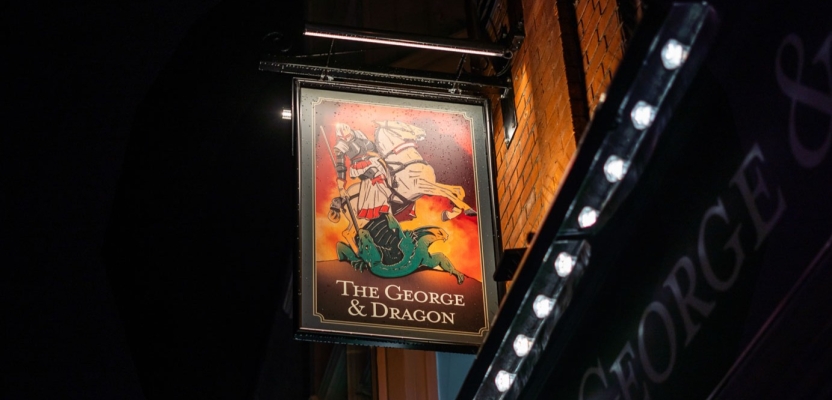
I’ve had a few I’m proud of, especially over the last 4 years, but I can’t go past The Black Horse in Fitzrovia.
The Black Horse was the first pub branding I ever did, so it will forever hold a special place in my heart.
The pub was a shell when we found it, but the vision was clear: we were to have a traditional pub on the ground floor and a hidden speakeasy-style cocktail bar upstairs. It was in this duality that I found the inspiration for the branding.
I got given the dream brief of complete creative freedom and just went for it. I was still fairly new to Urban Pubs & Bars, so I was flattered that I was tasked to do this. I figured the company (now 6 years old) could have relied on trusted contacts to bring the vision to life, but they trusted me to do it and I took the opportunity very seriously.
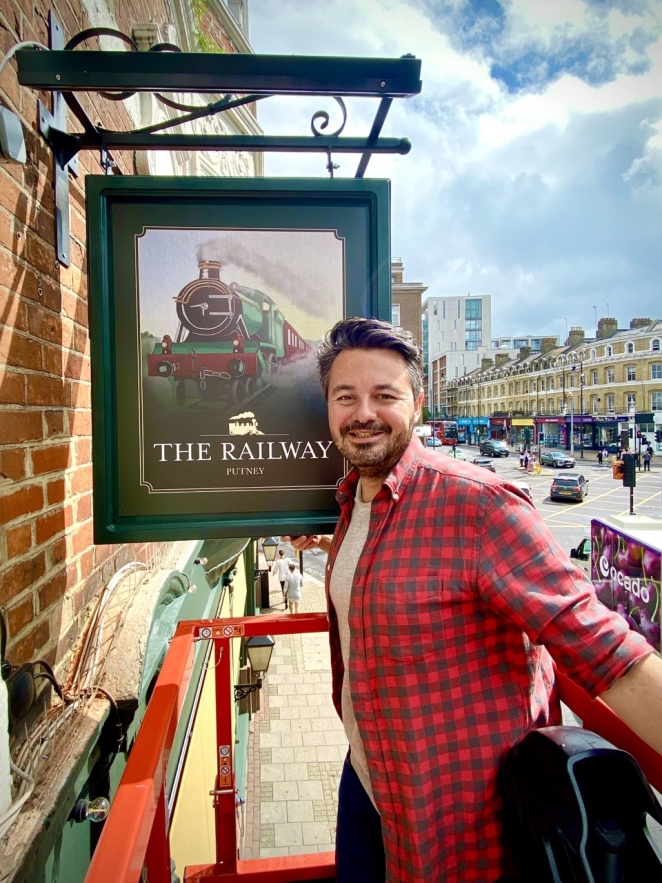
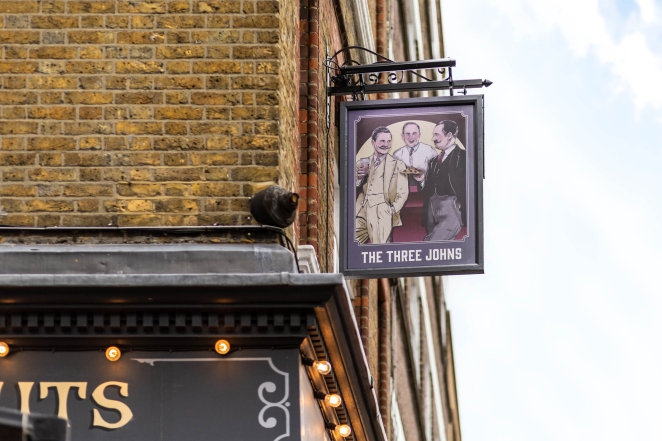
London pubs are so worldwide iconic. To see my branding hanging outside one (let alone now 40 and counting) was a real thrill and an honour.
What do you think sets apart truly exceptional creatives from the rest of the pack?
I think holding on to that childlike curiosity is the difference between the creatives that stand above the pack. If you look at all the great innovators from all walks of life, most of their success is sparked by curiosity and asking ‘why not’ and finding a solution.
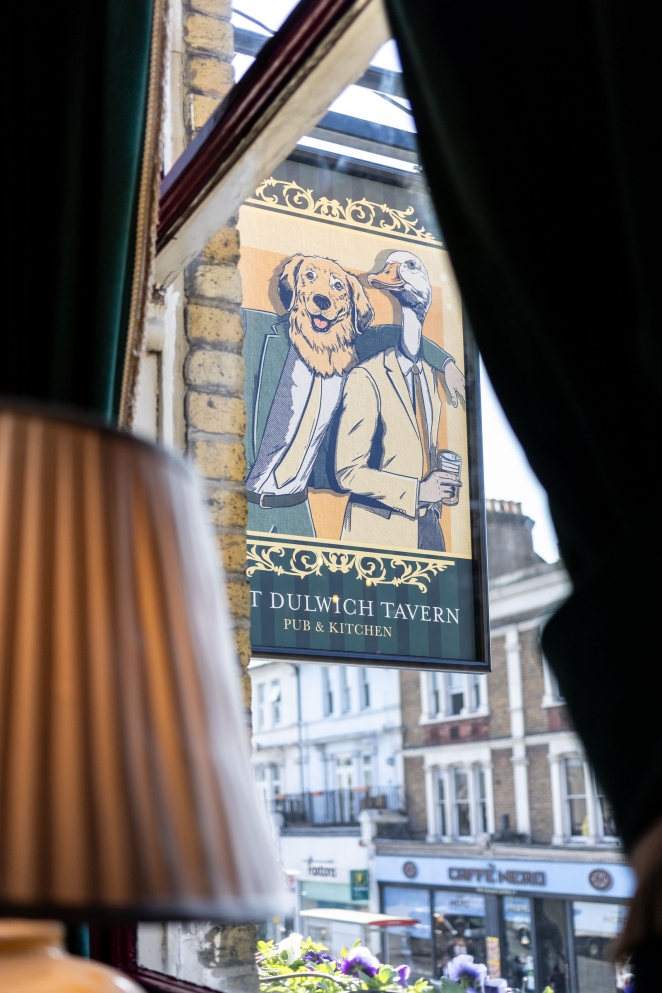
How do you think technology has influenced the creative industries and how have you adapted to these changes?
I grew up in the era that sat between analogue and digital, so I think it’s fair to say I’ve grown up alongside technology. I was very much taught that the computer was to be used as a tool and not a starting point.
At Uni I learned how to illustrate, use gouache paint, Pantone pens, how to print and the history and fundamentals of design. And this was long before we even turned the computer on.
I think like most things the rise of technology has both a positive and a negative effect, but it all comes down to your reliance on it.
For me I love the advancement of the Adobe suite and drawing tablets.
Being able to draw on a screen like it was a piece of paper and paint digitally is incredible.
Using brushes like Kyle’s Brushes that mimic water colours or halftone patterns is phenomenal, and then having access to things like Instagram means that you can show your work to the world within seconds of making it. It’s really an incredible time.
The flip side of that coin is people not taking the time to learn their craft, what a halftone is or how to use a watercolour and just going for a digital version without that curiosity I spoke of above which sets the great creatives aside.
What is the one thing that you would change about the industry?
In the UK, the segregation of talent is bizarre.
The idea that you have your role and that’s it is very foreign to me. A ‘creative artworker’ can’t design or a ‘designer’ can’t art direct is crazy to me. I’ve found in the UK, you get pigeonholed into roles, and it’s hard to break out.
This is a big flaw I’d change.
Any websites, books or resources you would recommend?
Instagram. Every day of the week.
It’s all there.