



When Bicester Motion set out to become the world’s leading mobility technology community, it needed more than a new look—it needed a brand that could span past, present, and future. Enter Lee Hoddy, Executive Creative Director at Conran Design Group, who led the charge on rebranding this ambitious 444-acre site.
Tasked with reflecting Bicester’s heritage as a former RAF base while projecting its future as a hub for cutting-edge innovation, the result is a striking identity that fuses history with forward momentum. In this interview, Hoddy shares the creative thinking, challenges, and inspirations behind a brand built to move.
What was the brief for the rebrand?
For those who don’t know, Bicester Motion is a rapidly growing mobility community with ambitions to become the world’s leading mobility technology community by 2035. It’s a pretty unique place: a sprawling 444-acre estate in the heart of the UK’s Motorsport Valley, somewhere you visit and don’t forget in a hurry.
Bicester Motion needed a brand that reflected its expanded operating scale and the impressive calibre of brands in its tenant portfolio – the likes of Polestar and Neom McLaren Formula E.
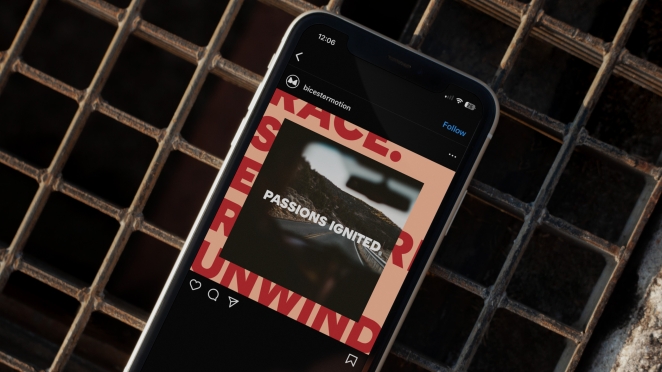
The brief was to create a brand that set the tone for the incredible experiences that businesses and visitors can expect at Bicester Motion. It needed to convey the site’s rich history as a former RAF base, as well as its future as a global centre of excellence for mobility innovation. There was a delicate balance to strike: between paying homage to the heritage and provenance of the site while also leaning into and dialling up its dynamic and future-facing ambitions.
It’s also an organisation with lots of subsidiaries – including Bicester Heritage, host of events like the Flywheel and Scramble – and is going to be opening an on-site luxury hotel, so it also needed an easy-to-navigate architecture.
How did the initial pitch/brainstorming phase go?
Understanding the site's broader landscape – its physical presence, its past and its potential – was essential. Our process began with site visits and a deep exploration into the theme of motion in all its forms.
We were really inspired by the vast Bicester Motion landscape and how the land and sky converge to honour the RAF’s legacy while opening up new possibilities for mobility. The tension between heritage and aspiration created a uniquely rich and inspiring design space.
Describe the purpose of the brand and its target audience
Bicester Motion’s audience is as vast as you might expect, from mobility innovators and automotive and aviation leaders to car fanatics and classic car enthusiasts. The brand needed to resonate with them all – and sit confidently alongside the logos of some of its more famous tenant businesses.
What was your thinking behind the rebranding solution?
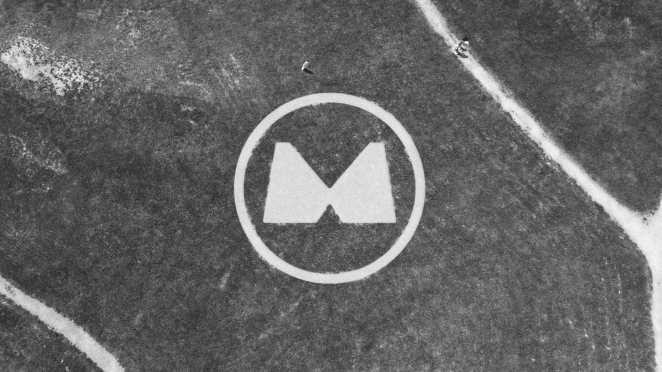
We wanted the visual identity to feel world class and timeless, and capture Bicester Motion’s ambition to redefine the future of mobility. Motion was also going to be a big part of the brand, so we considered motion behaviours from the outset, creating a symbol that iconically represents the convergence of horizons – a meeting point of mobility pioneers from past, present and future.
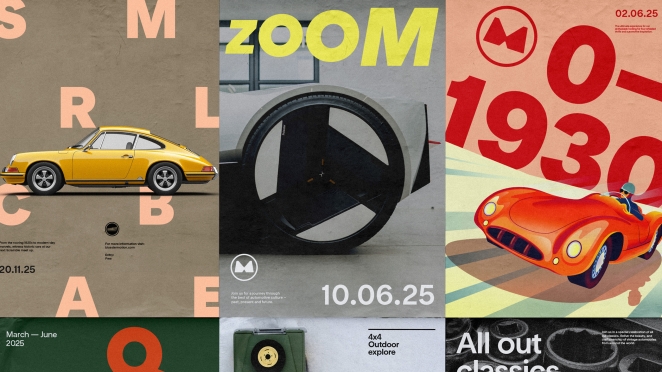
Using the horizon angles from the marque, we designed visual triptychs that act as storytelling devices. The design system demonstrates an understanding of who Bicester Motion is by capturing its physical environment and the innovative mobility futures it continues to shape. To support the business’ brand architecture and bring consistency to its growing portfolio, we then designed a roundel holding device for sub-brand use.
Did you learn anything new during the project?
That the world needs catalytic brands like Bicester Motion – a ‘facilitator’ to inspire innovation and bring ambitious disruptors together, but with an openness and democracy that invites the world in.
What was the biggest challenge? How did you overcome it?
When you’re working with such rich source material, it’s easy to fall into RAF or motorsport tropes. We didn’t want to make that mistake, so looked at the story first – it was all about embracing the spirit of excellence and innovation, so we created a brand that represented that journey and potential of the future. It was about respecting the past but creating space for an innovative future.
What details are you most proud of and why?
Probably linked to visual tonality: creating a visual language that evoked a sense of heritage and history, while simultaneously being relevant to Bicester’s future mobility ambitions. Seeing the brand emerge on-site, the new symbol has a timeless presence, binding together many varied brands and experiences.
What visual influences fuelled your solution?
We were definitely inspired by the source material for the broader kit of parts. RT Rondelle’s a beautiful typeface to work with – inspired by the best of public transport signage with a stoicism that felt particularly iconic. We also introduced a colour palette that originated in the classic Royal Air Force colours.
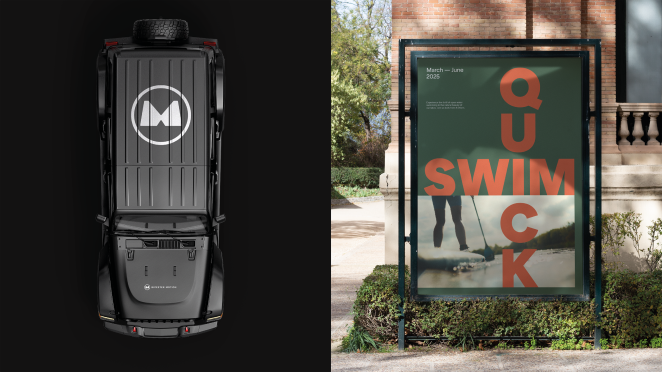
The vision for the site was also a major inspiration, greatly influencing the broader design system and the visual and verbal language to engage new audiences.
What do you hope it achieves for the brand?
We think the brand feels iconic and timeless – that was our aim, and we hope we’ve achieved it with the new identity. And we’re looking forward to seeing it coming to life across the site – from signage to helipad landing areas – in the months to come.
How did you ensure that the new brand identity resonated with the brand's existing audience while also attracting new ones?
It was a balancing act: we knew we couldn’t throw away any cues to the past that would resonate with classic car enthusiasts and the people who regularly visit Bicester Motion. At the same time, we needed to engage the mobility pioneers and innovators. It was about embracing RAF-isms where we could but dialling up brand elements that convey Bicester Motion’s future-focused mission and ethos too.
Can you share any behind-the-scenes anecdotes or memorable moments from the rebranding project?
It’s always good to walk around a place to get a sense of how the brand will come to life. We were doing a site walkaround last summer when we spotted ghost signage for an RAF helipad on the ground.
This trace of the past captured our imaginations in terms of what it might mean for the future: we started thinking about how the helipad marking would be seen from the sky, and how the new brand could convey the spirit and motion of flight. That then played into how we designed the circular motif, which reflects the convergence of land and sky, and has since become a strong brand signature. After the new brand launched, it was fun to see it come to life at the first Scramble event of 2025 in January!
How do you ensure consistency in brand messaging and visual identity across various channels and touchpoints?
The new brand guidelines, which will act as a blueprint for everyone using the Bicester Motion brand, were designed to feel accessible and empowering. We wanted the team to feel like the brand has flex, but that its iconicity lies in its simplicity – so staying true to this with brand applications is key.
Credit list for the work
Core team
Lee Hoddy, Executive Creative Director, Conran Design Group
Curtis Free, Design Director, Conran Design Group
Matt Hodges, Senior Designer, Conran Design Group
Emily Palmer, Account Director, Conran Design Group
Supported by
Millie Middlebrook, Designer, Conran Design Group
Amy Salter, Designer, Conran Design Group
Gary Chambers, Design Director, Conran Design Group
Ralph Ardill, Strategic Brand Consultant