


Every creative career begins with a spark, and for motion designer Annie Duarte, it started with a handmade stop-motion film created during her A-levels. From sewing puppets and building sets from everyday materials to developing animations for agencies, studios and global brands, Annie's journey reflects how curiosity, experimentation and persistence can shape a successful creative career. Now freelancing from Brighton, she specialises in creating engaging motion graphics, social content, digital advertising and explainer videos that combine clean design with playful storytelling.
In this interview, Annie discusses how she developed her creative process, why feedback is an essential part of great animation, and the importance of embracing failure as a way to grow. She also shares the tools she relies on, the creatives who inspire her, practical advice for aspiring motion designers, and her perspective on how technology continues to reshape the creative industries without replacing the importance of strong ideas.
How did you first get into the industry?
 My first animation was a stop motion short I made during my A-levels. I learned how to sew, bent some wire into a makeshift armature, and built two (pretty scruffy) stop motion puppets. The set was thrown together using whatever I could find at home or in the classroom. That project really pushed me to keep exploring animation, which led me on to studying a degree.
I graduated from the University of Portsmouth in 2019 and was lucky enough to land an agency job pretty soon after. Working with a wide mix of clients meant I got exposed to loads of different animation styles and techniques, and it also opened me up to other areas like graphic design and UI design.
Where are you based now and who do you work for?
I’m currently based in Brighton and new to freelancing, but I have previous experience working in agency, studio, and in-house environments. Throughout my career, I have created content for a wide range of communication channels including: social media content, digital ads and explainer videos.
Can you explain your creative process? What makes it unique?
 I’m not sure if it’s unique, and it does tend to shift depending on the project. My process is quite iterative: I usually start with research, whether that’s looking at similar brands or animation techniques that feel relevant. I then sketch rough thumbnails in a sketchbook, before creating a blockout animatic (a rough animated draft of a video made by syncing storyboard images with temporary audio). From there, I build on the animatic to develop the final animation.
I believe feedback is extremely important, especially at the beginning of a project. Making sure everyone is on the same page from the start, along with regular check-ins, helps reduce the chance of miscommunication and avoids big changes creeping in as deadlines approach.
How would you describe your style?
I'd describe my style as simple and playful. I enjoy using clean shapes, limited colour palettes, and subtle animation to create scenes that feel warm, relatable, and full of personality. A lot of my work is inspired by everyday moments, and I like finding charm in small details. I aim for a balance between minimal design but also create animations that feel interesting and engaging.
Which individuals do you gain inspiration from? Do you have any heroes in the industry?
 An illustrator and motion designer I recently came across, Nuria Boj, has been a big inspiration to me. I really like how her work flows, and how she uses colour and lighting to frame a busy shot without it ever feeling crowded.
What tips would you give to aspiring creatives looking for work?
Creating a community of creatives around you is really important, not just for networking, but for staying motivated, getting feedback, finding new inspiration, or just sharing a space and chatting about your day.
If any creatives want to reach out please connect, I’d love to hear from you.
What kind of tools/kit/software could you not do without?
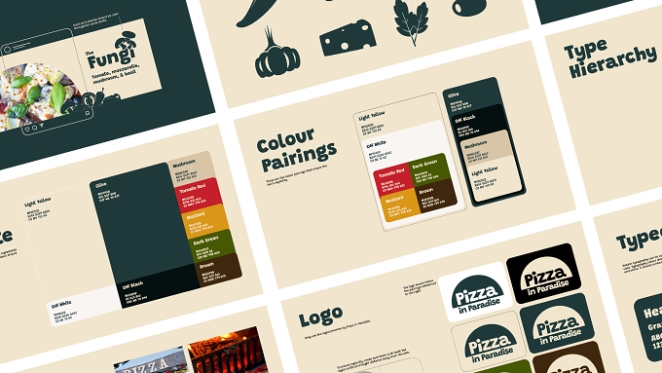 I rely heavily on the Adobe Suite: After Effects, Illustrator, Photoshop and InDesign, and that’s what I’ve used since the start of my career. I’ve also done a few projects in Procreate, which now has a really nice hand-drawn animation tool that’s fun to use.
There are also some newer tools out there like Cavalry and Affinity that look really exciting to explore. Any tips or tutorials anyone knows of would be really handy!
What’s your secret to staying inspired and motivated?
Most of my inspiration - especially from personal projects, has come from going on holiday or going to museums and aquariums. Like this animation was created after going on a trip to Rome.
What do you think sets apart truly exceptional creatives from the rest of the pack?
 Not being afraid to experiment with new styles and techniques - and fail at it! Just because something went wrong doesn’t mean it is a waste of time. Some aspects might have been a success, but if not, you know what not to do next time. Here is an example of a passion project I have worked on recently, creating 10 x 10 second videos in different styles called ten times ten (I know, imaginative!). Here is the showreel of the final project. Overall there were about 15 concepts... but some ended so poorly I had to hide them in the depths of my files!
How do you think technology has influenced the creative industries and how have you adapted to these changes?
I think it’s important to remember that software is just a tool. New programmes are always emerging, but the fundamentals of good creative work don’t really change. Creativity comes from your ideas, experience, and understanding of your design expertise. The tools you use might evolve, but it’s the thinking behind the work that makes the biggest difference.
Any websites, books or resources you would recommend?
For new motion designers, I would recommend “The Animator’s Survival Guide” by Richard Williams. It was one of the first books recommended during my degree and explains the fundamentals of animation in a lot of detail. It’s mainly focused on traditional animation, but the 12 principles covered in it translate really well into motion graphics.