
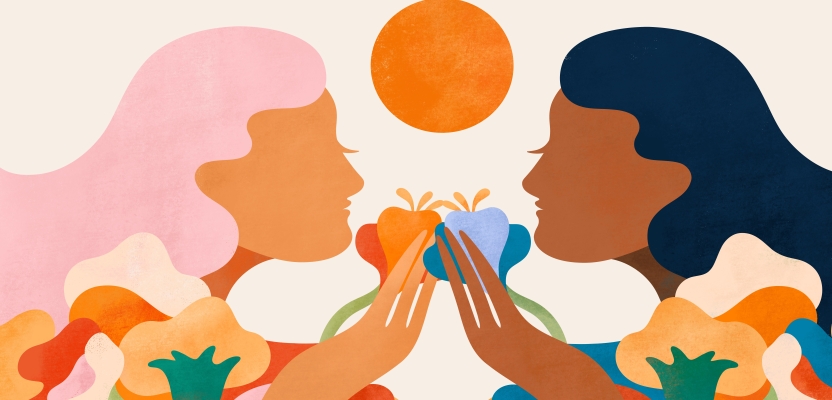

From sharing personal sketches on social media to collaborating with global brands like Puma, British Airways, and Sephora, illustrator Maggie Stephenson has crafted a career rooted in authenticity and emotional storytelling. Today, based in Jacksonville, Florida and represented by London agency Making Pictures, Maggie’s work spans editorial, advertising, and publishing. Her abstract, shape-driven style captures the beauty of human connection, simplicity, and emotion, bringing to life projects that resonate far beyond the page.
In this interview, Maggie opens up about her journey from freelance beginnings to becoming a sought-after illustrator, her unique creative process, and the role of emotion in shaping her art. She also shares valuable advice for aspiring creatives, thoughts on industry trends, and her perspective on how collaboration, resilience, and community are essential in the ever-changing creative landscape.
How did you first get into the industry?
I’ve always been into creative things, drawing, painting, illustrating... I just never imagined it could turn into an actual career, at least not until I realized that nothing brought me as much joy as creating. I began sharing my personal work on social media and over time, I started getting approached by clients who wanted to collaborate. Those early opportunities helped me realize that this path was not only possible but sustainable. What started as the occasional commission ended up growing into a full time freelance career.
Where are you based now and who do you work for?
I’m currently based in Jacksonville, Florida. I still take on freelance work with existing clients but I’m also represented by Making Pictures in London. My agents Tim, Grace and Anna have been absolutely fantastic and their support has really allowed me to focus more on the creative side of things. I work across editorial, advertising and publishing, mostly in the health and wellness industry. I’ve collaborated with clients like Puma, British Airways, The Royal Foundation Centre for Early Childhood, Women’s Health and Sephora.
What is your personal background and what role did it play in your career?
I was born in Poland and grew up in Germany. I later moved to the U.S. Living in so many different places and having family all over the world, taught me to value human connection. That shows up in my work, where I often focus on moments between people and how we connect with nature and our surroundings. Moving around and learning to be present have all shaped how I see the world and the way I create.
If you weren’t in your current industry, what would you be doing?
That’s a tough one because I feel like I’d still want to do something creative. Probably something in production, maybe video direction, design or some kind of creative project management. I really enjoy putting things together visually and giving creative feedback. Editing, shaping ideas, bringing a bigger vision to life… that kind of work has always felt natural to me.
Can you explain your creative process? What makes it unique?
My process is heavily rooted in emotion. I rarely jump right into sketching the moment a brief comes in. Instead I like to take a step back, even if it’s just a quick walk, to let the project settle emotionally. I think about what I want the work to feel like more than what I want it to look like. That initial headspace is really important to me and sets the tone for everything that follows.
Once I have a sense of emotional direction, I’ll begin with very rough sketches and refine gradually. I often go through multiple rounds, where I explore color variations and adjust shapes. Stepping away frequently is super important to return with a fresh perspective.
What makes my process unique is that I’m not just focused on the illustration itself. I’m always thinking about how the piece will live in context. Whether it’s packaging, editorial or advertising, I love to approach a project as part of a bigger story.
How would you describe your style?
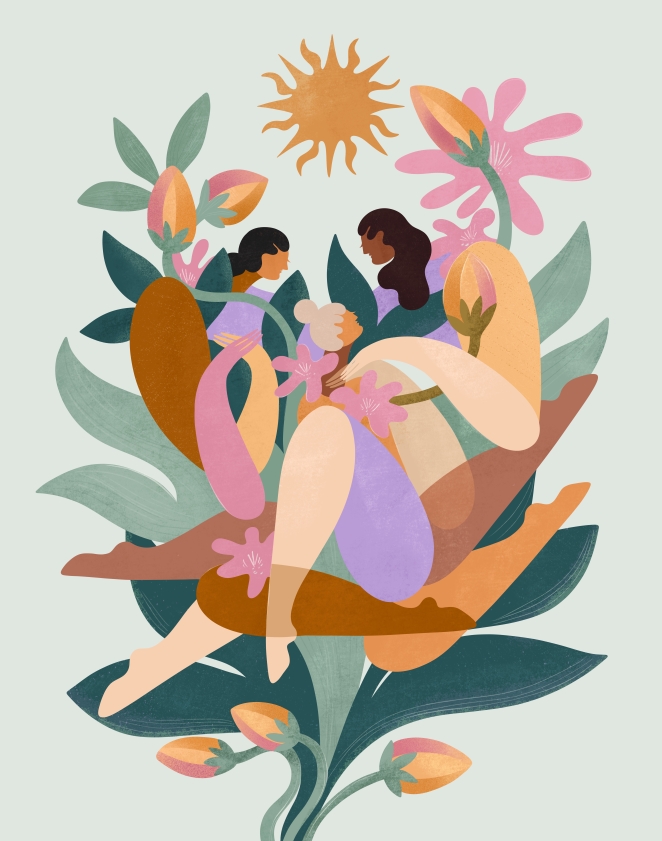
My style is abstract and shape driven, minimalist and expressive. I enjoy creating work that feels spacious and intentional. Emotion plays a big role in everything I create, it’s a huge part of the process itself. I’m especially drawn to understated moments and I use simplicity as a way to let those emotions come through.
Which individuals do you gain inspiration from? Do you have any heroes in the industry?
One person who really inspires me is Ollie Hirst. Beyond being an incredible conceptual illustrator with tremendous skill and knowledge, he’s very dedicated to the creative community. He mentors through the AOI and previously with the Arena, all while remaining so humble and approachable. He’s always willing to help others, share what he knows and find ways to bring people together. I really admire that. Seeing someone give so much back reminds me how important it is to support each other as creatives. It makes our job a little less lonely.
What tips would you give to aspiring creatives looking for work?
Self confidence, assurance, work ethic, punctuality, reliability, going above and beyond. There will always be someone out there who’s “better” or “more skilled” than you but that doesn’t matter. Instead of letting it discourage you, embrace it. Be happy for others, learn from what inspires you and focus on your own growth. Pride in your work and a strong work ethic will take you further than comparison ever will. Stay consistent, work extra hard, go the extra mile and the opportunities will come.
What tips would you give to other professionals to get more clients?
Networking and building connections are key. A lot of work comes from relationships, so reaching out, staying in touch and being personable really matters. Don’t be afraid to send outreach emails. Introduce yourself, share what you do, applaud other’s work, talk to one another. Let people know you’re available for work. There is absolutely nothing worse than sitting back, doing nothing and thinking people will come knocking on your door. Clients don’t have time for that. You need to get up, roll up your sleeves and go for it.
Can you share a memorable experience from your career journey that shaped your approach to creativity?
A big turning point for me was realizing that my life and my work aren’t separate. They’re connected. Whatever I’m going through personally can fuel my creative process and I can use that to my advantage and to the client’s advantage. It doesn’t mean I insert my own emotions into every project but I’ve learned how to channel whatever I’m feeling to amplify the emotion a brief calls for, whether it’s joyful or sorrowful. That awareness has made my work more intentional because at the end of the day, it’s about creating something that resonates and makes people feel something.
What kind of tools/kit/software could you not do without?
Procreate is my go to for almost everything. It’s my holy grail and the tool I use for just about any project. It feels organic and fits my style. I also use Adobe Fresco and Adobe Illustrator, especially when clients need vector illustrations. Each tool has its place but Procreate is definitely where I feel most at home creatively.
What’s your secret to staying inspired and motivated?
Unplugging and taking frequent breaks from screens and social media. Because so much of my work happens on a screen, it’s easy to fall into the habit of scrolling when I’m not working but I’ve learned how important it is to step away. Reconnecting with the world outside, whether that’s a walk or just some simple quiet time away from a screen. It keeps me grounded and helps me come back to my work with a clearer mind.
What’s the work achievement you’re most proud of?
I really can’t pick just one. I’m proud of every project I’ve worked on and grateful for every client I get to collaborate with. Each brief, whether it’s for editorial, advertising or publishing, feels awesome in its own way. Every time a new project comes in, I get that same renewed feeling of joy knowing I get to create something brand new.
As someone with experience in the industry, what trends do you foresee shaping the future of creativity?
As AI continues to grow, I think people will eventually feel oversaturated by it. There’s so much noise information out there already and I believe we’ll see a shift back toward simplicity. Minimalism and organic work that feels human. People no doubt will crave that ease and authenticity.
What do you think sets apart truly exceptional creatives from the rest of the pack?
Work ethic and genuine appreciation for the industry makes all the difference. I think there are many of us who truly believe in the process and in the work we do. Illustration isn’t just a job we do, a brief we complete or a paycheck we collect. It’s an opportunity to collaborate with clients, art directors and other creatives to bring something to life together. As a creative, there is nothing more rewarding than seeing a project come to life from thought, to brainstorming to final. That process, especially in a world where AI is becoming more prevalent is priceless and makes this job so powerful and irreplaceable.
How do you think technology has influenced the creative industries and how have you adapted to these changes?
Technology has changed the way we work in so many positive ways. Tools like Procreate and Illustrator have made the process more seamless and flexible, which I love. As for AI, I try not to dwell on it too much. It’s going to exist just like many other trends before it. Rather than letting it affect my outlook, I focus on continuing to create and nurturing the community I’m a part of. Trends will come and go but the value of human made, emotionally driven work isn’t going anywhere.
What is the one thing that you would change about the industry?
For emerging creatives, I wish it were easier to find their way into the community. I see so many talented people struggling and unaware that there’s a whole network of industry professionals who genuinely want to help. It’s easy to feel isolated when you’re starting out or to believe it’s all competition and being “better” than your peers. In reality this industry thrives on collaboration and support. I just wish that was more visible and accessible to those who are new, so they don’t feel so lost in the beginning.
Any websites, books or resources you would recommend?
The AOI (Association of Illustrators) and Arena are both fantastic resources. They offer so many tools and opportunities to connect, especially for emerging creatives. They also create space for mentorship, which I’ve been fortunate to be part of by mentoring other creatives. It’s a super valuable way for people to get plugged into the community and also build relationships with others. Finding that network early can make a huge difference in building a sustainable career in illustration.