


What began as a childhood dream to design the perfect car evolved into something far bigger: a drive to create without limits. Based in Abidjan and originally from Cameroon, 3D artist Ndongo Antoine Luther blends innovation, philosophy, and lived experience to build visual worlds that speak to both imagination and identity.
From agency work at Havas and Matanga to standout simulations using Houdini and Arnold, Luther’s path hasn’t been linear, but it’s been deeply intentional. In this exclusive spotlight, he opens up about the highs and setbacks that shaped him, why he resists shortcuts in favour of mastery, and how African artists can (and should) claim their place in global creative conversations.
How did you first get into the industry?
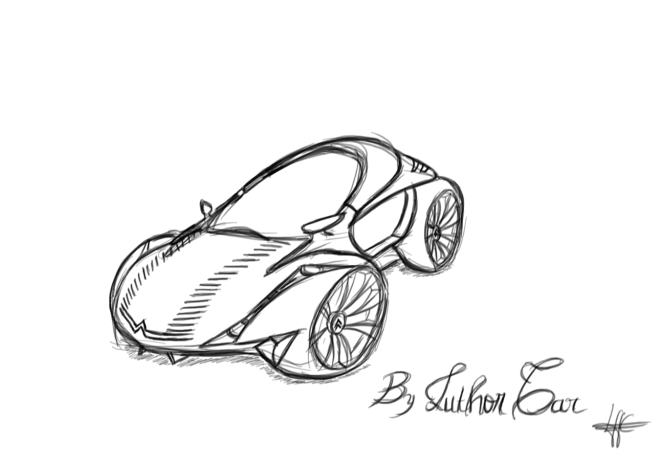
At first, I wanted to be a car designer. At the same time, I was so passionate about cars that I dreamed of a perfect car that would dematerialise in the event of an accident. I thought the ideal would be to build a vehicle that wouldn't kill. Now you can understand the origin of the name “Luthorcar”.
Along the way, I met another artist, my mentor, who introduced me to 3D, but it was only to make my cars in 3D. I was also learning After Effects because I was thinking of making the car videos, Photoshop and Illustrator. I'd lost my laptop with a lot of data on a car I was working on, so I can say that's where the dream about cars died. but I ended up with know-how. That's how I came to realise that I have something that allows me to work in communications agencies.
Where are you based now and who do you work for?
I'm currently based in Cote d'Ivoire, in Abidjan, but I'm originally from Cameroon. The agency I work for is in Cameroon and is called Matanga.
What is your personal background and what role did it play in your career?
I started in an agency in 2016-2017, in an agency called Notaboo as an intern. From there I was recruited to Havas Media Africa where I had the chance to be surrounded by brilliant minds (Gisèle Nseke, Brice Boya, Liliane Binyet, Agnès Mouella, . so at that time I was teaching philosophy in a high school located 300k from there, But the director of Havas Mr Engelbert Djouomo had decided to trust me.
I worked on Monday, and Tuesday, then on Tuesday night I traveled to teach on Wednesday morning, then Thursday and on Thursday evening I took the bus back to be at the office on Friday morning. I did it for 4 years. At Havas I had the opportunity to work on big brands like Chivas, Perenco, Bollore even if it revolved around events.
I innovated in this field because I was one of the first to present event simulations. Rather than making montages with photoshop I did all the decoration of the event on Twinmotion and we immersed the client in their theme. This allowed us to win a call for tenders from Pérenco.
Havas, being a branch of Bolloré, will close in 2020 following difficulties the group experienced in my country. A few months later, I found myself as a motion designer for the fintech Ejara. There, the challenges weren't the same as those of an agency. We went our separate ways, and later I found myself with Matanga, where I really had the opportunity to develop and leverage my technical skills, much more in terms of simulation on Houdini.
Besides, I also had quite a few opportunities in Romania, France, and the USA. I just hope to be on the right track to do even better; there's still a long way to go and a lot to create. I'm motivated to do much better, to go further.
If you weren’t in your current industry, what would you be doing?
Maybe I would have really become a car designer, I couldn't stay long in philosophy because of its aspect, I'm sure you'll be surprised, its doctrinal aspect. I found that people were more limited to restoring thoughts rather than building their own, I like to create so keeping myself in that routine wouldn't have been interesting for me.
I also like sports, I do a lot of cycling, I played a lot of football, maybe I would try to do a lot more there. In short, as long as I'm in a situation where my mind thinks, creates, everything is fine.
Can you explain your creative process? What makes it unique?
In general, like any artist, I start with a brief, from which an idea is born. I make sure that technically I can do it, and then I look for references, which can be either real or the work of other artists. They give me a better idea of the artistic direction I'm going to take. With the arrival of AI, I have one more assistant to quickly get an idea of the colors and atmosphere. The rest we bake ourselves.
I'd like to say that sometimes I don't respect the protocols. I concentrate much more on the result than on the protocols. For example, when I need to work on the texture of an object, I don't go and get a shaderball, I work directly in my environment with my reference. Observation plays a big part in this.
How would you describe your style?
To tell the truth, I don't know if I have a style, all I'm looking for is to produce something that pleases, something that's pleasant to look at. On the other hand, I do like innovation, I don't like having things that look the same, or as we often see someone else's work totally copied, I don't like that.
I always reassure myself that there's a part of myself that's manifesting itself. I think ideas are as infinite as the universe, and every day we can come up with something new. I'll say like Heraclitus “the sun is new every day”.
Which individuals do you gain inspiration from? Do you have any heroes in the industry?
I follow a lot of artists in the field, but there are some who have added to the motivation I already had. There's Marcella Brown who's FX TD, I was impressed to see a black woman reach this level in the field, and I said to myself but if she does it, how can I not even if we're not in the same environment, she inspired me a lot and even motivated me on houdini.
We talked a lot and she gave me advice. I think that's starting to bear fruit. There were also instructors who motivated me in the way they explained things: Jean-yves Arboit, Christian Bohm's, Arsen Margaryan. You know ... you can be very good technically, but passing on knowledge is another matter.
But the one that still boosts me is creativepool, which I didn't expect to happen. You know, it's a bit difficult when you're in Africa, especially in certain countries. Sometimes people even think that you didn't do the work. I recognize that there are usurpers, but there are also good guys, very good and not so good.
Unfortunately, the environment is often used to exclude some, and yet they can do the same renderings, write the same code, produce the same models, in short do at least part of the thing. I specify some, even if there are only 2 or 3 or 4 of them. So a big thank you to Creativepool for this recognition.
What tips would you give to aspiring creatives looking for work?
First, try to know your tool well, then patience, it sometimes takes time. You have to focus on the quality of your work and the rest will come by itself. At the time, I was just modeling for fun, I wanted to see my cars in 3D, and one day I discovered that I had a very, very serious level. When you produce what is good, you will inevitably generate interest.
What tips would you give to other professionals to get more clients?
I don't think I'm in a better position to answer this question, in general I've worked in agencies with little freelance activity, but what I can say, and what I'm starting to apply myself, is to work on your visibility, to produce above all works linked to demands.
For example in the agro-industry (food drinks and others), cosmetics, cinema (much more complicated because sometimes you have to produce things that are quite complicated in terms of creation and calculation). I think you also have to be very creative and have innovative concepts that captivate people.
For example, there's no point in rendering a Coca-Cola bottle unless the rendering level is very high; we're used to seeing average renderings, and there are much better ones out there. On the other hand, an innovative concept using the same bottle with an average rendering is more captivating. In general, you need to have a well-stocked portfolio and knock on the right door.
Can you share a memorable experience from your career journey that shaped your approach to creativity?
My “Fanta” project, which dates from 2020 or 2021, is the one that really introduced me to the world. I worked on a lot of details, and that's when I understood the importance of detail in my work. I said to myself, this is the minimum standard I must have in terms of production, this is what people will always expect of me, and that's what led to this “ekoi” project.
What kind of tools/kit/software could you not do without?
Houdini, Houdini, Houdini, in fact it's a tool that gives you a different vision of 3D. Houdini plunges you into an incredible intellectual adventure, where you learn to solve problems, there's something I'd like to say divine about it.
From nothing, you arrive at something using logic. Of course, you first have to understand how it works, and that's the big problem facing many artists, especially French-speaking ones. But I think that where there's a will there's a way.
Then Arnold Render, I'm already so used to it, even if I also use Octane ( for water drop rendering in general ), and redshift directly on houdini when I don't want to export to cinéma 4D to work on Arnold )
For AIs, we're still discovering and learning, but by the end of the year I'd like to have some pretty serious hybrid productions that really combine technique and personal creativity with AI. My reference is a deodorant commercial by rufus Blackwell that I saw on linkedin.
What’s your secret to staying inspired and motivated?
First, there's the pleasure of creating: it's an intimate need, an extension of who I am, a manifestation of my being. Then there's the family, to get back to the concrete realities we have to face. We want to please our parents and relatives, especially in a context where we don't really understand or believe in our profession.
There's also this desire to show other Africans that we can produce to high-industry standards, even if it's difficult, because most environments don't easily allow it. there's no point in enjoying mediocrity.
What’s the work achievement you’re most proud of?
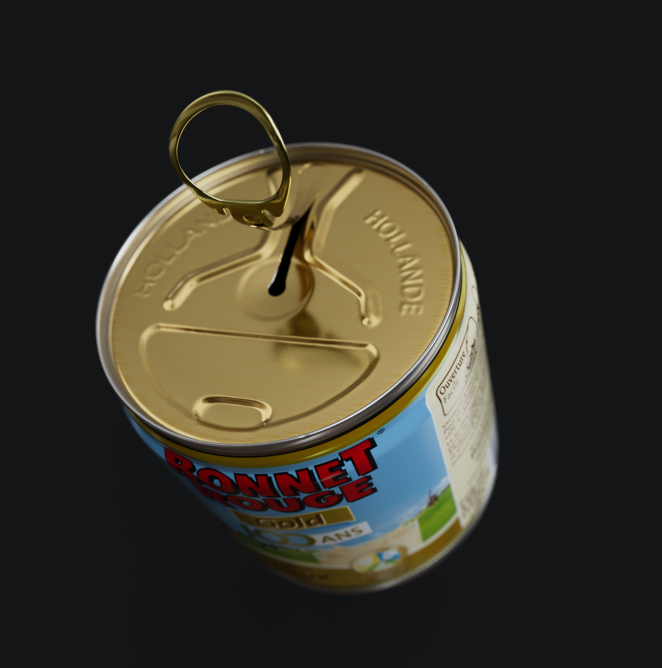
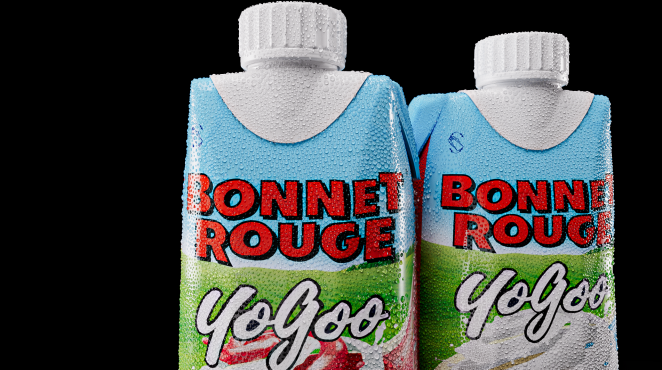
I think there are several, Fanta, Ekoi ( there I totally exploded, and I did it in 2 days if I'm not mistaken, because we were under pressure from the client ), Bonnet Rouge box renderings ( I think there I went very very very far in terms of product rendering, I suggest you see what the real box looks like and compare with the 3D version )
Bonnet Rouge animations ( this is my debut in terms of liquid simulation, RBD, Particle and Vellum). There are other projects coming up because I'm really positioning myself as a vfx artist, so there's a lot coming up.
As someone with experience in the industry, what trends do you foresee shaping the future of creativity?
Let's face it, AI changes a lot of things, so we'll have to adapt to it without taking away the creator's autonomy. Placing an order in a Mackdo doesn't make you a cook.
What do you think sets apart truly exceptional creatives from the rest of the pack?
Technical level, ideas (artistic culture), environment.
How do you think technology has influenced the creative industries and how have you adapted to these changes?
Yes, it has to be said that AI has changed a lot of things, in a positive way by enabling us to speed up our production, but also in a negative way because we see everyone suddenly becoming a great specialist in art, in AI, to the point of offering masterclasses.
Some people even go so far as to say that Hollywood should be abolished. So we have a tool which, in its automatisms, makes people who have never been interested in art suddenly become specialists. So we're a bit lost.
As far as I'm concerned, I've already integrated it into my pipeline, but what I've learned from my current experience is that it's better to have an artist or a team of artists capable of taking over in situations where the AI can't deliver the expected result.
A real artist produces what he thinks, shapes his work and manipulates it as he wishes, but someone who has never been in the industry will accept as perfect what the prompt has served him, since he has never had the possibility of producing otherwise. And it's this control that I'm looking for, so I prefer the hybrid approach.
Another thing is that I see that people are more interested in what AI produces, rather than simply producing works and considering AI as a tool. I think we currently have more testers than artists. And it shows in the productions: when an artist uses AI, it's nothing like the boring content we see all day long.
What is the one thing that you would change about the industry?
I'll do my utmost to ensure that the creative process is never suppressed, because it's an intrinsic property of the human being. Einstein placed great importance on imagination, and creating is an ontological principle of the human being in the same way as thinking, or physical activity (education of the body).
We have a humanity that thinks less and less, that doesn't know that sports education contributes to self-balance, and now we want to take imagination away too. They'll say to me, but even with AI it's our imagination, and I'll reply, “Placing an order at Mackdo doesn't make you a cook, asking for Van Gogh-style illustrations doesn't make you a painter, and asking for a Mona Lisa-style painting doesn't make you a Leonardo da Vinci."
There are artists, there are programmers who have programmed AI, and there are users, or even worse, testers.
Any websites, books or resources you would recommend?
Mographplus for rendering, Rebelway, Christian Bohm's and Cg circuit for Houdini, Creativepool to discover your value.