
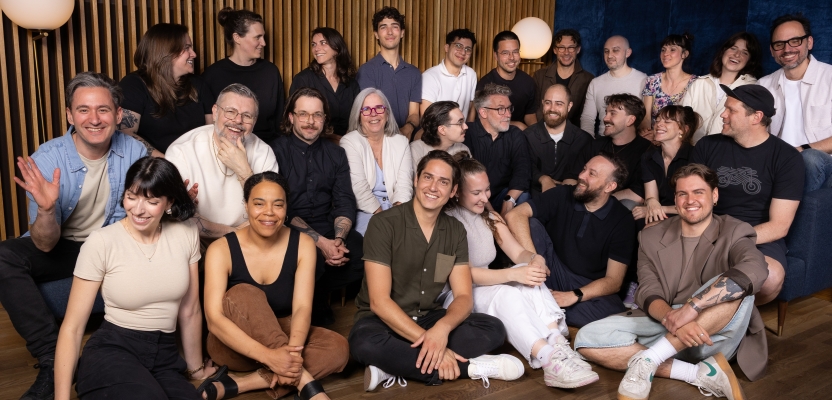

Founded in 2005 by Paul-Étienne Côté, Circonflex has grown from a violinist’s creative pursuit in Montreal to a global audio agency with studios in Montreal, Paris, Toronto, and New York. What started as a chance opportunity to compose for an international TV series has evolved into a powerhouse delivering music production, sound design, and sonic branding for some of the world’s largest brands and agencies. With nearly two decades of experience, Circonflex continues to push boundaries, blending artistry, cultural insight, and innovation to craft soundscapes that truly define brands.
At a time when AI-generated music is disrupting the industry, Circonflex sets itself apart by embracing new technologies responsibly while preserving the emotional depth and authenticity of human creativity. From viral campaigns like Mike chez RONA to government communications and global partnerships, the agency has built a reputation for excellence, adaptability, and bold creative thinking. Rooted in Montreal but resonating worldwide, Circonflex is shaping the future of sound in advertising, media, and entertainment.
How was your company born and where are you based?
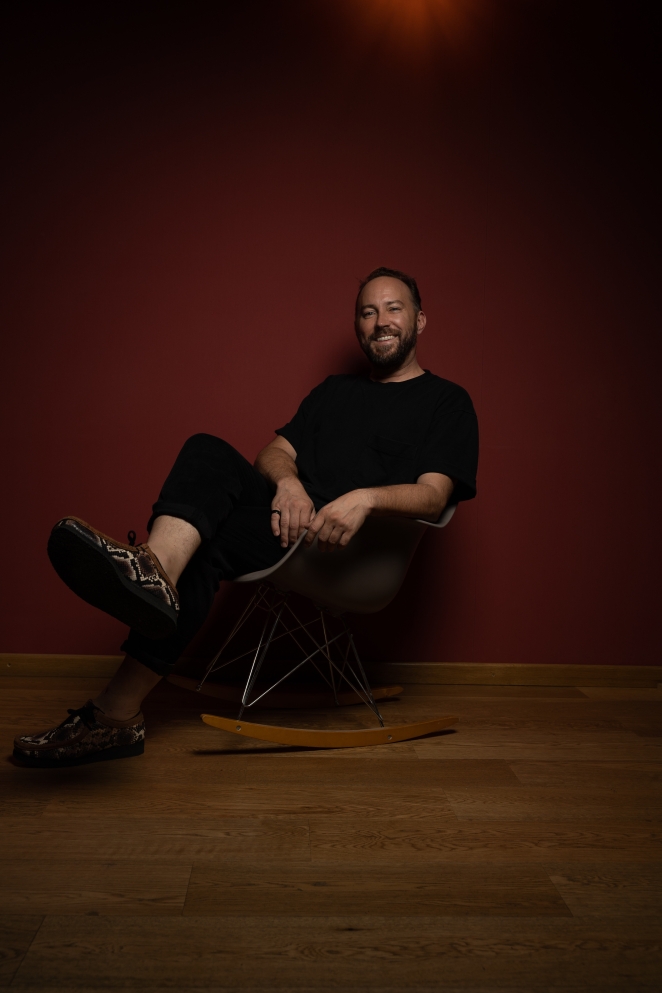
Circonflex was founded in 2005. At that time, I was a violinist performing on stage and composing music from my apartment in Plateau Mont-Royal, while also working as a waiter at Olive & Gourmando, a renowned restaurant in Montréal. A pivotal moment occurred when a music supervisor from Paris, in town for an animation TV series, visited the restaurant. I shared my music demo with her, and after months of evaluation, her French company, Marathon, hired me to compose music for all of their upcoming international series!!! This was a complete turning point in my life and marked the beginning of my career. Twenty years later, Circonflex now delivers music and audio solutions to the world's largest brands and agencies, with teams based in Montréal, Paris, Toronto, and New York.
What was the biggest challenge to the growth of your company?
The biggest challenge to Circonflex’s growth has been scaling without losing the creative quality that defines our work, and I think we’re doing pretty well so far! International expansion added another layer, since our French identity needed to be translated for agencies abroad (Circonflex!). More recently, the rise of AI-generated music has pushed us to position ourselves clearly as a premium partner that delivers brand-defining sound rather than commoditized tracks. You asked for one challenge, but I’ve just given you all of them!
Which was the first huge success that you can remember?
Oh, it was when I was asked to work on the brand Totally Spies! I remember flying to Paris to see the movie at Le Grand Rex theatre. It was Totally fantastic!
What’s the biggest opportunity for you and your company in the next year?
Can I name four? (Since we have four offices!) First, Circonflex New York just launched this year, which is a huge opportunity in itself. In Montreal, we’re working on a really crazy and one-of-a-kind podcast project. In Paris, I just hired a fantastic new producer, and in Toronto we’ve doubled the size of our studio footprint.
Can you explain your team’s creative process? What makes it unique?
We’re deeply passionate about our craft. Art, in all its forms, inspires us daily. Creativity isn’t limited to the music we compose or the sound we shape, it’s woven into every aspect of our studio life, from our workflows to our spaces.
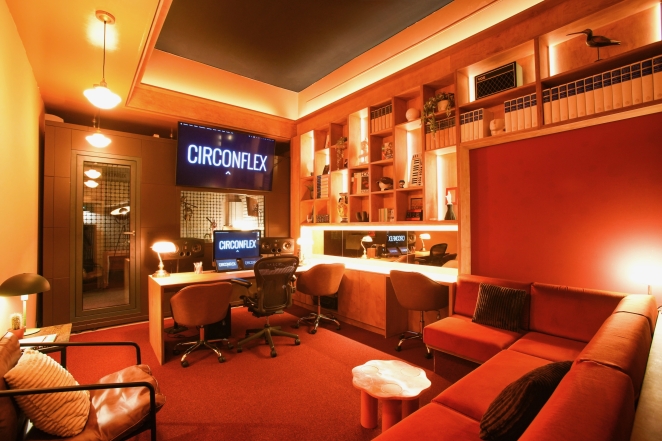
Our studios are designed to spark inspiration, with carefully curated décor and an environment that encourages bold thinking. We even bring that same care to the kitchen.
In our Montreal studio, we have an open kitchen with four in-house chefs who prepare fresh meals every day for our clients and collaborators. Just as we craft sound with precision and heart, they craft food. We believe that every sensory detail matters when creating something memorable!
How has COVID-19 affected your company?
COVID hit just as we had opened Circonflex Montréal! We were brand new, shiny, and then suddenly we had to close. Worst timing ever. But because we could record and mix remotely, both the Government of Canada and the French government asked us to handle their public communications. We were in charge of the music and sound for all the sanitary announcements. In the end, it actually turned out well for us.
What is one tip that you would give to other agencies looking to grow?
Things. Take. Time. So be patient. Even more patient!
Can you share a defining moment in your company's journey that shaped its identity or direction?
Opening in New York marked a turning point. It forced us to think globally while staying grounded in our Montreal roots. It also validated that our creative standards could resonate internationally.
What measures do you take to ensure diversity and inclusion are prioritised within your company?
At Circonflex, diversity drives creativity. Our Montreal team includes one of the very few female sound engineers in advertising locally. We are very proud of this!
We actively support young women pursuing audio careers by offering internships to female students, including high school girls, providing real-world experience and mentorship.
Beyond hiring, we focus on inclusive voice casting and collaborating with underrepresented talents. Internally, everyone’s ideas matter, because true innovation comes from diverse voices.
How do you balance maintaining your company's unique creative voice while meeting the diverse needs of clients?
You know that a circonflex is an accent, right? It’s this one → ^. We use it on vowels like ê, ô, î. Our company works the same way: our creative voice is unique, like the English language itself, but we adapt it with different accents : the New York accent, the Chicago accent, the London accent, and of course, the Circonflex accent. What makes us unique is our ability to shape sound that’s perfectly on-brand for each client, yet always unmistakably accentuated. The accent is our signature.

What strategies do you employ to adapt to changes and trends in the industry while staying true to your company's values?
To stay ahead (of AI, in particular), we’ve built an in-house music tech team of engineers and developers who experiment with new audio tools. This allows us to innovate quickly, test ideas internally, and integrate tech only when it meaningfully serves the story and strengthens a brand’s voice. We are making an ethical use of AI. Every evolution we adopt must align with our values: craft, emotion, and authenticity. Technology is a tool, not the driver, of the sound we create.
Can you share a memorable client success story that exemplifies your company's approach and impact?
One standout example is our work on the Mike chez RONA campaign, which perfectly shows how we combine cultural sensitivity, technical precision, and creative intuition. The idea started with a playful, long-standing misheard lyric: in Québec, to French speakers, the words “My Sharona” (the 1979 hit by The Knack) sound almost exactly like “Mike chez RONA,” which means “Mike at RONA,” the iconic hardware store. It was an inside joke rooted in local culture, and our challenge was to turn that joke into a fully produced, broadcast-ready re-record that captured the spirit of the original while leaving room for parody.
We re-recorded the track from the ground up, carefully matching the tone, instrumentation, and energy of the original, and casting a voice that could balance nostalgia with humour. The result didn’t just support the campaign : it became the campaign. Mike chez RONA took off across social platforms, construction sites, and fan pages, becoming a viral cultural reference in Québec.
Can you discuss a time when your company had to pivot or innovate in response to unforeseen challenges, and what lessons did you learn from that experience?
That time is right now. We’re in the middle of redefining what it means to create music in a world where AI is shaking up the industry. I can already see the lessons we’re learning in real time: how to position ourselves as premium, how to protect creativity while embracing new tools, how to double down on what makes us unique, and how to hold our ground against the tech giants. But the full story? Let’s reconnect in 5 years and see what I’ve actually learned. Deal?
Do you have any websites, books or resources that you would recommend?
Ha! The classic: How to Win Friends and Influence People by Dale Carnegie. Humans will always be humans, and even though it was written in 1936, it still resonates with me today. Although I realize it’s a bit paradoxical to recommend a book about listening and connecting with others, right after I’ve just spent this whole interview talking about myself!