
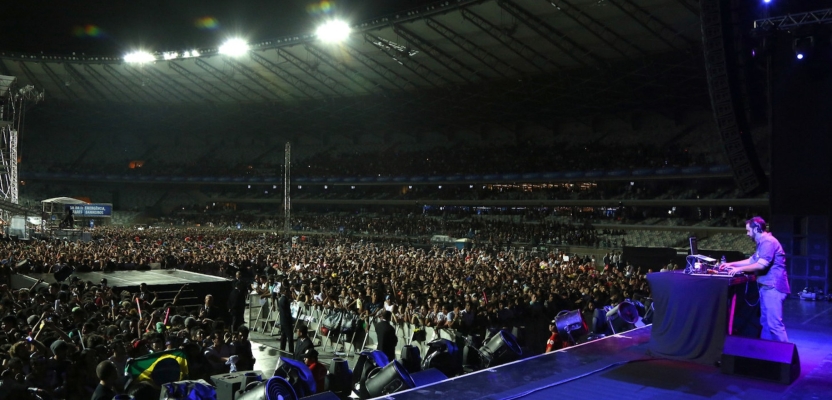

From DJing São Paulo’s most vibrant nightclubs to creating Emmy-nominated immersive soundscapes, Billy Mello has spent his life exploring how music and audio can move people. His journey began with a Joy Division cover band at 16, leading to a career in radio, music production, and a breakthrough as the resident DJ for Rede Globo’s Caldeirão do Huck. Over more than a decade, Billy became a household name in Brazil’s electronic music scene, even opening for Beyoncé’s Mrs. Carter tour in 2013. But in 2015, he left it all behind, moving to Berlin in search of new ways to connect technology, creativity, and emotion.
Today, Billy is a Berlin-based Spatial Audio Designer, Consultant, and CEO & Co-founder of LAIFE, an AI-driven music generation platform focused on mental health and performance. His work spans VR/AR projects, wellness tech, and global collaborations, blending emotional intelligence with cutting-edge sound innovation. Through his proprietary Emotitone Concept, Billy translates emotion into sound, crafting immersive experiences that are both technically groundbreaking and profoundly human.
How did you first get into the industry?
My journey into the audio industry began in São Paulo, Brazil when I was 16 years old. A group of friends decided to create a band to cover Joy Division’s songs, and there I was. But, professionally speaking, I started my career in Radio, also in São Paulo, which opened doors for me to start working in audio studios as a musician for jingles, producing music albums and also entering the DJ life in vibrant club scene during the 1990s, where I established myself as a DJ in the city’s top nightclubs. This early immersion in music culture laid the foundation for my career, allowing me to develop a deep understanding of music’s emotional and technical dimensions.
My mainstream breakthrough came as the resident DJ for Rede Globo’s “Caldeirão do Huck” from 2000 to 2014, reaching millions of viewers weekly and solidifying my reputation as a leading figure in Brazilian electronic music. This experience opened doors to high-profile collaborations and performances, including opening for Beyoncé’s MRS CARTER tour in 2013, and set the stage for my later evolution into immersive audio and technology-driven sound design.
Later, in 2015, I left all of this behind, and moved to Germany in pursue of new ways of music and sound expression.
Where are you based now and who do you work for?
I am currently based in Berlin, Germany. I work as a freelance Spatial Audio Designer and Consultant, and CEO & Co-founder of LAIFE, an AI-driven music generation platform focused on mental health and performance enhancement.
My work spans global collaborations with VR/AR studios, big corporations, wellness tech companies, and creative agencies, with a strong focus on immersive audio and social impact.
What is your personal background and what role did it play in your career?
My personal background is rooted in Brazil’s diverse musical landscape, where I was exposed to a multitude of genres and cultures from an early age. As a professional musician (piano and keyboard), DJ, and producer, I developed a passion for blending tradition with innovation. My experience as a resident DJ for a major TV show, international performances (including in Japan and Europe), and leadership roles in audio studios shaped my ability to adapt, reinvent, and push creative boundaries. Moving to Berlin in 2015 was a pivotal moment. Facing language barriers and a new industry environment, I embraced reinvention, specialized in audio for video games at Berklee, and built a global career at the intersection of art, technology, and social change.
If you weren’t in your current industry, what would you be doing?
If I were not in the audio industry, I would likely work on something that still combines creativity, technology, and human connection. I don’t know, something like neuroscience research, or teaching. My core motivation is to create impact and foster empathy, so any alternative would involve using technology and creativity to improve lives and solve real-world problems.
Can you explain your creative process? What makes it unique?
My creative process is based in the Emotitone Concept. This is a proprietary methodology I developed that combines the Valence/Arousal Circle (to map the emotional tone of each scene/project) with the Circle of Fifths (to translate those emotions into musical language).
The process unfolds in five stages: First, there’s deep exploration of the project’s emotional core). Then comes the Creative Development (conceptualizing the audio solutions), Production & Innovation (using tools and techniques), Integration & Optimization (ensuring seamless implementation), and finally Evolution & Assessment (continuous refinement based on feedback and emerging technologies).
This approach ensures that every soundscape is emotionally resonant and narratively cohesive, giving viewers a sonic palette that translates what they’re watching into emotion.
How would you describe your style?
I don’t have an actual style, if you think of music genres. My style is characterized by a fusion of emotional intelligence, technological innovation, and narrative depth. My approach is to create audio experiences that are not only technically advanced but also deeply moving, whether for VR/AR environments, therapeutic applications, or multimedia storytelling. One thing I like to do is to draw inspiration from the world’s sounds, often incorporating field recordings and experimental techniques to craft unique sonic identities.
Which individuals do you gain inspiration from? Do you have any heroes in the industry?
I am inspired by innovators who blend artistry with technology and social impact. In the audio and music world, figures like Brian Eno, Hildur Guðnadóttir and Hans Zimmer, thinking of for tech and emotional storytelling.
What tips would you give to aspiring creatives looking for work?
Every job opportunity is an opportunity for growth. Stay curious and inventive. Treat every project as a learning opportunity and don’t be afraid to experiment with new tools, genres, and technologies. Practice deep listening and embrace failure and iteration as essential parts of growth. Above all, cultivate resilience and authenticity. These are your greatest assets in a dynamic, competitive industry.
What tips would you give to other professionals to get more clients?
Focus on building genuine relationships and delivering transformative value, not just services. Position yourself as a partner in your clients’ success. Understand their needs deeply and offer solutions that elevate their work.
Can you share a memorable experience from your career journey that shaped your approach to creativity?
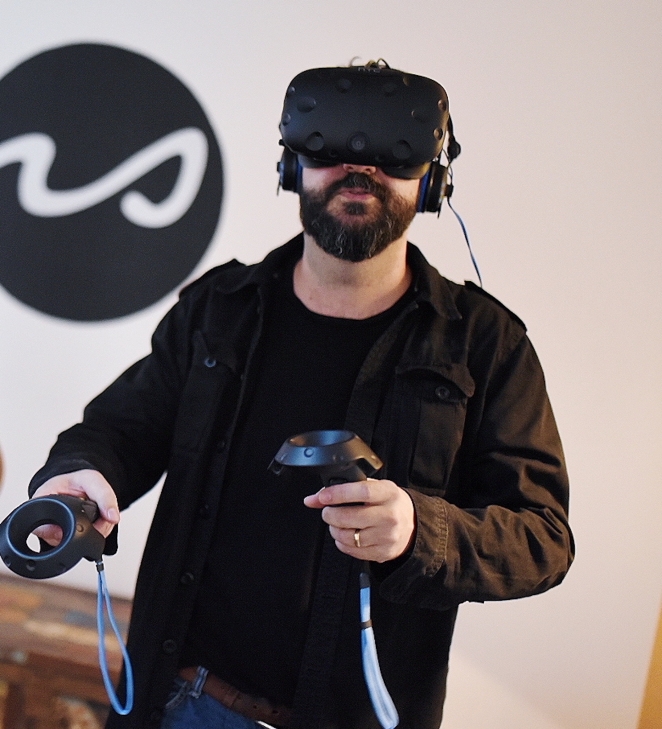
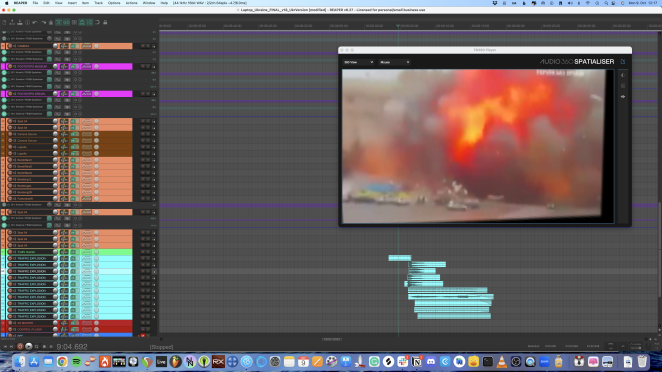
One of the most transformative experiences was relocating from Brazil to Berlin in 2015. Leaving behind established “fame” and comfort, I faced language barriers and a highly competitive industry. But it also created a blank slate for starting fresh and anew. This forced me to reinvent myself, learn new technologies, and develop resilience. Another pivotal moment was creating the audio for the Emmy-nominated VR documentary “You Destroy. We Create,” which required blending traditional musicianship with advanced spatial audio and adaptive sound design. Both experiences underscored the importance of adaptability, continuous learning, and using creativity as a force for empathy and transformation.
What kind of tools/kit/software could you not do without?
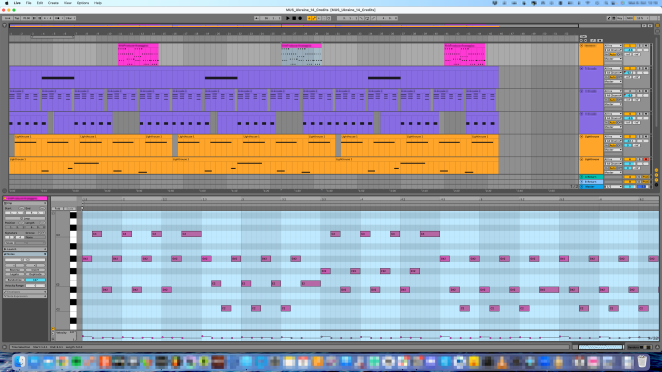
My essential toolkit includes DAWs like Reaper and Ableton Live, audio middleware such as Wwise (especially for Ambisonics and interactive audio), and game engines like Unity3D and Unreal Engine 5. I also always carry a Zoom H2n microphone with me, to record environments, ambiences, conversations and anything unusual when I go out.
What’s your secret to staying inspired and motivated?
Listening. My motivation is rooted in a blend of listening, curiosity, a desire to create meaningful impact, and a commitment to personal values such as empathy, resilience, and continuous growth. I dedicate time to “curiosity sprints”, where I experiment with new technologies, plugins, or genres without attachment to the outcome. All my songs available in music platforms such as Spotify are based on these sprints, where I test one specific plugin or DAW or anything else that creates sound, and try to make a song out of it.
But in the end I practice deep listening, both technically and emotionally, and regularly reflect on my work’s alignment with my mission.
What’s the work achievement you’re most proud of?
I am particularly proud of leading the audio design for the Emmy-nominated VR documentary “You Destroy. We Create,” which was also awarded a Peabody. This project exemplifies my commitment to blending emotional storytelling, technical innovation, and social impact. I am also proud of co-founding LAIFE and pioneering AI-generated music for mental health, which has demonstrated measurable benefits for users and represents a new frontier in therapeutic audio.
As someone with experience in the industry, what trends do you foresee shaping the future of creativity?
Trends include the rapid advancement of spatial audio for VR/AR/XR, with technologies like Ambisonics, Dolby Atmos, and real-time audio object manipulation becoming standard. AI-driven audio production is transforming music creation, sound design, and adaptive experiences, enabling personalization and interactivity at scale, and we need to keep a close look on it, to understand more and not miss the tech. There is also a growing demand for integrating audio with haptics, biofeedback, and multimodal interfaces for richer, more immersive experiences. I love it. Finally, ethical and therapeutic applications of audio, especially for mental health, are emerging as important frontiers for creative professionals.
What do you think sets apart truly exceptional creatives from the rest of the pack?
Truly exceptional creatives combine technical mastery with emotional intelligence, resilience, and a willingness to reinvent themselves. They are not afraid to challenge conventions, embrace failure as a learning tool, and pursue projects that align with their deepest values. They their craft to elevate, heal, and inspire others, not just to achieve recognition or technical feats.
How do you think technology has influenced the creative industries and how have you adapted to these changes?
Technology has transformed the creative industries since remote times, enabling new forms of expression, collaboration, and distribution. Nowadays the rise of spatial audio, AI music generation, and real-time interactive sound design has expanded what’s possible in storytelling, wellness, and entertainment. I have adapted by continuously learning new tools, integrating AI and machine learning into my practice, and developing proprietary methodologies (like the Emotitone concept) that leverage both technical and human insights.
What is the one thing that you would change about the industry?
If I could change one thing about the industry, it would be to create greater emphasis on ethical, meaningful, and socially impactful work, encouraging professionals to use their skills to address real human needs and challenges, not just pursue technical novelty or commercial success.
Any websites, books or resources you would recommend?
The amount of information available today is incredible compared to when I was starting out in the 80s and 90s. What I had to struggle to find back then is now readily accessible online, and usually for free. Take advantage of courses, blogs, your favorite artists' websites, and follow them on social media to absorb as much knowledge as you can. This ease of access to information is remarkable, and sometimes we take it for granted!
For books, I highly recommend "Psychology of Music" by Carl E. Seashore (ISBN 0-486-21851-1). Though written in 1938, its insights on how we perceive and process musical sounds remain remarkably relevant today.