


When eight local authorities across Cheshire and Merseyside set out to transform how they recruit foster carers, the challenge was bigger than just generating leads. It was about unifying a fragmented system, breaking down long-held myths, and creating a digital-first, emotionally intelligent strategy that could resonate across borough lines.
Enter Swype®, the agency tasked with not just delivering performance, but building a campaign that humanised fostering while aligning eight unique boroughs under a shared vision. At the helm was Wesley Ashton Holmes, Founder and Creative Director, who led the creation of one of the UK’s first government-backed foster care campaigns to combine strategic innovation, authentic storytelling, and meaningful collaboration.
In this in-depth interview, Wesley walks us through the thinking, process, and impact behind the Landmark Unified Local Authority Foster Care Recruitment Campaign, a project that didn’t just deliver results, but redefined what’s possible for public sector campaigns.
What was the brief?
To create a unified, multi-borough fostering recruitment campaign strategy that reduced costs, increased engagement, and brought together eight local authorities under a single, strategic digital approach whilst delivering performance across SEO, PPC, and Paid Social.
The wider brief came with ambition, but also complexity. Foster4 is one of the UK’s first government-backed foster carer recruitment services, spanning multiple councils, in this case, eight boroughs across Cheshire and Merseyside. Until this point, each council had managed recruitment independently, with separate campaigns, limited tracking, and no shared goals.
Our task was to bring consistency, clarity and measurable performance to a fragmented system, not just by running better ads, but by redesigning how the journey from awareness to enquiry worked across public sector organisations.
We had to launch the first wave of campaigns within four weeks. Early efforts focused on warm audiences and pre-engaged users, while the wider brand awareness activity was rolled out in months two and three. There was no previous account structure or digital infrastructure, so we started from scratch.
While some boroughs had internal cost-per-enquiry benchmarks, they were inconsistent and typically based on button clicks or loose engagements. We were clear from the beginning that our strategy would only track meaningful conversions, form submissions, calls, and contacts, not vanity metrics.
It wasn’t just about bringing results. It was about bringing alignment, shared strategy, shared data and shared momentum. The Foster4 campaign wasn’t just a media buy, it was a structural shift in how local authorities think about digital performance.
If I had to define the project brief in a single sentence: One of the first UK government-backed foster care campaigns to unite eight local authorities under a single, data-driven digital strategy.

How did the initial pitch/brainstorming phase go?
The early sessions focused on understanding what was broken, not just what was missing.
Our approach wasn’t shaped by what typical public sector campaigns look like. It was shaped by listening to foster carers, to prospective carers, and to the social conversations happening around fostering in the UK.
The insight was clear: too many people ruled themselves out before they even enquired. They thought they were too old. That they couldn’t foster if they rented. That it was only for full-time, married couples and that every placement was a long-term, full-time commitment. Those myths were acting as silent blockers.
So we flipped the typical ad format on its head. Rather than shouting “enquire now,” we asked: what’s stopping you?
That gave us our concept. Real stories. Real barriers. Real answers.
We proposed a campaign built on myth-busting, clarity, and empathy, supported by regional targeting, borough-specific benefits, and creativity that felt more like reassurance than marketing.
What made the pitch land wasn’t just the concept, it was the structure. We didn’t treat this as a launch. We mapped a 6-month user journey: from early awareness to research to action. Every campaign phase had a role to play.
And most importantly, we made it clear this wouldn’t be “one-size-fits-all.” Messaging, visuals, incentives, everything would flex per borough. But the structure would stay unified.
What was the process behind ideating the concept?
The ideation process began with a simple but honest question: why don’t more people enquire about fostering?
We didn’t start with assumptions. We started by listening to real foster carers, to comments online, to questions being asked (and not asked) across forums and social media. What emerged wasn’t a lack of interest, but a lack of clarity. People ruled themselves out before they even explored it. They assumed they were too old, not in the right relationship, didn’t own their home, or couldn’t commit full-time.
That gave us the heart of our concept, we weren’t here to convince. We were here to clarify.
We built the campaign around breaking down those invisible barriers through honesty, myth-busting, and lived experience. We paired this with borough-level insight on what each local authority offered, not all incentives were the same, so messaging needed to reflect that. Some could highlight council tax benefits, others promoted childcare support or training schemes.
We designed each campaign phase to align with a point in the user’s decision-making journey. Early-stage content was reassurance-led, stories, facts, real voices. Mid-journey campaigns became more practical, outlining types of fostering, eligibility, and benefits. End-stage campaigns focused on guiding users to info sessions and contact points.
The concept came from identifying that this wasn’t a media challenge, it was a mindset one. Our job was to unlock action by removing hesitation.
What was the production process like?
The production process was layered, we were delivering at pace while laying the technical and strategic groundwork in real time.
There was no existing campaign structure or performance infrastructure when we started. We had to build new ad accounts across Google and Meta, implement tracking with GA4 and Tag Manager, and create segmented funnels that reflected different stages of the user journey, all while planning for more than 80 individual campaign rollouts across eight boroughs.
Creative production was split into phases. We began with five core campaign videos: Who Can Foster, Memories, Challenges, Why Foster, and Part of the Family. Each one targeted a different emotional or practical barrier and was developed using insights gathered from interviews with real foster carers, not scripted case studies, but honest, raw conversations.
Alongside this, we created a library of static assets: myth-led graphics, regional carousels, explainer animations, and short-form content tailored to Meta. These were localised for each borough, often with their specific logo, benefits, or contact details embedded into the visuals.
Asset testing began with our high-intent audiences. We monitored early engagement signals and built out a retargeting framework based on behaviour, video views, page reads, or time on site. As performance data came in, we adapted. Nothing was locked. Creative was adjusted every two weeks to reflect what resonated.
Because the full team, strategy, creative, media, and reporting, sits in-house at Swype®, we were able to stay responsive, making changes without lag. That made a big difference in keeping the campaign sharp, relevant, and evolving in real time.
What was the biggest challenge during production? How did you overcome it?
The biggest challenge was building the campaign’s infrastructure while delivering at scale.
There was no existing tracking. No ad history. No shared analytics framework across councils. We weren’t handed a foundation, we had to build one, while also going live within four weeks.
We started with less than 10% of the budget allocated in month one. That gave us space to warm up the ad accounts, test creative safely, and make sure all tracking, across Meta, Google, GA4 and the website, was working cleanly. We layered conversion events based on actual outcomes, not click signals, so that we could optimise based on real intent.
At the same time, we were dealing with local authority nuance. Some councils had different incentives, benefits, or foster carer requirements. So even though we were building a unified strategy, we still had to adapt messaging and asset variants per borough.
It was a balancing act. Create enough consistency to keep the campaign unified, but enough localisation to keep it relevant.
We solved this with structured collaboration. Foster4 had access to live dashboards through Looker Studio, where they could monitor their KPIs in real time. That transparency helped maintain trust, especially in the early weeks, where small optimisations made a big difference.
More than anything, it was trust and process that got us through. The client trusted our direction, and we were methodical with rollout. That combination made the challenge manageable, and, in the end, one of the most rewarding aspects of the project.
What kit/tools/software were used to create the project?
Our stack was intentionally lean but powerful, chosen to keep production efficient and allow for daily optimisation.
We used Google Ads, Meta Ads Manager, Google Tag Manager, Looker Studio, Magicx, SEMRush and custom-built reporting dashboards tailored to Foster4’s borough data structure.
We used Adobe Creative Cloud across the board, After Effects, Premiere Pro, Illustrator and Photoshop, to produce campaign artwork, static carousels, imagery and animations. These assets were developed to scale across multiple boroughs, so we templated some of the more modular designs to adapt logos, messaging, and visuals per local authority quickly.
For campaign delivery, Meta Ads Manager and Google Ads were our primary platforms, with segmentation handled via custom audiences, lookalikes, and keyword/ad group structures broken down by borough and stage of journey.
We set up Google Tag Manager, GA4, and Meta Events Manager to track all key conversions, form submissions, info pack requests, phone clicks, and email sends. There was no existing tracking before we started, so these tools formed the backbone of the performance framework.
We used Looker Studio to build a live performance dashboard, shared with Foster4. This allowed stakeholders to align around consistent KPIs and view campaign impact in real time, a first for this group.
Creative feedback, reporting, strategy and asset reviews were managed through virtual and in-person meetings, ensuring version control stayed clean and deadlines were tracked at the pace we needed.

What is one funny or notable thing that happened during production?
One of the most notable turning points in the project was how we navigated the balance between building a unified brand and maintaining local relevance.
The strategy was always to present Foster4 as a single, government-backed service, something separate from the typical image of “your local council.” But the reality was that each of the eight boroughs had unique benefits, incentives, and identity nuances. The question became: how do we unify the brand, while making the message feel personal in every postcode?
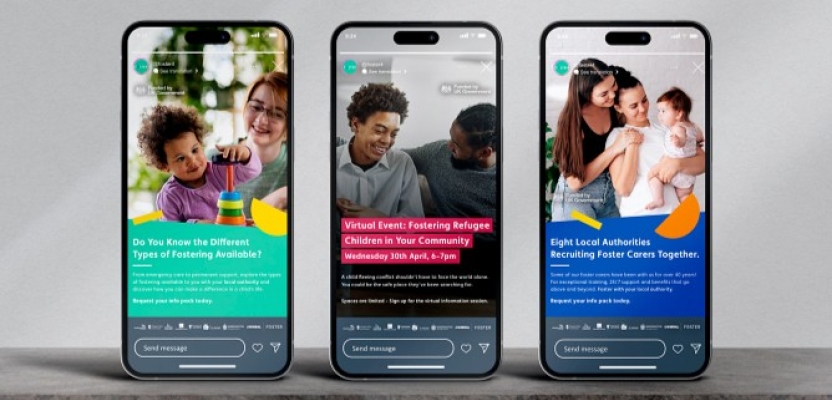
The solution came in the form of a mini-campaign: a partnership-led content series built specifically to highlight the collaboration. We developed a range of creatives featuring clear banners, local authority logos, and location-specific messaging, with headlines like “Eight Local Authorities Recruiting Foster Carers Together.” We combined this with tailored body text per borough and campaign variants that highlighted what made each local authority unique, whether it was 24/7 support, training pathways, or specific financial benefits.
This approach proved critical. Not only did engagement improve in boroughs that had previously seen slower traction, but the councils themselves began to see the power of aligned messaging. What began as a practical workaround became a symbolic moment: eight historically siloed teams were now collaborating under a shared visual language and shared strategy.
In a sector where fragmentation is often the norm, this shift stood out. It wasn’t just about performance, it was about showing what’s possible when clarity and cooperation meet smart creative. For a campaign with public trust at its core, that alignment was a milestone moment.
What’s the main message of this project and why does it matter?
The message is simple: fostering is possible for more people than we realise, and the blockers aren’t capability, they’re clarity.
This campaign wasn’t about driving volume. It was about changing perception. We learned early on that people weren’t ignoring fostering ads, they were assuming they didn’t qualify because of age, housing, working status, family set-up, or just a misunderstanding of what fostering actually involves.
By building a campaign that addressed those hesitations directly, with stories, proof points and tailored creative, we unlocked a different kind of engagement. Not just more clicks, but more meaningful interaction.
It matters because this wasn’t a brand selling a product. It was a public sector collaboration trying to reach people on an emotional level, and guide them through a big, life-shaping decision. That requires a different kind of care.
We also proved something else: that local authorities can think bigger. That eight councils can align behind a shared strategy, with shared KPIs, without losing their individual identity. And in doing so, they can outperform Independent Fostering Agencies, both creatively and in cost-efficiency.
How long did it take from inception to delivery?
The full project ran from initial concept development in October 2024 to campaign close in April 2025, around six months of paid activity.
That included everything from stakeholder workshops, audience research and strategy development to creative production, tracking setup, media rollout, and performance reporting.
We began running live campaigns just four weeks after kickoff, starting with high-intent retargeting and warm audiences while building broader awareness assets in parallel. From month two onward, the campaign scaled, across channels, creative variations, borough-specific targeting and more.
The final months focused on refining retargeting sequences, optimising spend, and closing the loop on user journeys. We conducted performance reviews and presented shared learnings across the wider Foster4 network.
What made this timeline possible was clear direction and full access, we had the autonomy to move quickly, backed by a structure that gave stakeholders visibility and confidence without slowing delivery.
Can you describe the creative spark or inspiration behind the initial concept? Was there a specific moment or insight that ignited the idea?
The spark came from a realisation: this wasn’t a typical awareness campaign. It was a public invitation to reconsider what most people think fostering requires, and that meant we needed more than marketing tactics.
We conducted interviews with real foster carers, not from Independent Fostering Agencies (IFAs), but specifically those working within the local authority system. One couple, now emergency carers for Sheffield City Council and both ex-senior police officers, offered honesty, warmth, and lived experience that shaped the campaign far beyond the original creative brief.
They talked about the emotional demands, the myths they’d heard before signing up, and the barriers that stop good people from enquiring. These weren’t abstract personas, they were the lived experiences of people at the heart of the care system.
We combined this with a deep dive into social comments, forum questions, and legacy campaign feedback. Patterns emerged fast. People didn’t think they qualified. Many had no idea there were multiple types of fostering, short-term, respite, parent & child, etc. The idea that you could foster part-time, or as a single working adult, was completely missing from most narratives.
So we reframed the job. This was a campaign about reducing doubt, not just increasing enquiries.
It’s this kind of groundwork, listening before launching, that defines how we approach strategy at Swype®
We developed a range of content around key themes and included branded videos from Foster4 focusing on key messaging such as: family, connection, eligibility myths, fostering types, and the 6-step process. Each piece was created to answer real questions, not just drive clicks. This wider thinking, going beyond the funnel to examine the whole onboarding journey, shaped the integrity of the campaign from day one.
How did you ensure that the concept aligned with the brand's values, goals, and target audience?
Foster4’s role as a government-backed initiative meant that trust, accessibility, and clarity were essential to the brand. But what made this campaign unique was that Foster4 also intentionally separated itself from traditional council-facing language and visual design. It was designed to look and feel different, while still operating with the authority of eight local boroughs.
We worked closely with the Foster4 team to make sure the tone and intent of the campaign matched that balance. Every message needed to be accurate, sensitive, and informative, but it also needed to be human. We weren’t writing policy. We were guiding someone through a decision that might reshape their life and the life of a child.
We validated all campaign angles through interviews with foster carers, social listening, and data from past information sessions. We tracked what questions people were asking, and what wasn’t being answered, and designed content that filled those gaps.
We also tailored messaging by region. Each local authority had its own support systems and incentives, so we avoided blanket messaging and adjusted content to reflect what each borough could offer.
That level of nuance ensured alignment with the brand’s goal: a unified strategy that could be trusted and actioned, while remaining accessible and locally resonant.
Were there any alternative concepts or ideas considered during the ideation phase? If so, what led to the selection of the final concept?
There were a few exploratory routes considered early on, particularly around leading with emotional storytelling from the outset. Some early conversations focused on spotlighting positive outcomes, using child-centred narratives or framing fostering as a way to “give back.”
While those ideas had merit, they didn’t address the problem we’d identified: that too many potential carers never even made it to the research stage because of assumptions and self-doubt.
We tested language and framing early on and saw that direct, myth-busting messaging paired with real foster carer stories was getting far more engagement and clarity. In short, it worked. It didn’t rely on emotional pull alone. It made people feel like fostering was a genuine option for them.
We also leaned away from over-sanitised messaging or overly formal tones. It would have been easy to default to safe, council-style communications. But the Foster4 brand, and our own challenger agency mindset, called for something braver.
So, we committed to the clarity-first approach. It didn’t exclude emotion, but it earned it by first removing doubt.
Can you discuss any collaborative or interdisciplinary aspects of the ideation process, such as working with other departments or external partners?
Collaboration sat at the heart of this project, not just within our team, but across eight local authorities, each with different structures, priorities, and sign-off processes.
We worked closely with the Foster4 central team in Warrington Council, who acted as the link between Swype® and each council. Their role was vital in managing feedback loops and aligning boroughs that had historically worked in isolation. In early workshops, we gathered insights from recruitment teams, family support workers, and foster carer liaison officers, which gave us a fuller picture of what messaging was and wasn’t resonating on the ground.
Internally at Swype®, the strategy, creative, paid media, and analytics teams worked side-by-side throughout, all under one roof. That’s something we’re intentional about as an agency. Because we’re not built around handovers or isolated departments, we’re able to test, review and adapt in real-time, which made a huge difference given the campaign’s complexity and pace.
We also leaned heavily on foster carers themselves. Their stories weren’t just used in finished assets, they shaped our tone, choice of headlines, and targeting logic. If a phrase didn’t feel true to them, we rewrote it.
This was a campaign built in partnership with people, not just platforms. That made the work stronger and the message more real.
What role did consumer research or market analysis play in shaping the concept and its execution?
It was fundamental. In fact, without it, we’d have misfired.
We began by gathering every piece of insight available, not just from Foster4 or past campaigns, but from the wider fostering space. Then we went further: conducting our own interviews, reviewing hundreds of online comments, and carrying out social listening across forums, Facebook threads, Instagram Q&As, and more.
We saw a clear pattern: people didn’t engage with fostering ads because they assumed they didn’t qualify. We weren’t losing conversions, we were losing curiosity.
This led to a complete shift in campaign framing. We didn’t just promote “benefits of fostering”, we answered real, often unspoken questions. Can I foster if I’m single? Over 60? Working full time? Renting? We then mapped these questions to borough-specific landing pages and content to ensure relevance.
We also tracked market behaviours, how Independent Fostering Agencies positioned themselves, where they advertised, their spend, and which incentives they led with. This helped us differentiate Foster4’s voice: public-first, not profit-first. Long-term stability over short-term promises.
Consumer research didn’t just support the strategy. It shaped every line of copy, every campaign phase, and every targeting decision.
Can you discuss any unique or unconventional production techniques or approaches used to bring the idea to life?
The most unconventional element wasn’t a tool, it was the mindset.
Rather than starting with a media plan, we started with people. We didn’t want to repurpose generic fostering templates or launch with polished brand videos. Instead, we grounded the campaign in authentic, unscripted insights from real carers. Our early production phase involved interviewing emergency foster carers from our local authority system, not IFAs, to ensure authenticity and avoid bias.
Those stories fed directly into our creative. Every advert was designed to answer a real question. Every ad format had a role in the user journey, awareness, education, and action. Even the structure of our retargeting campaigns reflected the long decision-making timeline that fostering requires.
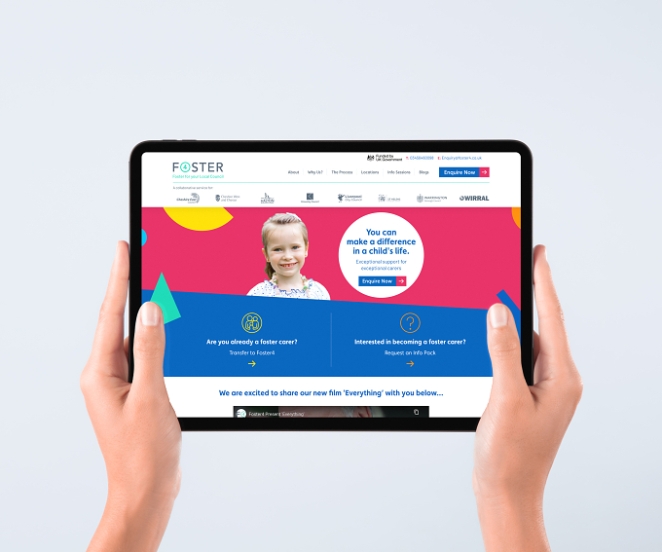
We also designed a flexible, localisation-ready creative system. From a single master concept, we rolled out over 80 unique ad variations, each tailored with the local authority’s name, benefits, or visuals, but maintaining a unified look and message. This allowed us to respect each borough’s identity while still presenting Foster4 as one cohesive brand.
Finally, we built a full cross-channel tracking system with a live reporting dashboard, because in a campaign with a long user journey, if you can’t clearly see what’s working across platforms, you can’t evolve or improve it.
How did you ensure that the concept remained innovative and stood out in a crowded marketplace?
We made a conscious decision not to follow the standard public sector formula.
Rather than pushing brand recognition or applying a traditional council tone of voice, we started from a blank slate. Foster4 needed to feel separate from a council, and separate from the IFAs who often dominate the fostering conversation online with aggressive incentives and fast promises.
We ensured our work stood out by doing two things differently:
- We prioritised clarity over emotion. Most fostering campaigns lean heavily on emotional storytelling. While that has power, we recognised that many people needed facts before they were ready for feelings. So we led with myth-busting, FAQs, eligibility explainer content, and visible next steps.
- We created a dual-track creative strategy. One side was unifying: establishing a single, trusted voice. The other was hyper-local: giving users tailored visuals and messages based on their borough. Few campaigns manage to be both, but it was essential to cut through in a crowded and complex space.
Above all, we made the campaign useful. It answered questions, guided actions, and respected how long this decision takes. That usefulness is what made it resonate.
What do you hope it achieves for the brand?
For Foster4, success isn’t just measured in clicks or conversion rates, it’s measured in real lives. The ultimate hope is that this campaign unlocks more qualified, informed foster carers across Cheshire and Merseyside, people who might never have enquired without that first nudge of clarity.
But more broadly, we hope it redefines what collaboration between councils can look like. Foster4 is one of the very first unified local authority fostering initiatives of its kind. This campaign showed that by working together, councils can build something bigger, something more visible, more effective, and more consistent than what’s possible in silos.
We also hope it gives Foster4 a replicable foundation. The framework is now in place: localised assets, full tracking, performance data, and a unified message. Future campaigns can build on this, evolve it, and expand its reach.
And for the sector? We hope it proves that empathy, strategy, and innovation belong at the heart of public service, not just in the private sector.
Credit list for the work?
Wesley Ashton Holmes – Founder & Creative Director
Role: Project Lead, Client Contact, Creative & Campaign Lead, SEO and Direct Reporting.
Adrian W – Operations Director
Role: Internal Agency Management, Project Structure, Foster Carer Interviews.
Jake T – Head of Paid Media
Role: Paid PPC, Paid Social, Campaign Account & Platform Setup, Multi-Channel Reporting.
Jordan C – Graphics & Motion
Role: Creative Development, Motion Graphics & Assisting with Ad Structure.
Megan G – Social Support
Role: Assisted with asset adaptation and campaign content planning.