

In a market overflowing with sameness, Chuck Studios set out to craft something unforgettable for Lipton Ice Tea—a campaign that doesn't just refresh, but redefines. At the helm was Olaf van Gerwen, Founder and Global Creative Director, who, alongside a powerhouse team of creatives, engineers, and sensory specialists, fused precision filmmaking with cultural symbolism to invent “The Lipting”—a cheeky, pinky-lifting, sound-tinged moment that distills the very essence of summer.
This wasn’t just an ad; it was a full sensory reset for a global brand, executed with obsessive detail and bold creative vision.
What was the brief?
The brief was to create a culinary identity and sensory signature for Lipton Ice Tea that would break through and help the brand stand out in a saturated market. The goal was to reconnect the brand with its vibrant heritage, celebrating the refreshing, uplifting qualities of its tea while capturing the essence of summer.
What was the process behind ideating the concept?
The concept development process was multifaceted, starting with the brand’s core mission. Lipton wanted to create a sensory signature that captured the uplifting, refreshing experience of their tea. This led us to two distinct creative paths.
The first was the focus on the product itself. We explored how the liquid, with its cooling nature, could symbolise the revitalising effect of a big gulp of Lipton Iced Tea. Could a wave of refreshing Lipton Ice Tea overflow the lens, a bit like if you’re a surfer in the ocean? This approach highlights the physical sensation and immediate lift the product can offer.

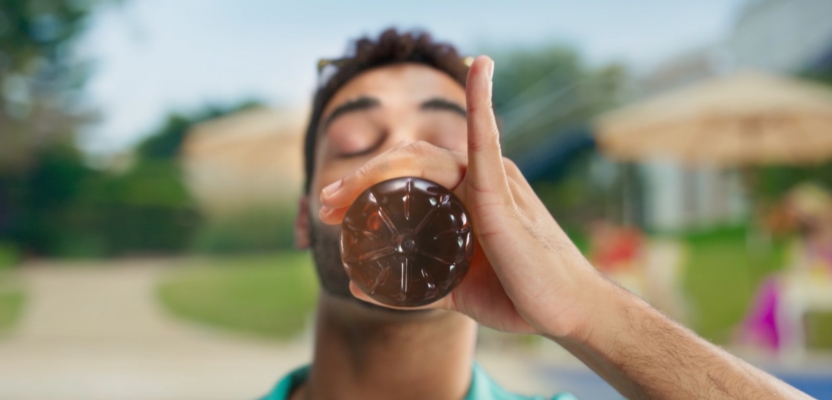
The second path took a more human-centred approach, we tapped into cultural symbolism and behaviour, as human behaviour never gets boring! We leaned into the tradition of raising the Pinky finger while drinking tea, a gesture historically associated with refinement.
The ‘pinkie’ is paired with a unique ‘ting’ sound, representing a signal of positive change through the sound of a teaspoon tapping on the side of a teacup. The unique combination of the pinkie and the ting becomes the new sensory signature, the Lipting, a playful and confident signifier of the summer feeling Lipton Ice Tea brings.
We ended up using a two-way creative street, blending the liquid's physical refreshment with cultural behaviour. This combination brought the concept to life in a way that felt both fresh and culturally resonant.
What was the biggest challenge during production? How did you overcome it?
The biggest challenge during production was finding the right talent who could authentically capture the refreshed, uplifting effect we wanted to convey. It's one thing to tell an actor to look refreshed, but capturing that precise, genuine expression is a different story.
To tackle this, we brought in Jamille van Wijngaarden, a drama director known for her ability to guide actors towards strong and emotion-driven performances. She worked closely with the talent to move beyond simple direction and instead evoke a real sense of refreshment. She is a true specialist at precisely that.
What kit/tools/software were used to create the project?
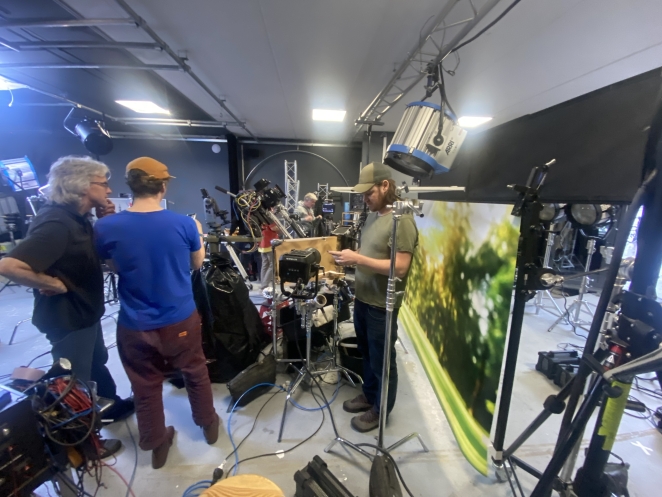
We capture high-speed images using a Phantom camera—an extraordinary piece of equipment originally built to record bullet impacts and other scientific phenomena. We use it to film motion at hundreds of frames per second.
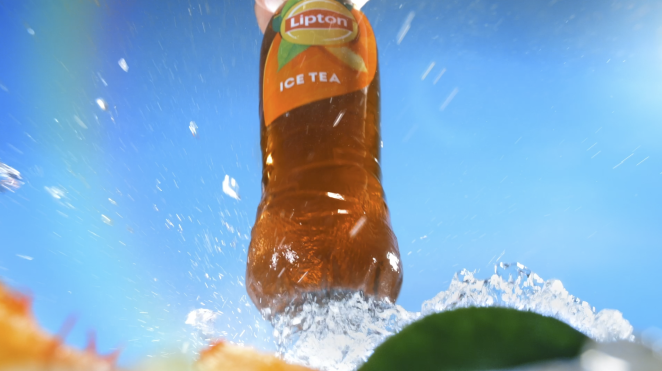
The camera is connected to an array of pistons, electromotors, and custom-built devices that make the tea behave exactly as we’ve designed it to: ripple, gulp, and swirl with intent. Whatever it takes to follow the shot design and make it look irresistibly gorgeous and refreshing. It’s a process fuelled by precision, craftsmanship, and an obsessive eye for detail—where technical mastery meets creative strategy
What is one funny or notable thing that happened during production?
One of the unexpected challenges during production was something as simple as lifting your Pinky. When we asked our actors to take a gulp of Lipton Iced Tea and lift their Pinky in a refined, effortless way, we discovered just how tricky this seemingly small gesture can be.
It turns out that not everyone's hands function in the same way. Some people really struggle to lift their Pinky without the ring finger tapping along, while others extend it so dramatically that it starts to look unnatural. It was one of the strangest, yet oddly specific requirements we've ever considered.
What’s the main message of this project and why does it matter?
‘Tea Changes Everything’ is the brand new communications platform of Lipton Ice Tea. This message emphasises the power of small, everyday moments to create positive change. By reclaiming the Pinky as a modern, playful symbol, the campaign reinforces the idea that Lipton Iced Tea can transform ordinary moments into uplifting experiences.
How long did it take from inception to delivery?
From briefing to delivery and air date, the process took around 1.5 years. It’s a lengthy timeline, largely due to the complexity of coordinating multiple stakeholders. Pepsi Lipton, a joint venture between PepsiCo and Unilever, owns Lipton Ice Tea.

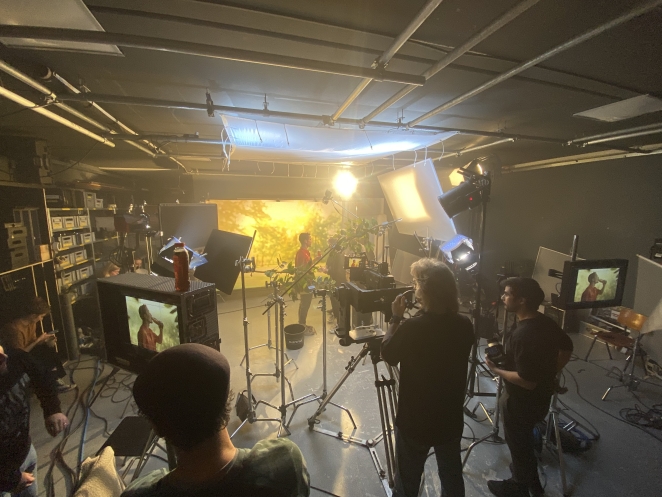
The project involved a wide network of agencies, including creative, design, branding, sonic, culinary, media and many others. This often meant approval of each element was lengthy, but we got there in the end!
Can you discuss any collaborative or interdisciplinary aspects of the ideation process, such as working with other departments or external partners?
The ideation process for this project was highly collaborative, involving numerous agencies and disciplines to create a cohesive final piece. Our primary task was to showcase the liquid and the consumption moment, but this had to fit seamlessly into the broader brand world developed by Design Bridge and Partners and the Adam & Eve DDB.
With so many moving parts, it required dozens of meetings with individuals, agencies, and partner agencies. Given the number of stakeholders involved, this level of collaboration demanded strong leadership and clear guidance from the brands side.
We are proud that the entire global team embraced the sensory signature, including the Pinky lift, as a central element that truly captures the brand's spirit.
Can you discuss any unique or unconventional production techniques or approaches used to bring the idea to life?
We had to get creative with our production techniques to capture the refreshing, immersive experience of a big gulp of Lipton Iced Tea. Since Lipton Iced Tea isn't heavily carbonated like many other fizzy drinks, it allows for a more intense drinking experience, something we wanted to convey visually.
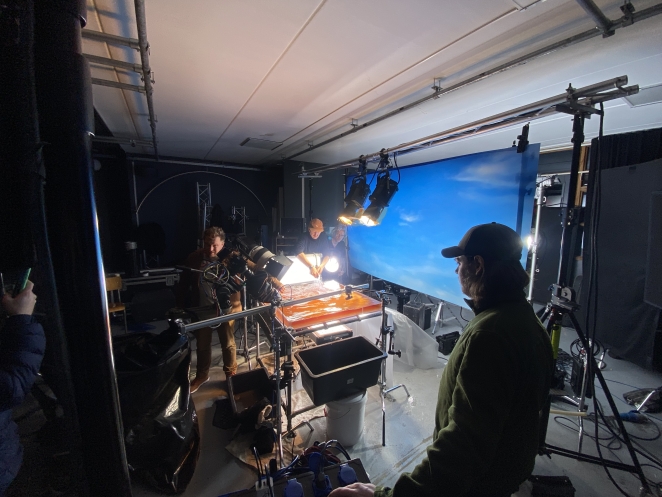
To achieve this, we built a custom, oversized bottle, twice the normal size, to fit our camera lens and capture the wild, swirling movement of the liquid. This larger model gave us the freedom to control the flow, creating a more dramatic, wave-like effect that mirrors the satisfying rush of a big gulp.
How did you ensure that the concept remained innovative and stood out in a crowded marketplace?
The campaign broke away from traditional category codes and leans into thinking of culinary identities. It’s a growing trend in modern marketing: using your actual product to achieve distinctiveness. The creation of the Lipting as a multi-sensory signature, combining gesture and sound, provided a fresh, ownable brand asset that could cut the noise.
What do you hope it achieves for the brand?
We aim to make Lipton Iced Tea instantly recognisable as the brand associated with the Pinky lift, a playful yet distinctive gesture that consumers can adopt. The idea is to create a sensory signature that connects the refreshing experience of the drink with a simple, memorable mnemonic device.
Ultimately, we hope this makes Lipton Iced Tea more distinctive to consumers, creating a lasting association for generations. It's about establishing a cultural cue that signals Lipton's unique, refreshing experience, something that can become part of the brand's identity for the next few years and more.
Credit list for the work?
Chuck Studios
Olaf van Gerwen - Global Creative Director
Ellen Gaedtgens - Managing Director
Gert Jan Timmer - Managing Partner
Erik de Koning, Niels de la Croix, Jamille van Wijngaarden - Director
Michael Brooke, Tom Bakker, Tim Green - DOP
Ellen Timmer - Producer
Stefano Crose - Art Director
Ximena Pineda Stabler - Copywriter
Anouk Schmitz - Account Manager
Pepsi Lipton
April Redmond – Global Chief Marketing Officer
Nipa Shah – Head of Global Marketing
Kevin Evans – Senior Marketing Manager
Agency Partners
Alessandro Foschini - Creative Director
James Cooney - Creative Director
Irina Liechti and Sarah Kavanagh - Producers
Linda Rytterstig - Client Partner
Mark Wood - Creative Partner
Ed Mitchell - Head of Creative Transformation
Sensory Experiences
Russell Jones - Founder, Sensory Director
Dan Rowe - Creative Director
Nikki French - Sound Designer
Adam&EveDDB London
Flemming Lerche - Global Business Director
Scarlett Aldridge - Account Director
Mark Shanley - Executive Creative Director
Sarah Carter - Communication Planning & Strategy
Payton Cox, France Nguyen and Carrie Moores - Producers
Product Benefit and Bubbletalk TVCs:
Agile Films - Production Company
Jeffrey Max - Director
Pirates TVC:
Riff Raff Films - Production Company
David Wilson - Director