

In an age where digital tools dominate the creative landscape, Roy Scorer stands out as a rare illustrator—someone who bridges the gap between engineering precision and artistic flair.
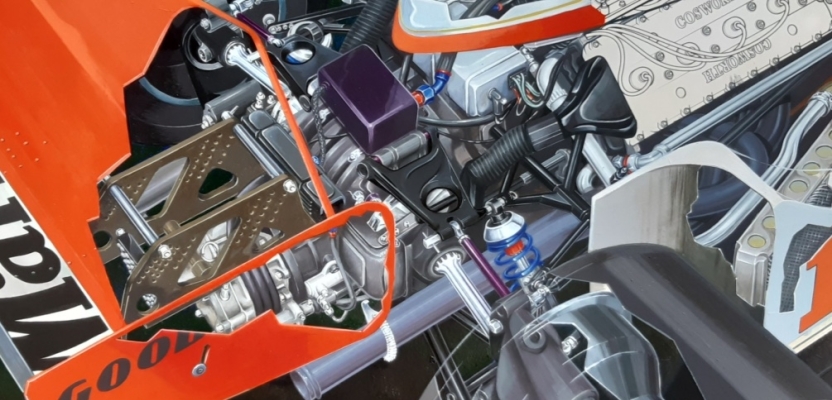
His journey began with a moment of serendipity in a school careers office and evolved into a career spent meticulously illustrating historic race cars. Fueled by a lifelong passion for motorsport and grounded in traditional craftsmanship, Roy's work reflects both an eye for detail and a deep respect for mechanical accuracy.
What sets him apart is not just his style, but his process—rooted in old-school techniques and shaped by decades of hands-on experience. His illustrations don’t just look right; they feel right to those who know the machines inside and out.
In this Member Spotlight, Roy opens up about the path that led him here, the method behind his art, and what keeps him inspired in an ever-evolving industry.
How did you first get into the industry?
Careers office at secondary school. Careers advisor had a poster advertising the course ‘Technical Illustration at Portsmouth College of Art and Design’.
Where are you based now and who do you work for?
Now based at RAF Brize Norton, Oxfordshire. Joint Air Delivery Trials & Evaluation Unit. MoD. Freelance which is where most of the work on my profile is from.
What is your personal background and what role did it play in your career?
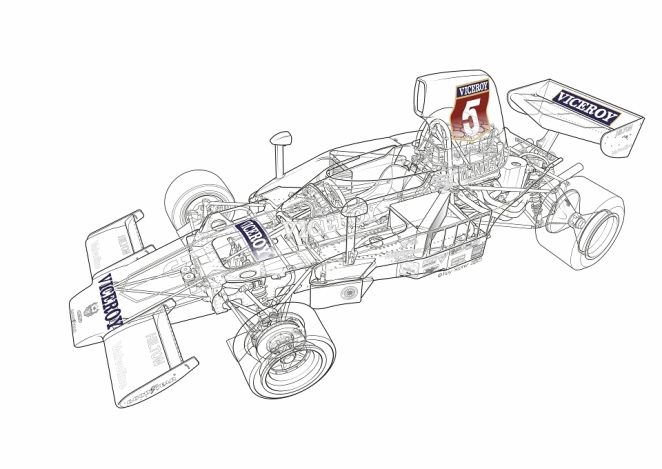
As a youngster, Motorsport was a big favorite as well as art. Autosport magazine in the 80s at least 1 a month there was a coloured cutaway of a racing car. Always wondered how they do it. Then seeing the poster at school which had a cutaway engine. It all clicked that is what I wanted to do.
If you weren’t in your current industry, what would you be doing?
That would be something arty. I always liked signwriting which although a lot is now printed and stuck onto race cars, works vehicles etc there is still a requirement for traditional signwriting. Shame I cannot say the same about technical illustration.
Can you explain your creative process? What makes it unique?
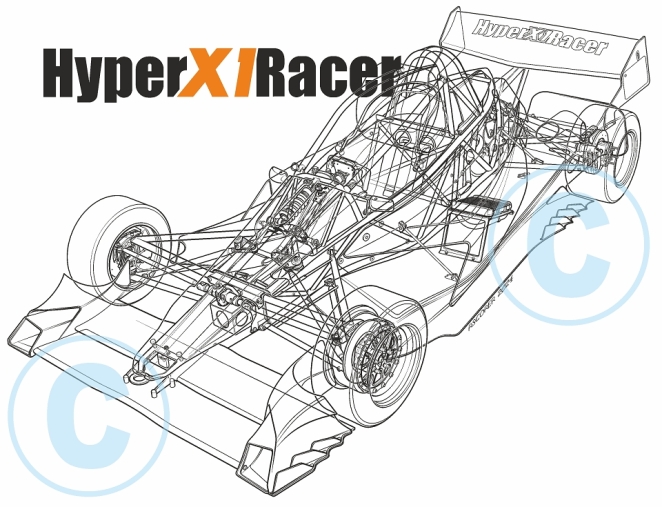
This depends on what the final image is going to be. With the historic race car project, there were all designed pre computer. Drawing board engineering or even workshop making something that fits and does the job.
So an understanding of what I am looking at to then put that across in a way that a race car mechanic will not look at it and think that looks wrong or out of place. So for these cars, about 200 photos of each car. They are not local to where I live so if I miss an item, it is going to be another long trip to get it.
How would you describe your style?
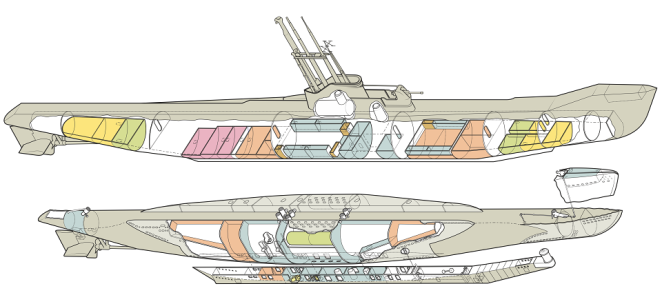
Detailed, precise with an artistic twist on what I was taught at college and my first couple of jobs after.
Which individuals do you gain inspiration from? Do you have any heroes in the industry?
Tony Matthews, Kevin Hulsey, David Kimble
What tips would you give to aspiring creatives looking for work?
You need to find that style, or approach that will stand out from the vast number of creatives all aiming for the same as you. Whatever it takes to get noticed
What tips would you give to other professionals to get more clients?
Perseverance is the main thing. Have faith in what you do
Can you share a memorable experience from your career journey that shaped your approach to creativity?
Producing my first race car cutaway and the response was very flattering.
What kind of tools/kit/software could you not do without?
Not sure. All done on a PC but could quite easily do it on a drawing board. Which would look a lot nicer to have a pencil illustration and an inked version. But more time consuming.
What’s your secret to staying inspired and motivated?
No secret. I just enjoy producing the illustrations.
What’s the work achievement you’re most proud of?
Tricky as it is only about 33% done. A hand painted cutaway illustration of a F1 race car. James Hunt McLaren. Started painting it in my lunchtime at work as there is a drawing board no one uses. Covid Pandemic put a halt on it.
I do not have the room at home and only go into the office 2 days a week, work flat out and then home. Maybe when I retire I will make room at home for the drawing board. For finished work. My first project for Haynes manual on Heathrow Airport.
As someone with experience in the industry, what trends do you foresee shaping the future of creativity?
Traditional artwork, sketches with pencil and paper, airbrushing will all end up digital. Ctrl Z (undo) is great, were as if you need to change a colour, it is easy instead of a possible restart.
What do you think sets apart truly exceptional creatives from the rest of the pack?

In technical illustration. An eye for detail. Producing one of those pieces where the more you look at it, the more you see and then see something different the next time you look at it.
How do you think technology has influenced the creative industries and how have you adapted to these changes?
Technology has been the cause of the demise of technical illustration. No longer taught in Colleges or Universities since 1988. It is now an extension for design engineers with CAD who then need to view their item in 3D. So the invention of 3D software (technical illustrator) was created.
What is the one thing that you would change about the industry?
Nothing to change. It is evolving and producing very complex illustrations and technology will make it easier and quicker to get to the final product.
Any websites, books or resources you would recommend?
For traditional illustrations. A book in 2 volumes. The Grand Prix Car by Laurence Pomeroy. There is plenty on the internet and various forums. But these generally tend to show and re show traditional artwork and discussions on the great technical illustrators no longer with us.