


Miguel Angel Martinez doesn’t just design brands—he feels them. From the aromatic swirl of hand-poured candles to the crisp lines of a luxury skincare logo, his career has been a masterclass in translating emotion into visual language. Now a sought-after freelance graphic designer and art director in London, Martinez’s path—a 15-year detour through creative operations, a five-year stint as a fragrance entrepreneur, and finally a leap into design—reads less like a resume and more like a manifesto for curiosity.
“I’ve never been afraid to start over,” he admits, sipping coffee in his Shoreditch studio. “But really, it’s all connected. Whether I’m crafting a scent or a website, I’m solving the same problem: How do you make something unforgettable?”
The Art of Reinvention
Martinez’s first act was in creative operations, where he managed workflows for agencies and production houses. It was here, amid spreadsheets and deadlines, that he developed what he calls “the architecture of creativity”—a blend of strategic rigor and empathy. “Operations taught me to see design as a conversation between logic and magic. A brief isn’t just a checklist; it’s a puzzle where every piece has to click emotionally and commercially.”
But it was his second act—founding the artisanal fragrance brand Elm Rd.—that sharpened his design instincts. As a solopreneur, he became a one-man creative army: designing minimalist amber bottles, handwriting product cards, and hauling his wares to craft markets. “I’d watch customers pick up a candle, run their fingers over the label, and smile. That’s when I realized design isn’t about pixels or Pantones. It’s about touch. It’s the difference between someone glancing at your product and needing to own it.”
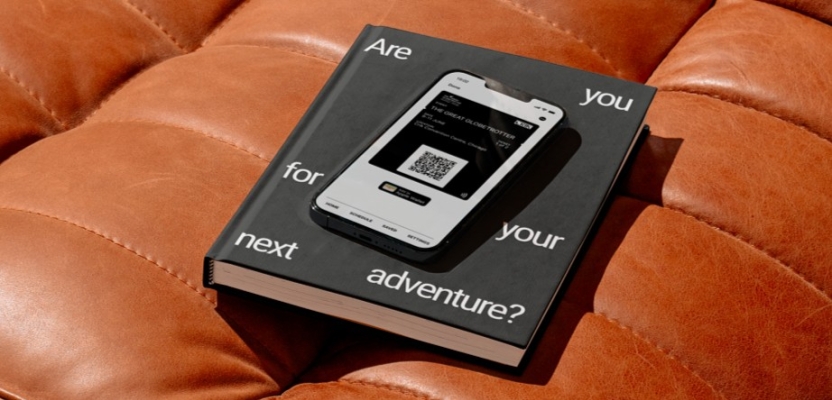
When Elm Rd. landed on shelves at Selfridges and Hong Kong’s iconic IT store, Martinez had a revelation: “I didn’t just love building brands—I needed to do it full-time.” In 2020, he launched Modus Creative, his freelance studio, merging the precision of his operations background with the tactile storytelling he’d honed in perfumery.
Design as Dialogue
Ask Martinez about his creative process, and he’ll tell you it starts with listening. “Clients often come to me with a vague vision—‘elegant but edgy,’ ‘modern but warm.’ My job is to dig into the why. What keeps their CEO up at night? What does their audience secretly crave?” He spends days immersed in a brand’s world before sketching a single concept, creating mood boards that blend competitor analysis, cultural references, and what he cheekily calls “soul scraps”—tiny details that give a brand heartbeat.
His style, a marriage of Swiss modernism and Japanese wabi-sabi, leans into “quiet impact.” Take a recent project for a boutique hotel: a logo that looks like abstract brushstrokes at first glance, but subtly forms the silhouette of the building’s 19th-century facade. “The best designs reward attention. They’re like a song where you discover new harmonies every time you listen.”
This philosophy stems from his love of cross-cultural inspiration. While many designers obsess over trends from Milan or Brooklyn, Martinez finds muse in unexpected places: the asymmetry of a Kyoto tea garden, the typography on a vintage Cuban cigar box, the way light filters through his grandmother’s lace curtains in Madrid. “Great design doesn’t have a passport. It just needs to make you feel something.”

Freelancing in the Age of AI
As the creative industry grapples with AI’s rise, Martinez remains a cautious optimist. “Tools like Midjourney are incredible for brainstorming—type ‘psychedelic Nordic spa’ and suddenly you have 50 concepts. But they can’t replicate the human messiness that makes brands relatable.” He recalls a client who rejected a sleek, AI-generated logo in favour of his hand-drawn concept inspired by their founder’s childhood doodles. “That logo wasn’t ‘perfect,’ but it had cracks where their story could shine through.”
For Martinez, technology’s true power lies in democratization. “When I started, you needed a $10k Adobe suite and a print shop connection. Now, a kid with a Figma account and a TikTok tutorial can design circles around corporate agencies.” His advice for standing out in the noise? “Specialize in the invisible stuff. Anyone can make a pretty Instagram tile. Can you design a checkout flow that feels luxurious? A packaging system that reduces waste without looking crunchy? That’s where the future is.”
Confessions of a Recovering Perfectionist
Martinez’s most revealing moment comes when discussing failure. Early in his freelance career, he pitched a major beauty brand with a campaign inspired by Brutalist architecture—all harsh angles and monochrome palettes. “They hated it. Said it felt ‘cold.’ I realized I’d prioritized looking clever over understanding their audience’s desire for warmth.” The experience became a turning point. Now, he starts every project with what he calls “the empathy audit”: interviewing a brand’s customers, lurking in their social media comments, even visiting their retail spaces incognito. “Design isn’t about you. It’s about holding up a mirror to someone else’s truth.”
This humility extends to his mentorship of younger designers. “I tell them: Your portfolio needs fewer pieces, not more. Show me three projects where you transformed a business, not thirty where you just made things pretty.” He also champions what he terms “ugly drafts”—sharing unfinished work early to avoid costly detours. “We’re trained to hide our process, but vulnerability builds trust. A client would rather see five rough ideas and help shape the winner than get one polished ‘meh.’”

The Scent of Legacy
Though he left the fragrance world behind, its essence lingers in his work. He compares building a brand to composing a perfume: “You need top notes—the instant attraction of a gorgeous logo. Heart notes—the emotional resonance of your messaging. Base notes—the lasting impression of seamless UX.” This multisensory approach has become his signature. For a wellness startup, he designed packaging with embossed patterns meant to be traced mindfully during unboxing. “Tactility is memory. If someone remembers how your product felt, they’ll forget your competitors.”
When asked about his dream project, Martinez grins. “I’d love to rebrand a centuries-old European perfume house. Imagine merging Gothic typography with AI-generated scent visualizations… Wait, can I pitch that right now?”
Final Notes
As our conversation winds down, Martinez reflects on the thread tying his eclectic career: “Curiosity. Whether I’m coding a website or studying how a bartender garnishes a cocktail, I’m always asking: What makes this matter to someone?” It’s this relentless hunger—to feel, to connect, to find the human pulse beneath every pixel—that makes Miguel Angel Martinez not just a designer, but a modern-day alchemist.