

Matthew Huntley's creative journey is anything but conventional. From growing up on a remote Australian farm to becoming a London-based filmmaker, cinematographer, producer and director, his career has been shaped by curiosity, resilience and a deep appreciation for visual storytelling. In this interview, he reflects on the experiences that led him into the film industry, the lessons he's learned behind the camera, and the creative philosophy that continues to drive his work.
Matthew also shares practical advice for aspiring filmmakers and creative professionals, discussing everything from networking and developing authentic craft to navigating the rise of AI in filmmaking. Whether you're starting your creative career or looking for inspiration from someone who has worked across documentaries, commercials and branded content, his insights offer an honest look at what it takes to build a lasting career in film.
How did you first get into the industry?
 The short version - I answered an ad for a role as an in-house production assistant at a low budget commercial production company in Melbourne.
Where are you based now and who do you work for?
I’m based in London, and I’m self employed. I also produce work through my own limited company, SGF Ltd.
What is your personal background and what role did it play in your career?
 I grew up on a farm and went to school in reasonably remote part of country Australia, and was one of three people studying art in my final year of secondary school. The school was used to turning out people who would inherit their family farms, or head to the cities to study law, economics, engineering or science. My teachers really didn’t know what to do with me - the only half formed idea I had about my future revolved around being a comic book artist.
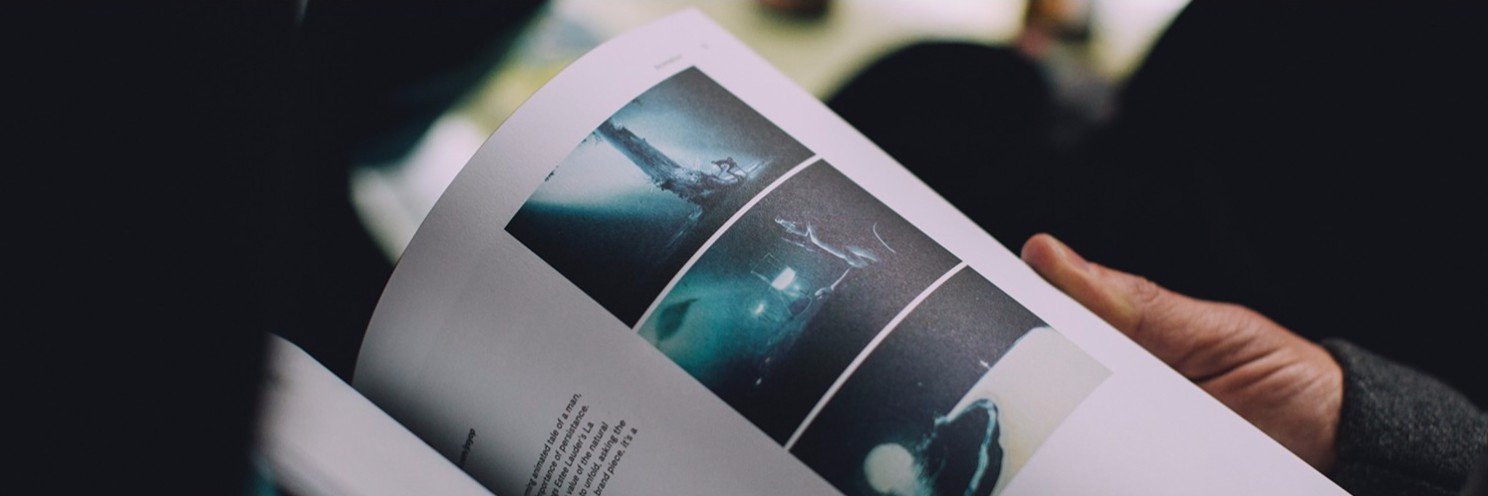
My head of year teacher suggested graphic design was the thing for me. So I went off and studied that for a year at college, and unsurprisingly had a pretty hard time. However while at secondary school I had also been the school’s film projectionist - every Saturday night we’d have a screening - and so film kind of worked it’s way into my understanding of visual gramma. My final year art project - a graphic novel/story about whale hunting - I still find interesting compositionally as it’s effectively 16:9.
Anyway after spending a year trying and failing at graphic design, I left and worked through a series of hospitality jobs before bizarrely landing a role as a production assistant making low budget tv commercials at a small production company in Melbourne. From there I branched out into working on lighting crews for theatre, TV and music, before getting a place at the 3 year BA course at the Swinburne Film School in Melbourne. And then studying cinematography at the Australian Film, Television and Radio School in Sydney.
If you weren’t in your current industry, what would you be doing?
Probably restoring/rewilding nature, or organic farming. Something outside and physical, doing some good in the countryside/wilderness.
Can you explain your creative process? What makes it unique?
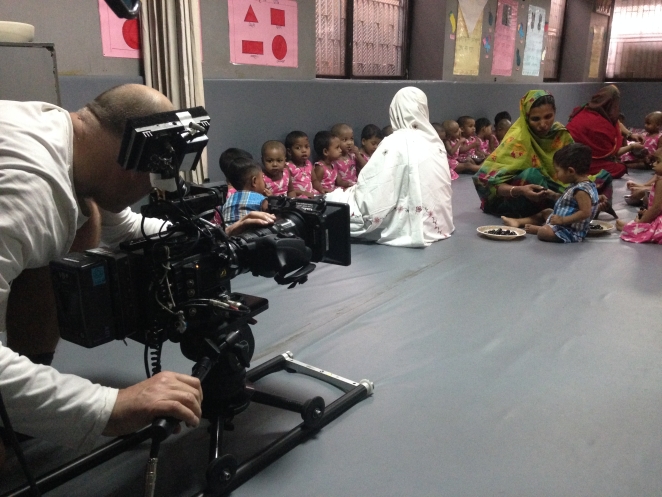 This is difficult to answer because while I do have a conscious process, I also think that a kind of over-analysis can damage the creative outcome, or render it less authentic, less fresh somehow. I’m under no illusions that what I do is ground breaking creatively. But it is honest, and craft (which I love) is at the heart of it. So… in the moment it’s decisions around craft, scratching a creative itch, and/or responding to the limitations of the environment or my resources to achieve a result.
Critically too, I like people and know for certain that the creative relationships you forge when working really do find expression on screen. I’m a firm believer that the work should be fun or at the very least satisfying for everyone involved. You will see it in the work.
How would you describe your style?
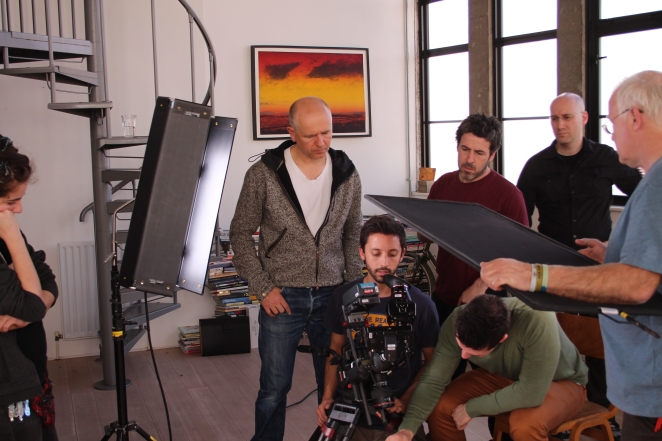
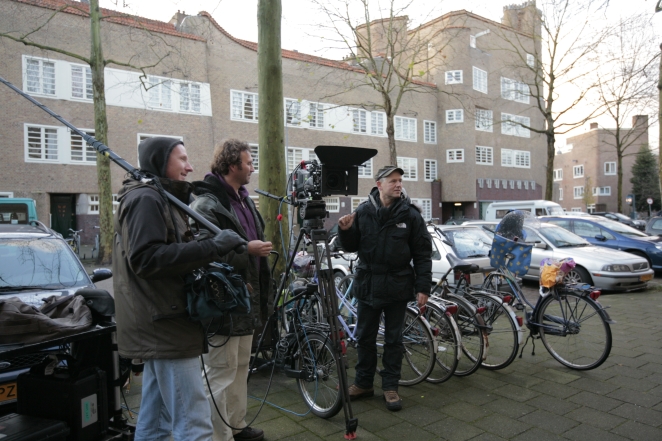
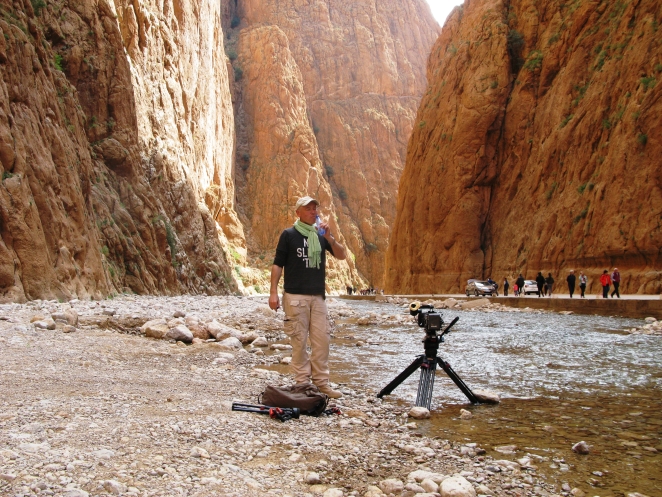 I learn’t a valuable lesson through my years as a jobbing camera operator/DoP and that is I often worked on projects where I’d meet a director and the rest of the creative team with little or no preproduction time. This meant I had to get on board with their ideas really quickly, often responding from gut instinct, and working with limited resources. If you work this way often enough, and for long enough, you develop a pretty lithe skill-set where you’re able to offer a range of creative solutions in short order. I try to carry this approach into my directing work, however I have to acknowledge different things are expected of me and this needs to be balanced against producers who understandably have to hedge against risk.
So, in brief, I can bring a documentary sensibility to projects I’m engaged in. I know how to respond quickly and credibly to situations playing out in front of the camera so they have life and energy. I also have a solid grasp of technical production throughout the process which has definitely come in handy, in shaping projects with complex post-production pipelines for example. Beyond that I think I’m pretty flexible when it comes to craft. The other aspect of this is social.
I have seen many times down the years, certainly when working behind the camera, how people’s social persona effects the result. I have had the great fortune to work with some very charismatic directors and crew who motivate people in ways that are then evident in the finished projects. I have also seen the opposite on a couple of occasions. I know which side of that equation I prefer to be on and have seen it play out positively in my work as a director.
Which individuals do you gain inspiration from? Do you have any heroes in the industry?
From a camera perspective; John Seal, Dean Semler, Roger Deakins, Robby Muller, Mandy Walker, Russel Boyd. Too many director’s to mention but here are some: Krzysztof Kieślowski, Kubrick, Peter Weir, Sofia Coppola, Kathryn Bigelo, Paul Greengrass, the list goes on.
One of the biggest influences on me though is music which is often the catalyst for creative day-dreaming. It gets the boulder rolling down the hill so to speak. I listen widely, but give MOR a wide swerve.
What tips would you give to aspiring creatives looking for work?
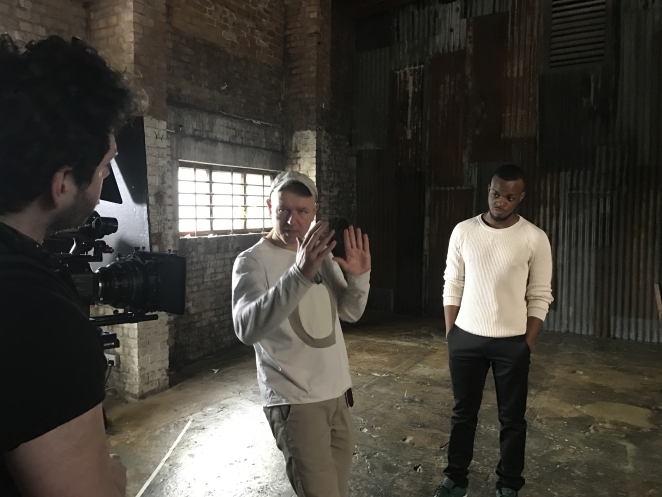 The million dollar question. Firstly there’s never been a more open time to be a creative in film/TV/video. Highly capable cameras are cheaper than ever before. As are powerful computers and postproduction software. You also have access to distribution in ways previously impossible not that long ago. Curiously this “abundant opportunity” can work against creativity (I think at least) because the dirty secret of creative endeavour is that it needs friction, resistance, a bottle neck, scarcity of, well, something. So here’s my advice:
1. Be self aware. You’re a creative so being weird is important and expected, in curated amounts. You’re expected to come at life from strange angles. But… learn to read a room. You want producers and collaborators to want to work with you, so don’t put them off.
2. Be extremely careful of AI. Your development as a creative is inextricably linked to your fearlessness, willingness to iterate through work, and emergent ability to think critically. There are no short cuts. Fail. Then fail better next time, and the next, and the next etc. Do NOT out-brain your core creative development. How do you tell the difference between “core” and “non-core?” That genuine insight is retrospective. Proceed very cautiously.
3. A sound recordist I worked with ages ago used to say “A job for nothing only gets you another job for nothing”. So find out where your rate sits relative to other people doing what you do and price yourself in line with them. This isn’t a hobby. It’s business. The corollary of this is you need to deliver. You cannot phone-it-in or half arse it. If someone wants to pay you for your work, and you’ve said yes to the gig, you better make sure you can guarantee your participation and pull it off. This is what makes professionals. And garners respect.
4. I think (Ok, hope) authentic, credible, documentary work is going to be more resilient to AI. People crave stories they can trust. It’s critical for us to be able to depend on our information and the stories we live by. If you believe this - as I do - and are willing to invest time in the craft of telling stories in this way, I think you may have the best chance to eke out a living. As a bonus too, documentary gets you out into the world with real people. It’s a great experience. Sitting at a computer prompting a sunset view does not beat climbing up a hill to shoot a sunset view.
What tips would you give to other professionals to get more clients?
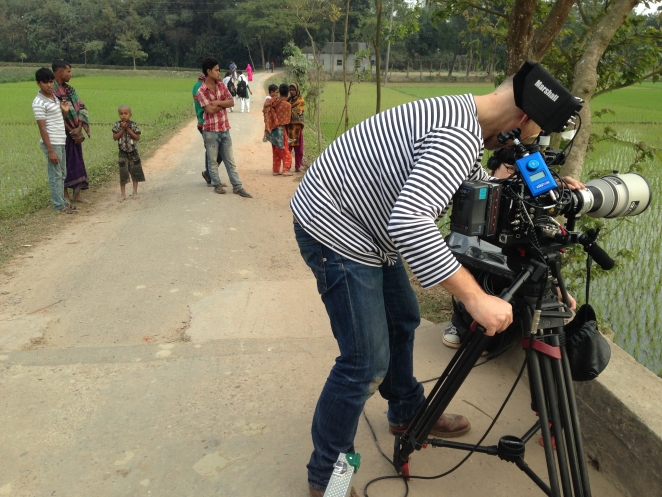 I honestly don’t know. Being good at what you do isn’t enough on its own. Networking definitely helps but isn’t enough on its own. Being fun to be around and work with is vital. All of these things are essential. But the reality is getting work has always been tricky and these days it’s really tough. You’re up against enthusiastic amateurs in production houses, marketing departments with Canva and Runway accounts who can get to a slick looking result in seconds. That it’s soulless and looks like all the rest of the mush out there won’t matter to them as they’re also trying to justify their salaries and won’t have the budget for humans. Tough to hear this but I think it’s where we’re headed.
Can you share a memorable experience from your career journey that shaped your approach to creativity?
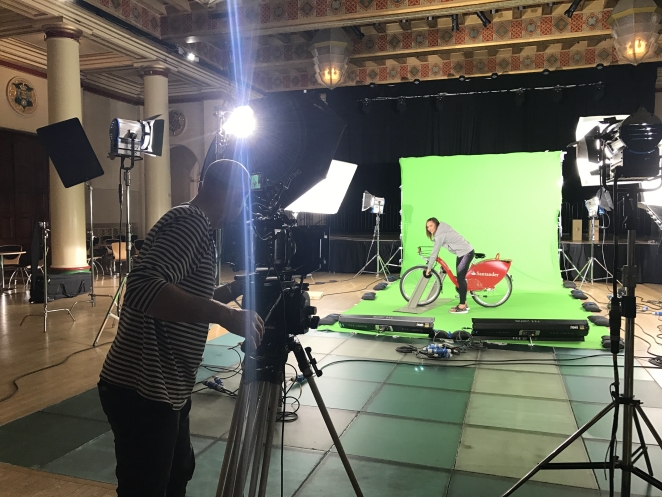 My first proper pay-check in the UK for three days of camera-work was a revelation. I’d arrived in Scotland on a one-way ticket from Australia. I had a back pack and my camera assistants bag, and I was living with my then girlfriend in Edinburgh.
I’d had a series of tough production experiences as a camera-man in Sydney before I left, and was in half-a-mind to concentrate on some writing I was doing. Three months in, and a series of jobs working in cafe’s later, and I was making coffee in a tent next to the Art Gallery in Edinburgh during the Edinburgh Festival. The manager - a rather tragic young David Brent figure - was walking around handing out pay-checks and giving the staff (Mostly University students) really terrible corporate motivational advice. I looked out of the door of the tent and saw a BBC Culture Show television crew at work with a presenter. I then looked at the pay I’d just received for the week of work and thought: “I’m going to have to go home. I can’t survive on this”.
The next day I went into a broadcast facilities house with my CV and show reel of camera work, and the day after I got a call about shooting for an American production. It was Barney the Dinosaur visits the Edinburgh Festival. What followed was three days of genuinely surreal filming experiences too long to go into here - though rather satisfyingly, I was shooting at one point within view of the cafe tent I’d been working in just a few days prior, and the expression on the managers face when he saw me was priceless. Anyway the pay-check for those three days kept me going for a month.
That job opened the door to many more, crucially in documentary, which I’d never really considered before. The big realisation was about confidence and self-awareness. I was a complete outsider in Scotland. However knowing no-one turned out to be an advantage in that precise moment as I was unencumbered by familiarity or expectations beyond being capable and sociable. It allowed a measure of reinvention and a route to be more forthcoming with collaborators about creative solutions.
As a director the realisations are often subtler. Navigating ego and interpersonal politics becomes a bit more of a factor. As a director you have to play a longer game and the sense of creative achievement can come often much later, and wrapped in strange clothes. I was working on an advertising project for a commercial production company in London run by quite a tricky man who was very hands on with the particular project I was engaged in at the time - a spot about international energy. In essence he’d sketched out the basic scenario and the producers had hand-balled it on to me to develop into a production ready script. I looked at the idea and could see the potential for something quite different and better than the rather beige “comedic spot” he’d come up with.
I had a moment of inspiration requiring a 3D graphic effect that would take place over the centre of London. I mocked it up into a storyboard which I presented. The images were quite graphic and a departure from what I’d been presented with, and immediately hooked the producer and the owner, and they green lit the production.
The finished spot worked well in the end, and I later overheard the company owner and one of the senior account managers at the Christmas party describing to someone else how they had developed the concept and were proud of it. And it didn’t bother me in the slightest, in fact I thought was funny. But the lesson is you’ve got to let everyone win in these circumstances. And there’s no reputational harm in this. Be happy that you did the job you were booked to do and everyone is pleased. You got your fee, your name is attached as director, and it’s part of your portfolio.
What kind of tools/kit/software could you not do without?
A good Leatherman (or similar) multi-tool is essential. A cine-saddle for hand-held/bonnet-mounts/low angle camera placement.
Fade-in screen writing software - brilliant, simple, and intuitive. DaVinci Resolve is great, even the free version. A sketch book. A good laptop.
Finally, there’s no such thing as bad weather. Just bad preparation. If you’re shooting outside, make certain you have appropriate clothing. And carry snacks.
What’s your secret to staying inspired and motivated?
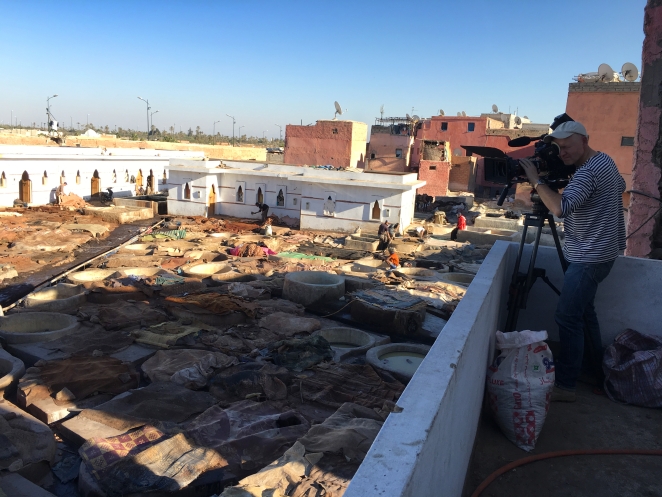 A good night’s sleep. Good tea and/or coffee. Exposure to culture - galleries, films, theatre, books and music. Good collaborators. And a sense of humour.
What’s the work achievement you’re most proud of?
I’ve been very lucky and had so many wonderful experiences with work, but I really don’t think about the achievements much after the fact. Work I’ve made has been recognised a couple of times which has been nice. And I’ve felt satisfaction many times when production aims have turned out well. But when I look at it, it’s genuinely the experiences I’ve had while making things that resonate still.
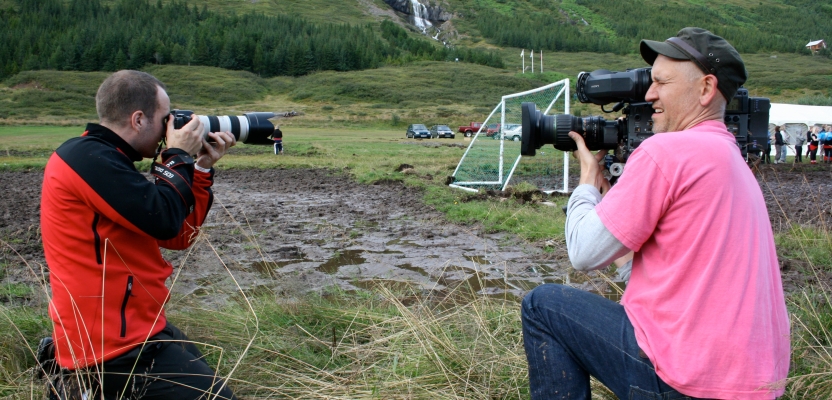
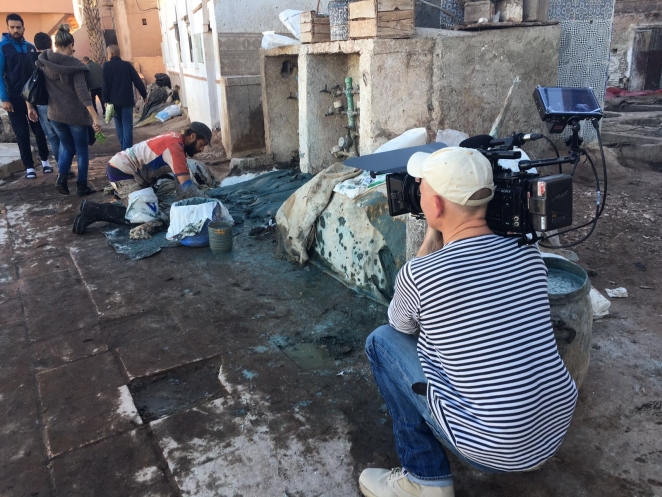
For example one of the most wonderful experiences I’ve had was floating in a dry suit 14 nautical miles off the coast of Iceland filming thousands of Gannets circling a sea-stack called Eldy which launched 400 feet out of the air above me. The support boat had motored away out of shot, and there was just me and a director bobbing about in the depthless black freezing sea. That was amazing. When we got back on the boat after 40 minutes of shooting, one of the deckhands asked me if I’d seen the killer whale… Which I hadn’t unfortunately. I wish I had.
As someone with experience in the industry, what trends do you foresee shaping the future of creativity?
 It’s impossible to ignore the penetration of AI into creative work. I’ve used it once, partly just to see what it was capable of, and partly because there was no other way to realise the ambition of the project within the budget I had. But for all the reasons I’ve laid out earlier, I am extremely cautious and wary about it. Especially when it comes to writing.
What do you think sets apart truly exceptional creatives from the rest of the pack?
Firstly, resilience. A willingness to take risks and work hard. A great set of “aerials” because you need to have a good idea of what’s going on, both in the culture, but also the physical world around you. Keep your ears open for good stories. Keep you eyes open for the way light falls on people, landscapes, and in spaces.
And nurture those great collaborative relationships with people you riff with. They’re gold.
How do you think technology has influenced the creative industries and how have you adapted to these changes?
 When I started out the camera in the production company I worked at was pretty big, and was connected to a big box that took big cassettes. Using it was definitely a two person operation, and the camera was SD resolution, so 720 x 480 pixels, there or there about’s.
My iPhone shoots 4K. I still find this miraculous.
More generally I think non-linear editing has been a marvellous development enabling people to prototype creative solutions quickly, but also finalise work, on a laptop or a tablet no less.
Overall technological change has enabled us to work faster and with greater quality. I do miss the dwell time though - time to think problems through. Technology has eroded this significantly and I think it’s visible in some work.
What is the one thing that you would change about the industry?
I have been around people who treat this business as though it’s life or death, and while I understand that often we work on productions where significant sums of money are being spent, it’s really important that we try to maintain a healthy perspective about what we do.
Most people in this industry would agree that in one former another, they work in advertising or entertainment. So we don’t have to decide who gets the kidney. I think we’d be happier, more creative, and much less stressed if sometimes we took a breath and reframed our perspective.
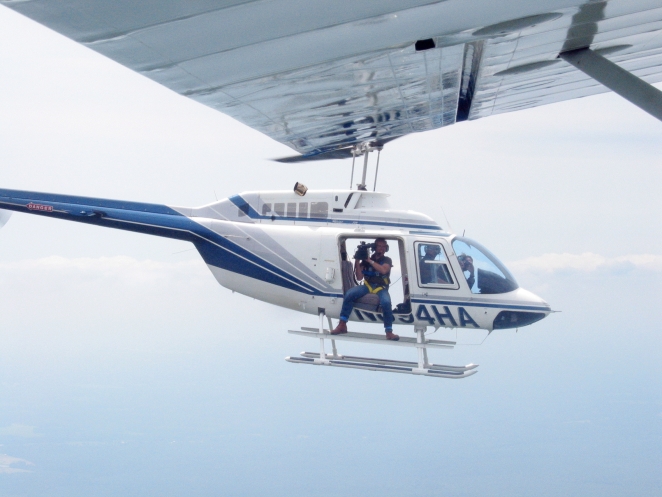
Additionally there are very real health and safety concerns that come baked in with this business. It’s very easy to launch into set-ups or scenarios without giving proper attention to risk. I know. I’ve done it and been fortunate. But I was onboard a helicopter that got into difficulty flying in bad weather because the owner of the production company I was shooting for pressured the pilot to fly into low cloud over tricky terrain.
Finally it’s a tricky business at the best of times so treat people as you want to be treated.
Any websites, books or resources you would recommend?
 The Scriptnotes podcast is ESSENTIAL listening. Craig Mazin and John August host a weekly podcast about screenwriting, but it’s so much more.
The Team Deakins podcast is highly recommended. The amazing cinematographer Roger Deakins and his wife can pretty much pick up the phone to anyone in the film business and get them in for a conversation. Definitely worth the time.
And graphic novels are an amazing way to get your visual storytelling muscles going. And they cover all genres. It’s not just men and women in tights & capes anymore…
Studio Binder is a wealth of information and resources for those beginning their journey into filmmaking.
Lastly films. Watch films, and more films. And long form serials too. Here are some recommendations:
Station Eleven. Babylon Berlin. Chernobyl. The Last of Us. Adolescence. The Worst Person in the World. Force Majeur. Blade Runner - the original and 2049. Arrival. The 400 Blows. Alphaville. High Plains Drifter. Bad Day at Black Rock. Mad Max 1,2, & 4. (3 was taken over by the art department and not in a good way.) Wake in Fright. Picnic at Hanging Rock. The Beat My Heart Skipped. The Great Beauty. La La Land…
Too many to mention.