

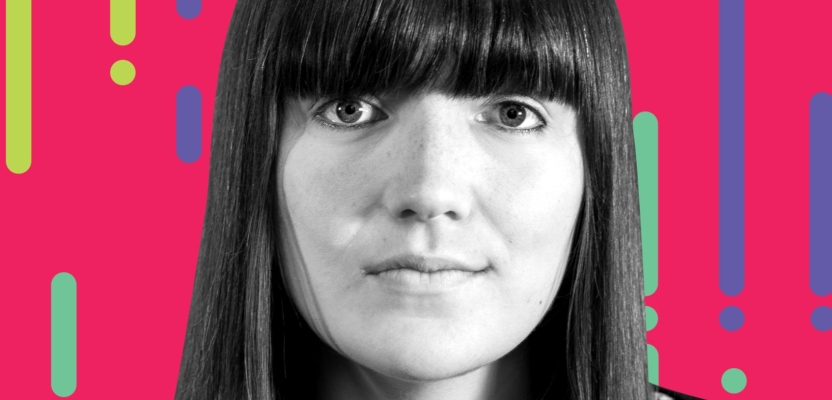

In a world where the digital landscape shifts in the blink of an eye, Melissa Chapman shatters every stereotype of what a CEO should be. From her unconventional beginnings as a part-time social media manager to leading a powerhouse agency that redefines content and creativity, Melissa’s journey is a masterclass in adaptability and bold innovation.
Eschewing routine for a dynamic mix of strategy sessions, trend-spotting, and real-time campaign launches for brands like Disney and PepsiCo, she drives Jungle Creations with a fearless commitment to empowering her team and challenging the status quo. This is a story of a leader who isn’t content with following the rules—but rewriting them.
Tell us a bit about your role! Is there a “typical” day?
Absolutely not. If there was, I would probably get bored. My job as CEO is to drive the vision of Jungle Creations, a publisher-powered agency delivering social, influencer, production, and creative. That means keeping us ahead of the ever-changing digital landscape, ensuring brands see the real impact social can have, and most importantly, collaborating alongside an incredible team that makes it all happen.
One minute I am in strategy meetings, the next I am working through the latest platform shifts and reviewing a campaign that is about to go live for the likes of Disney, Red Bull, DFS, Heineken, or PepsiCo. Never dull, always evolving.
What was the biggest challenge in getting to your current position?
Apart from navigating an industry that changes by the minute? Learning to back myself. I did not set out thinking, "One day, I’ll be a CEO," but I realised early on that success in this space is about being adaptable, making bold decisions, and not waiting for permission.
Another challenge was shaking off the idea that leadership has to look a certain way. I used to think CEOs had to be perfectly structured, emotionally predictable, and up at 4 am for a green juice and a run.
That is not me, and that is fine. Once I stopped trying to fit into that mould and embraced my own leadership style – one that prioritises collaboration, bold ideas, and surrounding myself with brilliant people – everything clicked.
What is your personal background and what role did it play in your career?
I initially aimed to become a barrister but quickly realised that the legal world was not where my passions lay. After taking some time off and working at Asda, I found myself drawn to journalism, just as digital media was beginning to take off.
I joined Jungle Creations as a part-time social media manager while finishing my dissertation, thinking it would be a good experience. I fast-tracked my degree, joined full-time, and became the company’s first employee. Since then, I have grown with the business, working across content, brand strategy, and commercial growth before stepping into the CEO role.
Not having a traditional career plan actually worked in my favour. It meant I was open to opportunities and willing to take risks. I have always been competitive and driven, but the biggest lesson has been that success is not about following a set path. It is about finding where you thrive and running with it.
What is your biggest career-related win? What is your biggest loss?
Scaling Jungle’s media brand audiences from one million to over 150 million followers and expanding into new revenue streams across multiple territories has been a huge achievement. Leading campaigns that have driven millions of views and tangible brand impact for clients like Wasa, Clarins, and Symprove is something I am really proud of.
The "Little Casanova" campaign for Yoti stands out in particular. It was not an easy sell, but we knew we could make it work. The campaign ended up generating 40 million organic views and winning a Cannes Lion, proving the power of smart, social-first storytelling.
As for losses, there was a time when 90% of our revenue came from Facebook. Every algorithm change felt like a gamble, and it was a wake-up call that we needed to diversify. That experience shaped how we operate today. Now, we focus on a multi-platform, multi-revenue model, making us far more resilient.
Which individuals and/or agencies do you gain inspiration from? Do you have any heroes in the industry?
I have always been drawn to people and agencies that challenge the status quo and redefine the space they operate in. Jungle was built with that same mindset, which is why we have grown into a publisher-powered agency delivering social, influencer, production, and creative.
We never followed traditional media playbooks, and that has been our strength. The businesses and leaders I admire most are the ones who take risks, adapt quickly, and push boundaries in ways that actually make an impact, rather than just making noise.
What advice would you give to your younger self?
Back yourself more. You do not need to have everything mapped out, and you definitely do not need to fit into a mould to succeed. The things you think make you different are actually your strengths. Also, stop overthinking whether you belong in certain rooms. One day, you could be leading them.
If you weren’t in your current industry, what would you be doing?
I’ve always fancied being a detective. True story, I actually looked it up once. I’ve always been into problem-solving, understanding people; what makes us all tick, and figuring out what’s driving everything we do beyond the surface level.
Escape rooms and board games are my thing—there’s something about the challenge and strategy that keeps me hooked. So, I’d probably be looking for something where I can keep my mind busy, work through challenges, and always have a bit of mystery to solve. It’s not all that different from navigating the social landscape.
What’s your one big dream for the future of the industry?
For social-first brands to be recognised for the real-world impact they create. Too often, social is treated as a nice-to-have when in reality it is one of the most powerful drivers of culture, conversation, and commerce.
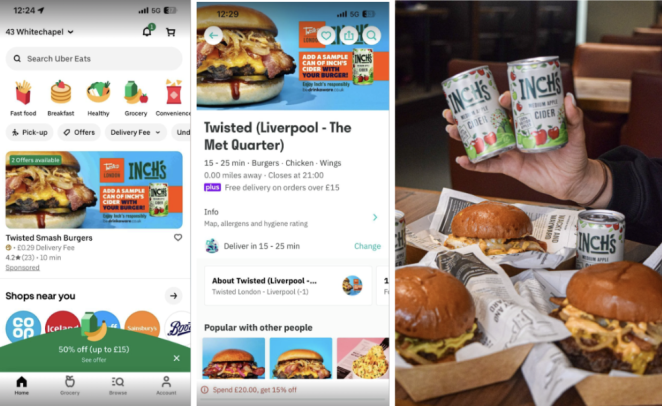
At Jungle, we have built a model that takes brands from URL to IRL and back again. Twisted started as a content brand and is now a restaurant, a cookbook, and a product line in supermarkets. The industry is shifting, and the brands that embrace this full-circle approach where content does not just drive engagement but real-world action will be the ones that thrive.
What are your top tips for aspiring creative professionals?
- Be yourself. Do not try to fit into a mould of what you think a creative professional should be. The best ideas come from individuality, not imitation.
- Be proactive. If you spot a challenge, come up with solutions, not just problems. It is one of the fastest ways to build trust and autonomy.
- Stay adaptable. The only constant in this industry is change. What works today might not work tomorrow, so being able to pivot and rethink your approach is essential.
- Understand platforms deeply. Success in social is not just about making good content, it is about knowing where and how to distribute it so it lands with the right audience.
- Build real communities. Social is not just about amassing followers, it is about creating something people want to engage with and be part of. That is where the real impact happens.
What are your top tips for other creative leaders?
- You do not have to be the best at everything. Leadership is about surrounding yourself with brilliant people who fill your gaps, not trying to do it all yourself.
- Create a space where people feel empowered to take risks. The best work comes from teams that feel trusted to push boundaries without fear of failure.
- Stay adaptable. This industry moves fast. What worked six months ago might be irrelevant now, so being open to change is key.
- Data is important, but instinct matters too. Not everything can be measured before it is tested. Some of the best creative decisions come from knowing when to trust your gut.
- Make sure your work drives real-world impact. It is not just about likes and views. If your content does not translate into action, it is just noise.
When you think about your team, what is the thing that matters to you the most?
That they feel empowered. The best work happens when people have the confidence and freedom to take risks, test ideas, and challenge the norm. Jungle was built on that mindset, and it is what has allowed us to grow into a publisher-powered agency delivering social, influencer, production, and creative.
Collaboration is also key. No one person has all the answers, and the best ideas often come from bouncing things around with the team. My job is to make sure we create an environment where people feel supported, heard, and excited about what they are working on. When that happens, the results speak for themselves.
How do you approach collaboration with other creatives or teams and what do you believe makes for successful partnerships?
The best collaborations happen when everyone brings something different to the table. At Jungle, we have built a model that combines the power of our media brands with deep platform expertise, meaning we understand what works on social in a way that few others do. When we collaborate, whether internally or with brands, it is about using that knowledge to create something that does not just engage but drives action.
Mutual respect is key. The best partnerships happen when both sides trust each other’s expertise and are open to new ways of thinking. Some of our biggest successes have come from brands trusting us to push beyond safe ideas and create something that lands with audiences. When you get that right, it is a win for everyone.
What industry trends do you foresee taking hold in the coming months?
- AI-driven tooling and optimisation. Mentioning AI feels like tick-boxing buzzwords at the minute, but just because it feels icky, does not lower its importance. AI is rapidly becoming an essential part of how brands understand audiences, refine strategies and maximise performance. At Jungle Creations, we have built proprietary tech to stay ahead, including Jungle IQ, our AI-powered analytics engine, and Pollinate, our methodology for creator connections. These tools allow us to analyse trends, identify opportunities, and activate the right creators at the right time, ensuring brands get the most out of their social strategies.
- More "phygital" brand experiences. The best brands are not just living online, they are bridging digital engagement with real-world action. We have done this with Twisted, taking it from a content brand to restaurants, cookbooks, and supermarket products. The brands that can move seamlessly between URL and IRL will be the ones that build lasting communities.
- Platform diversification. The days of relying on one social platform for reach and revenue are over. We learned this the hard way when Facebook dominated our model. Now, with talks of a potential TikTok ban in the US, it is yet another reminder that brands cannot afford to put all their eggs in one basket. A multi-platform approach, spanning short-form video, creator-led content, and emerging social spaces, is the only way to stay ahead.
What do you think sets apart truly exceptional creatives from the rest of the pack?
The best creatives do not just follow trends, they understand why they work and how to get ahead of them. Anyone can jump on a format, but the ones who truly stand out are the ones shaping culture, not just reacting to it.
At Jungle, we back our creatives to deliver the best work by giving them everything they need to make it happen. That is why we have built an entire ecosystem in-house, from state-of-the-art production studios to a fully equipped test kitchen for Twisted and a podcast studio for original formats. We trust our teams to create at the highest level, so we make sure they have the tools to match their ambition.
Exceptional creatives think beyond the idea itself. They consider the full journey—who it is for, why they will care, and what action it will drive. That is what turns good content into something that genuinely shifts the needle
How do you think technology has influenced the creative industries and how have you adapted to these changes?
Technology has completely reshaped how we create, distribute, and scale content. When I started at Jungle Creations, we focused on written editorials. Now, as a publisher-powered agency delivering social, influencer, production, and creative, we’ve adapted by integrating more advanced tools and tactics across content creation and distribution.
That said, fundamentally, the art of good storytelling is very much the same as it has been for hundreds of years. The core understanding of people—how to engage them, entertain them, and take them on a journey—hasn’t changed. The medium has shifted, and so have the technical tactics, but a good story has and always will be a good story.
We’ve adapted by building our own proprietary tech, including Jungle IQ, our AI-powered analytics engine, and Pollinate, our creator connection methodology. These tools help us understand trends in real-time, optimise content, and connect brands with the right audiences at the right moments.
Beyond AI and data, the biggest shift has been in how people consume and interact with content. Creators have more influence than ever, communities are driving brand conversations, and brands that embrace social-first thinking are the ones seeing real impact. Our approach has always been to stay ahead of these changes by combining tech, creative expertise, data, and platform knowledge to deliver work that truly resonates.
How do you prioritise self-care and maintain a healthy work-life balance?
I have learned that leading a company does not mean doing everything yourself. Collaboration and delegation are key, and surrounding yourself with a strong team makes all the difference. I trust my team to do what they do best, which allows me to focus on where I add the most value without feeling like I need to be across everything all the time.
Understanding my ADHD has also been a game-changer. Instead of forcing myself into ways of working that do not suit me, I have found ways to work with my brain rather than against it. That has made a huge difference in managing energy and avoiding burnout.
Balance is not always about strict boundaries, it is about knowing when to step back, recharge, and come back stronger. Sometimes that is a day off, sometimes it is stepping away from a problem to get a fresh perspective, and sometimes it is just making sure there is time for things outside of work that actually keep you sane.
How do you handle creative blocks or burnout?
Creative blocks usually happen when you are too in it. Sometimes the best thing you can do is step away, shift focus, or talk things through with someone else. A lot of the best ideas come from completely unrelated conversations or moments where you are not actively trying to force creativity.
We’ve built an environment that encourages experimentation, collaboration, and real-time problem-solving. Whether it is brainstorming with the team, testing something in our in-house studios, or just getting a different perspective, there is always a way to break out of a creative rut.
Burnout is trickier because it is not just about being stuck on an idea, it is about not having the energy to care about the ideas at all. That is when you have to take a proper step back, recharge, and remind yourself why you do what you do. Creativity thrives when people feel energised, supported, and excited about what they are making, so that is always the priority.
Can you describe a moment when you had to think outside the box to overcome a creative challenge?
The "Little Casanova" campaign for Yoti was a great example. The challenge here wasn’t that the product itself was difficult to sell, but that software advertising often struggles to capture people’s attention in a meaningful way. The brief was to make facial recognition technology engaging without feeling too technical or dry.
We decided to lean into creativity and humour, using storytelling to make the concept relatable. By having a 10-year-old pretend to be 26 and go on blind dates, we turned a complex piece of technology into a fun and memorable story. The result? 40 million organic views and a Cannes Lion win.
The campaign succeeded because we thought beyond the traditional tech advertising approach. By keeping it light, entertaining, and human, we were able to deliver the message in a way that resonated with audiences. Plus, having our in-house teams take care of everything from production to distribution meant we could execute the idea exactly as intended.
Do you have any websites, books or resources you would recommend?
Instead of one specific book or website, I’d say the best way to stay ahead in this industry is by immersing yourself in the platforms and communities you’re working with. Follow creators, track trends, and stay curious. Spend time on social platforms to see what’s resonating with audiences—not just what’s being published by brands.
If you're looking for inspiration, don’t forget to look beyond the usual industry sources. The best ideas often come from places you wouldn’t expect.