
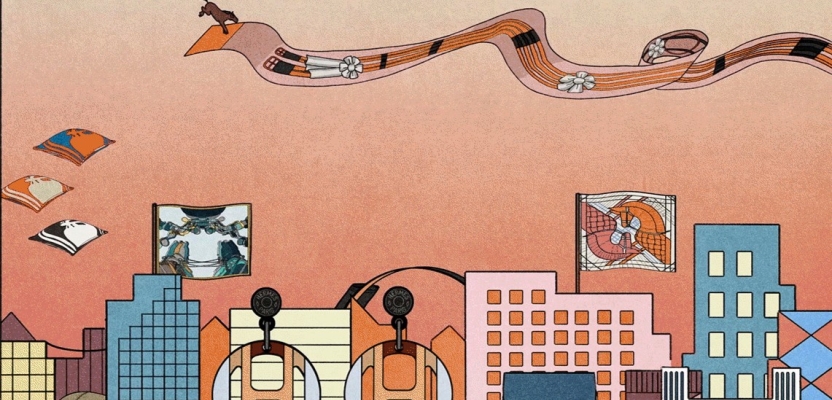

Klaus Kremmerz entered the illustration world almost unexpectedly, discovering that the act of creating images could become both a profession and a personal language. Rooted in years of reading novels, essays and short stories, his work carries the instinctive ability to “see while reading,” transforming words into atmospheres, tension, and visual storytelling. What began as experimentation evolved into a distinctive style influenced by the clean lines and tonal clarity of 1960s comics, minimal on the surface, yet rich in silence, humor and emotional depth.
Today, Klaus works from Italy with major global clients, building illustrations like carefully composed puzzles where planning and intuition move together. Whether developing campaigns for Hermès, crafting posters or shaping narrative-driven imagery, he approaches each project with the same guiding principles: clear vision, authenticity, and the belief that ideas, supported by experience, curiosity and human imperfection, are the heart of meaningful creative work.
How did you first get into the industry?
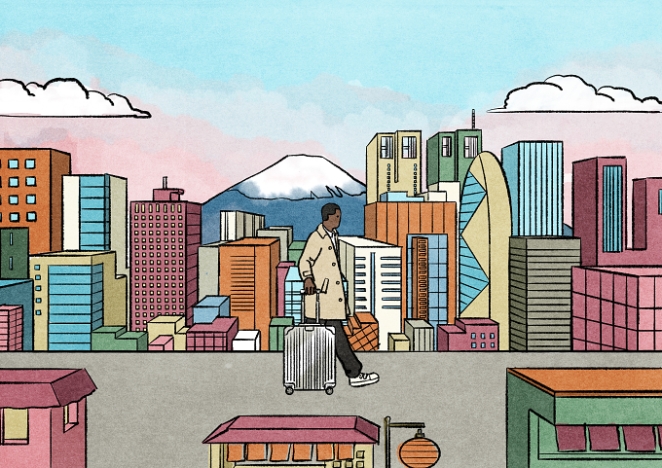 I became an illustrator almost by chance in 2016. I had always drawn and studied art, but my interests were more in the field of contemporary art than illustration. One day I realized that illustration could be a way to make a living by creating images, so I began to explore how that world worked. After years of experimenting and trying to develop a personal visual language, I started sharing my work online, and commissions began to arrive from magazines and agencies around the world.
Where are you based now and who do you work for?
I live and work in Italy, at the moment I’ve been working on projects for Google, Rosewood Hotels, FORBES and Qonto.
What is your personal background and what role did it play in your career?
My creative background comes mostly from reading. As a teenager, I was a voracious reader of novels, essays and short stories, from Hemingway to Carver, from Russian to Japanese authors. That habit trained my imagination. Reading taught me to visualize scenes and atmospheres in my mind, and later, that same instinct to see while reading became part of my drawing. The desire to tell a story through a single image comes directly from that.
If you weren’t in your current industry, what would you be doing?
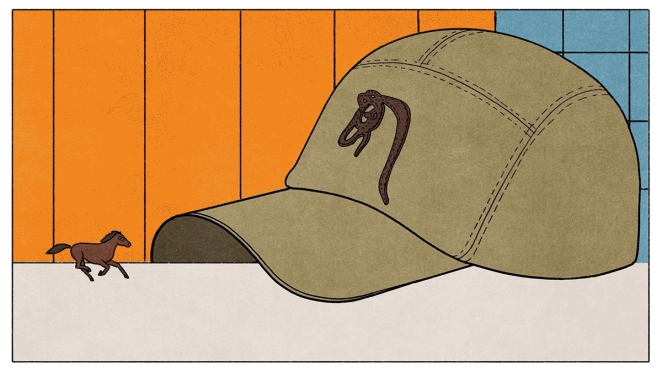 My process always begins with words. I start from a brief, underlining key phrases and ideas that define the tone of the story. Then I sketch compositions, perspectives and points of view, almost like solving a puzzle. The real creative part starts when the hand begins to draw and the image finds its own rhythm. It’s a mix of planning and intuition, like a musician who starts playing and suddenly the music flows naturally. I try to simplify shapes and facial expressions so that atmosphere, composition and light convey the emotion rather than the faces themselves. My style is essentially narrative, with a retro taste inspired by the visual language of 1960s comics, clean lines, flat colors and a quiet sense of humor
Can you explain your creative process? What makes it unique?
My process always begins with words. I start from a brief, underlining key phrases and ideas that define the tone of the story. Then I sketch compositions, perspectives and points of view, almost like solving a puzzle. The real creative part starts when the hand begins to draw and the image finds its own rhythm. It’s a mix of planning and intuition, like a musician who starts playing and suddenly the music flows naturally. I try to simplify shapes and facial expressions so that atmosphere, composition and light convey the emotion rather than the faces themselves. My style is essentially narrative, with a retro taste inspired by the visual language of 1960s comics, clean lines, flat colors and a quiet sense of humor.
How would you describe your style?
It’s storytelling through minimal means. My images are simple on the surface but built around tension, silence and humor. I like when an image feels like a frame from a forgotten comic book, nostalgic but still contemporary.
Which individuals do you gain inspiration from? Do you have any heroes in the industry?
My references come mostly from art, not from illustration. I admire artists like Ken Price, Raymond Pettibon, Robert Crumb and John Wesley, all of whom moved freely between art, comics and visual culture. They proved that you can use a popular language and still create high art. I also love cinema, design, theatre and architecture, anything that can tell a story through images.
What tips would you give to aspiring creatives looking for work?
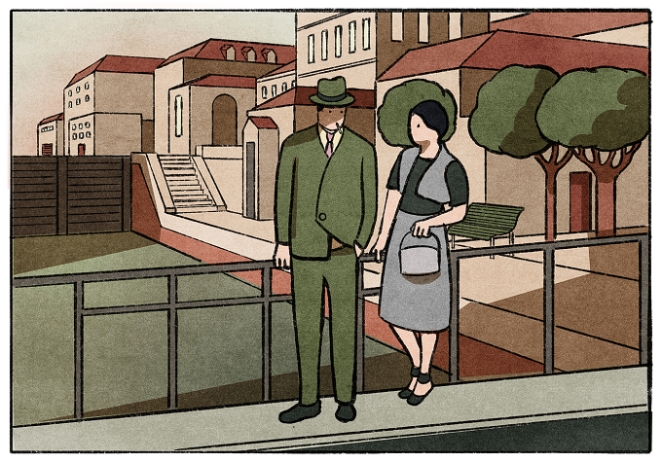 Don’t follow trends. Try to find your voice in places outside your field, in music, film, literature or nature. Look at the world, not just other illustrators. If you imitate, you’ll end up as a weaker copy of someone else, and it’s hard to recover from that. Authenticity takes time, but it’s the only thing that lasts.
What tips would you give to other professionals to get more clients?
Think like an artist but also like an entrepreneur. You have to stay in the present while imagining the future. The market changes fast, and personal experimentation is just as important as commissioned work. Experimentation keeps you fresh, and clients sense that energy. I don’t use AI to generate images because I love the act of drawing itself, but I do use tools like ChatGPT as an assistant to manage briefs, deadlines and proposals. It helps me stay organized and sharp. Technology should be seen as an ally, not a threat.
Can you share a memorable experience from your career journey that shaped your approach to creativity?
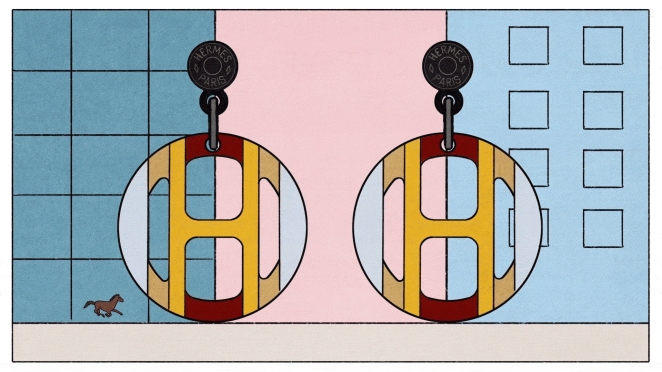
The second campaign I created for Hermès, launched last year for the Chinese market, was one of the most challenging and rewarding experiences of my career. It involved three animated pieces, and the deadlines were extremely tight, less than a week to deliver detailed layouts, storyboards and character concepts. Despite the pressure, the project went beautifully. Each animation started from one of my ideas and developed into a short narrative. Collaborating with an American animation studio while coordinating with the Chinese client from my studio in Milan was complex but enriching. Hermès is the definition of excellence, and working with such a brand taught me a lot about precision and trust in creative dialogue.
What kind of tools/kit/software could you not do without?
Today I couldn’t work without my iPad with Fresco, which I find much more agile and intuitive than Photoshop. I love the freedom of being able to work anywhere while traveling, on a train, or in the studio. After years using a Wacom Cintiq, I find the Apple Pencil much more precise and natural. Digital tools are now the most efficient way to deliver high-quality work quickly, while traditional techniques are something I keep for personal projects.
Reading, traveling, listening to music, running, living. Everything I do influences how I see and interpret the world. Creativity is a reflection of experience, so I try to keep my senses active and curious every day.
What’s the work achievement you’re most proud of?
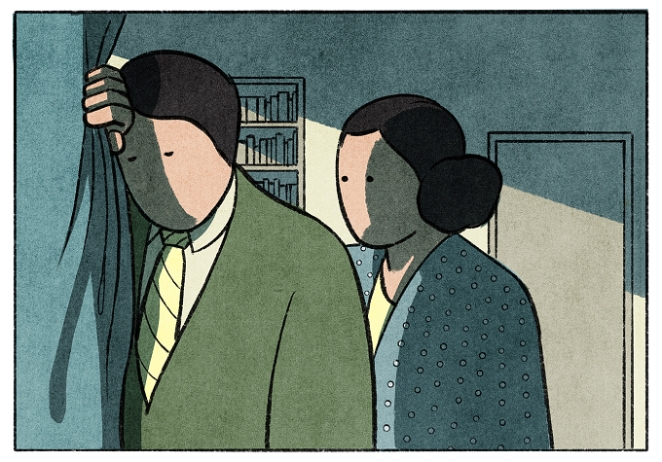 I’ve had the chance to work on many different projects, posters, book covers, animations and editorials for some of the most respected names in publishing and design. It’s hard to pick one, but I really enjoyed creating the poster for the Japanese film Broker. I watched the movie before starting and built the illustration around its emotional tone. In general, I’m proud of every project that pushes me to go further and where I can feel that I’ve left a personal mark.
As someone with experience in the industry, what trends do you foresee shaping the future of creativity?
I believe contemporary art and illustration are merging more and more, exchanging roles and languages. Artists like Takashi Murakami, who created installations and decorations for Louis Vuitton, perfectly embody this crossover where the visual language becomes both artistic and commercial. In Asia, and particularly in Japan and China, this approach is already thriving. Murakami’s work shows how art can transform commercial or public spaces into immersive visual experiences. It’s a growing field that involves internationally recognized creatives invited to sign hotels, boutiques, cultural venues or malls with their unique styles. It’s a fascinating and demanding direction that values authenticity and individuality, qualities that technology can’t easily replicate. I also believe the future will continue to move toward green and socially conscious themes.
What do you think sets apart truly exceptional creatives from the rest of the pack?
I believe a truly exceptional creative stands out for having a clear vision and the ability to let it evolve over time. They know how to adapt to change, see technology as an ally rather than a threat, and build authenticity through experience, reflection, and quality of thought. The best creatives are also their own toughest critics: they know their limits, know how to overcome them, and stay focused on what really matters. In short, an exceptional creative is someone of substance, not appearance.
How do you think technology has influenced the creative industries and how have you adapted to these changes?
 Technology has changed everything. It speeds up production and communication, but the essence remains the same: ideas. I use digital tools to improve my workflow, but the human touch, the imperfection and rhythm of a hand-drawn line, is still what gives emotion to an image.
What is the one thing that you would change about the industry?
I don’t like that clients often judge the quality of a creative by their number of followers. I understand it’s a marketing logic, more followers mean potential visibility, but quantity rarely equals quality. Many great artists simply don’t play the social media game. If I could change something, I’d like talent to matter more than metrics.
Any websites, books or resources you would recommend?
I read constantly, but not about art or creativity, mostly literature. One book I recently loved is Temptation by János Székely, which I consider a masterpiece. Beyond that, I’d recommend reading anything, watching everything, traveling and listening to music. Living fully is the real source of inspiration.