

When the pandemic unexpectedly turned her European holiday into a permanent move, Roberta Labanca chose to reinvent herself. Originally from Rio de Janeiro with a background in marketing, she embraced the challenge of starting over in London, diving into UX and UI design. What could have been a setback became a turning point, allowing her to merge strategy, culture and emotion into a new creative identity.
Today, Roberta is a freelance brand and digital designer working with purpose-driven brands across the UK, Europe and Brazil. Her work blends bold minimalism with vibrant storytelling, inspired by her Brazilian roots and shaped by her international experiences. With resilience, collaboration and adaptability at the heart of her process, Roberta continues to prove that great design is as much about people and stories as it is about visuals.
How did you first get into the industry?
I graduated in Business with a focus on Marketing in 2018 after initially studying International Relations. I’ve always been fascinated by how people think, behave and connect with brands, so shifting towards marketing felt natural.
After graduating, I worked as a social media manager for a major fashion brand in Brazil.
In mid 2019, I decided to take a holiday in Europe, and then the pandemic hit. What was supposed to be a short break became the beginning of a new chapter in my life. I made the decision to stay in the UK and start over in the middle of global chaos, in a new country, with a different language and culture.
That’s when I saw an opportunity to shift again. I began studying UX and UI design and started building a portfolio that reflected my new identity as a designer: someone who translates strategy and emotion into visual language.
I applied to agencies in London, ready to take on a new role and prove myself in a different market.
Where are you based now and who do you work for?
I’m based in London, where I currently work as a freelance brand and digital designer. After spending three years at a creative agency where I worked on projects for major UK brands, including those under the Unilever umbrella, I decided it was time to build something of my own.
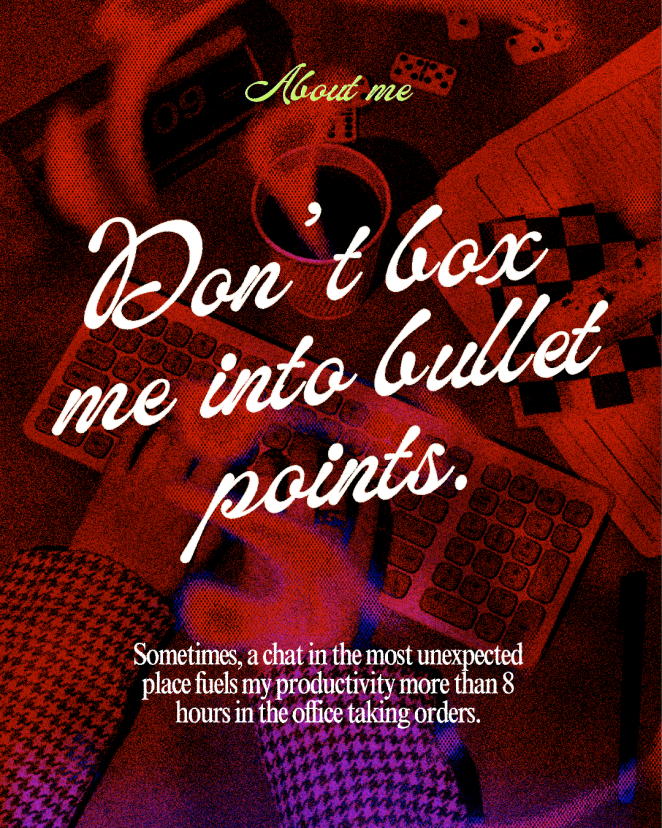
Today, I collaborate with purpose-driven brands and organisations across the UK, Europe and Brazil. I often team up with other creatives such as copywriters, strategists and developers depending on the scope of each project. I really value that collaborative energy because I believe great design doesn’t thrive in low-energy environments.
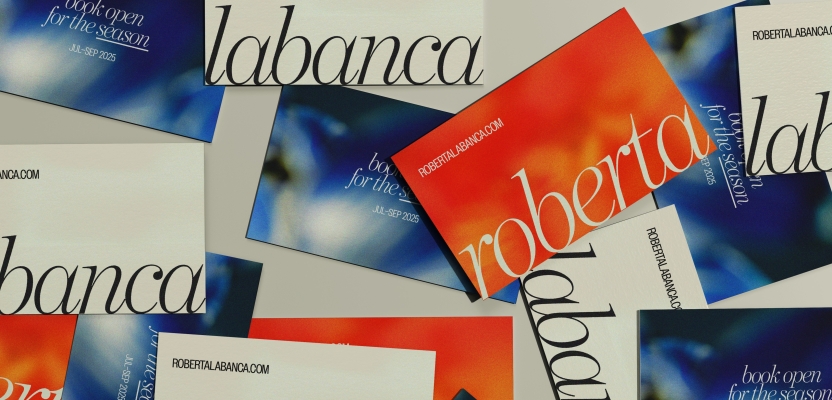
I’m currently open to new opportunities and my books will reopen in July for new projects.
What is your personal background and what role did it play in your career?
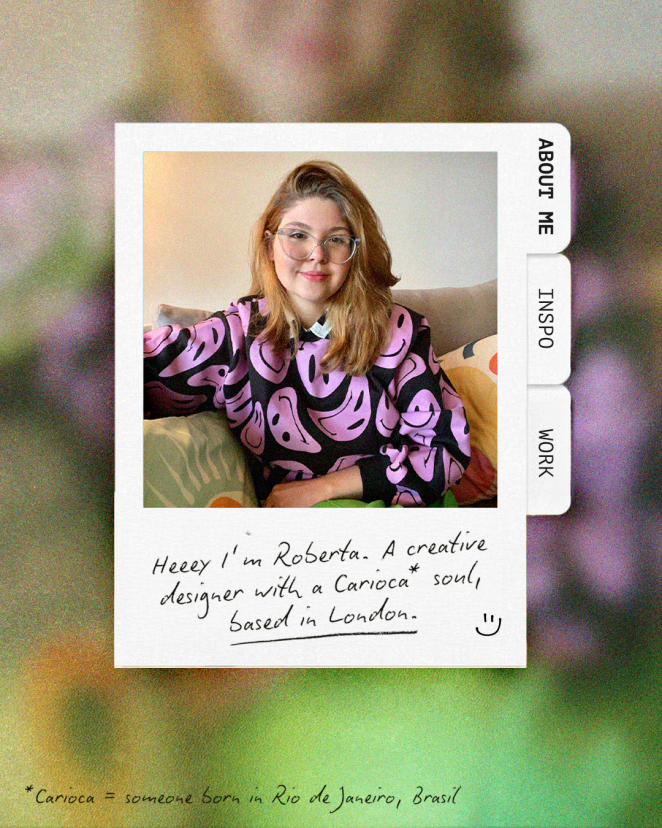
I’m originally from Rio de Janeiro, Brazil, a city full of contrast, emotion and identity. I grew up surrounded by bold colours, strong voices and a culture that doesn’t hold back.
Brazil may no longer be my postcode, but its culture remains alive in me, and in my headphones, where samba, bossa nova and funk carioca play on repeat.
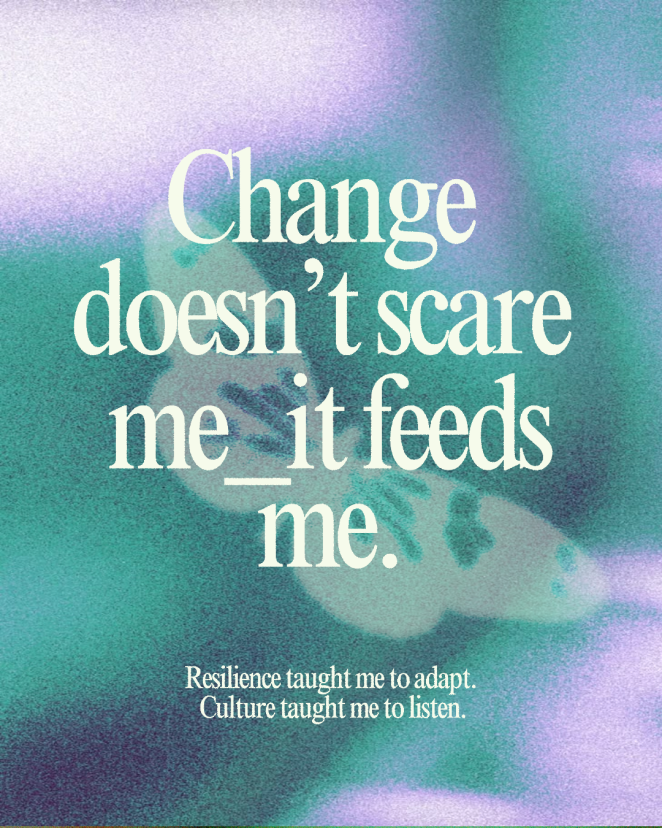
I’ve worked across cultures, time zones and deadlines, adapting again and again. Not because I had to, but because I wanted to understand. Change doesn’t scare me. It feeds me.
Resilience taught me to adapt. Culture taught me to listen. My roots gave me the energy to never give up. I bring that mindset into every project, always pushing to find fresh perspectives and new possibilities.
If you weren’t in your current industry, what would you be doing?
I have a brother with autism, and for years, music was our shared language. We connected through rhythm, melody, repetition. It gave us a bridge when words couldn’t. So if I weren’t designing, I think I’d be working with music in a more psychological or therapeutic way, helping people connect to themselves and to each other.
Can you explain your creative process? What makes it unique?
My creative process begins with connection. I listen closely to the people behind the brand, their goals, frustrations and what’s between the lines.
Research plays a big part. I dive into behaviour, language and culture to understand how the brand fits into people’s lives, and how it can stand out in an honest way. Then comes translation, turning strategy into design that feels intentional, expressive and human.
What makes my process unique is how collaborative it is. I work closely with diverse teams such as writers, developers and strategists because I believe the best ideas come from solving real problems together. I’m not attached to being the loudest voice in the room. I want to create work that people connect with and feel part of.
How would you describe your style?
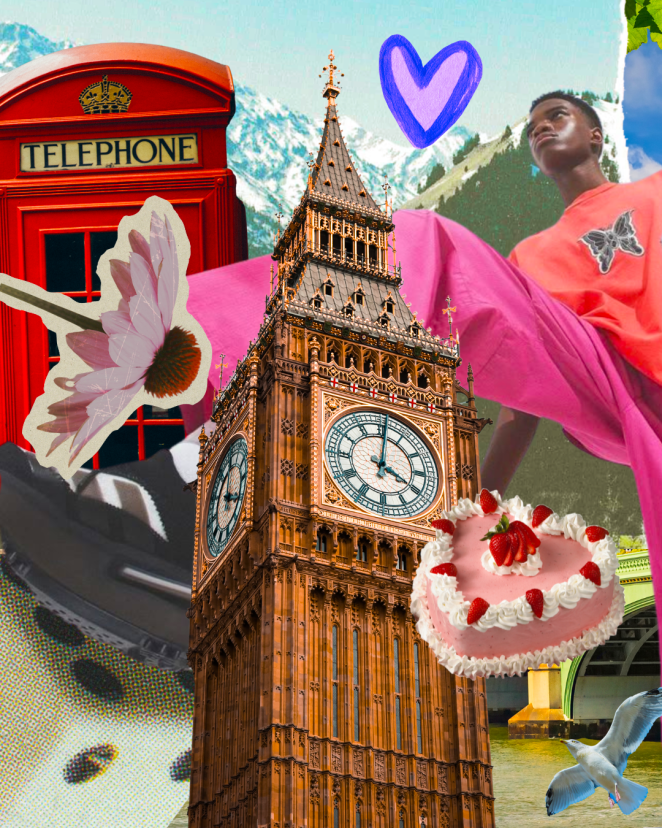
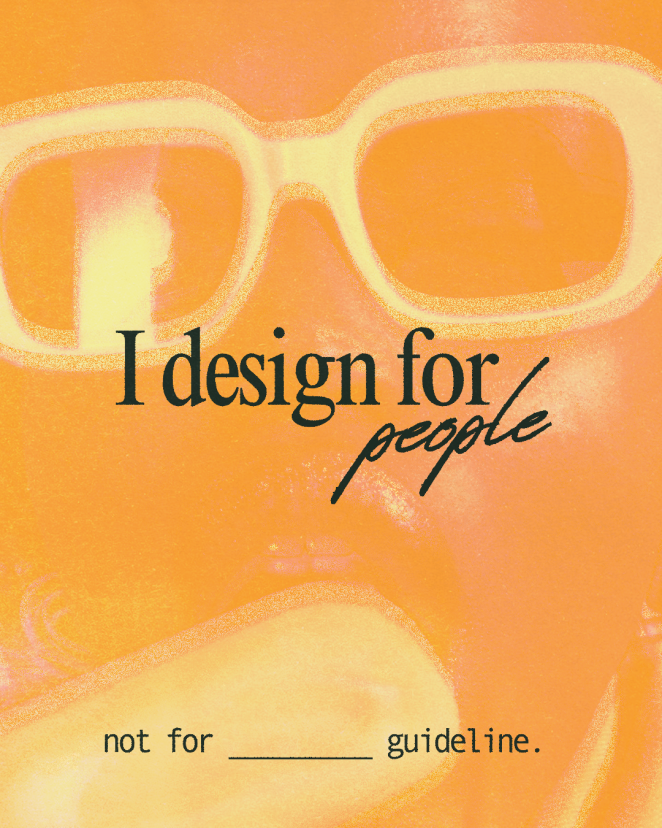
My style is a mix of bold minimalism. But my blood is maximalist. I’m an adaptable designer. I know when to keep it clean and when to go full texture and bold colours.
I love working with layers, gradients, textures, halftone effects, acidic hues and typography mixes. I explore trend styles like soft tech, acid graphics, Y2K futurism, mixed dimensions, hyperrealistic surrealism and digital brutalism.
My visual language usually lives somewhere between structure and chaos.
Which individuals do you gain inspiration from? Do you have any heroes in the industry?
[I’m inspired by a lot of people. it’s impossible to name everyone in a single answer. Each one means something different to me, from admiration to creative influence, from visual language to personal strength.
I admire Paula Scher for her fearless use of type and cultural vision, Jessica Walsh for her boldness and creative leadership, and Carolyn Davidson for the simplicity and strength of the Nike swoosh. Aurélia Durand is also a reference, for her bold illustrations that give voice to Afro-descendant communities.
From Brazil, I look up to Bea Feitler for her revolutionary editorial work, Marina Willer for how she brings emotion into strategy, João Incerti for his tropical storytelling through illustration, and Breno Loeser for his thoughtful design approach that blends Brazilian religious roots with African ancestry and symbolism.
I also find deep inspiration in the world of street art. Artists like OSGEMEOS, Banksy and Eduardo Kobra shape the way I think about visual impact, public space and narrative. Their work reminds me that design can be political as well — and that it can live far beyond the screen or the grid.
What tips would you give to aspiring creatives looking for work?
"Don’t wait to feel ready. Test, publish, share your process." Every time you feel like you’re self-sabotaging, come back to this. Progress doesn’t wait for perfection.
What tips would you give to other professionals to get more clients?
Stay visible, even if it feels uncomfortable. I’m not a fan of networking events, but I’ve learned they’re essential. Stay close to people who trust your work and see your value.
Can you share a memorable experience from your career journey that shaped your approach to creativity?
My memorable experience is starting over and rebuilding my career from scratch, in a new language and culture.
But that challenge taught me something powerful: when words feel out of reach, design becomes my language. I started focusing more on listening and observing the people around me. I gained new skills and tools that helped me bring more inclusivity and empathy into my work.
What kind of tools/kit/software could you not do without?
Illustrator is my go-to for branding and vector work, and Photoshop helps when I want to explore texture, collage or image treatment. Figma is where I create design systems and work on UI design. Notion keeps me organised.
For inspiration: Savee.it, Dribbble, and I like reading articles on Medium and design newsletters to stay updated. I’ve also started interacting more on Creativepool and Instagram.
LinkedIn? I’m working on it. That white and blue interface still makes me a little anxious ahah!
What’s your secret to staying inspired and motivated?
Travelling, visiting my family, getting to know new cultures, that always recharges me. I also find joy in listening to music. I love discovering songs in languages I don’t understand at all and vibing like I do, ahah.
Nature helps too. A walk, hugging trees, watching the stars. I try manual activities (even though I’m not great at them) just to keep my mind moving. Skateboarding gives me energy. Movement feeds me.
And yes, I play video games. League of Legends and Pokémon Unite help me release stress, and The Sims lets me play with design and create storytelling. I also love watching gameplay videos to discover new releases. It keeps me curious, playful, and reminds me not to take creativity too seriously all the time.
And of course… money motivates me too. Paying a bill and reaching a financial goal matters. The world is capitalist, and I can’t do the things that inspire me without some stability. So yes, creative freedom, but rent comes first.
What’s the work achievement you’re most proud of?
[One of the projects I’m most proud of is the packaging design for Bed Head by TIGI, which came to me through the agency I Am Female. I worked on it from concept to final delivery, translating Bed Head’s bold and rebellious personality.
This project was especially meaningful because it was created specifically for the Brazilian market, a culture I understand deeply.
As someone with experience in the industry, what trends do you foresee shaping the future of creativity?
This is the moment to be more authentic than ever. The future belongs to ideas with soul, stories behind the visuals, and strategies that feel human. That is going to be the real value.
After 7 years in the creative industry, I’ve seen how AI is becoming part of the workflow in many areas. In design, I see it as a shift, a tool we must adapt to. But I also recognise that its impact is more complex and, in some cases, deeply worrying.
We’re also living through political and economic crises, and I see the millennial generation connecting more with a culture of escapism (the urge to escape reality), often through the excessive consumption of collectibles.
But one thing I love watching is the return to handmade culture, especially among the new generation. There is a renewed appreciation for the human touch, the slow, the imperfect. Ceramics, crochet, analog photography and print culture are all making a comeback, now reimagined through the lens of technology and contemporary aesthetics.
I also hope to see more conversations about sustainability and creative economies. The next generation has the power not just to follow the system but to shift it.
I’m watching it happen up close, and it makes me feel hopeful about the direction creativity is taking.
What do you think sets apart truly exceptional creatives from the rest of the pack?
Resilience. The kind that allows you to adapt to new ideas, new clients, new feedback, and sometimes completely new directions.
I always say: if you choose this career, it must be out of love. Because putting your work out there, living in constant cycles of approval and feedback, takes courage.
So for me, what truly sets someone apart is the ability to stay open and still show up. Resilience and empathy are what keep us creating, even in the middle of uncertainty.
How do you think technology has influenced the creative industries and how have you adapted to these changes?
Technology changes every minute, literally. Did you know that over 90% of the world’s data was created in just the last few years? That gives you a sense of the speed we are dealing with.
I was born in 1995, right at the edge of the millennial generation and the start of Gen Z, which basically means I had a Tamagotchi in one hand and a dial-up internet connection in the other. I have lived through a lot of transitions, from analogue childhoods to the internet era, and now AI is leading the conversation.
What we can do is adapt. I try to focus on how these tools can support and accelerate my workflow.
What is the one thing that you would change about the industry?
I’d change the idea that speed is everything. That faster means better. It creates burnout, anxiety and even depression, especially in a world where one job is often not enough to pay the bills. Many of us are juggling side hustles after hours, just to keep things going.
Creativity needs time, presence and not just deliverables and pressure.
I’d also love to see more space for real diversity, and a hiring process that respects people’s time and effort. Less unpaid labour, fewer endless phases. More recruiters who care about how we think, not just how we perform under pressure.
Any websites, books or resources you would recommend?
Books
- The Design Thinking Playbook by Michael Lewrick
- Don’t Make Me Think by Steve Krug
- Ikigai by Héctor García and Francesc Miralles
- The Metamorphosis by Franz Kafka
- The Art of Danish Living: How to Find Happiness
Newsletters
- It’s Nice That – for creative news and projects
- 3-2-1 Thursday by James Clear – short, smart insights
- Austin Kleon Newsletter – creativity with humour and honesty
- UX Design Weekly – updates on design tools, trends and articles
- Bits to Brands – branding insights with personality
- Medium Digest – I follow topics on design, culture and behaviour