

For Liying Wang, design is far more than aesthetics — it is a strategic communication tool. With a background spanning theatre, fine arts, graphic design, and business analytics, she has built a multidisciplinary career focused on transforming complex information into clear, impactful visual narratives. Currently working within the CMO office of a major tech company in California, Wang specializes in executive and visual communication, helping leadership teams navigate ideas through thoughtful, decision-focused design.
Her creative philosophy is rooted in clarity, structure, and intentionality. Influenced by both analytical thinking and creative intuition, Wang approaches design by simplifying rather than adding, prioritizing meaning over decoration. From high-volume performance marketing environments to executive storytelling, her work reflects a modern understanding of design’s role in business, technology, and human connection.
How did you first get into the industry?
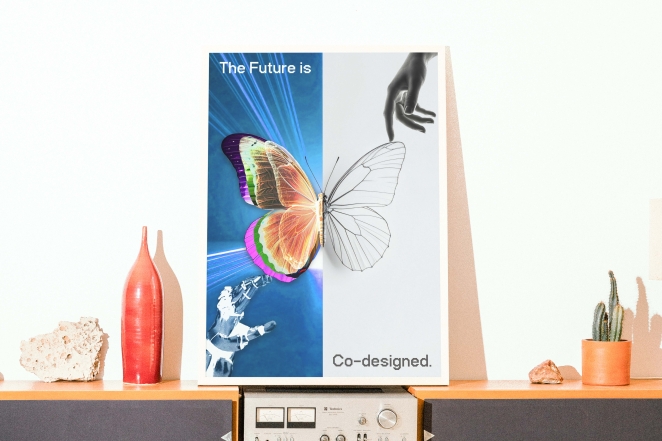 I started with a traditional graphic design background, but quickly moved into performance-driven environments at a growth marketing agency after completing my Master’s degree. This experience required me to think beyond just aesthetics; I had to create designs that converted, scaled, and communicated effectively. It fundamentally shaped my approach to design, turning it into a business tool rather than merely a visual output. Now, I am focusing on visual communication and executive storytelling. I truly value the moments when my designs resonate with others and make a meaningful impact.
Where are you based now and who do you work for?
I am currently based in California, U.S., working in the CMO office of a big tech company. In this role, I support executive-level communication by turning complex ideas into clear, decision-ready visuals to present to the senior leadership team or large public groups.
What is your personal background and what role did it play in your career?
I hold a BA in Theatre, Film & TV Fine Arts Design, an MA in Graphic Design, and am currently completing my MBA with a concentration in AI and Data Analytics. Growing up and being educated across different systems gave me a dual lens: creative intuition + analytical thinking. Having a foot in both the creative and analytical worlds has completely shaped my career. It helps me design with real data in mind and build tools that solve actual business problems rather than just creating visually pleasing assets.
If you weren’t in your current industry, what would you be doing?
 Good question, I’d probably still be doing something creative and communication-based — possibly working in content strategy, education, or a role where I could combine visual thinking with problem-solving. I’m naturally drawn to work that connects ideas, people, and business goals.
Can you explain your creative process? What makes it unique?
I work in three layers:
Clarity first — What’s the actual message?
Structure second — I map information before visuals (hierarchy, flow, decision logic).
Visual last — Only then do I design, using minimal elements to reinforce meaning.
What makes it different: I remove before I add. Most designers decorate; I reduce.
How would you describe your style?
My style is clean, thoughtful, and adaptable, with a strong focus on clarity and intentional communication. I’m drawn to visual systems that feel modern and intelligent, but still human. I like design that has a clear point of view without feeling overly decorative or forced. Thematically, I like exploring deeper, thought-provoking concepts, like the "gentle horror" and psychological manipulation themes I explored in my "Your soul as a training set" poster.
Which individuals do you gain inspiration from? Do you have any heroes in the industry?
 It’s going to be a long list; there are just so many designers, writers, and creative thinkers. I’m inspired by people who combine strong craft with strategic thinking, especially designers and creative leaders who understand branding, systems, and innovation. I also look up to practitioners who work at the intersection of design and technology, because that space keeps evolving and demands both creativity and adaptability.
What tips would you give to aspiring creatives looking for work?
Don’t focusing only on visuals—learn how your work make impacts. Learn to explain your work clearly; communication is a differentiator
What tips would you give to other professionals to get more clients?
Be very clear about the value you bring and make it easy for people to understand the kinds of problems you solve. I also think responsiveness, professionalism, and a clear point of view matter a lot — people remember how easy you are to work with.
Can you share a memorable experience from your career journey that shaped your approach to creativity?
 Working in a high-volume performance marketing environment. When you produce dozens of assets weekly and looking into the backend data, you realize quickly: aesthetics don’t matter if the message isn’t clear. That taught me that creativity is strongest when it is grounded in purpose. It shifted my mindset from “making something that looks good” to “making something that works beautifully and supports the bigger objective.”
What kind of tools/kit/software could you not do without?
Adobe Creative Cloud is essential for me, especially Photoshop, Illustrator, and Firefly. I also rely on Figma for collaboration and design systems, and I use workflow and documentation tools to keep projects organized. Beyond software, I value tools that help me think clearly and move efficiently from concept to execution.
What’s your secret to staying inspired and motivated?
I stay inspired by staying curious and exposed to different disciplines, especially design, business, and technology. I also find motivation in building things with real purpose — whether that’s a portfolio piece, a case study, or a creative experiment. Structured learning and seeing tangible progress keep me going.
As someone with experience in the industry, what trends do you foresee shaping the future of creativity?
 AI will continue to reshape how creatives work, especially in ideation, production, and personalization. I also think design systems, content scalability, and cross-functional creative roles will become even more important. At the same time, the value of original thinking, strong taste, and human judgment will only increase.
How do you think technology has influenced the creative industries and how have you adapted to these changes?
Technology has made creative work faster, more collaborative, and more scalable, but it has also raised the bar for originality and problem-solving. I’ve adapted by actively learning AI tools and I see technology as a partner in the process, not a replacement for creative judgment.
What is the one thing that you would change about the industry?
I would like to see more recognition for the strategic and business value of design. Too often, creative work is still treated as decoration rather than as a core part of problem-solving, communication, and growth. I think the industry benefits when design is included earlier and more meaningfully in decision-making.