

Ken Gerhardt’s creative journey began with a love for fine art before a chance encounter with a photographer shifted his path toward the lens. For him, photography was never just a profession but a way of expressing ideas, capturing light, and telling stories with authenticity. Over time, what started as a hobby transformed into a lifelong pursuit of craftsmanship rooted in discipline, patience and vision.
Now based in Cape Town, Gerhardt continues to champion analogue methods and the purity of black-and-white film, even as technology rapidly reshapes the industry. Fiercely protective of photography as a craft, he warns of AI’s growing influence, reflecting on the importance of honesty, expression, and creative integrity in a world that often values speed over substance.
How did you first get into the industry?
My desire to study fine arts led me to talk to a professional photographer outside the art college. I treated photography more as a hobby than a profession. Whereas fine art is made primarily for aesthetic or creative expression, distinguishing it from popular art or even photography. It is that word 'expression' that encouraged me to reconsider photography as my primary medium.
Where are you based now and who do you work for?
I work and happily live in Cape Town, South Africa. It's my photographic gear that takes me to other places, far and wide, fortunately.
What is your personal background and what role did it play in your career?
Well, leading question… as a boy I dabbled in watercolours, oil & canvas, got a kick out of carving chunks of wood. I reckon the tools evolved with age till I ended up hefting a camera around my neck. The word ‘career’ never entered my mind. Hope this satisfies your question?
If you weren’t in your current industry, what would you be doing?
I reckon sitting behind an easel painting oils onto a stretched canvas, lost somewhere on one of the many wine estates here in Cape Town…
Can you explain your creative process? What makes it unique?
I pre-visualise a body of work, I select one genre/subject; I research as much as possible, put together a storyboard (or, shoot some tests), walk away from the 'idea' for days, if not a week or two. If this percolates and the aroma is right, it's time to set out and shoot it.
How would you describe your style?
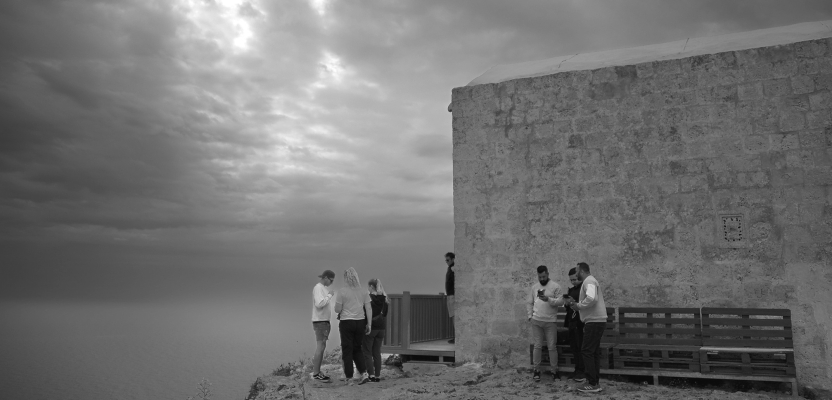
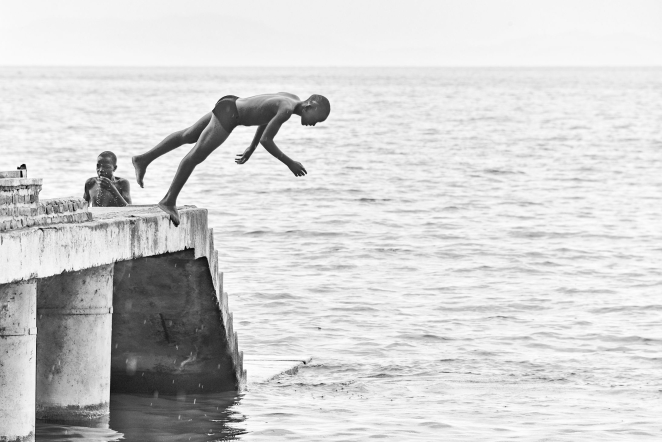
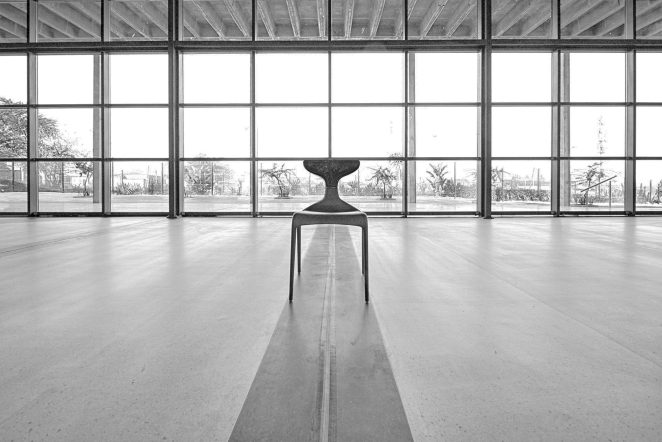
Style? Mm.., I do not agree with the word style. I make certain to shoot what came to mind initially, especially as I have a pre-visualised storyboard. Not having the genre clear in my mind, my pictures will not appear in the camera! It is not style that generates my photography; it is the expression conveyed and how my viewers interpret the collection. (Bear in mind, my exhibited collections are B&W handprints shot on film.).
What tips would you give to aspiring creatives looking for work?
You must be honest with yourself in this! Is it food, fashion or fine art, etc? Once you are convinced of your speciality, you will be far better equipped to convince clients that you are the right person for the job. (This may not apply to commercial photographers who are craftsmen–they are required to shoot according to a brief from the client.)
What tips would you give to other professionals to get more clients?
Display a portfolio of ONLY what you are truly practised at shooting. This kind of portfolio proves how disciplined you are in your particular skill set! Because of this, clients will confidently know you will carry through your expertise and deliver the goodies they want, irrespective your portfolio…
Can you share a memorable experience from your career journey that shaped your approach to creativity?
A particular filmmaker/director who shaped my B&W stills career was Federico Fellini. Need I say more? He could project vivid B&W moving images at you off a white linen sheet as a cinema screen; mind-blowing motion pictures frame-by-frame! It was almost as if Fellini didn’t need dialogue; his flickering visual narrative was genius personified!
What kind of tools/kit/software could you not do without?
My 135 mm analogue cameras, tons of B&W film and trusted light-meter… Jokes aside, I do take all my digital gear along as well. Speaking of digital gear, AI gives me the shivers! I predict that the discipline of craftsmanship in photography is under threat. AI scares me.
What’s your secret to staying inspired and motivated?
My inspiration? It is to keep the discipline of true craftsmanship alive in photography. Photography where lenses are prioritised for the desired rendering of the scene. After all, one is harnessing ‘light’, not resorting to Adobe Photoshop to manipulate/edit what you failed to shoot in-camera out on location!
What’s the work achievement you’re most proud of?
Walking into a gallery displaying my framed black & white photographs with folks gathered in gossip, their heads tilted to ’n fro, vino-in-hand, suitably entertained while musing my works hanging in a gallery...
As someone with experience in the industry, what trends do you foresee shaping the future of creativity?
AI, AI... I dread it with intensity! Yes, it is a trend for the future; however, is it a good influence as far as photographic prowess is concerned, I don’t know? Besides, how on earth will clients, buyers, and lovers of original photography differentiate true images from manipulated captures? AI is impersonal… and yes, it is going to kill us craftsmen.
What do you think sets apart truly exceptional creatives from the rest of the pack?
Relevance… being closely connected to contemporary behaviour; it’s the creative’s heart, not the mind, that drives ideas. Luke 6:45 (NIV) “For the mouth speaks what the heart is full of…”
How do you think technology has influenced the creative industries and how have you adapted to these changes?
Technology is rampant, unrestrained, and too fast for me! How to adapt? With reluctance, despair and probably will continue to kick against the goad, he, he…
What is the one thing that you would change about the industry?
There is nothing to change within the photographic industry. However, a good idea is to continually modify one's portfolio to match market trends. NOT your skill, but what you present as ‘new works’ to prospective clients. Make an effort to always refresh or reshoot what is in your current portfolio.
Any websites, books or resources you would recommend?
Yes! Photographers should make regular visits to art galleries where only oil paintings are exhibited. Pay attention to how artists move their brushes over canvas with strokes and dabs; their oils express their vision, and their skilled hands translate intrigue. It’s inspiring because we photographers also need to ‘translate’ what we see through-the-lens…
Thank you, Creativepool.
Luciano Koenig Dupont August 26th, 2025, late evening
Great Ken !