
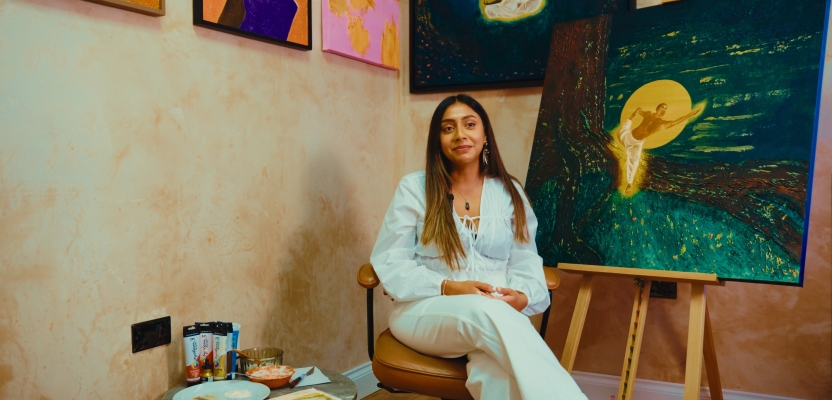

Deena Davda’s journey into abstract art isn’t defined by a single turning point, but by a quiet, persistent pull toward creative expression that has followed her since childhood. Now a London-based abstract artist specialising in health and wellbeing, her work sits at the intersection of emotion, intuition, and sensory experience, designed not just to be seen, but deeply felt. With a background in graphic design and over a decade in the industry, Deena brings both structure and soul into her artistic practice, creating pieces that resonate on a human level.
In this conversation, Deena reflects on her evolution from designer to full-time artist, the influence of figures like Tracey Emin, and the importance of authenticity in creative work. She shares insights into her intuitive process, the role of vulnerability in art, and why staying open to experiences, mistakes, and growth is key to building a meaningful and lasting creative career.
How did you first get into the industry?
 Creativity has always lived within me. I began painting in childhood, instinctively drawn to expression through colour and form. But it was in 2003, when I created my first canvas piece, that something shifted, it felt less like a hobby and more like a calling. From that moment, art became a constant thread in my life, quietly evolving alongside me.
Where are you based now and who do you work for?
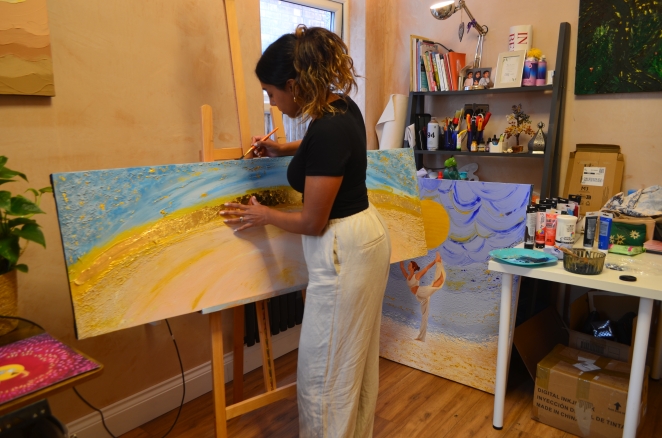
I’m based in London in my home studio and work as a full-time, self-employed artist. My practice is deeply personal, allowing me the freedom to create work that is both intentional and emotionally resonant.
What is your personal background and what role did it play in your career?
My creative foundation was built through a BTEC in Art and Design, following a BA (Hons) in Graphic Design. I spent over 12 years working in the graphic design industry, which shaped my understanding of composition, balance, and visual storytelling. After two years freelancing, I felt a strong pull back to my roots - to create something more tactile, more human. That transition into full-time artistry wasn’t just a career move; it was a return to myself.
If you weren’t in your current industry, what would you be doing?
 I would still be creating in some form. Most likely, I’d be immersed in creative writing, another space where emotion, storytelling and expression can unfold freely.
Can you explain your creative process? What makes it unique?
My creative process begins long before the canvas. It starts in stillness, in observation, reflection, and absorption of the world around me. Days or even weeks beforehand, I become deeply aware of my surroundings, emotions, and energy.
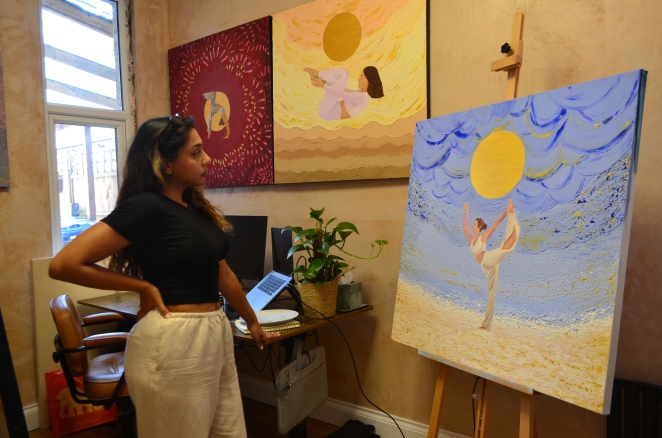
When I finally begin painting, it feels less like starting and more like continuing something that has already been forming internally. My work is intuitive, guided by feeling rather than structure, which allows each piece to carry an authentic emotional depth.
How would you describe your style?
Expressive, spiritual, grounding, and elegant.
My work is designed not just to be seen, but to be felt - to create a sense of calm, connection and inner stillness.
Which individuals do you gain inspiration from? Do you have any heroes in the industry?
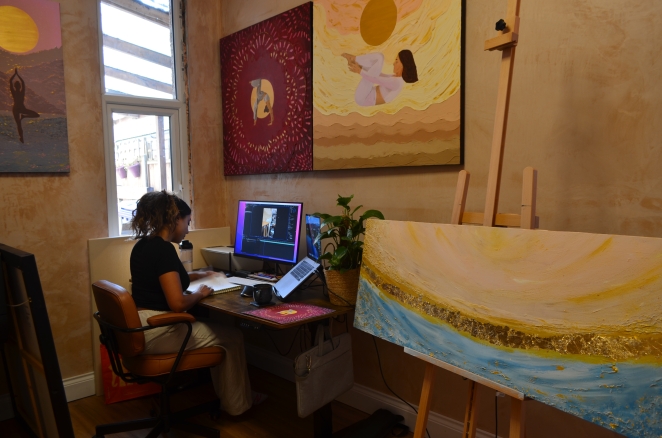 Tracey Emin has always inspired me. Her raw honesty and emotional freedom are incredibly powerful. She creates without restriction, and that level of vulnerability is something I deeply admire and strive towards in my own work.
What tips would you give to aspiring creatives looking for work?
Start by creating for yourself, not for validation. When your work is rooted in authenticity, it naturally attracts the right audience. Everything else follows from that foundation.
What tips would you give to other professionals to get more clients?
Don’t be afraid to be visible. Sharing your work can feel vulnerable, but in reality, people are far more supportive than we often imagine. The right clients are drawn to confidence and authenticity.
Can you share a memorable experience from your career journey that shaped your approach to creativity?
 One of the most defining moments was during high school, when my art teacher recognised something in me that I hadn’t fully seen in myself yet. She nurtured my creativity, introduced me to new techniques, and encouraged me to explore digital tools - I remember being the only student working on Adobe Photoshop CS3 at the time.
That year, I fell in love with art in a way that stayed with me. It planted a seed that has continued to grow ever since.
What kind of tools/kit/software could you not do without?
My acrylic or watercolour paints, brushes, and paper - the essentials that allow me to translate emotion into form. There’s something irreplaceable about the physical act of creating.
What’s your secret to staying inspired and motivated?
Staying curious. Staying open. And always feeling like there is more to explore, more to understand, more to express. Be open to making mistakes and learning from them, because trust me, there’s a lot to be learnt! And only from learning do you truly begin to grow.
What’s the work achievement you’re most proud of?
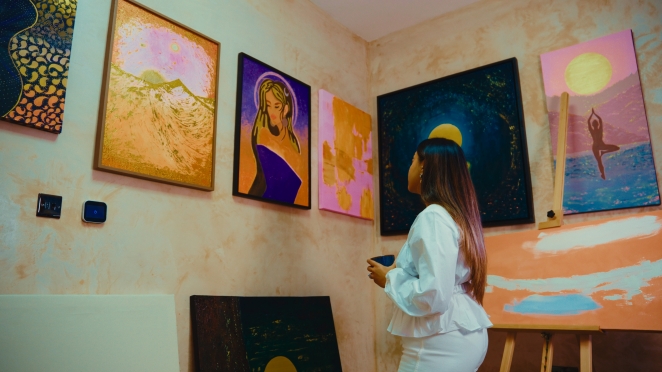
 Earlier this year, I held my first exhibition, where I presented the first piece from my Health and Wellbeing series, exploring how artwork can transform physical spaces, much like platforms such as Wall Pics that bring custom canvas prints into everyday interiors. It was a pivotal moment, not just professionally, but personally - seeing my work exist in a space where others could experience it.
As someone with experience in the industry, what trends do you foresee shaping the future of creativity?
There is a growing desire for tactile, sensory experiences. Textural art is becoming increasingly significant because people want more than just something visual, they want something they can feel, connect with, and live alongside.
What do you think sets apart truly exceptional creatives from the rest of the pack?
Exceptional creatives don’t just create, they live and breathe their craft. It becomes part of their identity, their way of seeing the world. It’s not something they switch on and off; it’s their constant.
How do you think technology has influenced the creative industries and how have you adapted to these changes?
 Technology has opened up new ways to share and connect. I’ve embraced the digital space as a way to build an online presence for my work, allowing it to reach audiences beyond physical boundaries.
What is the one thing that you would change about the industry?
I would love to see more accessible opportunities for emerging artists - particularly more open calls from established galleries. Finding the right platform as a new artist can often feel overwhelming, and more support in this space would make a meaningful difference.
Any websites, books or resources you would recommend?
Creativepool is an incredible platform for discovering and connecting with creative talent.
I also find inspiration through Pinterest, it’s a great space for visual exploration.
One book I highly recommend is Do Story: How to Tell Your Story So the World Listens by Bobette Buster, it beautifully explores the power of storytelling.
But above all, my greatest source of inspiration is the world itself - everyday moments, nature, energy, and human experience.