

In this exclusive interview, we sit down with Alastair Mills, Executive Creative Director, and Beatriz Zambrano, Junior Creative at Impero, to delve into the creative process behind Christian Aid’s latest climate awareness campaign.
With the 2024 Paris Olympics serving as the backdrop, the team faced the challenge of leveraging the global event’s attention while tactfully sidestepping direct Olympic references. From concept to production, Mills and Zambrano share the highs, lows, and creative breakthroughs that transformed stock footage into a thought-provoking call to action on the climate crisis.
What was the brief?
Christian Aid asked us to capitalise on the inevitable attention that the 2024 Paris Olympics would get to raise awareness of the climate crisis.
How did the initial pitch/brainstorming phase go?
It was a rich subject matter, and we had no shortage of disruptive and thought-provoking ideas. The challenge was always going to be bringing two seemingly unrelated topics together and not least the legalities about talking about the Olympics without talking about the Olympics.
What was the process behind ideating the concept?
We got very far with another idea, but for various reasons we had to leave it, so we started the process again with limited time. We briefed again at speed, and with the transparently tight time frame. This also meant we needed to keep our communications with our client open so we could be a fast-moving, united team.
What was the production process like?
Owing to budget constraints we needed to work with existing footage to create an aesthetic that brought everything together while landing the links between the climate crisis and the olympics. It was a huge job of searching, crafting, searching again and crafting more.
What was the biggest challenge during production? How did you overcome it?
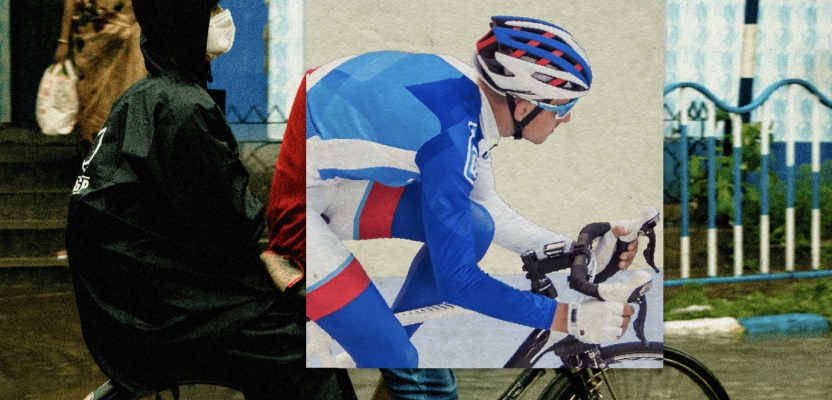
The biggest challenge in the production process was to find the right material to show our message in the most impactful way. Since our ad is based on stock footage, our priority was to source clips about the climate crisis that visually complemented scenes of sports events.
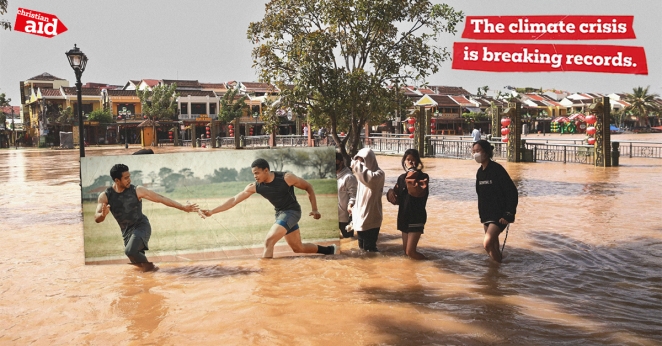
However, we weren’t allowed to show any Olympics Intellectual Property, so we had to allude to the Olympics without showing any trademarks. This task was further complicated by the time constraints we faced, but despite the time pressure, the team remained resourceful and dedicated to finding the visuals that would best highlight the urgent need for action on climate change.
What kit/tools/software were used to create the project?
To create the project we used Adobe Premiere Pro and Photoshop.
What’s the main message of this project and why does it matter?
Our campaign aims to raise awareness of climate injustice and inspire individual action. The last global convergence in Paris was the 2015 UN climate summit, where the Paris Agreement was signed. Unfortunately, nine years later, that agreement is at risk, as carbon emissions and global temperatures continue to rise, leading to even more frequent severe climate events.
How long did it take from inception to delivery?
After we changed direction, we only had one month left to get a new concept approved, and finish production.
Can you describe the creative spark or inspiration behind the initial concept? Was there a specific moment or insight that ignited the idea?
The idea was initially inspired by the Olympics motto, "Citius, Altius, Fortius," which means "Faster, Higher, Stronger" in Latin. So we thought, what if we show the meaning of this motto for countries in the Global South? Where the weather is changing faster, sea levels are rising higher, and storms are getting stronger.
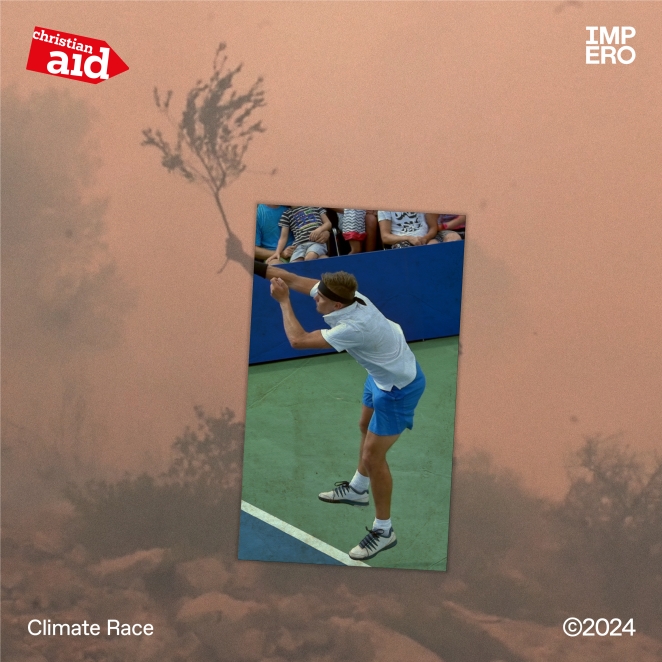
Comparing aspects of the Olympics with climate change led us to the technique in our ad: There are phrases often used by commentators referring to sporting events, but which could also be applied to describe the climate crisis. With this in mind, we wrote a script that sounds like a sports commentator's narration, but paired it with footage of the climate crisis to create a strong contrast between what the viewers are hearing and what they are watching.
How did you ensure that the concept aligned with the brand's values, goals, and target audience?
We wanted a brave concept that pushed the boundaries of comms surrounding climate change and the Olympics. We ensured that the campaign had a future focus. Our target audience ‘mentors’ are very family-focussed, and want to ensure a future for their children. In order to connect with them, we pulled on their heartstrings to get them to engage with the campaign and join us to beat climate change.
Were there any alternative concepts or ideas considered during the ideation phase? If so, what led to the selection of the final concept?
We had a really interesting idea about a “loss leaderboard” to reflect the medals table that everyone follows during the olympics. We thought that instead of the leading nations, we’d show the ones that were suffering most from the climate crisis in a never seen before “loss leaderboard”. Our idea was to then have a “medal ceremony” to give a platform for the nations most at risk. But after pushing it quite far, it felt it relied a little too much on serendipity.
Can you discuss any collaborative or interdisciplinary aspects of the ideation process, such as working with other departments or external partners?
Bringing this idea to life was a massive team effort. Although every member of each department had a defined role, the process was highly collaborative. For example, if we were tight with timings and needed to find a specific piece of footage, the responsibility didn’t fall on just one person. Instead, if anyone was available at the moment, they would pitch in to help with the search, speeding up the process and ensuring we met our deadlines efficiently.
How did you ensure that the concept remained innovative and stood out in a crowded marketplace?
By making the video seem initially like a sports film, we wanted to create a sense of intrigue, and then shock and surprise as the comparison between the Olympics and climate crisis becomes clear.
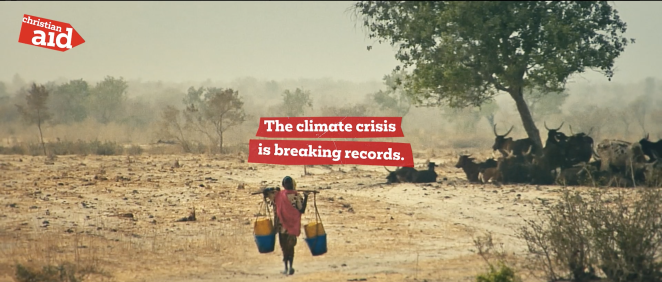
Clarity was really important. The contrast was seemingly counterintuitive, so we knew it would get some attention. But the key was to land the link effortlessly. So this was a case of crafting it tirelessly until we knew it would be understood as well as emotionally engaging.
What do you hope it achieves for the brand?
All of our work for Christian Aid is aimed at increasing the charity’s relevance, knowledge and salience. We hope that this campaign highlights the shocking realities of the climate crisis and encourages people to take action.
Credit list for the work?
Executive Creative Director: Alastair Mills
Creative Team: Beatriz Zambrano
Motion Editor: Precious Salazar
Designer: Charlie Dyckhoff
Account Director: Shannon Farmer
Chief Strategy Officer: Chris Tyas
Producer: Julia Tallis / Shaye Laree Thompson
Project Manager: Julia Tallis / Shaye Laree Thompson