

For Anubis Mendoza, creativity has always been part of life. Growing up surrounded by photography, colors, and endless sketching sessions, he developed a natural affinity for the visual arts. That passion carried him into the world of graphic design, where over two decades of experience across diverse roles shaped him into a versatile creative leader. Today, Mendoza works as a Gen AI Art Director at Oliver+, balancing human creativity with the possibilities of technology.
But behind the titles and accolades lies a simple philosophy: stay curious, stay resilient, and adapt. From experimenting with programming and design hybrids to embracing new AI tools like MidJourney and Runway, Mendoza has never been afraid to evolve with the industry. His career reflects both the challenges and the joys of being a modern creative, finding empathy, storytelling, and balance in a world moving at breakneck speed.
How did you first get into the industry?
Well, I think that's easy to answer: my parents were photographers when I was a child, so I was always around the visual arts. They bought my siblings and me lots of paper and colors, so we spent hours drawing freely.
Where are you based now and who do you work for?
I currently living in Cuernavaca, a city less than 2 hours from Mexico City, working remotely for Oliver+ as Gen AI Art Director.
What is your personal background and what role did it play in your career?
My background is as a graphic designer. I currently have over 20 years of experience, so I've been fortunate enough to cover many different roles in the creative industry. Perhaps it's not so common that I've covered roles as a hybrid between programmer and designer, but I always liked that duality.
If you weren’t in your current industry, what would you be doing?
Wow, maybe in the kitchen, I really enjoy cooking, and seeing that expression on people's faces when they try a dish they like—they don't need to say anything, they just nod their heads and look for an accomplice agree with them, you know? Like, hey dude, this tastes really good. Although it could also be in music. When I was a kid I took piano lessons, then I grew up and left it behind, and today at certain times I feel like a frustrated musician hahaha.
Can you explain your creative process? What makes it unique?
In brief, in my professional work, first and foremost, you have to think, you have to create concepts based on insights, and you have to ensure that these concepts are empathetic and easy for the target audience to decode.
Once that's done, you can go for inspiration, create mood boards, key visuals, it's a little more complex than that, but I want to give you a general idea.
This is not something that happens in my personal work, which is mostly spontaneous and does not usually have commercial objectives.
Here, an idea just pops up and I start creating.
How would you describe your style?
Well, as a designer, I try not to have a style, but rather to adapt to each case depending on the brief.
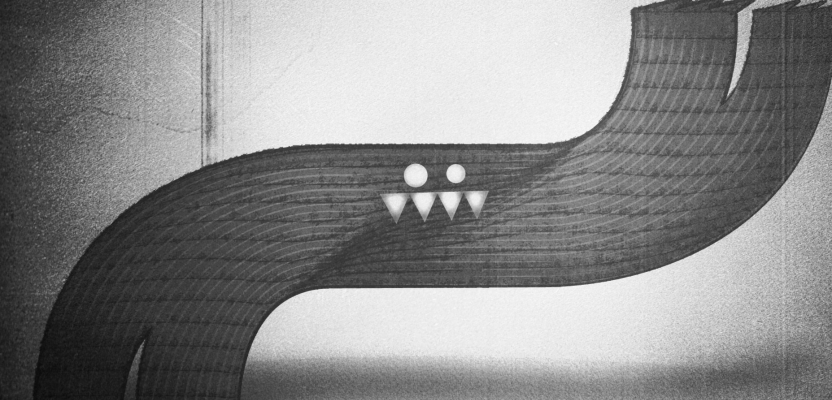
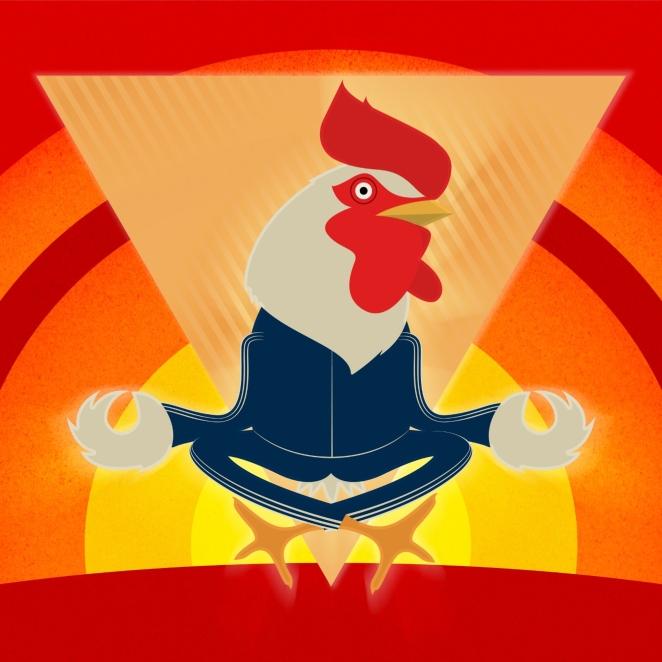
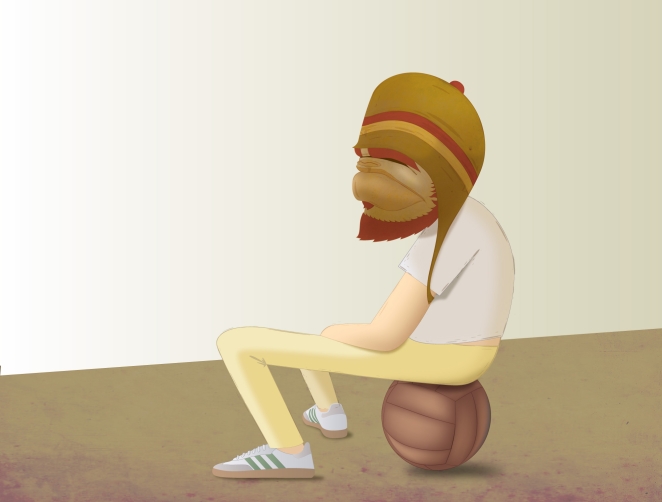
Although the work I show here is mostly personal, I prefer not to explain my style and leave it up to you, the reader.
Which individuals do you gain inspiration from? Do you have any heroes in the industry?
I think that every time I had the chance to answer this question, I would leave great people off the list. But you'll be expecting to read names here, so I won't disappoint you. They're not creators I see every day, but they really inspire me: Mitsy Avila Ovalles, Han Hoogerbrugge, Karlotta Freier, Dilraj Mann, and Charles Burns.
What tips would you give to aspiring creatives looking for work?
To be curious, and if they're not naturally curious, to build it up. That's like an engine you know...curiosity moves you and takes you places you might not have considered.
What tips would you give to other professionals to get more clients?
Well, I think I am nobody to give this kind of advice, I think I can say that personally, no matter if the projects I do are big or small, I always give the best of me, you never know where the next project can take you.
Can you share a memorable experience from your career journey that shaped your approach to creativity?
I don't know if it would be too long to try to explain it here, but I'll try to be brief. Once, we came up with a sci-fi story to sell products from a leading global technology company. Yes, it was a sci-fi story, but we made sure it could happen in real life, and well, I don't know if it ever happened in the end, but the client was delighted and mentioned something so simple and so relevant: we've been trying for years to get advertising agencies to understand that we, as a technology company, don't sell technology, we actually sell fear.
And this reveals a very simple truth about brands: in this case, the brand couldn't sell its products if companies didn't feel vulnerable.
What kind of tools/kit/software could you not do without?
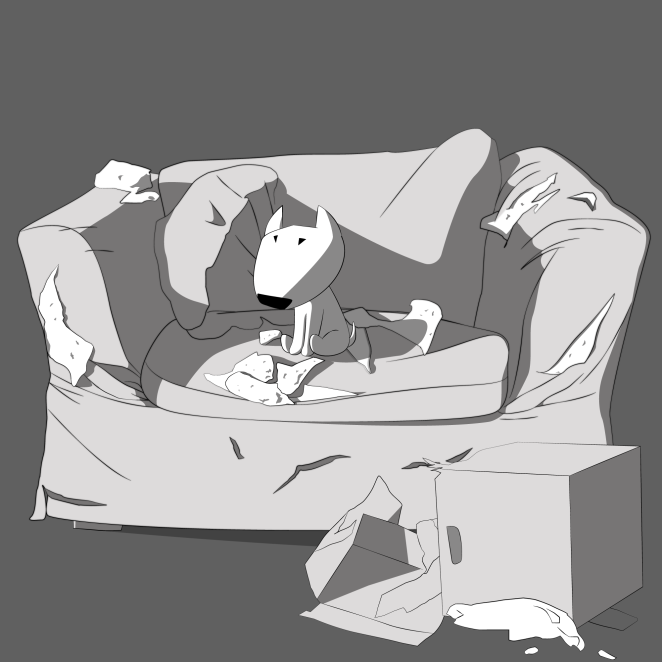
I'm afraid to say that at this point in my life, I hardly ever pick up a pencil. I usually go straight to my tablet, and the programs I use most, in order, are Illustrator, Photoshop, and After Effects. It's true that since last year I've added different Gen AI technologies. My basic kit is Chat GPT, Midjourney, and Runway, although I can always add other software, analog drawings, or photographs depending on the project.
What’s your secret to staying inspired and motivated?
There is no secret; I simply love my profession and everything related to it. Every day I find something that motivates me, even on those days when I hate the world. There is always a moment when I find the motivation I need to keep going, whether it's surfing the internet or reading a book.
What’s the work achievement you’re most proud of?
Luckily I haven't gotten there, so I'm still on the move.
As someone with experience in the industry, what trends do you foresee shaping the future of creativity?
This is a hard question to respond to, and I don't feel I have the knowledge to do so. All I can say from my own perspective is that from time to time, saturation happens, and then we take a step back and return to the basics, and the basics become relevant once again.
What do you think sets apart truly exceptional creatives from the rest of the pack?
I like to think it's a combination of determination, perseverance and ultimately talent.
How do you think technology has influenced the creative industries and how have you adapted to these changes?
Technology always has two sides. Today, we produce more in less time, with higher visual quality, and this is more democratic. I mean that more people have access to technology and can produce something interesting without perhaps having as much experience or formal education. But it's also true that the conceptual part has been relegated. Thinking isn't for everyone, and the production that you can visualize today in minutes or even seconds can overshadow ideas and concepts. So it's a daily challenge to slow down, not to get carried away by producing quickly and on a large scale. It's not easy; it's tempting to just write a few prompts and ask the AI for variations. Believe me, it's complicated. Agencies want to produce campaigns at a dizzying pace today. Did you know that there are agencies promising to create a brand and an advertising campaign in 24 hours? Worst of all, it's possible.
What is the one thing that you would change about the industry?
Well, we are human, our sector is not very empathetic with the humans behind the creativity of a brand, of a campaign, so that's what I would change, the lack of empathy with the workers.
Any websites, books or resources you would recommend?
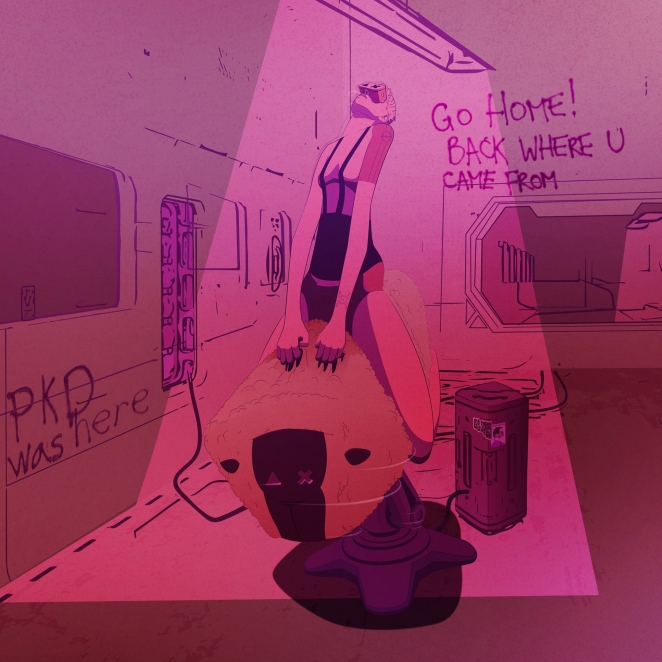
The internet is an endless ocean, and I'm sure you, the reader, know of something inspiring that I don't, but I can't help but mention Han Hoogerbrugge. You can find something about him right now in books, on the internet, or in a multimedia exhibition if you're luckier.
Then, well, I watch a lot of interviews on YouTube, mainly on topics related to my profession that interest me, so it depends on your interests. If you haven't done so before, just type what you want to consume on the internet or YouTube and give it a few minutes of your attention.
And finally, I don't know, I also try to find inspiration in things that apparently have nothing to do with my profession. Every day I read something, but I also try to laugh for a few minutes by freely exploring Instagram. Hey, I'm just someone else who tries to counteract stress with a little fun.