

Get ready to unwrap a holiday advertising adventure like no other. In this exclusive interview, Director Ian Roderick Gray lifts the curtain on Sky Bet’s audacious new “Super Week – Super Sized” campaign, revealing how a playful concept transformed into a gritty, larger-than-life commercial brimming with both practical magic and immersive CGI.
Discover the creative spark, meticulous planning, and collaborative teamwork that made the fantastical feel real—and learn why this Christmas-themed production might just be Sky Bet’s most ambitious project yet.
What was the brief?
To create a Christmas themed commercial advertising Sky Bet’s “Super Week - Super Sized” incentive and by specifically showing a physical representation of the concept of “Super Sized” applied to real world situations.
How did the initial pitch/brainstorming phase go?
When you’re given a brief and concept as fun and imaginative as this one, the brainstorming phase is always an exciting process. Having created many adverts for Sky Bet, we’ve developed a strong understanding of their brand and the conceptual boundaries we need to work within.
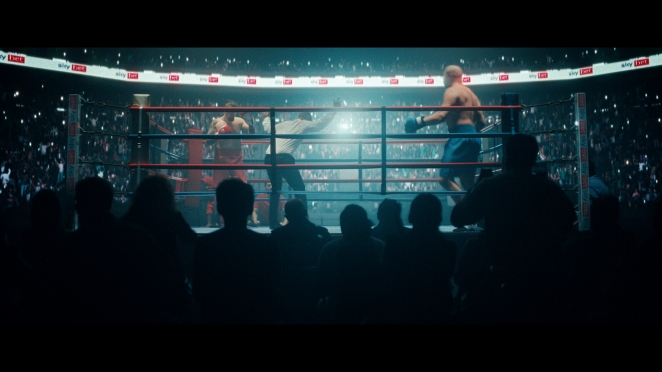
Every decision was guided by a simple mantra: “Is this Sky Bet?” This focus streamlined the creative process and gave our ideas clear direction. Once we fully grasped the rules of “Super Sized” and how its fantastical elements would come to life in each scene, it became a matter of balancing imagination—identifying which ideas felt a touch too fantastical and which remained true to Sky Bet’s brand and aesthetic.
What was the process behind ideating the concept?
We knew Sky Bet was taking a bold step with this brief, as it marked a conceptual departure from their direction over the past two years. Their recent output has leaned heavily into a naturalistic, documentary style, so the challenge was to seamlessly incorporate complex VFX that inspire a sense of wonder into this grounded, "real-world" aesthetic.
The key was to ensure everything felt gritty, lived-in, and tangible, enhancing the contrast with the fantastical elements. Even those fantastical elements had to feel believable, adhering to realistic physics, lighting, and movement. Believability, rather than hyper-realism, was our priority. We set out to build a world full of imperfections, blemishes, and a deliberate lack of polish.
Anything overly stylised or too clean was rejected, and the performances had to authentically mirror the audience's reactions to ensure that each scene was firmly grounded in reality. We continuously had to avoid anything that felt too cartoony, which is not always an easy task when you’re working with VFX.
What was the production process like?
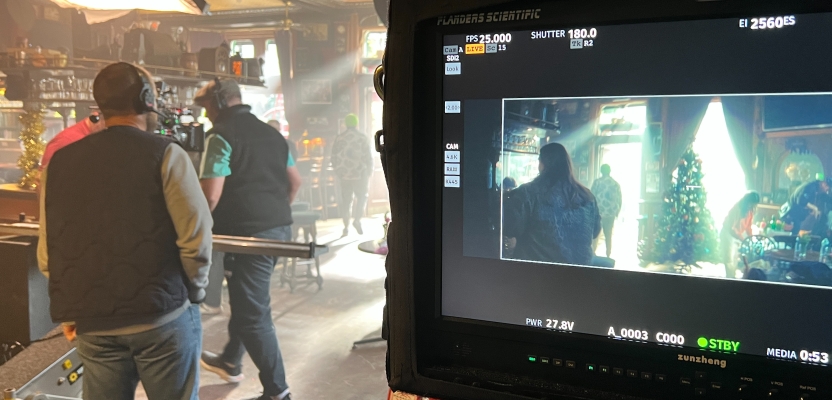
At The Banquet, we know that preparation is everything. Investing time and effort into pre-production ensures a smooth, efficient, and enjoyable production process. For Sky Bet, this meant thorough collaboration with the creative and brand teams to align on every detail. We then clearly communicated these plans to all Heads of Department, from production through to post—edit, VFX, sound design, and colour.
This was an ambitious project with a modest budget, which placed added responsibility on production to deliver exceptional results without compromising quality. We scoured London for locations that were not only ideal but also cost-effective, and crafted a watertight shooting schedule to minimise filming days while capturing everything we needed.
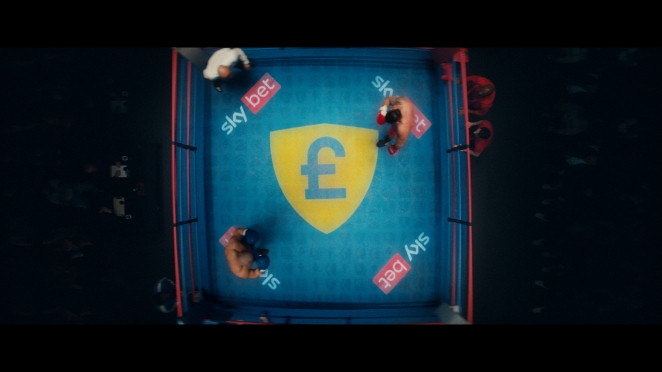
Fortunately, we had an incredible team. The excitement and energy around the project fostered a genuine sense of harmony, making the entire process both productive and enjoyable.
What was the biggest challenge during production? How did you overcome it?
The biggest challenge was ensuring the VFX were seamlessly integrated and as believable as possible. Our goal was to achieve a standard so high that the audience would question what was CGI and what was captured in-camera. Often, the most convincing effects came from combining practical props and real lighting with CG elements. This required meticulous planning and close collaboration across all departments, each with a clear understanding of the technical process.
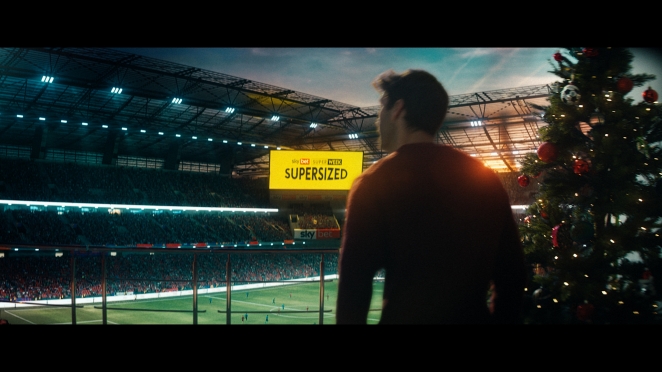
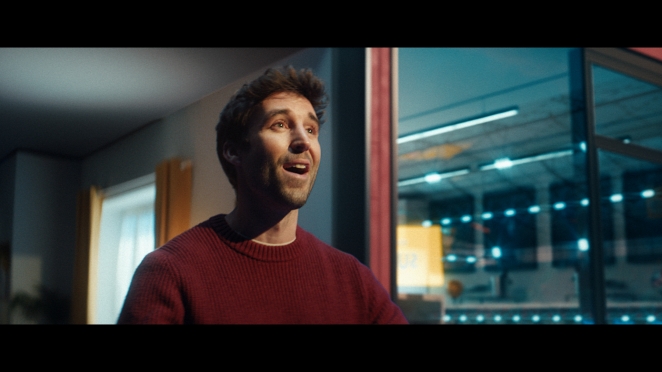
A standout example of this was the shot where a television expands and transforms into a physical window, revealing a real stadium. While it could have been executed entirely in CG, our brilliant cinematographer Joe Douglas quickly recognised that a greater sense of realism could be achieved by constructing a practical television/window that physically expanded. This approach allowed real lighting to flood the set and interact naturally with the props, something that would have been difficult to replicate in CG alone.
Zoe Koperski, our production designer, rose to the challenge of designing an expandable window that could seamlessly operate on cue. Finally, the team at LMNTL-Visuals took the footage and crafted a photorealistic back wall and CG television to composite over the shot. The result, born from the collective efforts of all departments, is a far more immersive and convincing effect—one that perfectly blends practical and digital elements to stunning effect.
What is one funny or notable thing that happened during production?
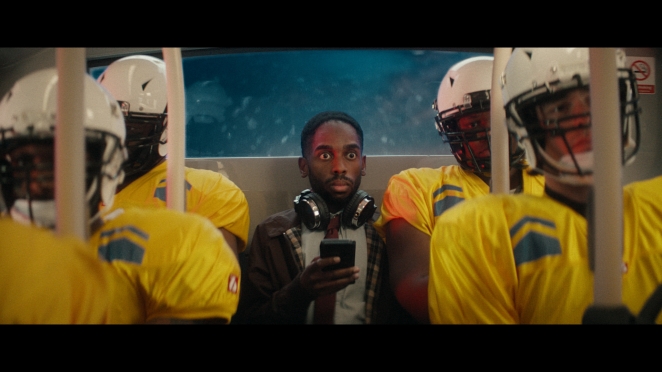
For one scene, we needed a bus full of enormous NFL players in full uniform. During the casting process, our producer, Adham Hunt, realised we’d achieve far better results by casting an actual NFL team instead of searching for large actors. Before long, we had half of the London Warriors on board for our advert. They arrived on the day fully embracing their thespian sides—quoting Shakespeare and jokingly asking for character motivations.
The scene’s central actor, Reece Skinner, looked tiny by comparison to these behemoths. To amplify the humour and highlight the “Super Sized” concept, we deliberately positioned him in the very centre of the bus, completely surrounded by the NFL players. Achieving the perfect symmetry for the shot was crucial, but we soon realised the players needed to swap seats—no small feat with a full camera setup blocking their exit.
Their solution? Simply climb over a slightly apprehensive Reece, who gamely tucked himself into his chair like a turtle retreating into its shell. Several giant men in full NFL gear literally clambered over him to reach their optimal positions, creating a moment as comical in real life as it appears in the final shot. Reece’s on-screen reaction is remarkably close to his genuine response during this unforgettable sequence!
What’s the main message of this project and why does it matter?
Sky Bet has run numerous “Super Week” promotional campaigns, but this marks the first time they’ve spotlighted the “Super Sized” aspect. It was crucial for the “Super Sized” concept to land and resonate with the audience, distinguishing it from previous Super Week commercials.
The idea of “Super Sized” had to feel bigger, bolder, and more extravagant than anything done before. Capturing this unique element of Super Week and communicating it as clearly and effectively as possible to the audience was absolutely essential.
How long did it take from inception to delivery?
We began working on this project in late September and we have just delivered the first of five slightly different versions of the advert, so around two and a half months of work in total, which for a project that features many different locations and sets, as well as a significant amount of CGI is not a huge amount of time, so it was a challenge to say the least!
Can you describe the creative spark or inspiration behind the initial concept? Was there a specific moment or insight that ignited the idea?
We were very lucky to have received a highly developed concept. Our job was to take the seeds of that concept and grow it into something tangible.
How did you ensure that the concept aligned with the brand's values, goals, and target audience?
We worked in close collaboration with the outstanding creative team at Sky Bet, as well as directly with the brand team, to ensure that every creative decision was a true reflection of the Sky Bet brand.
Sky Bet were an incredible partner throughout—fully supportive of the production process and providing invaluable guidance from a brand perspective. The clarity and detail of their brief gave us a strong foundation, enabling us to sharpen and refine the creative direction with confidence.
We firmly believe that adhering to brand guidelines and understanding the target audience are fundamental to successfully fulfilling any brief. For this reason, it was essential to us that Sky Bet remained involved at every stage of the process, from inception to delivery.
Were there any alternative concepts or ideas considered during the ideation phase? If so, what led to the selection of the final concept?
Sky Bet explored several concepts internally before determining that this was the strongest direction. While each idea was shared and discussed with us, the final decision was very much their own.
Can you discuss any collaborative or interdisciplinary aspects of the ideation process, such as working with other departments or external partners?
This project was highly collaborative from start to finish. Sky Bet provided the initial concept, and we worked closely with them to refine and shape the overall approach. Once the concept was finalised, we developed a comprehensive Director’s Treatment—a detailed blueprint that outlined every aspect of the project.
This included lighting, camera work, the style of performances (favouring naturalistic over “big”), set design, props, wardrobe, the overall colour palette, tempo, sound design, and a breakdown of potential CGI usage.
The treatment served as both a guide for the client and a foundation for the heads of department, who used it as a starting point to bring their own brilliant ideas to life. These contributions were then carefully vetted, with the strongest concepts fed back to Sky Bet to ensure they aligned perfectly with the brand.
This process allowed us to balance creative ambition with brand consistency, delivering a final product that felt both innovative and unmistakably Sky Bet.
Many of the more developed ideas emerged once locations were found and secured, with key shots and effects specifically designed to maximise the potential of each environment. Once the locations were finalised—including identifying which would be sets—the director and cinematographer collaborated to create a detailed shot list.
From there, we developed highly specific storyboards and, ultimately, an animatic. This ensured that the pacing of the advert felt dynamic and that each shot worked seamlessly within the edit.
The progression from shot list to animatic proved to be an invaluable tool for the heads of department, providing clarity and helping them refine their objectives within the broader creative vision.
What role did consumer research or market analysis play in shaping the concept and its execution?
Once the animatic was completed, Sky Bet utilised it for market analysis. The results of this testing led to minor refinements in both the visual elements of certain shots and the VoiceOver script. These adjustments were carefully implemented to ensure maximum brand awareness and audience engagement.
Can you discuss any unique or unconventional production techniques or approaches used to bring the idea to life?
In addition to the practical expanding wall constructed for the complex television sequence, we employed numerous innovative camera techniques throughout the production to achieve a high-tempo, dynamic, and original aesthetic.
The opening shot, for example, features the camera traveling backwards through a footballer’s legs just as she is nutmegged by a player on a high-speed run. To pull this off, we mounted the camera onto a powerful and agile remote-controlled car, expertly operated by the legendary James Davis.
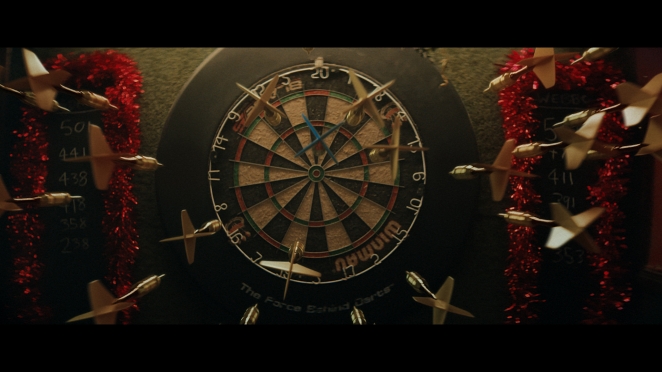
The production was filled with these creative innovations, and it was immensely rewarding to discover unique solutions for some of the more ambitious shots.
Credit list for the work?
AGENCY AND BRAND: Sky Betting and Gaming
Creative Principle - Adam Edworthy
Lead Producer - Holly Liddell
Head of Film & Motion - Marcus Richardson
Senior Creative Copywriter - Sarah Cornwall
Lead Creative Designer - Jamie Webster
Art Director - Dave Kee
Head of Brand & Sponsorship - Kieran Forde
Senior Marketing Manager - Fiona Bardsley
Senior Brand Manager - Ash Vann
Production Company : The Banquet
Producer - Adham Hunt
Production Manager - Luke Grech
Client Producer - Jen White
Director - Ian Roderick Gray
Postproduction:
VO: Jeff Stelling
VFX/CGI: LMNTL
VFX Lead/Supervisor: Noah Kayma
Modeling Lead: Paul Köhler
VFX Production Lead: Joshua Partyka
Roto/Assist: Florian Kocian
Editing: Stitch
Producer: Maggie McDermott
Editor: Phil Currie
Assistants: Chris Hutchings / Laura Zvarikova
Sound Design: Sound Canvas
Sound Designer: Tom Joyce
Coloring: Harbor Picture Company
Colorist: Alex Gregory
Producers: Sarah Banks and Charlie Morris