
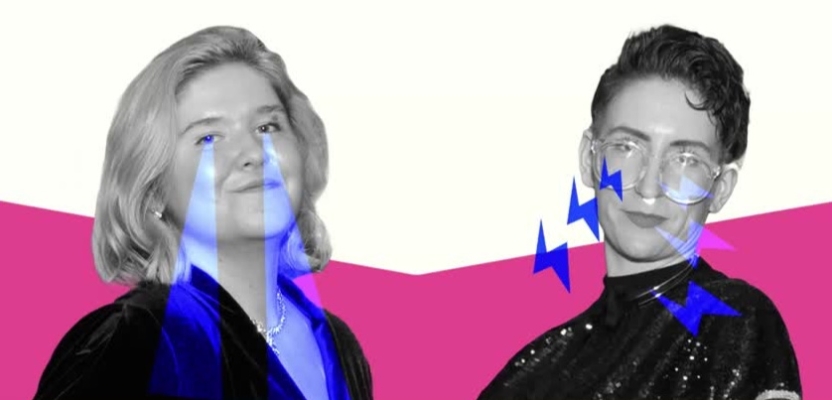

I Am Female* didn’t start as a “nice idea.” It started as a reaction to a creative industry still dominated by the same white, male faces, the same recycled leadership styles, and the same monotonous voices shaping what culture looks like.
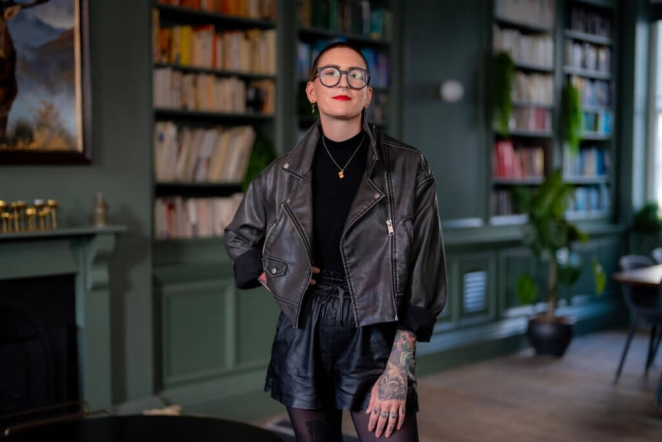
Founded by Annie Bartley (above) and based in Clapham Junction (with a global team), the studio exists to challenge all of that — not politely, but properly. Built on a fierce belief that diverse lived experience makes better creative work, I Am Female* combines a structured, craft-first process with the freedom to get messy, stay curious, and push until something genuinely connects.
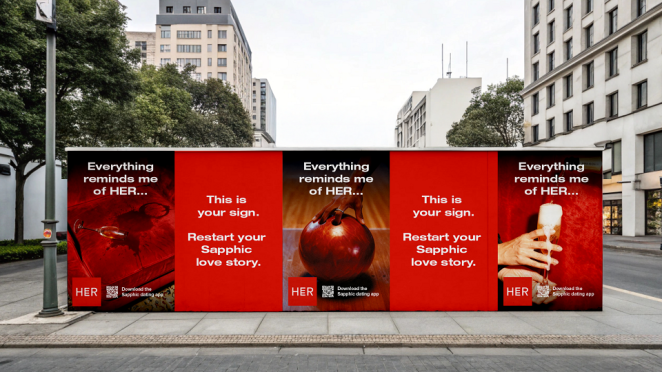
In this Company Spotlight, Bartley talks about scaling fast, staying agile when the new-business cycle refuses to behave, and the moment things clicked — from landing their first £50k+ contract in 2023 to a viral OOH campaign for queer dating app HER, created with a queer team and a community-first mindset. The mission is clear: less tokenism, more intersectional leadership and a future where agencies stop acting like factories and start acting like facilitators of meaningful change.
How was your company born and where are you based?
I Am Female* was born because I was pissed off with the lack of representation for women* and the LGBTQIA+ community in the creative industry. I wanted to challenge outdated leadership styles and push to see more representation across the board.
I’m tired of seeing the same white, male faces and hearing the same monotonous voices. This industry needs more diverse voices; it deserves it, especially in leadership. We’re on a mission to change what a great agency looks like. We believe that diverse lived experiences build better creative ideas, and we channel that into everything we do.
Our studio is based in Clapham Junction, SW London, but we have team members globally.
What was the biggest challenge to the growth of your company?
In the beginning, it was because we grew fast, and that was difficult to manage. We had to scale how we work to match demand while still maintaining high-level creative output.
At that time it was just me running the agency alone, and that was tough. Then we merged with a copywriting agency, and our Co-Owner and Content Director, Harriet Phillips, came on board. It made such a difference. We were better and could push harder.
We streamlined and fine-tuned our internal process to set ourselves up with a better working model. But now we face a different challenge: getting consistent work! A couple of years ago, I could predict when our busy and low periods were, but those cycles have changed year on year, and that is a challenge.
So, it’s about being agile, consistent, adaptable, and headstrong in our belief of who we are and what we can deliver.
Which was the first huge success that you can remember?
Landing our first contract above £50k back in 2023 was massive. It showed us what we were capable of and pushed our mindset into thinking bigger. It was such a huge success for us because it showed what I’d been shouting about for years, that we can transform brands in the big arenas. That we can go head-to-head with the huge agencies and win.
What’s the biggest opportunity for you and your company in the next year?
I feel we’ve been on an uphill slog this past year, laying the important groundwork for our next big stage. And that can feel (and has felt like) nothing is happening for us. But we’ve been stepping into who we really are as an agency and what we stand for, and because of that, and the representation we have been pushing, it has put us in front of brands that are our ideal partners.
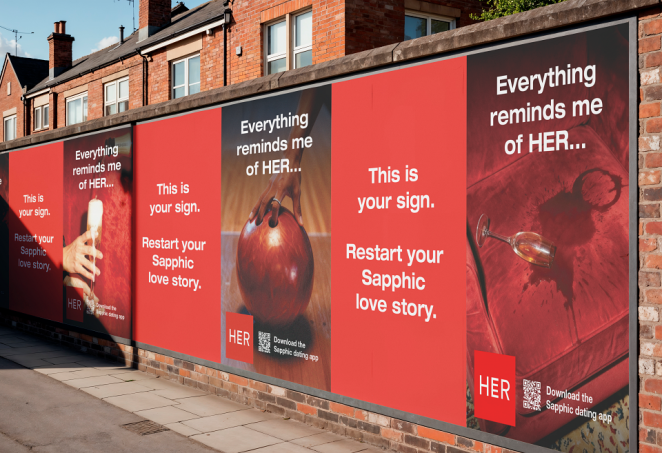
We’ve just had an OOH campaign go viral for the queer dating app HER. It was such a great campaign. We assembled a queer team to execute the campaign, and it showed that when you co-create with the community, you produce work that really connects. This partnership is the start of something incredible, and more so, puts our mission on a larger platform.
Can you explain your team’s creative process? What makes it unique?
We are a very structured agency, we’re all about process! After nearly 20 years in the industry working brand and agency side, we’ve been able to put together a process that not only delivers great work, but also supports the creativity of our team.
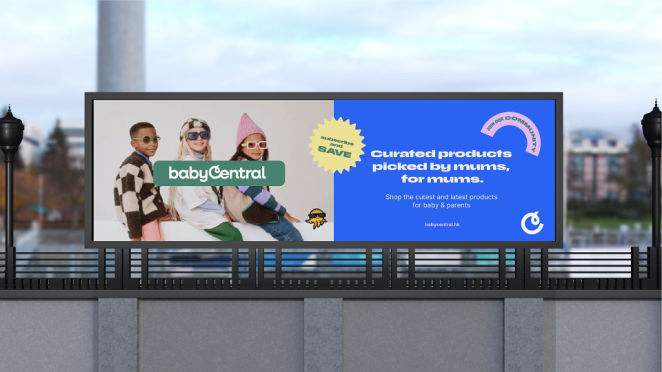
Within that structure, we leave plenty of space for instinct and messiness. We start with clear goals and objectives, clear values, clear voice, and then we build from there. We’re not afraid to be messy, to pivot or to challenge and ask questions. The best creativity happens when we stay curious and open to possibilities.
How does your team remain inspired and motivated?
We’re not your average agency. We’re not here to just win clients and clock profit. We’re here for something bigger. Our mission is to change what a great agency looks like and to hold a mirror up to the creative industry and say, ‘hey – what the f*ck are you doing, you can do better’. But you’d have to individually ask each team member this question, as I’m sure it’s different across the board.
But for me, personally, I’m inspired to make a difference. To be difficult. To be the representation I never had, and to push to ensure that marginalised groups are represented at leadership level, and every level. I know what side of history I want to stand on.
What is one tip that you would give to other agencies looking to grow?
Question yourself. Why are you growing? What is the purpose of this growth? Who is it for? What’s your exit strategy? My advice is to always question. Question everything.
How do you go about finding new clients/business?
We have a long game and a short game. Relationship building is our long game, and we’ve been doing that for 5 years. It’s ensuring we’re at the front of mind by always putting out marketing to help nurture that – whether that’s social, SEO, articles or newsletters.
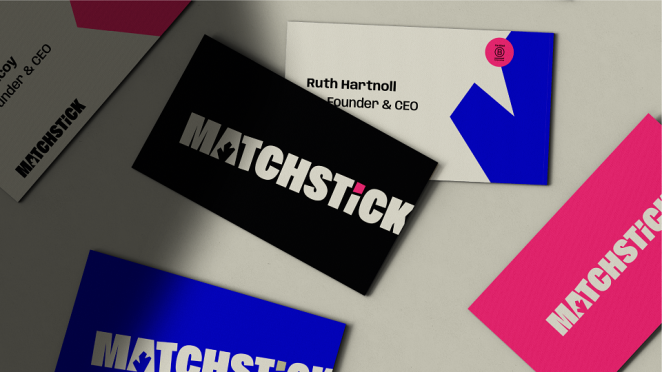
Our short game is more fun and explorative. When we have the budget, we try new sales outreach, press, speaking events, and podcasts. But a large percentage of our leads still come in from referrals, recommendations and returning clients. So, our long game strategy must always be ticking along in the background whilst we have fun with our short game.
What’s your one big hope for the future of the industry?
That those creating the work actually reflect the world we live in. That the people shaping culture actually reflect the culture. Less tokenism, more intersectional leadership. And that creative agencies stop acting like factories and start acting like facilitators of meaningful change.
Can you share a defining moment in your company’s journey that shaped its identity or direction?
From the moment I launched this agency, its identity had been built on purpose. But it’s defining moment that shaped our stronger, more authentic direction, firmly rooted in who we are, was September 2024 when we finished the merger with Turn the Tables Copy, a content and copywriting agency run by our now Co-owner + Content Director, Harriet Phillips.
This huge step really cemented who we are, what we can deliver and what a powerhouse you can create when you put two feminist, headstrong queer women together.
How do you foster a culture of innovation and experimentation within your team?
We must always remain curious. That is so important. Our biggest mistake is to think we know everything. There’s so much out there that it can be overwhelming trying to decipher the shit from what’s actually valuable.
So, we often test things on ourselves first. Whether it’s AI platforms, new software, we use it on our studio projects to see if it’s worth bringing into our creative eco-system. It’s about creating safe spaces for trying new or weird things and sharing what did or didn’t work.
Can you describe a project that challenged your team creatively and how you overcame any obstacles?
Most projects are creatively challenging because we look at choosing projects that help push our creative boundaries and capabilities. But I find the biggest and most exciting challenges are juggling short deadlines with high creative output. When we are pushed to create in a short window, we usually come up with better solutions; however, that could be the ADHD in the team!
How do you balance maintaining your company’s unique creative voice while meeting the diverse needs of clients?
We are flexible and adaptable, but not with our values and what we stand for. Those are non-negotiables. Clients come to us because of who we are and what we stand for. They want a bold, honest, human approach. We never dilute that, even when we’re adapting for a more traditional audience.
What measures do you take to ensure diversity and inclusion are prioritised within your company?
This is at the forefront of everything we do. As a queer-led, women*-led agency, we prioritise working with women*, the LGBQTIA+ community and those from underrepresented backgrounds. For the past couple of years, we’ve been building the IAF Creative Collective. A collective of diverse talent with a variety of lived experiences that we can call on to collaborate with on projects.
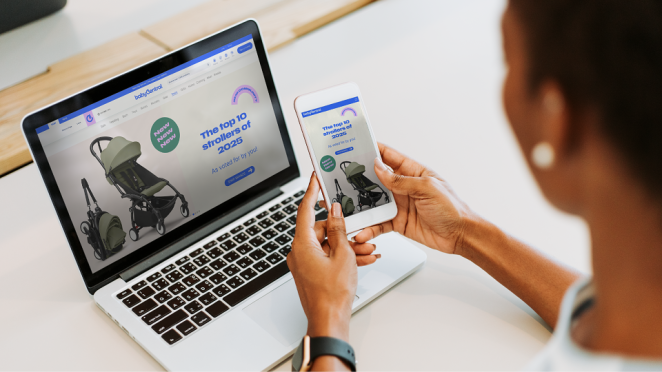
We build teams around those projects, and ensuring diverse voices are included at every part of our projects is the core of who we are and how we work. *If you identify as a women, you’re a woman.
What strategies do you employ to adapt to changes and trends in the industry while staying true to your company’s values?
We stay curious, open-minded and cynical in equal measure. You can’t be complacent in this industry. We keep an eye on trends, experiment with what’s useful, and ignore what’s just noise. And we’re always asking: how does this serve us, our clients, and the people they’re trying to reach?