

Co-branding has never been more tempting or more treacherous. In a landscape where every brand is swiping right on “collabs”, it can be hard to tell the strategic soulmates from the messy situationships. In this piece, Robert Volten, Managing Partner at Chuck Studios, draws on both his branding expertise and his own post-breakup dating adventures to decode what makes a partnership genuinely worth committing to. Through five of the best co-branding partnerships of the year, he explores how the right match can amplify distinctiveness, unlock new audiences and tap into real human rituals – without one brand losing itself in the process.

I have always thought that co-branding is comparable to dating.
And I’ll have to admit, I’m quite experienced when it comes to dating. After the end of an 8-year relationship, I threw myself out there. Tinder, Hinge, Happn… I used them all. Like a carefully curated brand platform, I tried to sell the best version of myself.
It was a very enlightening experience. Just like branding, dating forces you to confront some uncomfortable truths. Because before anyone can buy into you - romantically or commercially - you need to know exactly what you stand for. What are your values? Your boundaries? Only then can a meaningful partnership form.
Otherwise, you’re just riding along on someone else’s wave.
Much like dating, co-branding only works if you have two strong partners. Each brand doesn’t just need to believe in themselves, they need to believe in each other. If not, it’s like an unknown person married to a celebrity: only one side is ever recognised. So, what does a good co-branded relationship actually look like in the real world?
Pringles x Miller Lite
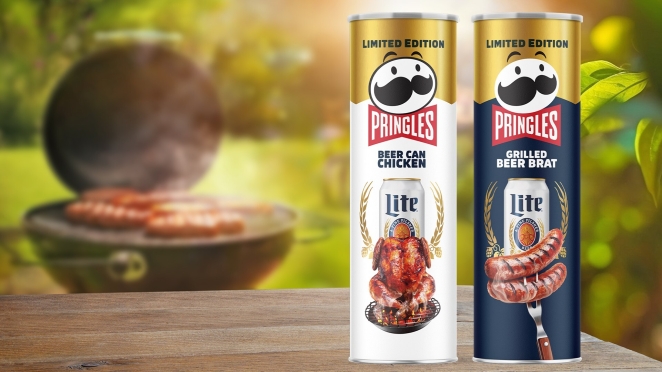
One of my favourite couples of 2025 was Pringles and Miller Lite - not because beer-infused crisps are revolutionary, but because the collaboration understands when and why people come together around food.
On the surface , sure, the pairing looks a bit unlikely. One is a global snack brand built on playful form and flavour and the other is a no-nonsense American lager. But when you step back a bit, the logic becomes clearer. This is a partnership that isn’t about product similarity but shared occasions. Both brands sit naturally at the centre of the same cultural moment: the good old summer barbecue!
And that’s where the intelligence really comes through. Rather than forcing a new behaviour, Pringles and Miller Lite lean into an existing ritual, one that’s social, seasonal and emotionally familiar. Crisps and beer aren’t novelties at a barbecue - they’re constants. By anchoring the partnership in that truth, it comes across as intuitive.
It’s what makes it creatively fun too. Miller Lite could have partnered with a meat brand and no one would have blinked. But by choosing Pringles, the brands create something more playful and unexpected, a partnership that sparks interest because it joins two different categories without confusing either identity.
In a year where food and beverage collaborations have increasingly focused on moments rather than products, Pringles x Miller Lite stands out as a reminder that the best brand relationships don’t have to reinvent new occasions. They simply show up (albeit confidently and creatively) to the ones people already know and love.
Wendy's x Takis
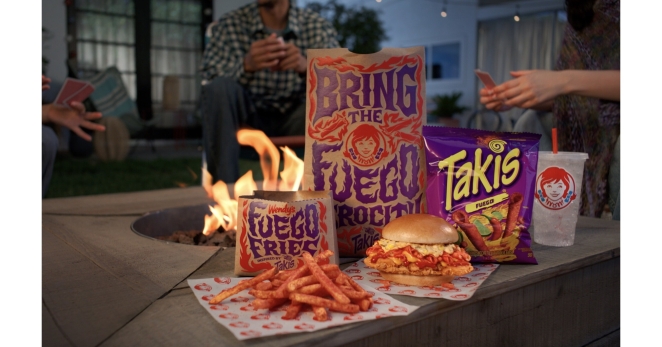
What makes the Wendy’s and Takis collaboration so powerful is that it is not built on contrast, but amplification. Forget yin and yang; this is yang and yang.
Both brands already own spice in their own way. Founded in 1969, Wendy’s brings old-guard heat and credibility while Takis represents a newer, louder generation of intensity that speaks directly to Gen Z. Put together, their distinctive brand assets (or DBAs) don’t dilute each other. They turn the volume up, allowing each other’s spice to strengthen their positioning. Twin flames, if you will.
The result is instantly legible, culturally relevant and unmistakably on brand for both sides. The question of “will the brands come through?” is easily answered. Yes, because each remains highly identifiable while bouncing off of each other’s fiery roots.
Trolli x Mountain Dew
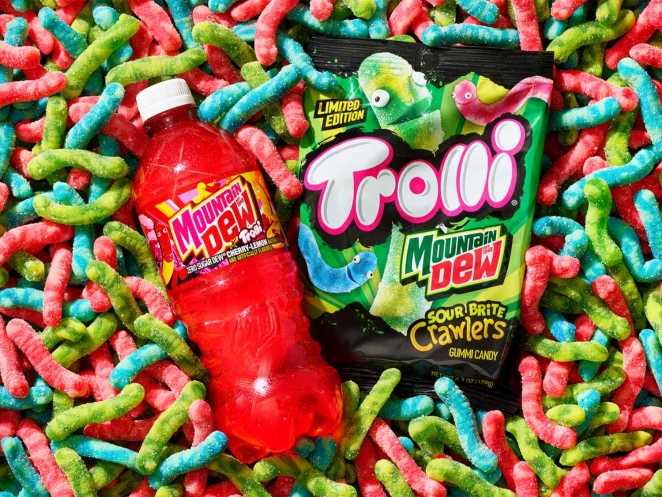
What makes Mountain Dew’s recent collaboration with Trolli work is that it relies on logic, not shock value. Sour lives at the heart of both brands, so moving that sensation between the two guardians of sugar, candy and fizzy drink, feels intuitive. A study found that only 1 in 8 adults enjoy extreme sourness, but this collaboration gives secret sour lovers the confidence to reveal themselves.
Like Oreo x Coca-Cola’s partnership last year, the partnership feels natural because it builds an established ritual, rather than a manufactured moment. Both brands are playful, social and active, yet they play different roles across the day. Trolli is about texture and indulgence, Mountain Dew about refreshment and energy.
The collaboration allows each brand to stretch into the other’s territory without losing their unique offering. It broadens the audience, invites trial, and keeps both brand identities firmly intact. A match made in heaven. For both.
Krispy Kreme x Crocs
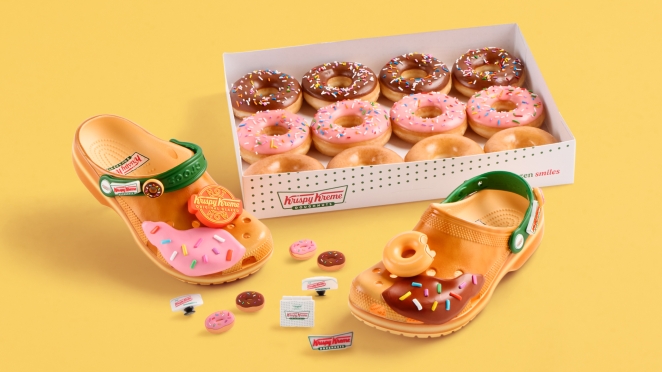
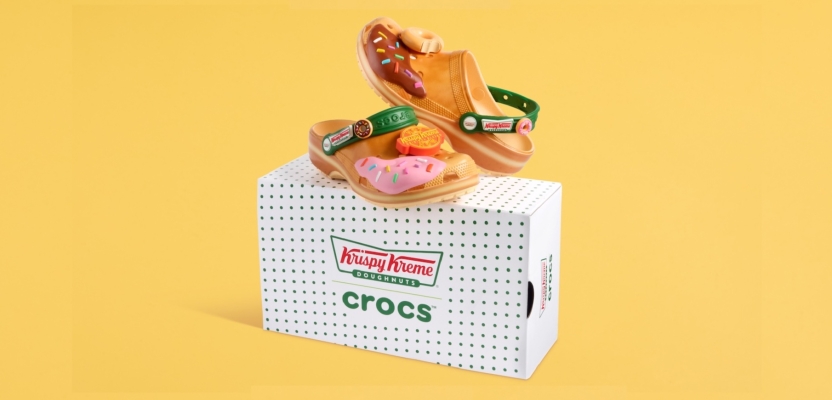
This is a smart partnership because it stretches the brand without putting it at risk. By stepping briefly into fashion, Krispy Kreme moves beyond food and into culture, without pretending it belongs there permanently.
Put simply, contrast beats similarity. As a result, the doughnut legends are able to tap into a different consumer base, one that may not even be thinking about doughnuts at all. That is where the value sits. The same can be said of Krispy Kreme’s rendezvous with Primark earlier this year.
No one is confused about what Krispy Kreme actually does. These are clearly playful light PR moments that aren’t being forced on us. It remains a doughnut brand, just one that is confident enough to explore new avenues, show up somewhere unexpected and still be recognised.
Native x Dunkin’
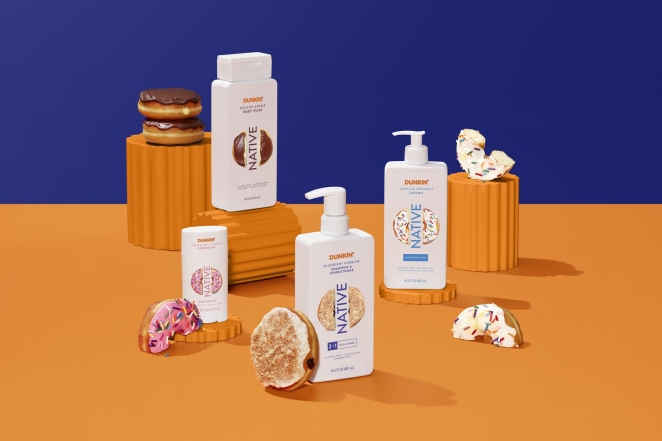
On the topic of doughnuts, Native and Dunkin is the kind of co-branding that shouldn’t make sense, and that’s exactly why it works. A doughnut brand in your shower isn’t logical, but it’s far from stupid.
For Native, Dunkin’ delivers instant scale, cultural relevance and exposure far beyond personal care. For Dunkin’, Native’s clean, considerate ethos subtly softens its artificial, mass-market associations.
The result is a partnership where both brands borrow what they need without diluting who they are, adding new associations to give each an advantage. It’s playful, strategic and self-aware, proving that the best food co-branding moments don’t have to follow a strict set of rules.
Relationships Take Work
Branded marriages can be messy and tough, but they can also be wildly rewarding. There’s no doubt that when done thoughtfully, co-branding can be one of the most effective marketing strategies - providing growth, relevance, boosting awareness, expanding audiences and enhancing brand equity.
Essentially, it’s a high-risk, high-reward relationship: the challenges are real, but so are the doors it can open. Just like dating.