Chris Frankland
Senior Creative
ABOUT
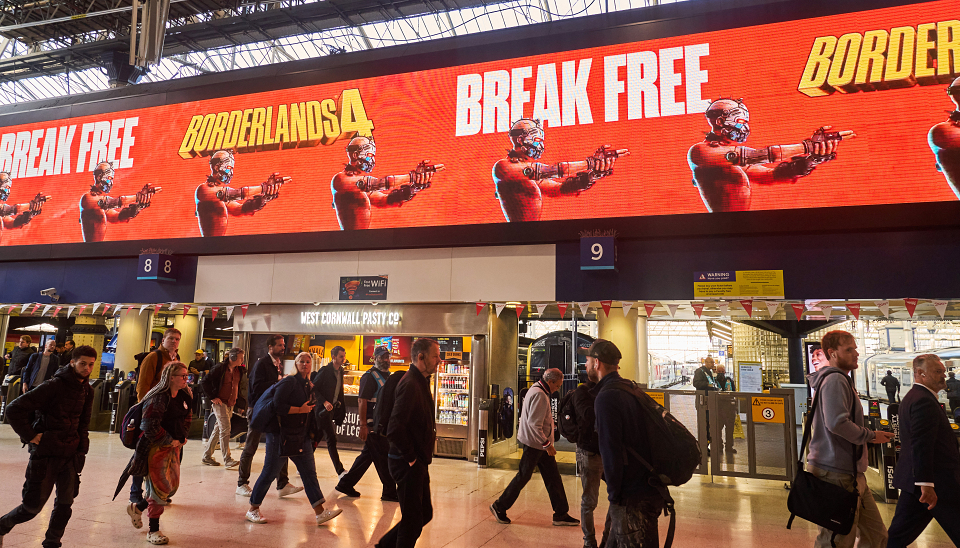
To launch Borderlands 4, we completely took over London’s Waterloo Station, transforming one of the UK’s busiest stations into an immersive gameworld. Commuters found themselves in a spatial tug of war between the game’s new totalitarian villain, The Timekeeper, and a host of new Vault Hunters encouraging the public to ‘Break Free’ from their unthinking daily routines.
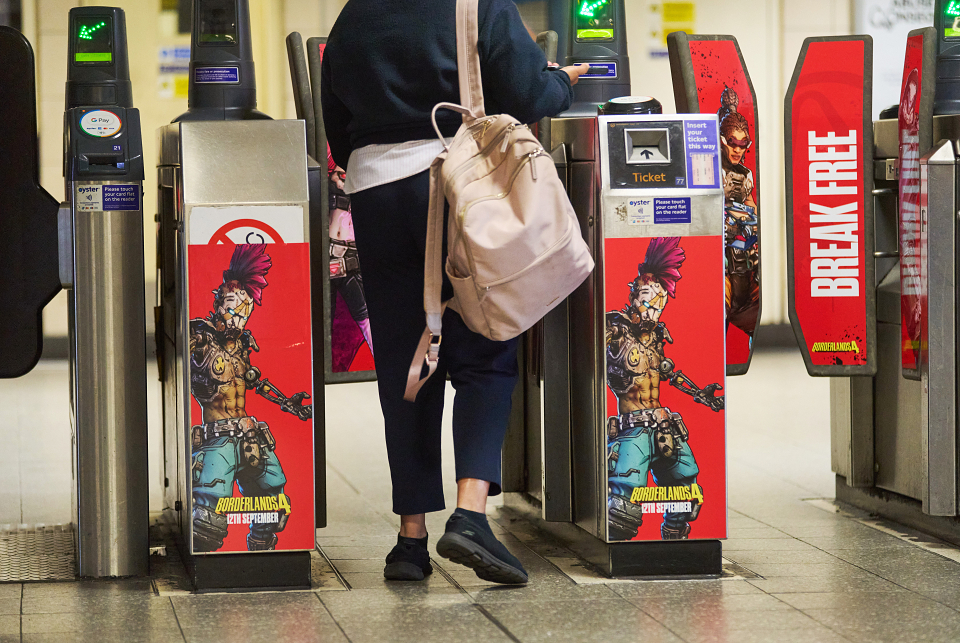
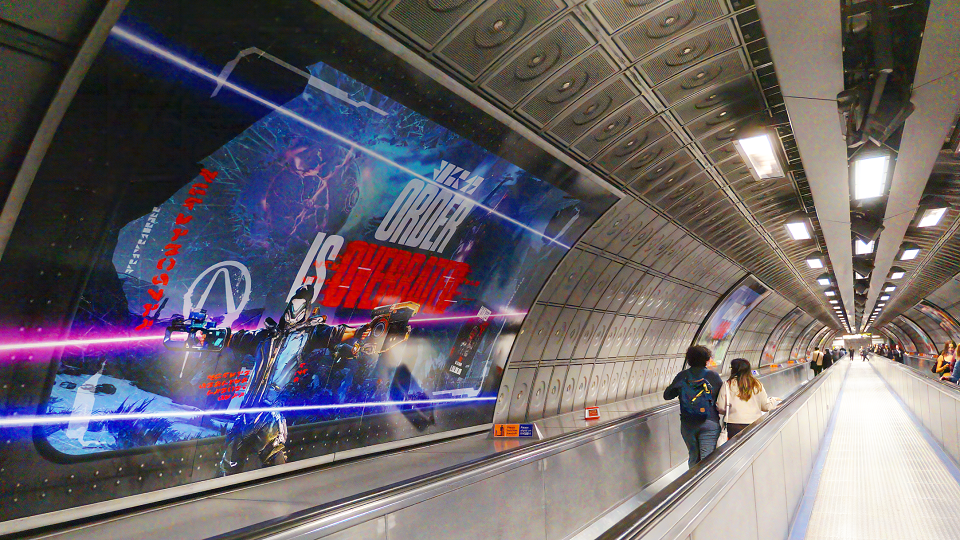
Bringing the game’s universe into everyday journeys, our design team built a dystopian sci-fi environment from scratch, layering it directly onto the existing transport architecture. Spanning more than 140 design assets across the station, including 115 meters of travelator tunnels, escalators, Europe’s largest indoor digital screen, external 3D special builds, and Snapchat enabled vending machines, the installation seamlessly integrated into the commuter flow.
By treating the station as our canvas, we jarred commuters into an awareness that simply by being in the space, they were part of The Timekeeper’s rule too, transporting millions into the Borderlands universe.
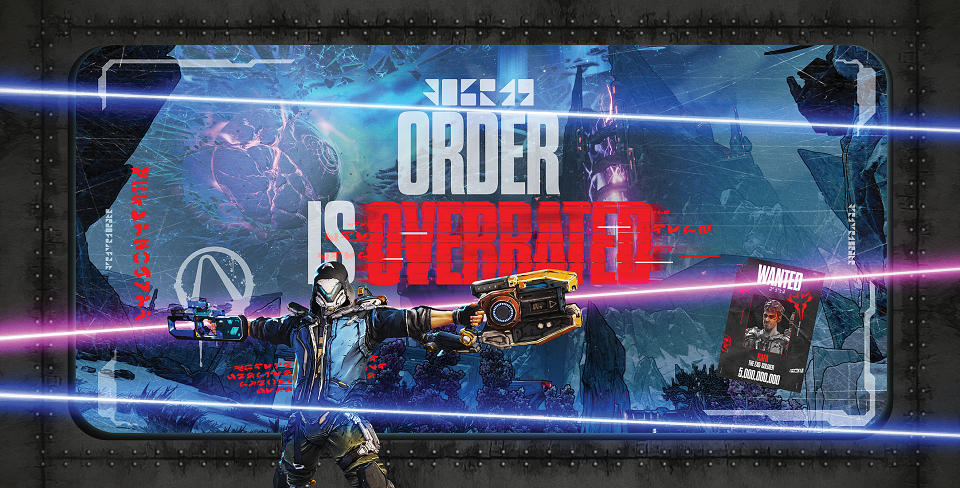
The game’s villain, The Timekeeper, thrives on clinical order, silence and unwritten rules. So, our creative concept ‘Order Is Overrated’ was designed to weaponise the unthinking habits of people on their daily commute and place them directly into the game’s new narrative conflict.
Our design strategy was to create physical examples of The Timekeeper’s oppressive regime, turning the call to action ‘Break Free’ into disruptive moments that jarred commuters out of their traveling stupor. The concept explored the friction between cold, authoritative dominance and vibrant, revolutionary ‘hacking’ elements that delivered messages of rebellion. By subverting traditional advertising spaces across Waterloo, we turned passive ad spaces into a continuous storytelling environment where characters felt as though they were breaking through into reality.
Transforming one of London’s busiest travel hubs into a cohesive narrative world was a massive environmental design challenge. While the client provided foundational character art and key plot guardrails, translating these digital assets into large scale physical environments required bespoke spatial adaptation. Our design team had to reverse-engineer and upscale the visual elements from trailer frames to structurally construct a living, believable universe.
We executed this world building across three layers of environmental immersion:
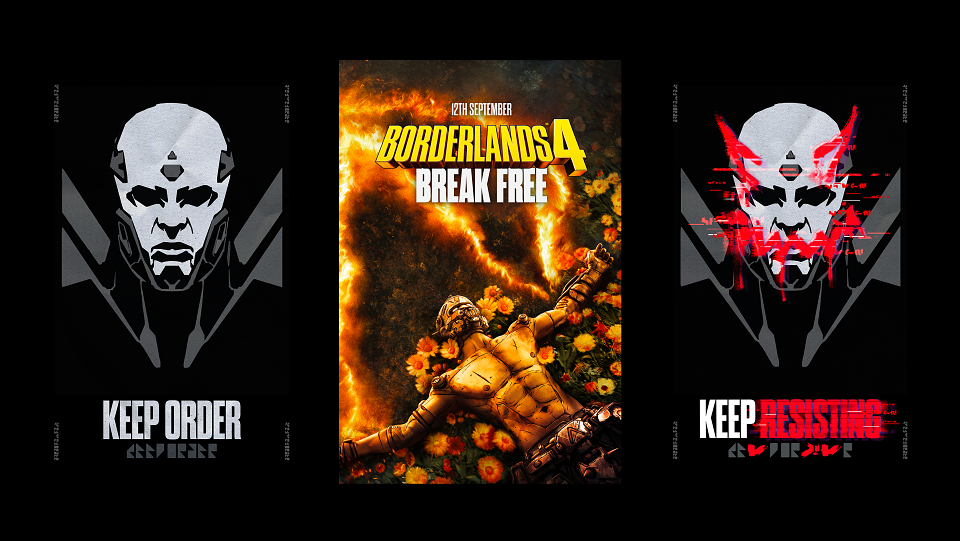
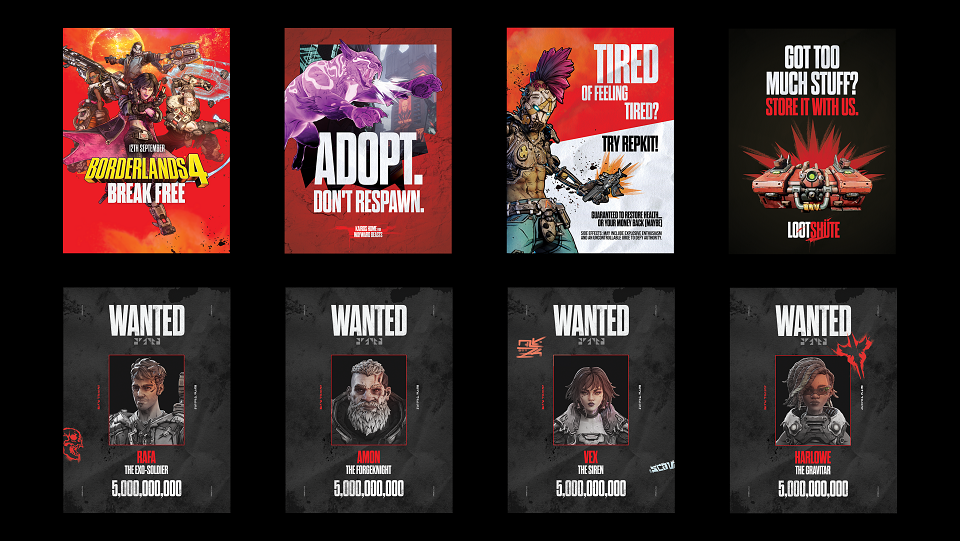
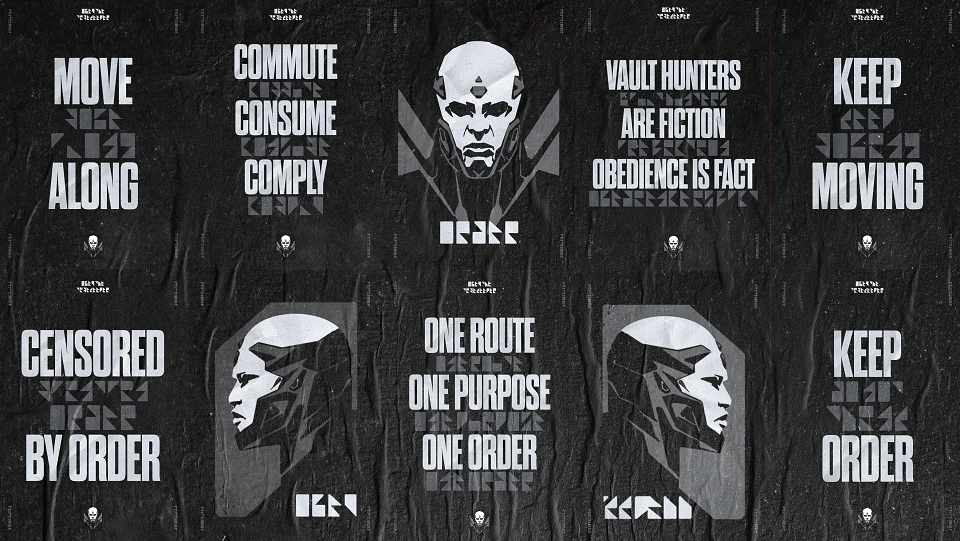
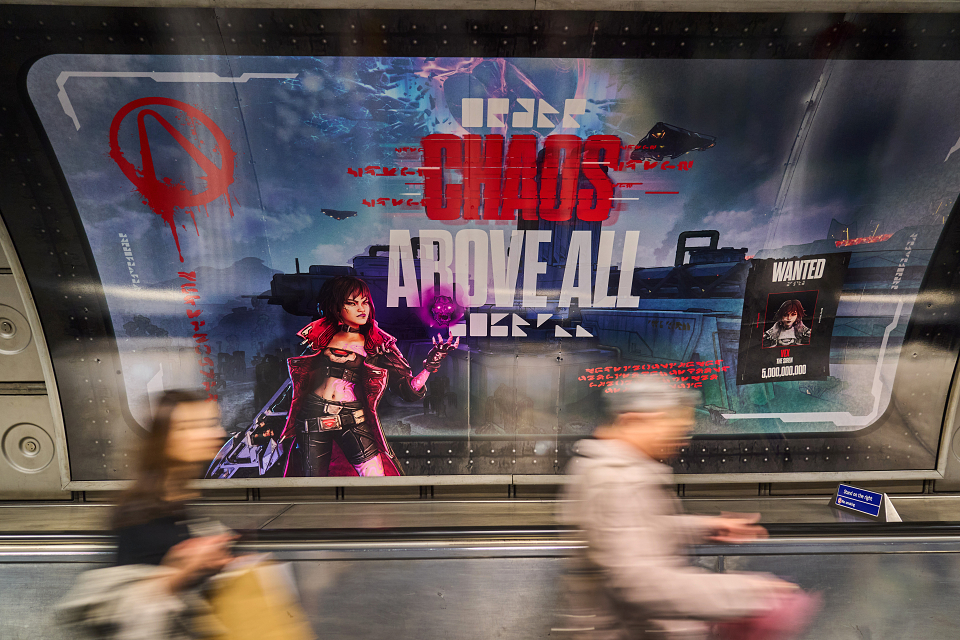
The architecture of oppression: To make commuters feel the weight of living under the iron fist of The Timekeeper, we enhanced existing tunnel structures, barriers, and one-way security glass with synced digital screens, architectural wraps and fly postered propaganda from ‘The Order’. Clinical commands like ‘Commute. Consume. Comply.’ sat alongside other satirical riffs on classic tube ads and spoof public health posters, styled with clever (and legally safe) nods to brands you would expect to see in the real world.
The calls of rebellion: To bring to life the game’s central conflict, we then ‘hacked’ into those authoritarian spaces. Oppressive imagery was broken up with realistic ‘hacked’ elements revealing underground messages of rebellion, pictures of The Timekeeper were bastardised, and his rules were rewritten or parodied by the new cast of Vault Hunters.
Spatial triggers:
The Conveyor Belts: As commuters stepped onto Waterloo's escalators, the digital boards became grim, industrial assembly lines churning out robotic synthetic enemies in perfect unison to reflect forced conformity… until our vault hunters hacked in to change the signal.
Travelator Subversion: One side of Waterloo’s 115-meter travelator tunnel was converted into a totalitarian corridor of "Commandments," while the other side had hacked, graffiti-strewn versions replaced by the vault hunters, literally putting commuters in the middle of the crossfire.
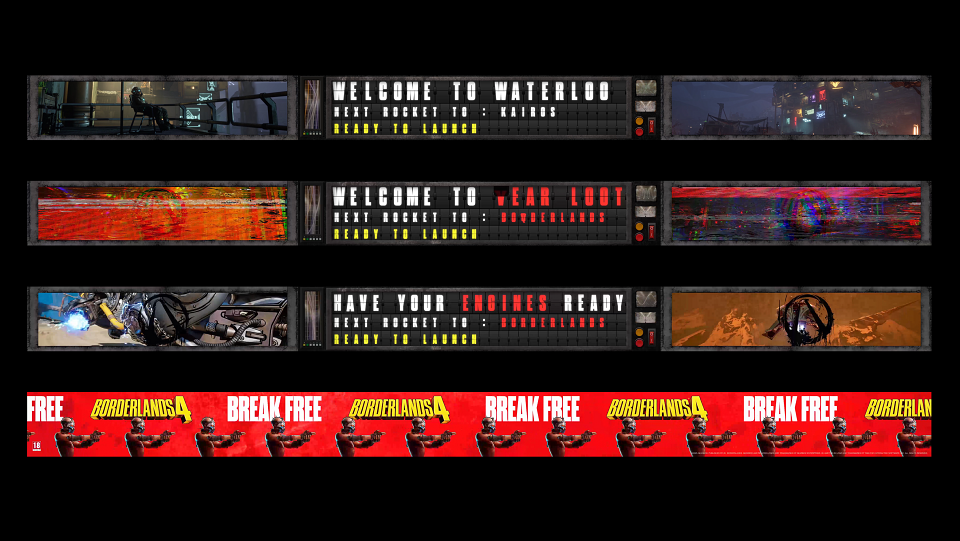
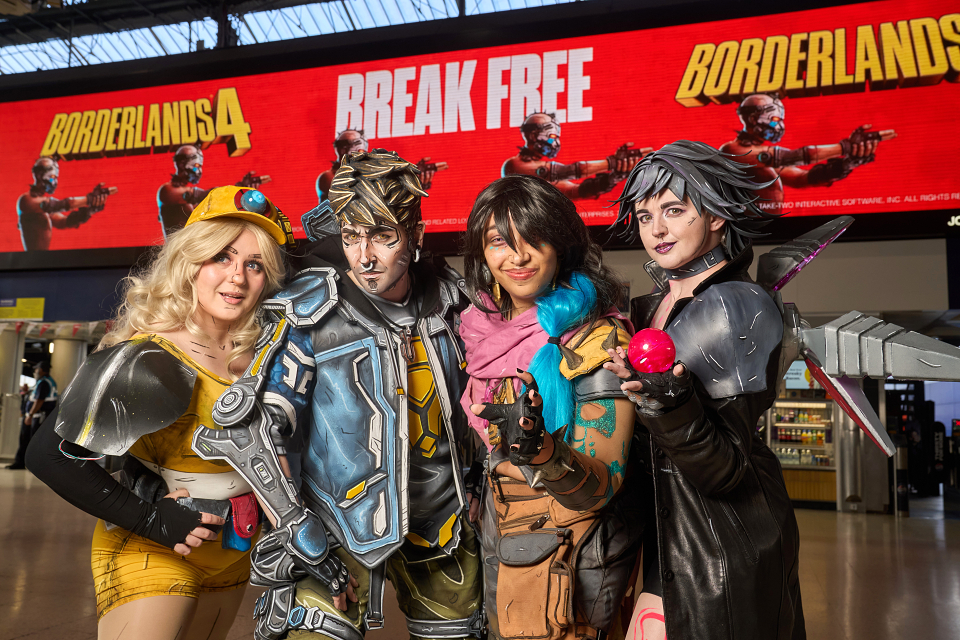
The Kairos Departures Board: We transformed Europe’s largest indoor digital screen, Waterloo Motion, into a dystopian transit departures board. The activation featured beloved character Claptrap hacking into the display to rearrange the letters (delightfully revealing that Waterloo is a perfect anagram for ‘Wear Loot’), unveil gameplay footage, and broadcast the launch date.
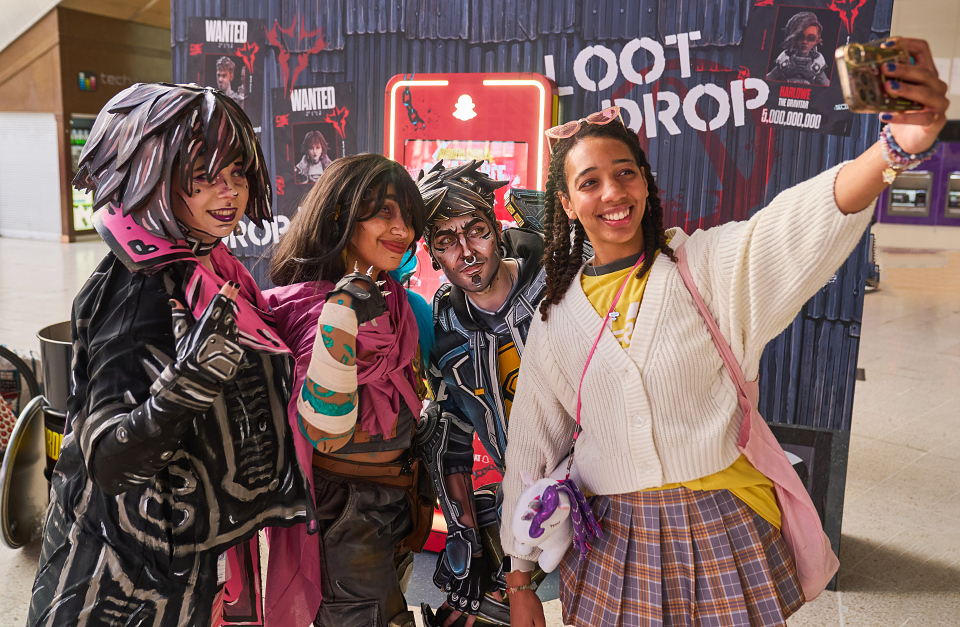
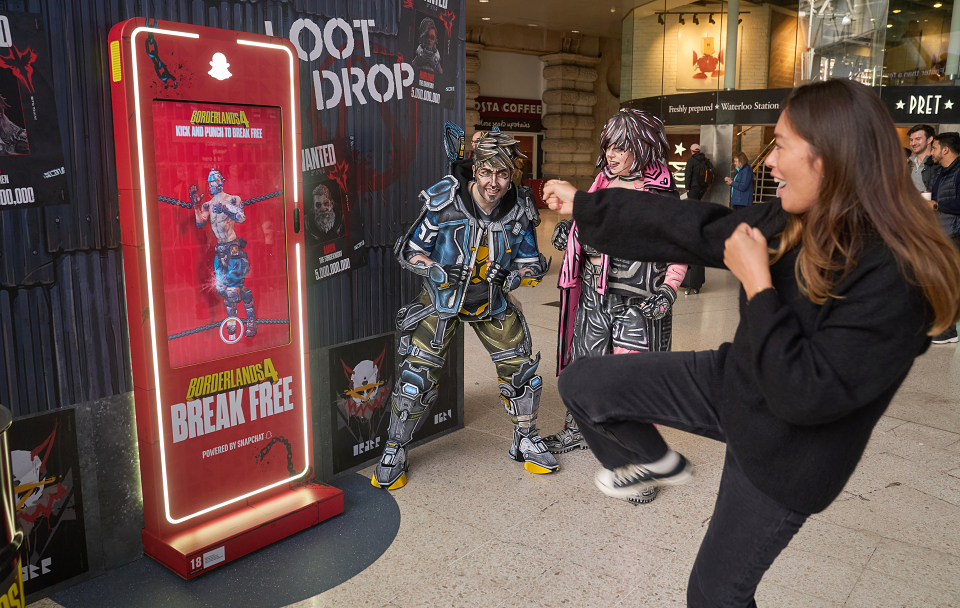
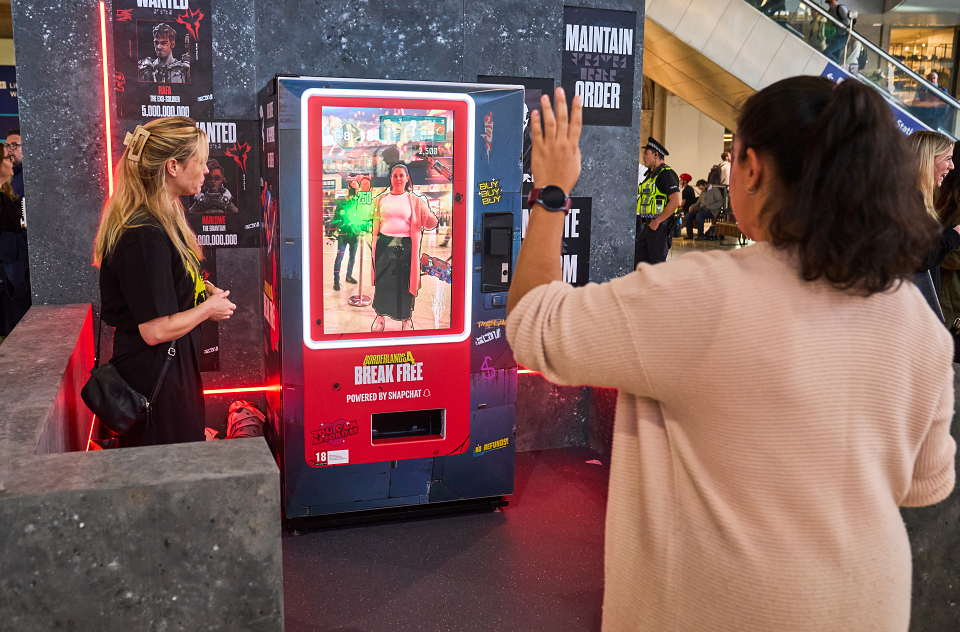
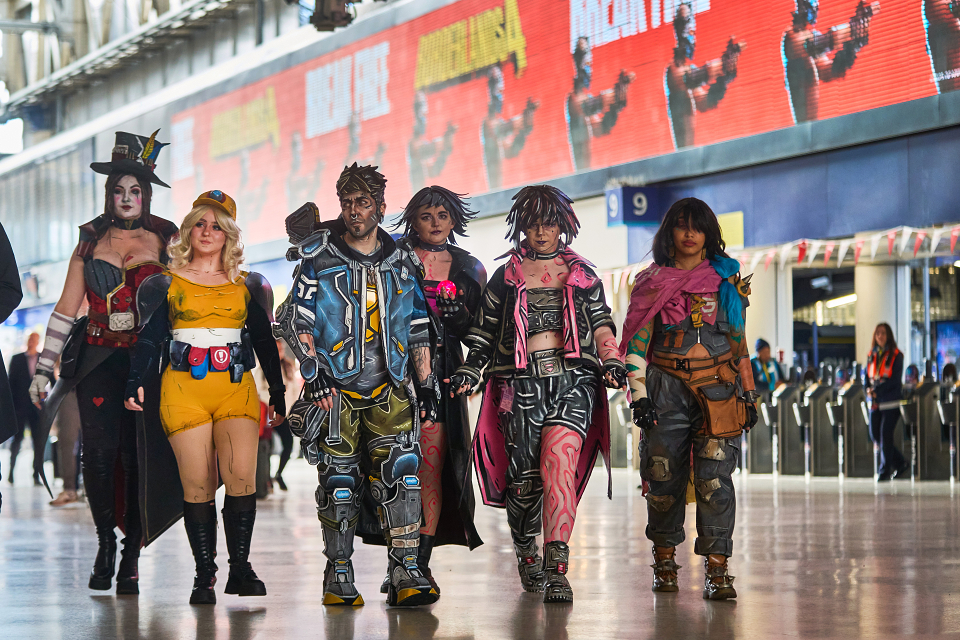
Loot Drops: Physical, interactive 'Loot Drop' installations popped up on the station concourse, manned by professional cosplayers and connected to custom Snapchat AR mirrors that allowed users to digitally ‘Break Free’ from their chains and unlock exclusive merchandise from a custom-built, physical Borderlands vending machine.
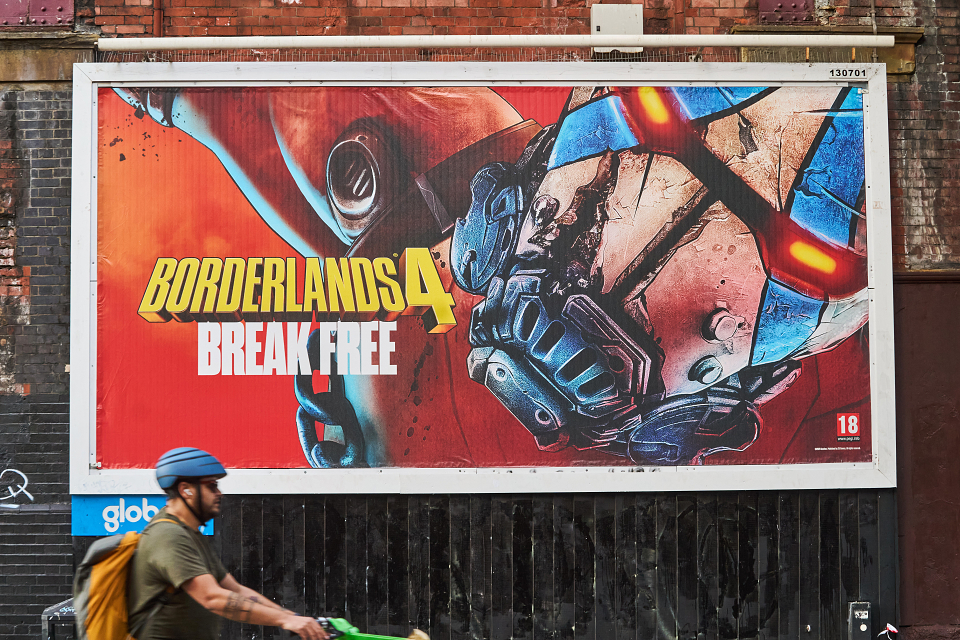
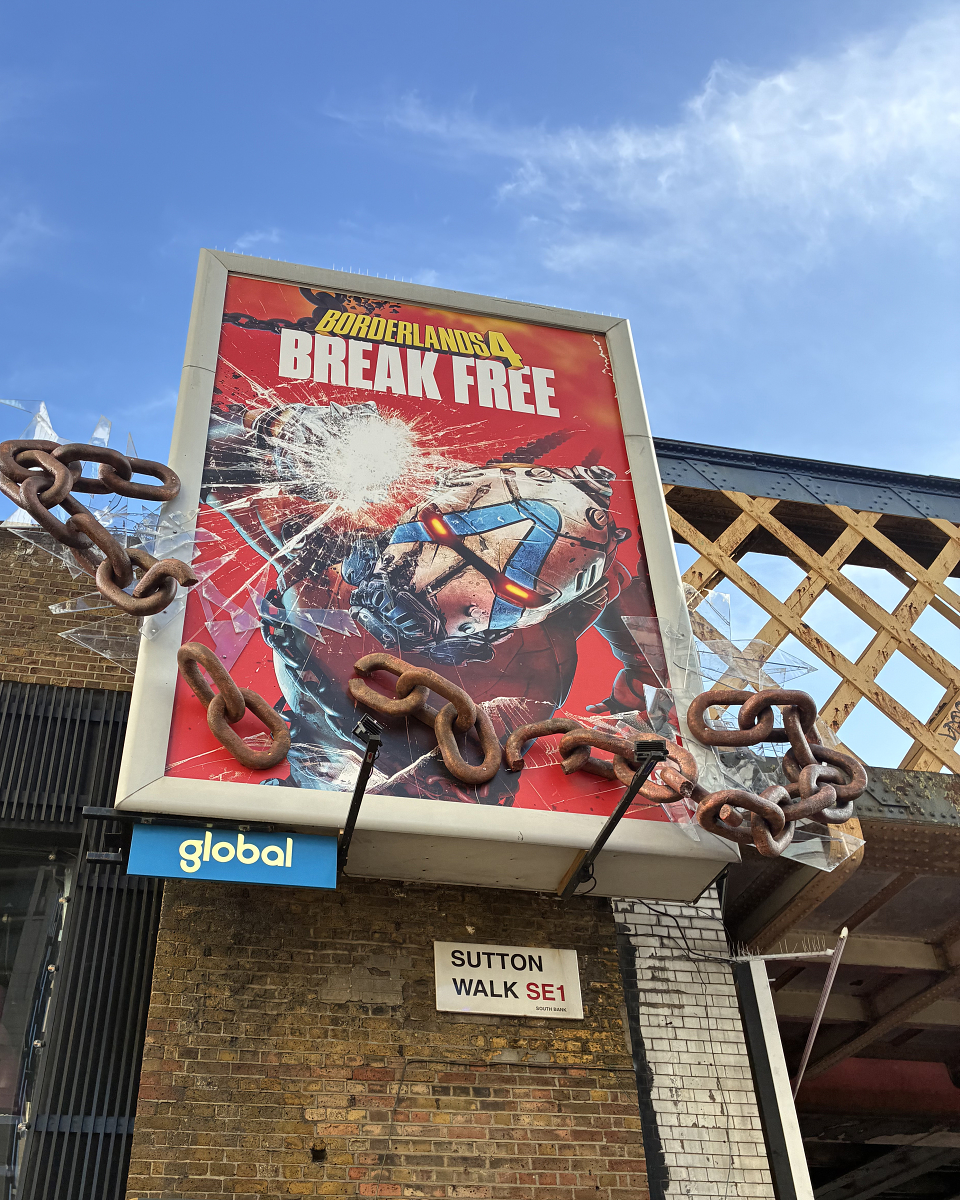
The 3D Special Build: Outside the station, we disrupted the streets with a massive, three dimensional billboard. An iconic Psycho Bandit character physically smashed out of the frame, his chains breaking free of the boundaries of the board and eyes vividly lighting up red at night.
It is no easy task making the uniquely vivid world of Borderlands 4 feel like an organic part of reality, but by treating each space at our disposal as a bespoke world-building opportunity in its own right, we delivered a fleeting suspension of disbelief and an immersive experience for anyone who engaged with it. The absolute creative trust granted to us by 2K and Gearbox Studio to one of their most valuable AAA IPs stands as the ultimate testament to the calibre of our design work.
By leaning into an elevated, world-built narrative, we achieved massive commercial and spatial impact with:
- 15,000,000+ impressions generated through the physical Waterloo Station activation alone.
- +6 points lift in prompted brand awareness across our core target markets.
- +5 points increase across all major brand health metrics, including premium brand perception, positive emotional connection, purchase intent, and cultural buzz.
A tug-of-war between authority and rebellion has never looked this good.
MADEIT CREDITS
-

2K GamesClient
-

Lee PitmanSenior Design Creative -

Fred SalmonExecutive Producer -

Chris FranklandSenior Creative -

Abbie BurlandDesigner -
the forge at PHD -
Mike Deanmotion designer -
Hattie RaySenior Project Manager -
Ashley EvansAccount Director
Annual 2026 ShortlistOrder Is Overrated - Borderlands 4 Waterloo TakeoverOOH