

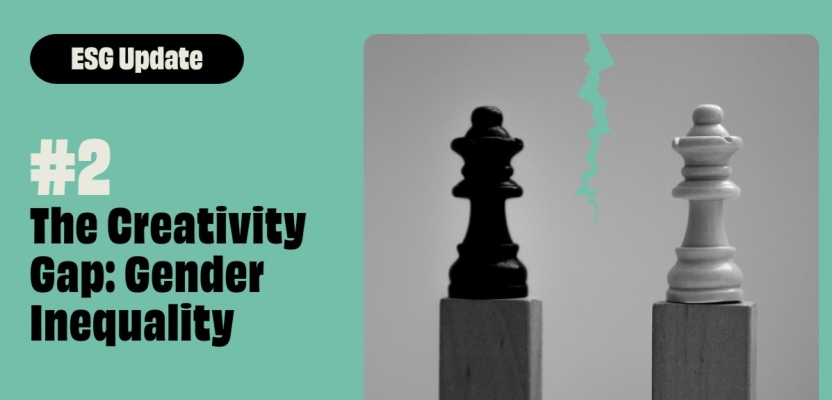

Creativity is the engine of innovation, differentiation, and connection for brands and businesses. Yet its full potential is undermined by a persistent gender gap in creative leadership. While women make up 60% of entry-level roles in the industry, they hold just 29% of leadership positions. This imbalance not only hinders progress toward equity but also narrows the diversity of ideas that fuel truly groundbreaking creativity.
Why does this disparity persist, and what can business leaders and creative teams do to close it?
Creativity gap, in numbers
Women CEOs account for only 9% of executives in the Russell 3000 and 10.4% of Fortune 500 companies.
Women in creative roles earn significantly less than men, with the average pay gap across permanent roles at 15.1% (£9,618 annually) as of 2025. In some sectors, such as advertising, the gap widened from 15.2% in 2023 to 19.7% in 2024.
Challenges emerge early, even for women who outperform men academically and enter creative fields at high rates. Women are 19% less likely to be promoted to their first management role than their male counterparts.
What’s driving the creativity gap?
Stereotypes: Cultural stereotypes continue to associate creativity with masculinity, leading to biases in hiring, promotions, and media coverage of women’s work.
Lack of mentorship: Many women report a lack of mentorship and role models in male-dominated sectors like animation or music production.
Career interruptions and family responsibilities: 37% of senior marketers attribute the pay gap to women taking time off for childcare or family duties. Additionally, 30% cite the need for flexible working hours as a contributing factor.
Systemic biases: Discrimination in hiring, promotions, and salary negotiations persists across creative sectors. Women often face biases that undervalue their contributions compared to male colleagues. For instance, even in freelance creative work, women report losing out on high-paying opportunities due to systemic biases.
Performance evaluation bias: Performance reviews too often reflect gender biases that undervalue women’s leadership potential. Research from Stanford indicates that women are criticized for assertiveness while men are rewarded for similar traits, creating inequitable perceptions of leadership readiness.
The impact of the creativity gap
- Restricted innovation and diversity: The underrepresentation of women in leadership roles limits the diversity of perspectives in decision-making processes. According to McKinsey & Company, diverse leadership teams are 45% more likely to report above-average financial performance.
- Impoverished cultural output: Excluding women from leadership stifles creativity, resulting in less inclusive cultural production and narratives that fail to resonate with broader audiences.
- Reduced organisational trust: The gender pay gap and lack of women in leadership roles undermine organisational trust by fostering perceptions of unfairness, reducing employee morale, increasing turnover, damaging reputation, and stifling collaboration.
Unlocking creativity through gender equity
Proactive flexibility: As outdated gender norms evolve, flexibility in the workplace has emerged as a key driver of potential and progress for all employees—not just women. A McKinsey study reveals that both men and women rank flexibility among their top three desired benefits, with women becoming more ambitious post-pandemic, thanks in part to flexible work structures.
Create transparent career pathways: Promotions should not rely on informal networks. Businesses can implement mentorship programs, where female creatives are paired with senior leadership to gain visibility and career guidance.
Tackle cultural barriers: Companies must address not just organizational barriers but also cultural perceptions of leadership. Training initiatives can help redefine leadership qualities like empathy and collaboration.
Provide mentorship: Make your female colleagues feel supported and build their skills. Programs like GetEven by How&How offer pro-bono support for women creatives to advance their careers through mentorship and skill-building.
Women bring fresh perspectives to creativity, storytelling, and leadership, and it’s time to fully tap into that talent. Building a more inclusive industry may mean challenging the status quo, but the payoff is clear: stronger ideas, better leadership, and a future shaped by equity and innovation.