BioPicture Studio
Illustrator
ABOUT
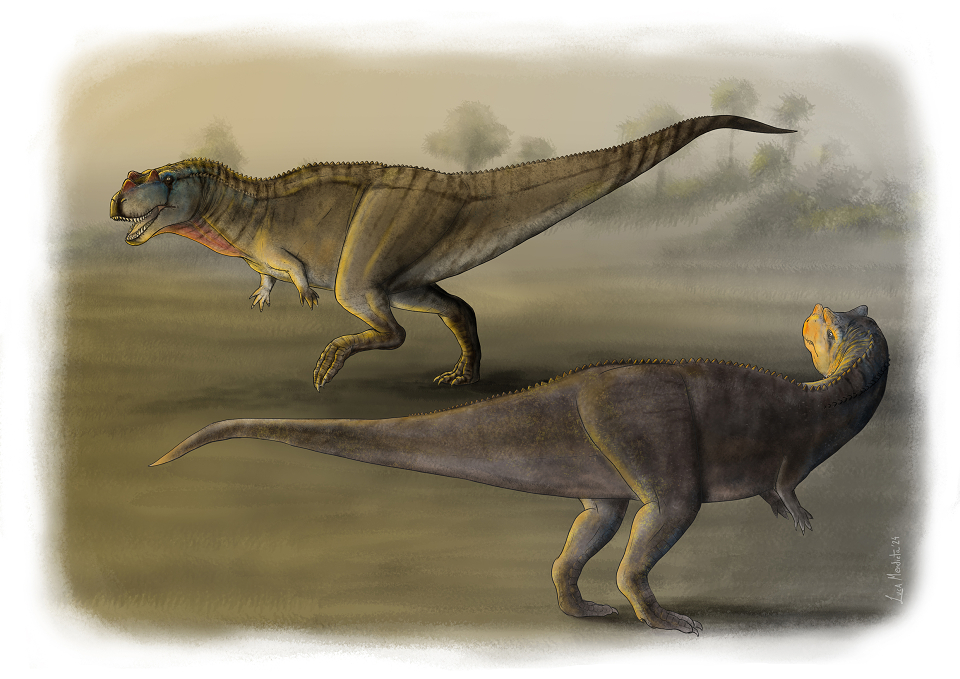
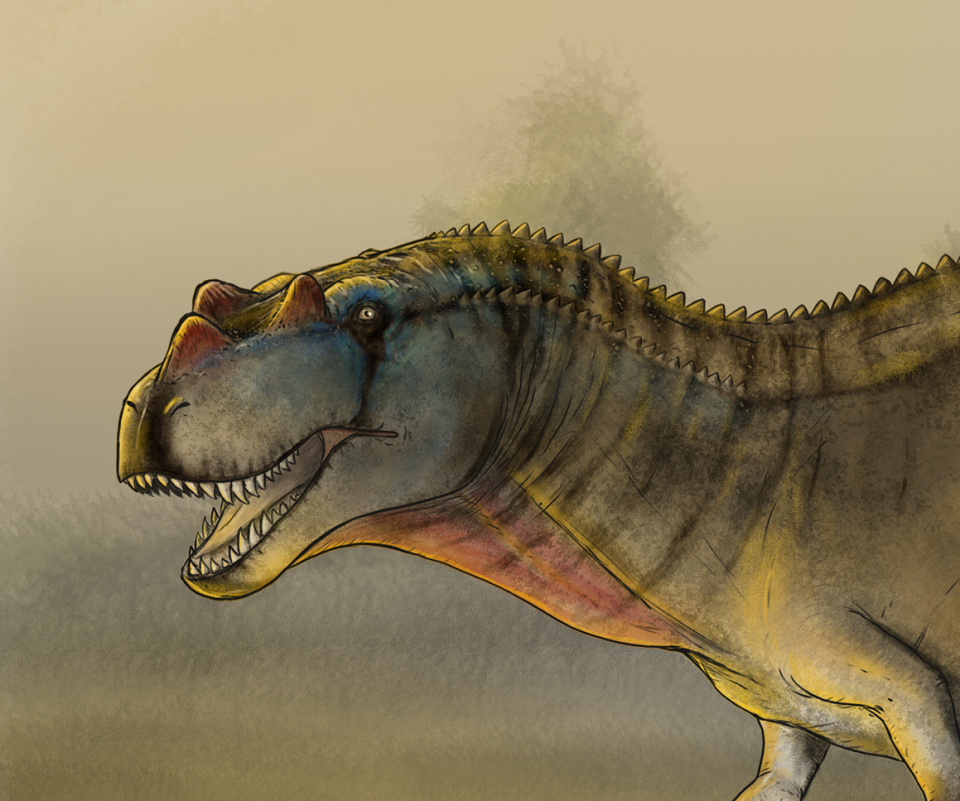
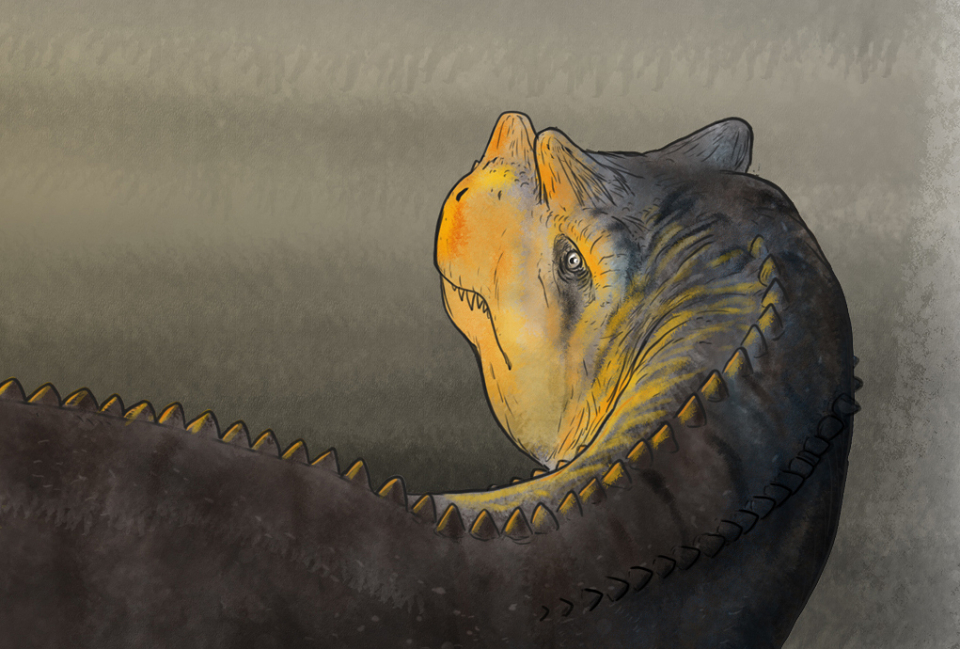
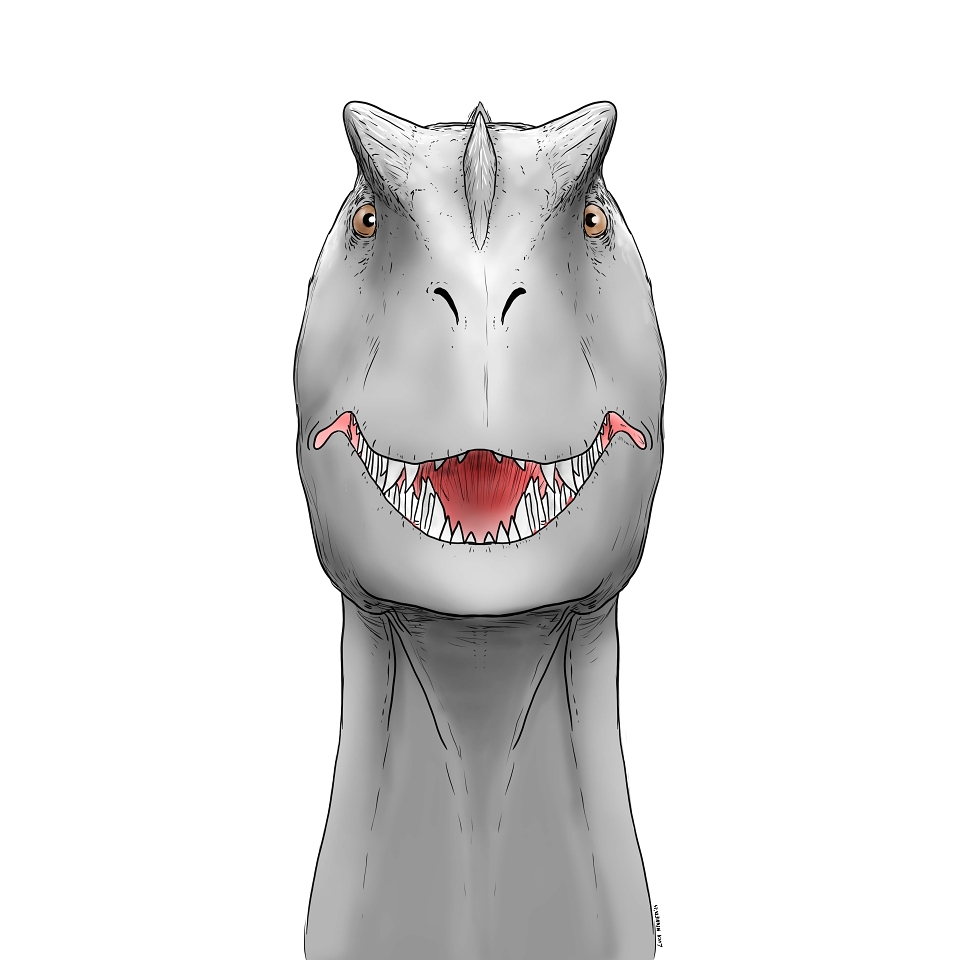
The illustration shows a hypothetical courtship scene. In it, a male, with a more striking colouring, displays himself in front of a female with a much more subdued colouring. Both sexual dimorphism and the colouring used as a sexual call and the posture with the tail pointing up are behaviours typical of modern birds.It is a theropod dinosaur, and therefore bipedal. It had a carnivorous diet, as its knife-shaped teeth demonstrate. It had three fingers on each front limb. According to the first discovered holotype of this species, USNM 4735, it measured between 5.3 and 5.69 metres long.Its skull, about 55 cm long, has characteristic protuberances, one above the nasal bone and two others above each antorbital fenestra. It is thought that these horns could have been covered with keratin and, therefore, were longer when the animal was alive.Species name:Ceratosaurus nasicornisClassification:Dinosauria, Saurischia, Theropoda, CeratosauridaePhylogenetic relationships:Relationship with the clade Abelisauridae (Carnotaurus), Elaphrosaurus, Laevisuchus, Noasauridae, Elaphrosaurinae.Period:From the Upper Jurassic, in the Kimmeridgian period (approx. 154 million years ago), to the end of the same period, in the Tithonian (approx. 149 million years ago).Geographical distribution:-North America (Morrison Formation, Colorado, USA)-Europe (Lourinhã Formation, Portugal)Reference specimens:USNM 4734USNM 4735AMNH 27631UMNH VP 5278MWC 1BYUVP 12893DNM 972
Detail of the male specimen's head.
Detail of the female specimen's head.
Sketches
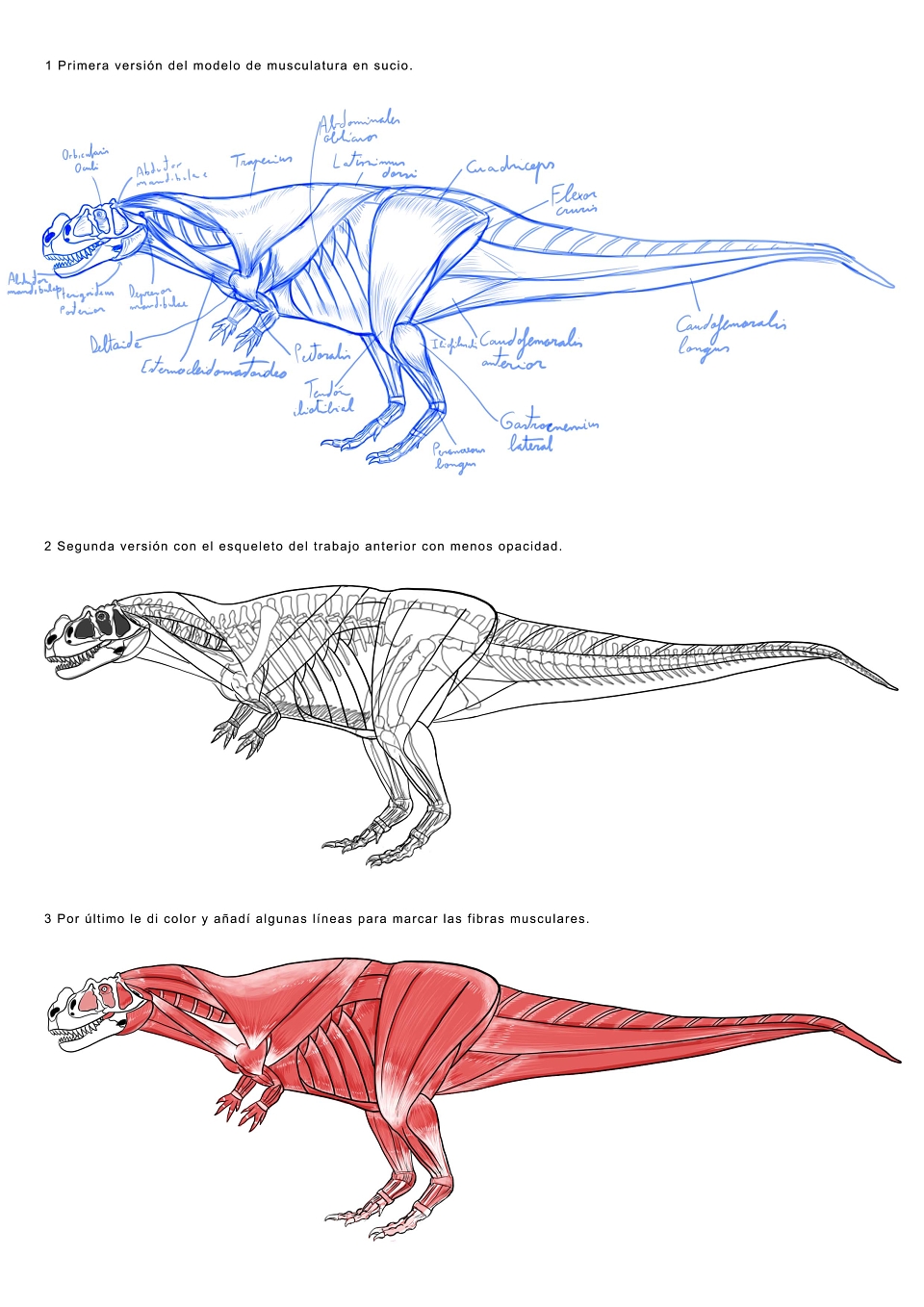
Myological reconstruction
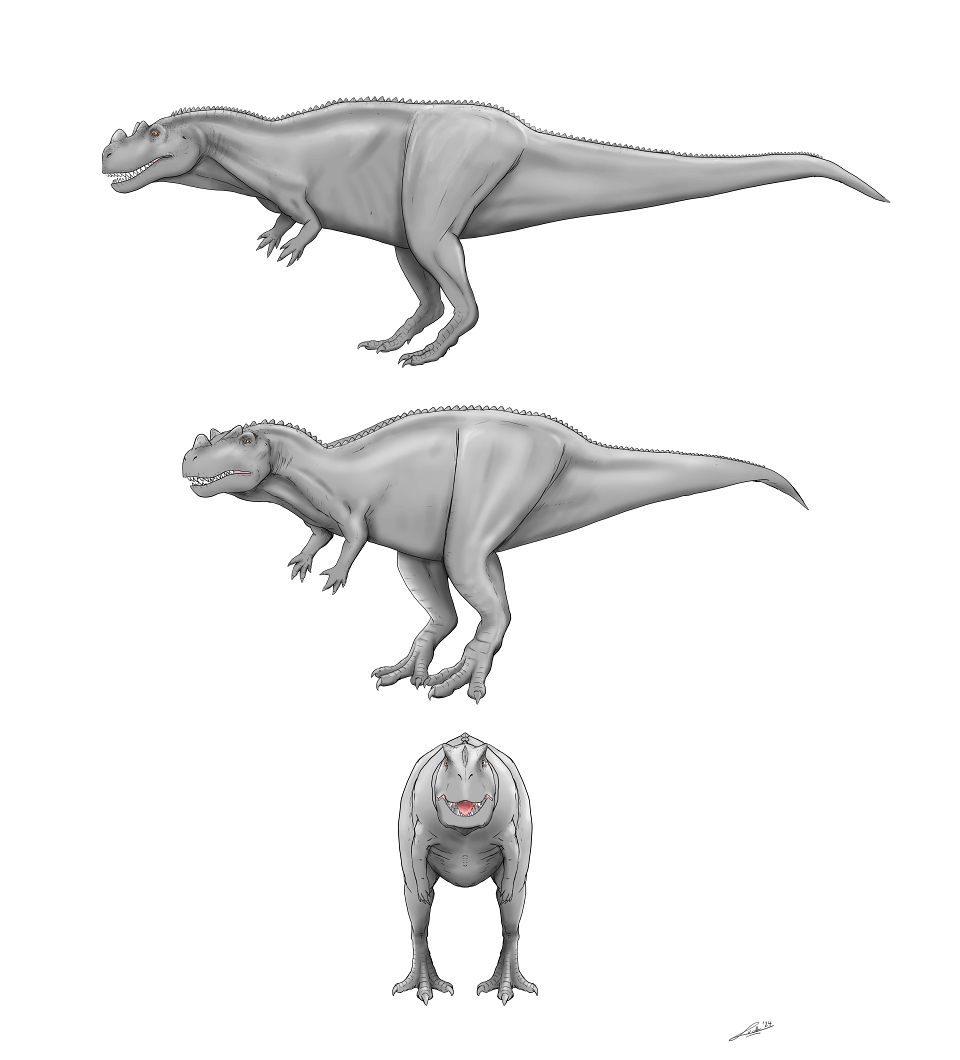
Volumetric and position
Front position
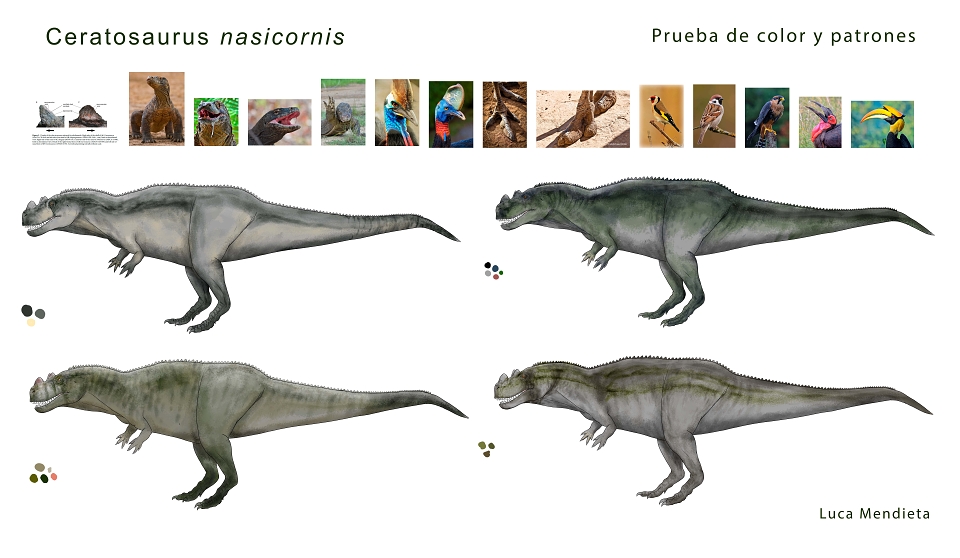
Color patterns