

Ever since AI truly burst onto the scene in a big way just a few short years ago, the creative industries have been wrestling with a pretty existential question: are these algorithms the indispensable sidekicks they proclaim to be or stealth rivals eyeing up our jobs? It’s got to the point now where I’ve written so much about the pro and cons of AI that I’m almost starting to bore myself but one thing I’ve never really thought about (until now) is the technology’s inherent limitations. That, in a nutshell, is where I think our future as an industry lies.
It's far from the first time we’ve faced down existential threats. After all, we creatives have survived everything from Photoshop to the internet and come out the other side stronger and better equipped. This time, of course, it feels different. The machines can draw, they can write, they can even whip up music that sounds uncannily like your favourite pop star.
Where are the limitations we can use to our decidedly human advantage?
So, what does AI actually do best, and what is it that we human creatives will always have in our locker, no matter how advanced our silicon friends become? Where are the limitations we can use to our decidedly human advantage and where should we just throw in the towel and admit defeat?
The AI Advantage: What Machines Do Best
First, credit where it’s due. AI is an absolute beast when it comes to the heavy lifting of creative work. By “heavy lifting,” I mean all the high-volume, data-crunching, iteration-churning tasks that would take us mere mortals ages (and multiple strong coffees) to complete. Modern AI systems can process vast amounts of information in the blink of an eye, finding patterns and insights that might elude even the most diligent intern.
Give an AI a million data points on consumer trends and it will gleefully spit out a detailed analysis faster than you can say “big data.” In marketing, for instance, generative AI is already being used by 56% of US B2C CMOs to aid in content creation and campaign planning. It excels at analysing what has worked before and producing options. So many options.
Repetitive production tasks like resizing ads into 20 different formats or generating scores of image variations in a design sprint are squarely in AI’s wheelhouse. Why wouldn’t we let the machine handle the drudge work if it means we get to head home before midnight?
One clear AI superpower is rapid ideation at scale. Creative teams have started to treat AI as a tireless junior creative that never runs out of drafts. Agencies are already experimenting with hybrid workflows where an AI generates, say, 100 rough ad variants overnight, then the human creatives come in the next morning to curate and polish up the best ones. It’s a bit like having a hyperactive brainstorming partner who can sketch out every crazy notion that flits across your mind. Not everything will work, but there will always be gems amidst the dirt.
Generative AI is already being used by 56% of US B2C CMOs
Logo ideas, layout alternatives, colour schemes and tagline suggestions can be churned out in endless permutations without the AI breaking a sweat. This can massively accelerate the early stages of projects. As one Forrester analyst put it, these tools “bring tremendous computing power, speed, and scale to the human act of creativity and ideation”.
For time-pressed creatives, that speed is a godsend. Instead of spending all week coming up with ten concepts for a client, you can have the AI give you fifty to cherry-pick from by lunch.
AI also shines in its role as a pattern recognition maestro. It can detect trends and motifs across huge datasets of art, music, or text, then remix them in novel ways. Need an illustration in the style of a 18th-century woodcut meets modern street art? An AI image generator has digested millions of references and can produce a pretty convincing pastiche.
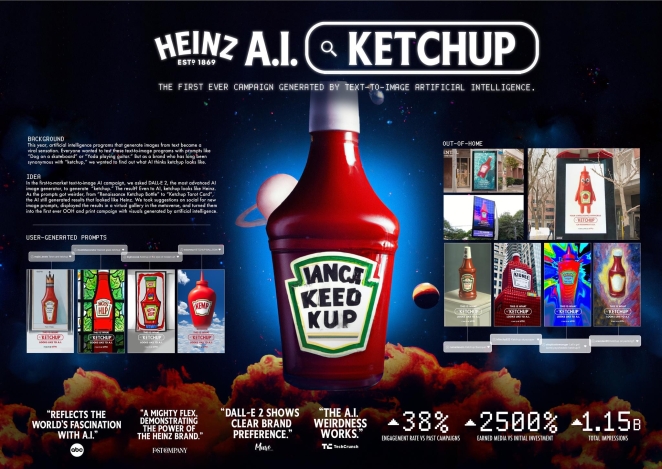
We’ve even seen AI predict what a brand’s visual identity should look like. A famous example was Heinz using an AI to answer the prompt “draw ketchup.” The result? Every AI-generated image unmistakably resembled a Heinz ketchup bottle, proving how deeply the brand is coded into our visual culture. (When even a machine knows “it has to be Heinz,” you know your branding is on point.) The campaign, conceived by humans but supercharged by an image-generating AI, took a core idea and gave it new form and scale.
Across the board, AIs are becoming adept collaborators for technical and tedious tasks that don’t exactly thrill most creatives. In video production, AI can automatically edit footage or recommend clips for a rough cut. In web design, it can handle responsive layout adjustments and even basic code for prototypes. In animation or game development, AI might handle inbetweening frames or generating background art.
These are the kinds of behind-the-scenes chores that, while necessary, don’t earn you a standing ovation at the Cannes Lions. By outsourcing them to automation, creatives can focus on the more visionary aspects of the project. A recent industry forecast even predicts that as AI takes over the rote stuff, the demand will shift toward high-paid creator skill sets paired with AI assistants.
It’s important (and a bit amusing) to note that AI’s strengths often lie in areas where a touch of mediocrity is perfectly acceptable. AI thrives when the task calls for something good enough, as opposed to dazzlingly original. It can generate a serviceable press release, a generic stock music jingle, or a fairly decent image of “an otter using Wi-Fi on a plane” all by statistically remixing the familiar patterns it’s seen before.
“AI thrives when our need for originality is low and our demand for mediocrity is high.”
As one commentator quipped, “AI thrives when our need for originality is low and our demand for mediocrity is high.” Need 500 product descriptions written in a consistent, error-free (if bland) style? AI’s got your back. Want to A/B test 20 versions of a Facebook ad copy where only two words differ? Easy. These are important tasks in modern creative work, but let’s face it, they’re not the stuff of artistic legend. And that’s fine! Not every canvas needs a Picasso; sometimes you just need a bunch of perfectly passable paint-by-numbers done fast. AI is brilliant at that kind of thing.
To sum up the machine’s resume: speed, scale, consistency, and endless stamina. It doesn’t get bored or tired, and it never procrastinates when faced with drafting a hundred variations or crunching data till 3AM. It’s the ultimate production workhorse.
Crucially, AI can also surprise us with unexpected combinations drawn from its vast training data, even sometimes sparking ideas humans might never have thought of. In that way, it can act like a creative catalyst, jolting us out of writer’s block or giving us wild new directions to explore.
Many creatives now keep ChatGPT or an image generator in their toolkit not as a replacement for their own ideas, but as a clever stimulus. It’s like bouncing ideas off a savant who has absorbed the entirety of human creative output (albeit one that occasionally responds with something utterly bonkers). Used well, AI can broaden our horizons and handle the grunt work simultaneously.
However (and this is where our story takes a turn) for all of AI’s awesome powers, there remain certain things it just can’t do, at least not with any real finesse. Which brings us to the flip side of our question.
The Human Edge: What Creatives Will Always Do Best
If AI’s talent is to automate the average and scale the known, then human creatives excel at venturing into the unknown. Where an AI analyses patterns, we’re the ones who upend them. True creativity lies beyond the churn of uninspired idea. It’s about intuition, imagination and those magical eureka! moments that AI simply doesn’t have the spark for.
As author Ray Nayler points out, “creative work is not predictable. It is not about statistical likelihood or mashing up the familiar – it is about leaps in logic and counterintuitive juxtapositions… seeking to do what has never been done before.” In other words, creativity is fundamentally about originality and unpredictability. And guess what?
Machines are terrible at being unpredictable on purpose. They lack the childhood memories, the bizarre dreams, the emotional baggage, and all the beautifully irrational human experiences that inform truly original art. An algorithm might master the rules of sonnet-writing from Shakespeare’s dataset, but it’s not going to wake up one day and invent slam poetry.
One thing creatives will always have over AI is empathy and emotional depth. We create art to move hearts, not just tick boxes. An AI can simulate a tone of voice or even write lyrics that rhyme, but it doesn’t feel joy or sorrow or love and audiences can tell the difference.
Think about the last song that really gave you goosebumps or the last film scene that made you tear up. Chances are, there was a human behind it who’s lived and felt those emotions. We bring our whole selves (flaws, quirks and all) into our creative work. It’s the secret sauce that gives creative work its soul. Even the most sophisticated AI lacks a soul. It can’t write a gut-wrenching song about heartbreak with genuine heart, because it has no heart, metaphorically speaking. Human creatives infuse pieces with cultural context, metaphor and subtext. These are dense layers of meaning born from participating in the human condition. Good luck coding that.
An AI doesn’t have convictions; it won’t push an idea it knows is a long-shot because it can’t know things outside its programmed logic
Let’s talk about risk-taking and the willingness to fail spectacularly too, another area where humans have the upper hand. AI by design sticks to probabilities: it’s a master of the safe bet, the statistically “likely” choice. But groundbreaking creativity often comes from the unlikely choice, the bold experiment, the rule-breaking leap into something that might flop.
We’ve all heard stories of legendary campaigns or artworks that experts predicted would never work until they did and changed everything. Those leaps of faith come from human conviction and yes, sometimes sheer stubbornness. An AI doesn’t have convictions; it won’t push an idea it knows is a long-shot because it can’t know things outside its programmed logic.
AI doesn’t make the idea better, but it does make it visible faster (polishing and presenting what's known) whereas the better idea in the first place still has to come from a person. We’re the ones with the capacity to dream up an idea so leftfield that no algorithm would arrive at it because there’s no precedent. Every creative industry is propelled forward by those human-originated leaps of imagination that feel a little like madness… until they spark a cultural phenomenon.
Real-world examples underline this. Take the world of journalism and copywriting: news outlets have experimented with AI-written articles for routine topics, but the results can be painfully bland. BuzzFeed famously tried using AI to generate dozens of travel guides in 2023, touting them as “AI-assisted.” The outcome? Decidedly mediocre.
The guides were factually okay but had all the personality of damp cardboard. One reviewer dryly noted that the AI-generated travel articles were “just not that good... generic advice that wouldn’t actually help if you wanted to plan a trip”. Readers largely shrugged, and BuzzFeed quietly backtracked on the experiment. It was a classic case of AI doing what it does best (churning out passable content quickly) and exposing what it can’t do at all (providing fresh insights in a compelling voice).
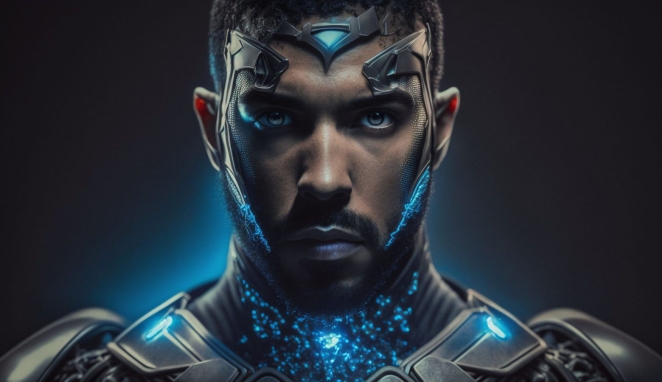
Similarly, in music, we’ve seen AI mimic superstar vocals and yes, an AI-generated “Drake” track went viral and racked up millions of listens. It was a neat parlour trick that spooked record labels but did it give fans anything more than a momentary oh wow? Not really.
The track was quickly taken down, and its legacy is more about legal and ethical debates than artistic impact. Meanwhile, actual artists (including Drake himself) doubled down on the value of authenticity; as Drake put it when cheap AI copies of his voice started popping up, this might be the “final straw” before we all wise up. In short, AI can imitate style convincingly, but it struggles to innovate or resonate on that deeper level that real art does.
Another arena: film and TV. AI can de-age actors’ faces or help generate background scenery in what are essentially fancy post-production tasks. But it isn’t writing The Godfather anytime soon. Hollywood knows it, too. In the recent Writers Guild of America strike, one of the key issues was limiting the use of AI in writing. Why? Because writers understand that while an AI might pump out a formulaic script, it takes a human storyteller to craft something audiences will actually care about.
“the machines aren’t good enough to completely replace us right now.”
Showrunner Raphael Bob-Waksberg (creator of the uniquely excellent BoJack Horseman) captured this perfectly during the strike: if studios had to choose “us or the machines,” he argued, they’d pick the humans because even the execs know “the machines aren’t good enough to completely replace us right now.”
That’s a striking admission from the very powers that be. They’ve seen what AI can do and, sure, it can cobble together a police procedural episode plot or a paint-by-numbers action movie. But it can’t replace the spark of a writers’ room pitching crazy ideas, or a director’s singular vision, or an actor’s improvisation. These are inherently human, collaborative, often chaotic processes that represent the sort of beautiful mess that no AI working in isolation can replicate.
Crucially, creativity is not just about the end product; it’s about the process. The late nights, the heated debates, the moments of inspiration in the shower – the journey that every creative team goes through to arrive at something amazing. AI doesn’t partake in that journey; it just delivers an output. As creatives, we often find value (and unexpected ideas) in the process itself – the mistakes, the serendipitous discoveries, the personal growth. AI has no stake in the game, no sense of pride or personal fulfilment. We do.
And perhaps that’s why, even if one day an AI could technically execute a creative task as well as a human, it still wouldn’t replace the role of the creative. Because being a creative is a way of seeing the world and channelling experiences into something new. That human touch (call it a soul, a point of view, whatever) is what we bring to the table, and it’s not something an algorithm can manufacture out of ones and zeros.
Another Opinion
Before we wrap up, let’s consider a perspective from someone who’s straddled both the old-school and the new.
Paul Aitkenhead, Head of PR and Communications @ Gamma
“For me, AI is brilliant at the heavy lifting. It can take in huge amounts of information, find patterns and give us options quickly.
What it cannot do is replace free thinking or those real eureka moments. That spark still comes from people. Creativity is about intuition, lived experience and having the courage to make something new that has not existed before.
I have been through something similar in my own career. I started out in reprographics, which some may even need to look up today. Back then we supplied designers with the tools they needed to bring graphics to life. Then everything suddenly turned digital.
A lot of people resisted it and turned away, but those who embraced it became leaders in a new era of design and branding. I see AI in the same way. It is a tool, and it is up to us to decide how we use it.”
Paul’s take is a timely reminder that we’ve been here before. The creative industries have always evolved with technology – from the advent of photography (which painters once feared would make them obsolete) to the switch from hand-drawn illustrations to digital, and onward to today’s AI-assisted workflows.
Each time, a segment of creatives panicked, and another segment got busy learning the new tools. The ones who learned thrived, often unlocking entirely new realms of creativity in the process. The ones who clung to “how things have always been done” became cautionary tales and nostalgic anecdotes.
The Way Forward
So, what’s the bottom line in this human vs. AI creative showdown? It’s simple: play to each side’s strengths.
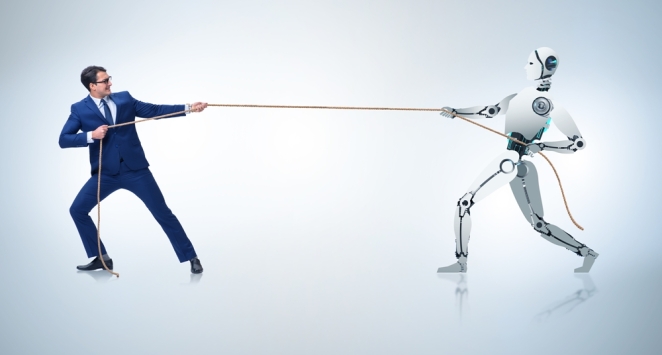
A smart creative will use every tool available if it helps tell a better story or craft a better design. We’re already seeing forward-thinking creatives partnering with AI in fascinating ways: fashion designers using AI to brainstorm avant-garde patterns, architects using generative models to explore forms no human would sketch, filmmakers using AI to pre-visualize scenes and then adding their directorial flair to bring it to life. In these collaborations, the AI is the supporting act.
Importantly, recognizing the boundaries of AI’s abilities is what will keep our work honest. If you know the AI is only as good as the data it was fed (which is to say, the past), you’ll know that the job of creating the future rests squarely with us. We can take the patterns of the past (have the AI sift through them and present them neatly) but then it’s on the human creative to say, “Alright, what’s missing here? What hasn’t been done? What can I add that’s me, that’s human?”
Our originality is our competitive advantage. As a recent report on agency automation succinctly found, “The more creative and ‘original’ the role, the less likely it will be replaced by automation.” Originality is the single biggest factor that protects a creative job from being usurped. In other words, your weird, wonderful human brain with all its idiosyncratic ideas is your best job security in the age of AI.
In the end, I’d wager the future won’t be a zero-sum cage match between artists and algorithms. Instead, it will be a symbiosis, albeit one where we humans must assert our creative leadership. We hold the conscience, the cultural understanding, and the daring to venture beyond the dataset.
AI, for all its might, is ultimately a reflection of us that mirrors our inputs, our brilliance and our biases, but it doesn’t originate meaning on its own. That’s our turf. And as long as we continue to value creativity that pushes boundaries and connects with people on a human level, there will always be a place for flesh-and-blood creatives.
To answer the question posed: AI does best at doing, well, a lot – but only within the lines we’ve already drawn. Creatives do best at imagining what lies outside those lines. The smart move is to let the AIs paint faster and fill in the obvious parts, while we concentrate on sketching the bold new outlines of the future. In other words, let the robots do the boring bits – we’ve got more interesting dreams to chase.
And that’s something no machine can take away.