
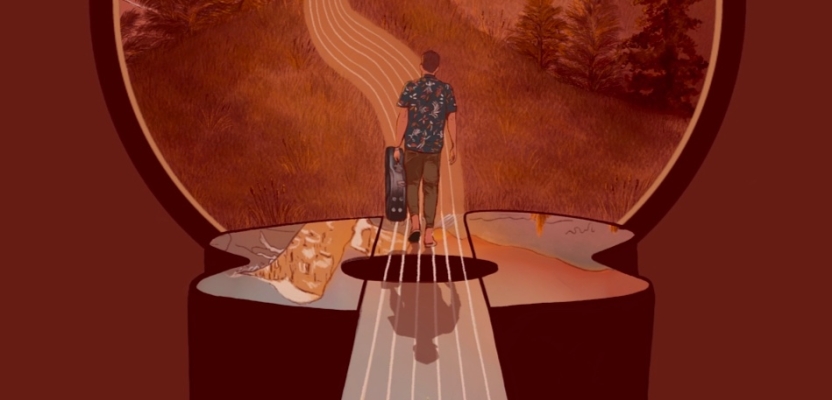

For the past 20 years, simmering away behind my “real job” has been an immortal fascination with music and the artistry of songwriting. I’ve been a singer/songwriter for longer than I’ve been a professional copywriter, however I’ve always lacked the connections, the charisma and the (let’s be honest here) funds to make a good crack at the professional music game.
However, creating for the sheer love of birthing something new into the world and figuring out the subtle magic in how to match the perfect turn of phrase with the perfect chord change has kept me at it. To date I’ve written and recorded hundreds of songs and a half dozen albums, effectively as a very expensive and time-consuming hobby. I can’t say I’d have done (and enjoyed) the same, had I been born 20 years later.
Lately, I’ve started to wonder if the world still values the kind of music I make—or more to the point, the way I make it. Hours lost layering harmonies in a bedroom studio, rewriting verses that never quite land, chasing that elusive spark of something true. It’s never been about polish. It’s been about presence. About feeling your way through a song like fumbling in the dark for a light switch.
That process (the uncertainty, the breakthroughs, the little jolts of magic when something clicks) that’s what kept me going. Even when no one was listening. Even when I didn’t know why I bothered.
Now, for the first time, I’m asking myself: Would I have bothered at all, if I could have typed in a prompt and had something “good enough” pop out the other side? Would I have traded the messy journey for the instant fix?
Enter Suno, which currently stands at the bleeding edge of generative music. It can now craft entire songs with lyrics, melody, instrumentation, and even surprisingly convincing vocals, from a simple text prompt in literal seconds. What once took days and weeks in a studio now takes less than a minute sat on your phone while waiting for a bus.
And for songwriters like myself, this technological sorcery arrives hand-in-hand with something much darker: a quiet, creeping existential dread. Because if a machine can do it all (compose, arrange, perform) where does that leave me?
The Rise of the Machine Maestro
Launched in December 2023, Suno has evolved at a breakneck pace. Its current version, v4.5, released in May 2025, can generate eight-minute multi-genre tracks with fluid transitions, vocal harmonies, and production polish that rivals the biggest professional pop songs. You can ask for “a smoky lounge jazz track about losing time in Tokyo” and out comes something hauntingly real that most people wouldn’t even blink at.
Free users get ten compositions a day. Paid subscribers unlock literally thousands, as well as everything from commercial rights to early-access remixes. The barrier to entry? A few well-chosen words. It's not just a tool anymore. It's a co-writer, a producer, a band.
Wonder and Whiplash: A Songwriter's Reaction
As a hobbyist songwriter and a professional wordsmith, I find myself stuck between two emotional poles. On one side: awe. Suno’s ability to take my vague ideas (nostalgic heartbreak, desert at dusk, lo-fi trip hop) and turn them into fully realized tracks feels like magic. It’s like having a dream collaborator who never sleeps and always shows up.
But just beneath that awe is a gnawing anxiety. If I can feed my emotional state into an app and get a song back, where’s the line between expressing myself and outsourcing my soul? Is creativity still meaningful if the effort’s been abstracted away?
What happens to the slow, painful joy of wrestling with a melody until it says what you feel?
From Helper to Hijacker: When Tools Cross a Line
Artists have always embraced tools from guitars and keyboards to DAWs and autotune. But Suno feels different. It doesn’t just extend your abilities; it replaces them. You’re not writing with it; you’re feeding it instructions.
And that shift triggers a fundamental question: are we still creators, or have we become curators of machine-generated expression? When an algorithm nails the subtle heartbreak of a faltering voice, or stitches together genre-defying hooks better than a live band, it’s hard not to feel obsolete.
Lawsuits, Lyrics, and the Looming Industry Storm
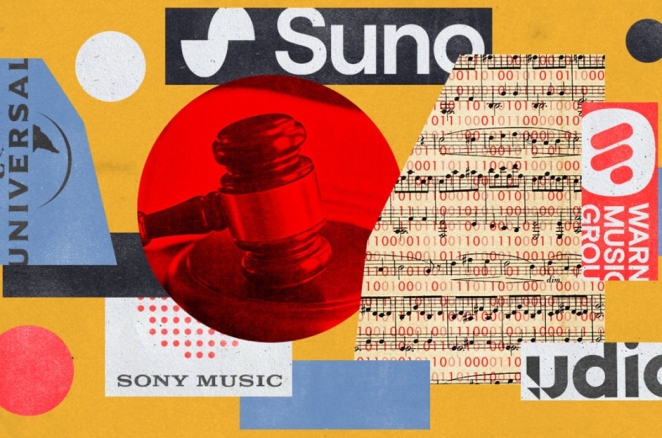
The music industry isn’t taking this lightly. In mid-2024, the RIAA teamed up with Sony, UMG, and Warner to sue both Suno and rival Udio, claiming they’d trained on copyrighted material at “an almost unimaginable scale.” Damages sought: $150,000 per infringed work.
The U.K.’s Ivors Academy raised its own alarm, demanding the takedown of Suno’s ReMi lyrics tool after it regurgitated nearly verbatim lines from copyrighted songs. Even Amazon’s Alexa+ integration with Suno sparked outcry, with artist groups accusing it of giving AI an unfair platform to compete with human-made music.
This isn’t just a legal skirmish. It’s a cultural fault line. And it's shaking the foundations of an industry built on human originality and ownership.
The Real Crisis: Authenticity in the Age of Simulation
Legal battles aside, the deeper discomfort lies in what Suno represents. Not theft, but imitation. Not infringement, but replication. If a machine can simulate introspection and approximate pain, joy and longing, then what happens to the soul of songwriting and the songwriter?
In April 2024, artists from across genres (Billie Eilish, Imagine Dragons, members of Aerosmith) signed an open letter warning that AI could “infringe upon and devalue” human creativity. Yet critics of that view push back, arguing that AI has no real consciousness, no history, no heartbreak. It can imitate, but not feel.
And maybe that’s the line we need to hold.
How Do We Respond? Reclaiming the Human Spark
Here’s the truth: AI isn’t going away. The genie’s not going back in the bottle. So the question shifts from “How do we stop it?” to “How do we live with it?”
Coexistence is possible. Use Suno as a sketchpad. Let it spit out drafts, moods, fragments. Then refine, rewrite, and reimagine. Filter it through your lived experience. Turn its polished imitation into something messier and more real.
The human edge isn’t technical. It’s emotional. AI can harmonize, but it can’t hurt. It doesn’t know what it feels like to lose a parent, or to fall out of love, or to be stuck in a dead-end town with no way out but song.
Your stories still matter. Maybe now more than ever.
Closing Chords
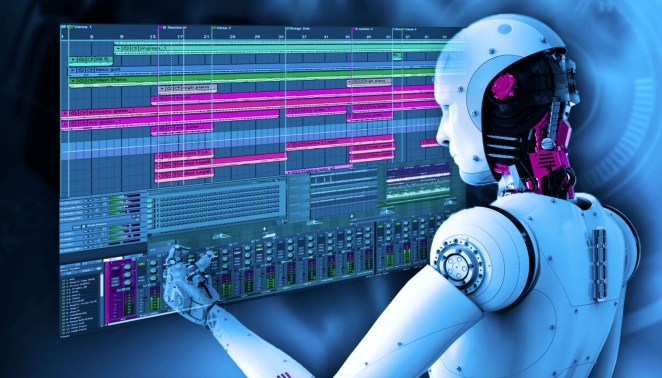
Standing at this strange intersection (as a copywriter, a songwriter, a human being) I’m both stunned and unsettled. Suno is incredible. It’s also terrifying. Not because it creates music, but because it risks sidelining the slow, fragile process that gives music meaning.
And that’s the existential question staring us down in 2025: Will we use AI to enhance our humanity, or let it numb it? The machines are composing. But the soul of the song? That’s still up to us.