



In the corridors of thousands of creative agencies around the world, a generational shift is well underway. Millennials and Gen Z (once the junior staff members crafting memes in the corner) are now occupying the big chairs as creative directors, founders, and strategy leads. And they have opinions.
Ask these new agency leaders where the creative industries are headed, and you’ll get a mix of optimism, realism, and the occasional eye-roll. From the rise of AI to demands for diversity, sustainability, new business models and a more meaningful cultural role, the next-gen is pressing “refresh” on the status quo. Here’s what they have to say, in their own words and actions.
Values-Driven Creativity

Oliver Spicer
For Gen Z and young Millennials in charge, creative work isn’t just about selling – it’s about standing for something. This cohort has grown up amid social and environmental turmoil, and they’re bringing those values into the boardroom.
Over 60% of Gen Z would pay more for a product or service from a sustainable brand, and they “care deeply about social issues and the broader impact of corporate actions, from climate change to equality”. In other words, purpose isn’t a buzzword; it’s a baseline expectation.
This ethos is reshaping how agencies pitch to clients and develop campaigns. If a brand lacks authentic commitment to things like sustainability or social good, young creative leaders will be the first to call it out.
Creative work isn’t just about selling – it’s about standing for something
In fact, the industry’s own data shows a trust uptick driven by values: after decades of decline, UK consumer trust in advertising actually rose from 36% to 39% in the past year – a bump attributed largely to younger audiences who respond when brands align with their ideals.
“Authenticity” is the mantra. We hear it in the halls of London agencies and over Zoom calls from New York to Singapore. Creativity thrives on tension: the friction between familiar themes and unexpected twists... – and today that tension often comes from marrying brand messaging with genuine values.
Young leaders are proving that ads can tackle climate change, inequality or mental health and still boost the bottom line. Far from being naive idealists, they argue it’s just smart strategy. The business case for DEI is clear, with over half of Gen Z workers ready to walk if a company doesn’t take diversity and inclusion seriously. Lose the values, lose your talent (and audience). It’s as simple as that.
Keeping the Human Spark Alive
Chris Davies
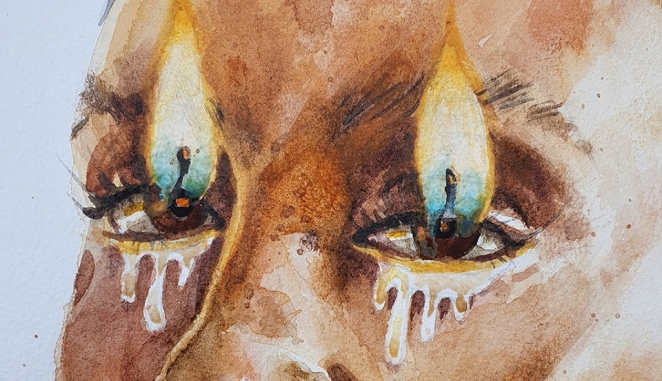
No conversation about the future of creativity can ignore the A-word: Artificial Intelligence. Unlike some industry veterans who greet AI with a shudder, Gen Z and Millennial creatives are relatively sanguine. They grew up alongside Siri and Photoshop’s neural filters; to them, AI is just another tool – one with enormous potential and clear limits.
“The biggest risk in the creative industry isn’t automation, it’s stagnation,” one creative leader wisely said. In other words, falling behind is a greater danger than being replaced by a robot. This generations’ leaders are determined to adapt, experiment and stay ahead of the curve.
Their outlook on AI is pragmatic: use it to sharpen creativity, not replace it. Automation can take over the drudge work – resizing ads, crunching data – freeing human minds for bigger ideas. AI can even inspire, acting as a springboard for concepts. But when it comes to true creative spark – that leap of intuition or emotional resonance – the consensus is that humans still hold the trump card.
“The biggest risk in the creative industry isn’t automation, it’s stagnation”
“The future will likely favour people who can pivot, experiment, and unlearn as quickly as they learn,” a Creativepool workshop piece noted earlier this year, highlighting how younger creatives thrive by continually picking up new skills (like AI) and just as quickly discarding old assumptions. This agility gives them an edge in a tech-charged landscape.
None of this is to say they’re blindly optimistic. Many Gen Z/Millennial directors remain healthily skeptical of AI’s hype. They’ve seen the “AI Art” demos – cool, but soulless – and concluded that while AI can assist, it lacks the human touch that great creative work demands.
One editorial cheekily likened AI art to “a loaded gun that never fires,” all flash and no bang. The next-gen won’t hesitate to leverage machine learning in campaigns, but they’ll just as quickly remind clients (and us all) that an algorithm can’t feel empathy, nostalgia, or humour – at least not yet. For these leaders, the future is about co-creation with AI, not capitulation to it.
Diversity is the New Creative Muscle

Walk into any creative shop helmed by Millennials or Gen Z and you’ll likely notice a difference in the team: diversity isn’t just a box to tick, it’s an article of faith. Having come of age amidst vibrant social movements, these leaders view inclusivity as fuel for creativity.
Homogeneous teams build one-note solutions; diverse teams spark symphonies of ideas. Hiring for “culture fit” is giving way to hiring for culture add – bringing in talent that enhances, not just mirrors, the company ethos.
The numbers back up their instinct. Agencies that embrace diversity have lower turnover – not just because it’s “nice” but because people, especially younger staff, vote with their feet. 69% of millennial and Gen Z workers are more likely to stay with a company that has a diverse workforce.
In an industry famous (or infamous) for its churn rate, that statistic turns heads. Young leaders are increasingly baking inclusion into their business strategy, knowing it attracts both top talent and clients who want fresh, culturally tuned work.
“Creativity thrives on tension”
“We have three generations in the office now – if not more. That’s a strength, not a weakness,” says one Millennial creative director. It requires emotional intelligence to get a Gen Z strategist, a Millennial copywriter, and a Boomer client on the same page, but the creative magic often lies in that very mix.
As a Creativepool feature quipped, “creativity thrives on tension” (yes, that line is worth repeating) – and the tension of different perspectives, when guided by respect, leads to breakthrough ideas.
From London to L.A., young creative leads are fostering workplaces where everyone’s voice counts (no matter the age, gender, or background) and where challenging each other is encouraged. The old adage “great minds think alike” is out. The new one? Great minds don’t have to think alike – they just have to think together.
Of course, diversity isn’t just internal. It’s also about the work itself. Campaigns fronted by homogeneous faces or tone-deaf to cultural nuances simply won’t fly with Gen Z audiences – and leaders of that same generation know it.
They’re pushing clients to embrace real representation on screen and to co-create with communities, not forthem. As one global agency CEO put it, diversity is the creative industry’s “new muscle” – exercise it, or become flabby and irrelevant.
New Business Models: Purpose Over Titles
Rebecca Hendin
If you sense a pattern emerging – that these younger leaders are not enamoured with some old-school traditions – you’re spot on. Beyond the work itself, they’re reinventing how creative businesses run.
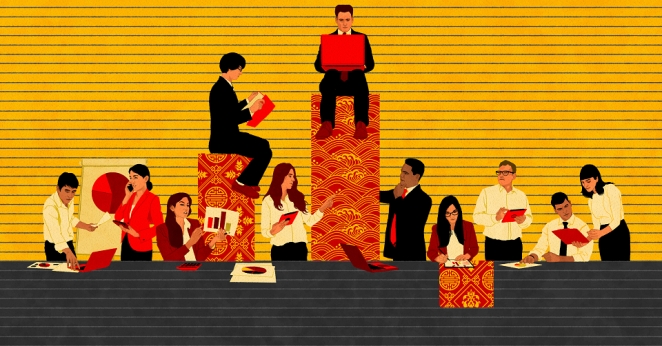
Hierarchies are flattening, freelancing and remote work are commonplace, and the once-coveted big titles (“Senior Vice This or That”) carry a little less shine. Why? Because Gen Z and Millennials prize mission and growth over status. A 2025 LinkedIn report found 68% of Gen Z and millennial hires prioritize “purposeful work” over fancy titles. Climbing the ladder isn’t enough; they want to know what the ladder is leaning against.
This has led to a wave of entrepreneurial experimentation. Many millennials started their own agencies in their 20s and 30s, tired of waiting for the old guard to make changes. From Brooklyn to Bangalore, new boutique agencies are offering agile structures, employee co-ownership, four-day work weeks – you name it – to create cultures where work aligns with personal values.
Even within big agencies, next-gen leaders are carving out “intrapreneur” roles and labs to test new ideas (often under the bemused gaze of older execs). The message is clear: evolve the business or watch young talent (and clients) slip away.
Instead of talent moulding themselves to fit, companies are reshaping to attract talent
One vivid example comes from JOAN Creative in New York. Its leadership, embodying this generation’s mindset, emphasises company culture as much as client output. “We live by that ethos,” says JOAN’s co-founder, referring to a work culture driven by purpose and authenticity.
The agency’s success – winning accounts while touting values-first principles – shows that betting on people over portfolios can pay off. Across the pond, London agencies echo the sentiment. “Focus on building a company you’d want to work for, and the rest follows” is a Millennial founder’s motto.
We’re seeing a clear pivot: instead of talent moulding themselves to fit companies, companies are reshaping to attract (and keep) talent. In practice, that means more mentorship, mental health support, flexible career paths and a rejection of the brutal “hustle culture” that defined earlier eras.
Crucially, these leaders aren’t just chasing feel-good ideals; they’re also responding to hard economic truths. The gig economy looms large – many witnessed their elders get laid off in downturns, so security now comes from skills and networks, not a single employer. Agencies are adapting with project-based models and partnerships.
We’re essentially watching the creative industry’s work culture get a next-gen remodel – one that might just make it more humane and resilient.
A Global Generation Rewriting Creative Culture
Unlike previous leadership cohorts, Gen Z and Millennial creatives are inherently global in outlook. Social media, international study, and multicultural teams mean a creative director in São Paulo might have more in common with one in Sydney than with the CEO down the hall. This global perspective is shaping where the industry heads. Collaboration across borders is second nature to them – and often key to their strategy.
“We have a saying in our studio: good ideas don’t need a passport,” jokes a young strategist in Amsterdam. Increasingly, agencies are forming international collectives of next-gen talent to stay ahead.
Take Lonsdale, a Paris-headquartered independent agency: “With La Collab, our Gen Z strategic and creative collective, we tap into fresh perspectives from young talents across our offices and partner schools”, explains their Global Chief Growth Officer. By literally putting Gen Z voices at the table (and on campaigns for global brands), they ensure the work resonates from Europe to Asia. It’s not tokenism; it’s smart business – a diverse collective can spot trends and cultural cues far earlier. International voices in the creative process guard against the cultural flubs that go viral for the wrong reasons.
We’re also seeing global solidarity among these leaders on the big challenges. Whether it’s pushing for greener production practices or calling out tokenism, Gen Z and Millennial creatives are swapping notes worldwide.
The cultural role of creative work in society is front of mind
A creative director in Lagos might share insights on inclusive storytelling with a counterpart in London via the Creativepool community, or a Brooklyn design lead might mentor junior talent in Manila. This peer network spans continents and is redefining what “industry culture” means – less top-down dogma, more open-source collaboration.
Yet for all their global connectivity, these next-gen leaders are also deeply local when it counts. They champion authentic representation of local cultures in global campaigns, knowing that a one-size-fits-all approach no longer flies.
The cultural role of creative work in society is front of mind: advertising and design aren’t just selling products, they’re shaping norms and attitudes. Young leaders feel that responsibility keenly. In the UK and US, for example, many have used their platforms to support social justice movements or mental health awareness.
In APAC, leaders like those at Lonsdale’s Singapore office credit “creative diversity” as the force keeping them at the forefront of brand storytelling – building campaigns that bridge East-West cultural gaps with nuance and respect. The work is more culturally literate as a result.
Optimism with a Side of Real Talk
Rebecca Hendin
Spend an hour chatting with a Gen Z or Millennial agency leader, and you’ll likely come away inspired – and occasionally challenged. This generation brings a balanced outlook to the future of the creative industries.
They’re optimistic about the power of technology, diversity and fresh ideas to drive positive change. They genuinely believe creativity can make the world (and the workplace) better. But they’re also unafraid to point out the flaws that need fixing, whether it’s the carbon footprint of ad shoots or the lack of representation at the awards shows.
In true next-gen fashion, their tone is hopeful but irreverent. They’ll crack a joke about TikTok trends one minute and get philosophical about “creating work that matters” the next. As an editor listening to these voices, I find that warmth and wit distinctly refreshing.
There’s a pragmatism in how they’re forging the future – call it idealism with a game plan. Yes, AI is cool, but who’s curating the prompts? Yes, a diverse team is harder to manage, but look at the breakthrough ideas it yields. Yes, purpose-driven campaigns take courage, but playing it safe is riskier in the long run.
The kids are in charge now and they might just save us
Above all, these leaders are telling us that the creative industries’ next chapter will be defined by openness: open to new tools, new voices, new ways of working and communicating.
They’re ditching the ego and elitism that once pervaded “creative director” roles in favor of collaboration, empathy and a good measure of fun. The result? An industry that’s evolving – sometimes awkwardly, often brilliantly – to meet a fast-changing world.
So, what do Gen Z and Millennial agency leaders think about the future of creativity? In a nutshell: it’s ours to shape, if we have the guts to shape it. They’re rolling up their sleeves, inviting everyone to the table, and insisting that creativity can mean something again.
For those of us watching from the sidelines (or perhaps hanging onto our vintage job titles), the message is equal parts invitation and challenge. The kids are in charge now, and you know what? The kids are (mostly) alright. In fact, the kids just might save us.