

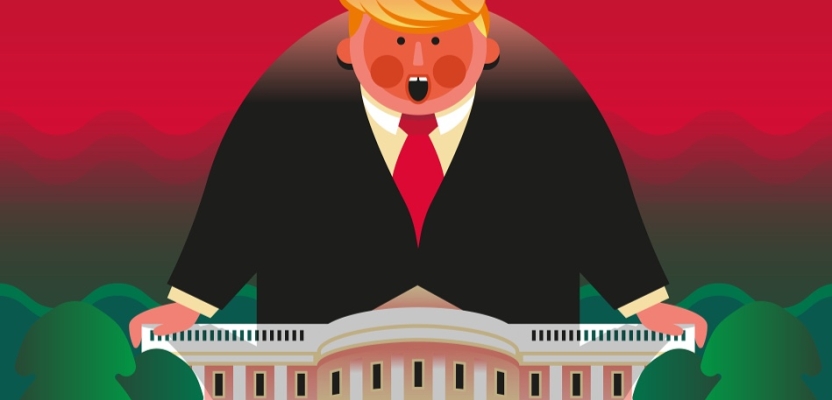

Donald Trump’s sweeping new tariffs upended global trade overnight last week, sending economic shockwaves far beyond the steel mills and factory floors. In boardrooms from New York to London, advertising executives and design studio owners are suddenly grappling with major new issues that didn’t exist a month ago – skyrocketing production costs, supply chain chaos, and jittery clients – that feel worlds away from the usual creative brief.
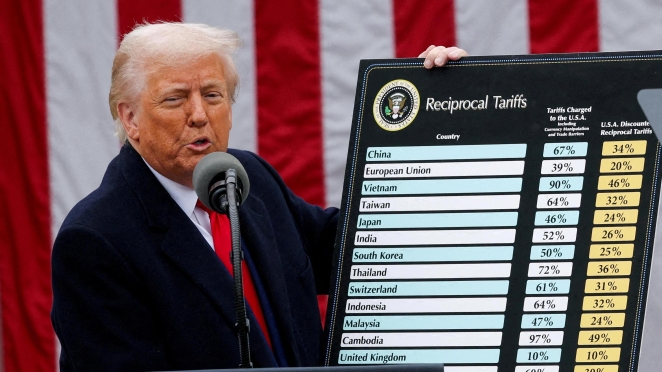
Trump’s protectionist trade gambit, framed as a bid to rebalance trade, has slapped duties on imports from almost everywhere: 10% baseline tariffs on all goods coming into the US, with steeper hits for China (a massive 54%), the EU (20%), Mexico and Canada (25% on automobiles). The White House insists this “America First” tariff salvo will restore fairness, but for the global creative industries the immediate result has been uncertainty, added costs and delayed projects – even legitimate threats of recession in the wider economy.
In this provocative deep-dive, I’ll explore the short- and long-term effects of Trump’s tariffs on the creative sector, zooming in on the advertising and design worlds in the U.S. and UK. From ad agencies facing budget cuts to design studios scrambling for new suppliers, the creative community is feeling the trade war’s tremors.
The piece will examine how production costs are climbing, supply chains are shifting, and how everything from branding and packaging to client relationships is being transformed by a policy storm no creative director saw coming. Along the way, we’ll hear expert opinions and real examples of how agencies and studios are adapting (or struggling) to survive in this new era of tariffs and turmoil.
The Immediate Shock: From Boom to Uncertainty
Neil Webb
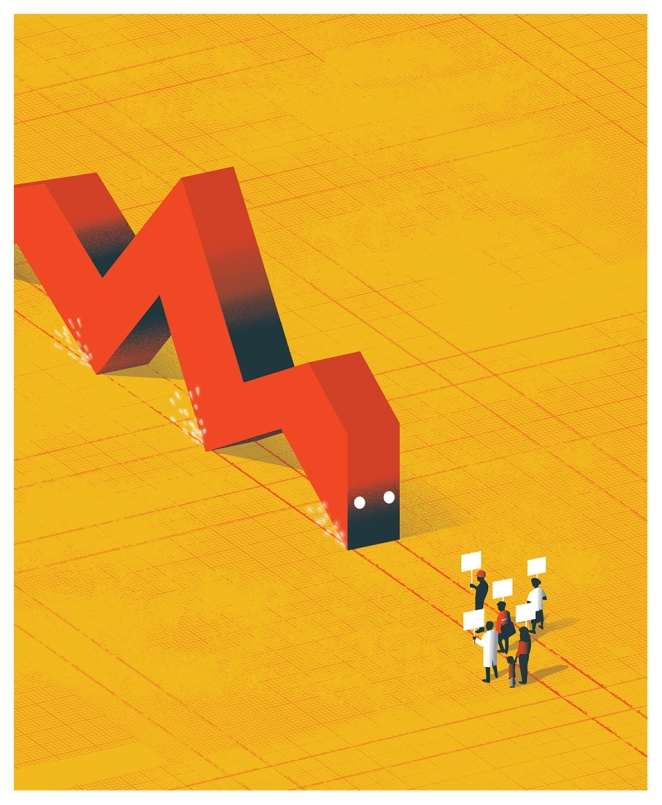
For much of the global creative industry, the tariff announcement landed like a plot twist in an already fraught economic story. Major stock indices tanked on the news, with billions wiped off shares across Asia and Europe. In the U.S., the Dow Jones suffered its steepest drop since the pandemic as boardroom confidence wavered worldwide
“There are no winners,” warned one UK business leader, describing a “global economic shockwave” set off by Trump’s tariff gambit. The creative sector – typically reliant on cross-border collaboration and discretionary corporate spending – suddenly found itself collateral damage in the crossfire of the trade war.
“The fundamental issue with tariffs is they cause uncertainty,” says Sir Martin Sorrell, famed advertising mogul and former WPP chief. “In uncertain times, clients delay decision-making – they either postpone, or cancel, or delay.”
“The fundamental issue with tariffs is they cause uncertainty” Sir Martin Sorrell
Indeed, an Interactive Advertising Bureau survey found 94% of US advertisers are concerned about the tariff impact on ad spend, with nearly half planning to reduce their ad budgets. Madison Avenue had been riding a post-Covid recovery, but the tariff turmoil has injected a heavy dose of caution. “Due to the potential impact of the recently imposed tariffs, the 2025 ad market is expected to tighten,” the IAB warned, predicting the hit will be most visible by mid-year, especially in sectors like retail, consumer electronics and media. In other words, the very clients that feed the advertising business are nervously eyeing their bottom lines.
The design industry felt the shock immediately as well. Many designers and production teams woke up to find critical materials suddenly more expensive or harder to get. “One of the biggest economic shifts is Trump’s renewed focus on trade tariffs... goods imported from China, Mexico, and the EU – including everything from camera equipment to printing materials, editing software, and production gear – could see price hikes,” notes creative director Harlin Miller. For design studios reliant on overseas suppliers or tech, those extra costs will likely trickle down to the consumers – us.”
Within days of the tariffs, some creative firms were convening “war rooms” of their own, mirroring their manufacturing clients. “Every one of our customers has got a war room set up,” said Michael Doss, CEO of a US packaging company, about partners scrambling to make sense of the fluid situation. If packaging producers and fashion brands are in crisis meetings, you can bet their design and advertising agencies are on the call too, bracing for project delays or cancellations.
Rising Costs Hit Creatives Where It Hurts
Perhaps the most immediate short-term effect of the tariffs for creatives has been a spike in production and material costs. Creative work might happen on computers and in studios, but it ultimately often translates into physical goods – print ads, billboards, product packaging, branded merchandise, event installations – or relies on hardware and software tools. With Trump’s tariffs, the prices of many of these inputs have shot up. Raw materials like paper, plastics, aluminium and steel – critical for everything from packaging prototypes to event stage design – are suddenly taxed and scarcer.
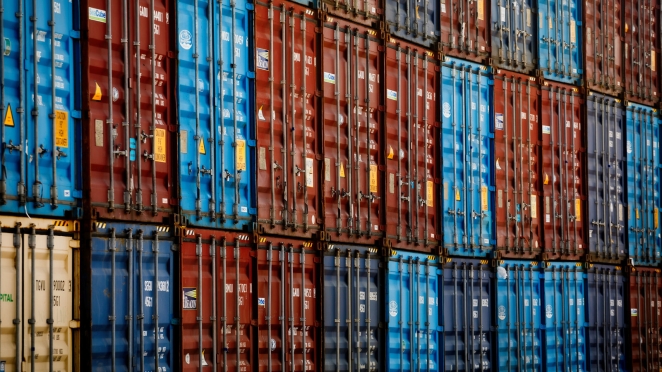
The packaging industry (an important partner for brand designers) was hit especially hard by tariffs on imported steel, aluminium, and polypropylene, which “inadvertently burdened industries reliant on affordable imports.”
US packaging suppliers depending on foreign polypropylene (for bulk bags) or specialty paper saw immediate price hikes that “flowed downstream, raising packaging production prices.” Those added costs either have to be absorbed – squeezing margins – or passed along, perhaps to the very consumer brands that hired design firms to create their packaging. In short, creatives will be paying more to produce the same work.
Designers who source hardware or tech from abroad are facing similar pain. A small architecture firm that imported specialty lighting from Italy, or a freelance photographer awaiting a new high-end lens from Japan, now confront new duties and delays. Filmmakers, photographers, and artists who rely on international gear found that tariffs “drive up operational costs,” as Miller explains. If a camera manufacturer faces a 25% tariff on its imported components, the next generation of cameras will cost more – and that added cost “will likely trickle down” to the creatives who buy or rent that gear. Graphic designers printing marketing brochures or lookbooks in China suddenly see quotes jump; a UK game design studio importing specialized tablets from the U.S. now budgets for an extra 10% tax at customs.
Even when creative production was domestic, the tariffs have caused knock-on inflation. “We were already using U.S. steel… then prices tripled overnight,” recalls Todd Noe, founder of a design/fabrication firm, describing how US metal prices surged when foreign steel became pricier in 2018. As foreign supply got choked by tariffs, everyone rushed to buy local materials, bidding up costs for all. Noe was forced to overhaul his process – bulk-ordering and cutting multiple jobs at once – just to eke out efficiency and survive the crunch. “When we first got hit with the tariffs, it kind of sucked,” he admits bluntly, though he managed to adapt, noting, “it’s helped us be more efficient.”
That kind of scrappy resilience – optimizing every step to save pennies – is now a common theme across creative production teams. But not everyone can adjust so easily, especially small studios with limited cash buffers.
In the advertising realm, the rising costs are more indirect but no less real. Media companies and ad-dependent platforms fear that as consumer prices rise (thanks to tariffs), people will buy less, and brands will slash ad budgets. One analysis warned that companies heavily reliant on advertising could see revenues fall by up to 4% as tariffs crimp consumer and marketing spending.
Marketing Brew reports that in past inflationary bouts, some companies passed higher costs to consumers and ironically ploughed some of the resulting revenue into more advertising. But this time, after years of pandemic and inflation, “the question is whether there’s still room in American pocketbooks” for another round of price hikes, notes Kate Scott-Dawkins of GroupM. If consumers pull back, advertisers will too – meaning fewer campaigns for agencies and leaner times for creative freelancers.
Supply Chains in Chaos: Scrambling for Plan B

Beyond cost, Trump’s tariffs have thrown global supply chains into disarray – and the creative industries are feeling those ripples. Design studios and marketing production teams often rely on finely tuned logistics: the Italian fabric arrives just in time for the fashion photoshoot; the large-format prints for a UK ad campaign are produced in Germany and trucked in; the merchandise for a product launch is sourced from a factory in China. Suddenly, those plans are up in the air. “Changing foreign suppliers could become more difficult as the Trump administration continues to enact new widespread tariff policies,” Packaging Dive observed in March.
Constant reversals – tariffs announced, then paused or modified – have businesses on edge. “Nobody is really clear right now. Are the tariffs going to stay for longer? ... Or are these tariffs just poker chips on the table that can be removed at any time?” muses Andreas Haag, a manufacturing consultant. That sums up the dilemma: should creative companies radically reorder their supply chains for the long haul, or is this a short-lived storm?
"Are these tariffs just poker chips on the table that can be removed at any time?" Andreas Haag
In the short term, many are hedging. Some “importing fewer foreign goods” altogether. A U.S. furniture design company, bracing for tariffs back in 2018, “proactively bought a heavy amount of inventory” in advance and even ramped up in-house production of textiles to offset rising import costs. That stockpiling approach – if you have the capital and storage – is one way to ride out volatility. Others are diversifying supplier bases, seeking tariff-free alternative countries or local sources.
“Sourcing Alternatives: Diversifying suppliers is key… exploring international sources unaffected by tariffs and building relationships with domestic producers,” advises one packaging sector report as a playbook for mitigating tariff impacts. In practice, a UK design firm that used to print client brochures in Shanghai might try a printer in Vietnam or Turkey for lower duties, or bring small-batch printing back to Britain despite higher base prices. Agencies are calling vendors in Mexico, India, Eastern Europe – anywhere that might not be in Trump’s crosshairs – to keep projects on track.
However, rerouting supply chains is often easier said than done. “Chinese technology, manufacturing, and shipping efficiencies can’t easily be replicated,” warns Dr. Harvey Karp, whose startup sells a high-tech baby bassinet designed by famed industrial designer Yves Béhar. His product is made in China; a new 25% U.S. tariff on it “threatens the viability of his business,” costing millions a year that they’ll have to pass on to consumers.
Moving production to, say, Vietnam or the U.S. isn’t feasible in the short run because the specialized factories and components are deeply rooted in China. Janis Provisor, co-principal of a luxury rug studio, faces a similar bind: her hand-knotted rugs are made by artisans in China and India, using skills and facilities not available in the U.S. “A blanket tariff that penalizes everyone is counterproductive,” she says. It’s “a no-win situation” – they can’t readily shift production, yet the tariff adds cost to a product that supports jobs and vendors globally. Creative businesses like these find themselves stuck: paying the tariff or finding creative (sometimes desperate) workarounds.
Some larger players with domestic capacity are seizing an advantage. U.S. packaging giant GPI noted that with 85 manufacturing sites across North America, “that gives us a lot more options…we’ll work hard with customers to mine our supply chain” and offset tariffs. In other words, companies that can localize production quickly are touting it.
For creative agencies, this can mean pitching clients on domestic production for campaigns (“Yes, we can source those event materials in-country to avoid import taxes”), even if it means higher base costs. Those with existing local partner networks are in a stronger position to adapt. Smaller firms, though, often lack that flexibility. As Haag pointed out, small and medium-sized manufacturers (and by extension, small creative studios) lack the pricing flexibility of larger firms. They’re the ones truly caught in the middle when suppliers jack up prices or shipments get stuck in customs limbo.
In the UK, the supply chain picture is further complicated by Brexit aftershocks. British creative companies were already adjusting to new EU trade frictions; now U.S. tariffs add a second layer of complexity. A London design studio that used to import materials from the EU tariff-free might now face tariffs sending finished products into the U.S. market. Tina McKenzie of the Federation of Small Businesses notes that 59% of small UK exporters sell into the U.S., and “tariffs will cause untold damage to small businesses trying to trade their way into profit”.
Her warning underscores that many UK creatives exporting goods (be it boutique fashion lines, art prints, or custom furniture) could see their U.S. sales margins evaporate. British exporters at least got off lighter than some others – the UK is only subject to the 10% baseline U.S. tariff, rather than the punishing rates slapped on China or Europe. “We have done much better than we anticipated…I hope with negotiation we can improve on the 10%,” says Brian Lishak, co-founder of Savile Row tailor Richard Anderson.
His luxury tailoring house has long catered to American clients. Now they must inform each U.S. customer that their bespoke suit will incur a 10% duty on entry – a delicate message when you’re selling $5,000 suits. Lishak is optimistic it “won’t have too adverse an effect” on trade and believes loyal clients will take the hit in stride. His strategy? Transparency and service. By proactively communicating the new costs and emphasizing the enduring value of the product, he hopes to keep relationships solid. It’s a playbook many niche creative businesses are adopting: be honest about the challenges, and rely on client goodwill to weather the storm.
Branding and Packaging: A New Twist on “Made in America”
DOWNSIGN
Trade policy might seem abstract, but it’s quickly becoming a concrete factor in branding, marketing, and packaging decisions. As tariffs make imported goods pricier, some companies are rebranding with a patriotic or local spin – and turning that into a marketing message. U.S. clients have been asking agencies to help highlight “Made in USA” credentials more than ever, hoping to appeal to consumers’ sense of nationalism or to justify higher post-tariff prices. In the short term, brands are rewriting narratives: a craft beer that suddenly costs more because its aluminium cans are tariffed might launch a campaign about supporting American aluminium and jobs. Creative agencies are behind the scenes crafting those stories, effectively spinning tariff troubles into branding opportunities.
Packaging design is on the front lines of these shifts. Heavier tariffs on imported aluminium and steel have the packaging world alarmed, since U.S. canners rely on metal from abroad. “The new tariffs are going to increase the cost of tin plate steel used to make food cans,” warned Robert Budway, president of the Can Manufacturers Institute. For packaging designers, that means clients in food & beverage might demand designs that use less metal or different materials. We may see a push for lighter, minimalist packaging – not just for aesthetics or sustainability, but to cut tariff-taxed material costs. A few years ago, sleek minimalism on a product box was a design choice; in 2025 it might be a cost mandate. Likewise, if imported inks or specialty finishes become expensive, packaging designers might simplify artwork to standard colours and coatings available domestically.
Some brands are even taking legal/contractual steps. In the fashion sector, talk of “Trump Majeure” clauses has emerged – a darkly humorous nod to force majeure, inserting tariff contingencies into supplier contracts. Essentially, brands want an out if sudden tariffs make fulfilling an order untenable. While primarily a concern for product companies, agencies working on those brands have to be aware. It’s hard to plan a long-term international ad campaign when your client’s supply chain is one tweet away from a new tariff. Industry experts warn that the lack of clarity and constant policy whiplash may prove more damaging than the tariffs themselves. That sentiment rings true for creative planning: uncertainty is the enemy of creative strategy.
On the flip side, there may be some unexpected branding benefits. Designers note that higher tariffs on cheap imports could stem the tide of knockoff products flooding the market. Fewer counterfeit handbags or copycat furniture pieces from overseas could nudge consumers back toward original designs – a win for creatives whose intellectual property is often copied. And if manufacturing of certain goods shifts to lower-cost countries like Vietnam or stays longer in the U.S., brands may find new storytelling angles (“crafted in Vietnam’s emerging design scene” or “proudly built in Detroit”). The creative industries excel at turning constraints into creative concepts, and we’re already seeing brainstorming around turning the tariff narrative on its head.
Ad Industry Jitters and Client Cutbacks

Neil Webb
If there’s one thing advertising hates, it’s uncertainty – and Trump’s tariff rollercoaster has delivered that in spades. In the US and UK, agencies are finding many clients in a “recession frame of mind,” as one marketing CEO put it. Tariffs function like a tax on businesses, and when companies face higher costs or shrinking export markets, marketing budgets become an easy target for cuts. Advertising is often one of the first areas to face budget cuts in times of hardship or downturn. As Jayson Dubin, a digital ad veteran, observed after reading the latest tariff news, “we all need to brace for what’s coming.” He predicts widespread belt-tightening in the second half of 2025: experimental branding programs axed, “unproven” adtech partners dropped, and only the most ROI-proven campaigns spared.
These predictions are echoed by data. That IAB survey in February found nearly half of ad buyers planned to reduce spend due to tariffs. By April, industry forecasters were revising growth estimates downward, essentially baking in an ad recession. It’s a stark turn from just a year ago, when ad spend was growing steadily. “Mid-year is when it will hit,” the IAB noted, and agencies are already reforecasting client spend for Q3 and Q4. Media companies, from big tech platforms to small publishers, are bracing to feel the pinch as their advertisers retrench. Morningstar estimated that if consumer spending dips and ad budgets follow, some major ad-reliant firms could see a few percentage points shaved off revenues – not catastrophic, but enough to force layoffs or cutbacks.
The effect in creative agencies is a palpable chill. Pitches for new work are being scrutinized harder. Clients are asking agencies to justify every line item, and some have quietly issued stop-work orders on campaigns slated for later in the year until they “see how this plays out.”
Martin Sorrell’s observation bears repeating: in uncertainty, clients postpone or cancel. Agencies are reporting exactly that – a big tech client delaying a product launch (and its ad campaign) because of concerns about component shortages, or an auto client cancelling a planned experiential marketing tour because tariffs on imported cars are driving up prices (25% auto tariff in effect). Each cancellation is lost income for production companies, PR firms, event staff, and of course the ad agency itself.
"We all need to brace for what’s coming” Jayson Dubin
Some creative shops, however, see opportunity in the chaos. “When everyone else cuts marketing, a smart company can gain share by staying the course,” goes the adage. A few bold clients will indeed try to spend through the downturn – and agencies are encouraging that where feasible. Moreover, certain sectors could even boost ad spending: if a tariff effectively walls off foreign competition, a domestic company might sense a chance to grab formerly contested market share and advertise more aggressively.
For example, if Chinese electronics face steep U.S. tariffs, an American electronics brand might ramp up ads touting its stability and local pedigree. Chinese brands marketing in the U.S. might also accelerate digital ad spend while they can, figuring they need to sell inventory before any consumer backlash or further restrictions hit. GroupM analysts noted that Chinese marketers in the U.S. could actually benefit in the short term, as not all goods they advertise are tariff-affected and a weaker yuan makes their products (aside from tariffs) more price-competitive. This dynamic creates pockets of opportunity for agencies nimble enough to pivot.
In the UK, the advertising sector is equally uneasy. British firms not directly tariffed still feel second-order effects: multinational clients cutting global budgets, local exporters earning less (and thus spending less on promotion), and a generally risk-averse business mood. The UK’s ad industry has been a growth jewel in recent years, but any hit to the broader economy could stall that. If U.S. tariffs contribute to a global slowdown, British agencies will inevitably feel it. Already, some UK marketers are considering shifting focus to other regions (like Asia or the Middle East) if the transatlantic business dries up. The UK ad market is heavily intertwined with the U.S., so a slump stateside is quickly felt in London’s adland.
Long-Term Outlook: Adaptation or Stagnation?
As the initial shock turns into a new reality, the creative industries are weighing how to survive and thrive long-term under a tariff regime that could last years. Many experts are pessimistic about the macro picture: higher costs, disrupted trade, and sustained tariffs “will impact global trade and limit growth,” economists agree. In plain terms, a protracted trade war risks a smaller pie for everyone – less global economic growth means fewer product launches, fewer new brands emerging, fewer ad campaigns. There’s even talk of a possible recession, which would hit creative fields hard.
Yet, adversity often breeds innovation. Creative businesses are nothing if not creative in problem-solving. We’ve already seen how some design manufacturers became leaner and more efficient due to tariffs. In advertising, periods of budget pressure historically have led to breakthroughs in targeting and effectiveness (think of how the 2008 recession accelerated the shift to measurable digital advertising). This time, agencies are doubling down on data and ROI to justify every pound or dollar a client spends. Dubin’s “silver linings” in the ad space include a purge of weaker players and a spotlight on real value: “Shady companies…will see ad dollars dry up, which will reward companies that genuinely create value. Consolidation will occur — only the strongest will survive… quality, performance and transparency will take centre stage.”
In other words, a shakeout could ultimately leave a leaner, healthier advertising industry, albeit after some pain.
For design and creative production, long-term tariffs might spur more local sourcing and self-reliance. “Tariffs may encourage domestic investment in material production, which could reduce dependency on imports,” notes a packaging industry analysis. If that happens, years down the line creative studios might have more stable local supply chains. Imagine a future where American-made paper and British-made printing presses see a renaissance because tariffs forced that investment – creatives could benefit from closer, more reliable resources (and maybe even market those “locally made” aspects as sustainable and community-friendly). On the flip side, if costs remain high and margins low, some businesses could downsize or shut down, leading to a loss of creative jobs and talent.
Crucially, client relationships in the long term will need extra care. Agencies and studios that guide clients through this uncertainty will earn trust and loyalty. We’ve heard of account managers becoming quasi-trade consultants, advising clients on how to tweak packaging or adjust campaign rollouts based on the latest tariff lists. Some forward-thinking agencies are even writing flexibility clauses into contracts – akin to the “Trump majeure” – acknowledging that sudden cost changes may require re-scoping work.
Clear communication is key: clients appreciate partners who are proactive about solutions rather than just delivering bad news. The Savile Row tailor’s approach of informing customers upfront about new duties is one small example; on a larger scale, a design firm might present a client with two versions of a project budget – one using imported materials with tariffs, and one using alternative sources – to quantify the differences and let the client decide.
Expert opinions differ on how long this tariff regime will last. Some suspect it’s a short-term bargaining chip for Trump and that relief could come with new trade deals. Others point to the President’s rhetoric that tariffs are a long-term tool to protect jobs, implying this could be the “new normal” through his term. That very uncertainty means creative businesses must remain agile. Many are running contingency plans: If tariffs drop next year, we revert to our old suppliers and ramp back up; if they persist, we invest in that new 3D printer or hire that local craftsperson to reduce import reliance. The ability to switch gears quickly will define the survivors.
“The industry is going through a tough phase, but those who can adapt, innovate, and deliver real value will come out stronger,” Dubin asserts optimistically. It’s a sentiment that could apply to all creative sectors. Already, we’ve seen adaptation in action – from designers finding creative materials locally to advertisers reshuffling media plans. The coming months will test the resilience of the creative industries.
Will a prolonged trade war clip the wings of the world’s creative output, or will it spark a new era of innovation born from necessity? One thing is certain: the intersection of global economics and creative arts has never been more pronounced. In an age where a tariff on steel can stall a sculpture installation, or a trade spat can shelve a Super Bowl ad, creatives must pay attention to the once-esoteric realm of trade policy.
Navigating the Crossfire: Creativity Meets Policy
At its core, the clash between global tariffs and the creative industries is a story of two worlds colliding. The freewheeling, idea-driven realm of creativity is now entangled with the hard-edged world of geopolitics and economics. Agencies and studios in the US and UK find themselves learning the language of tariffs, HTS codes, and trade agreements – conversations far removed from slogans and style guides. It’s an uncomfortable but perhaps enlightening shift.
In the short term, Trump’s tariffs have undoubtedly posed serious challenges: higher costs, nervous clients, delayed projects, and general volatility. Yet the long term will be defined by how creatively the industry responds. Already, adaptation is underway – from localizing supply chains and reimagining packaging to strategic budgeting and contractual innovations like tariff clauses. The creative industries have always thrived on constraints (after all, great art often comes from limitation). This may be one of the greatest constraints they’ve faced on a global scale.
The age of ignoring politics is over
The coming year will likely bring more twists – perhaps retaliatory tariffs abroad affecting creative exports (Europe and China are none too pleased, responding in kind), or maybe diplomatic breakthroughs that ease the pressure. Creative professionals will need to stay nimble and informed. The age of ignoring politics is over; the savvy creative agency now keeps CNBC on in the background next to Adobe Photoshop.
Finally, it’s worth noting a unifying insight shared by many; what hurts one part of the ecosystem eventually hurts it all. A tariff on metal cans might seem like only a manufacturing issue, but it cascades to designers, advertisers, and consumers. Likewise, a cut in an ad budget affects media publishers, artists, and beyond. In Trump’s trade war, the creative industries have become unintended conscripts, navigating battles not of their choosing. But by leveraging the very skills they market – creativity, storytelling, adaptability – they just might write a hopeful next chapter: one where innovation and artistry not only survive the tariff turbulence but emerge on the other side with fresh ideas and more resilient models for a volatile world.
The bottom line is that tariffs may be aimed at boosting manufacturing, but they’re also rewriting the rules for Mad Men and designers alike. In the US, the UK and across the globe, the creative sectors are proving both vulnerable and inventive in response. As one industry insider put it, “It’s the ultimate test of creativity – can we create prosperity out of chaos?” The answer, unfolding now in pitches and prototypes across the globe, will define the creative economy for years to come.
白 白 April 9th, 2025, at dawn
The writing is delicate and the emotions are sincere, which makes people unconsciously immersed in it and feel the author's thoughts.威樂/威樂娛樂/威樂娛樂城