
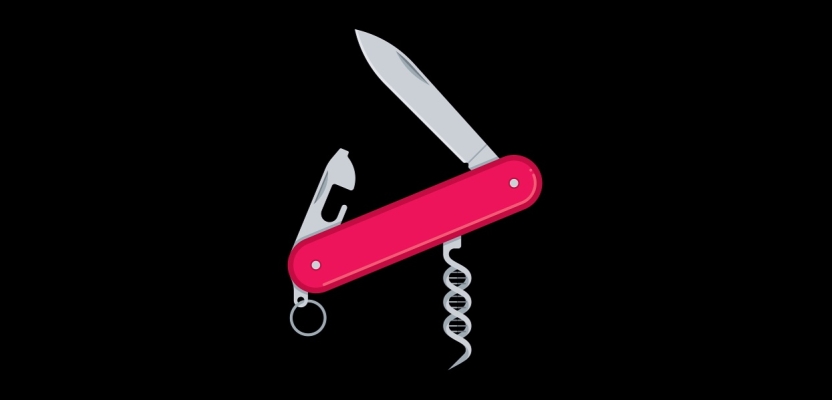

“Do we hire a Swiss Army knife, or a scalpel?” This is the kind of question that haunts creative agency leaders from London to New York and is particularly relevant in a world where AI is slowly taking out the boilerplate skills.
In an industry where talent is currency, agencies are debating whether to thrive with specialists or if a “jack-of-all-trades” profile is now mandatory. Is it better to have a team of narrowly focused experts, or versatile creatives who wear multiple hats?
Jack-of-All-Trades/Master of Some
Not so long ago, being a generalist was practically a job requirement in creative agencies. In those halcyon days, if you showed weakness in one area, your card might be marked (“Don’t give her that TV brief, she’s only good at X!”). The classic Madison Avenue creative was expected to concept a print ad in the morning, storyboard a TV spot by lunch, and brainstorm a radio jingle by teatime. Being a generalist (a creative chameleon) was very much the norm.
Over the last decade, however, the pendulum swung towards specialisation. As marketing channels multiplied (digital, social, experiential, AR, oh my!), agencies began hiring experts for each niche. Job titles became ever more hyphenated and specific.
Suddenly, you weren’t just a copywriter; you were a B2B fintech SaaS copywriter. Creative agencies carved out specialist departments: social media gurus, UX designers, SEO wizards, data analysts, etc. The idea was that deep expertise in each silo would produce superior work in that domain. Clients, too, often sought “specialist agencies” known for their industry or craft – whether it’s a healthcare advertising boutique or a CGI animation studio.
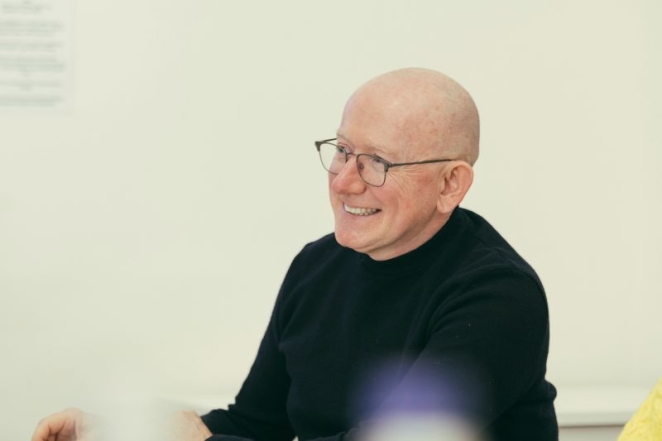
Simon Case
As Simon Case, Creative Director at Chromatic, explains, “specialism in industry verticals…is very important. For smaller agencies, being able to claim a niche based on deep understanding is a big competitive differentiator…those pockets of specialism will often provide the springboard to launch into other sectors”. In other words, focusing on a niche can be a powerful way to stand out and grow.
The Case for Specialists (Depth over Breadth)
There’s a lot to love about specialists. They bring depth of knowledge and mastery of their craft. A true specialist can deliver “best in class” results in their area. They’ve honed their skills to a razor’s edge, much like a scalpel designed for a precise task. In client work, this often translates to confidence: we trust a specialist’s expertise.
It makes sense because when you need to see a healthcare professional, you’ll generally feel safer in the hands of a specialist than a GP. Likewise, clients often seek out agencies renowned for a specific domain because they speak the client’s language. A specialist agency or team member can dive straight in without a learning curve, potentially saving time and impressing the client with nuanced insight.
Specialists also excel at craft execution. Once the strategy is set, a specialist ensures “world class execution and results” in their lane. For example, a boutique design agency that only does branding for breweries will likely knock a beer label project out of the park, because they’ve done it 50 times before. Their experience is deep, and their processes are refined for that niche.
By not trying to be everything to everyone, specialists can double down on what they do best. This kind of focus can foster a strong creative identity and culture. Team members know their lanes and take pride in being the go-to experts in them.
Finally, being a specialist doesn’t mean being narrow-minded. The best specialists avoid tunnel vision. Simon Case argues that “remaining fresh and relevant often requires us to look beyond our specialism… the best specialists will look at a situation holistically before delivering their specialist point of view”. In practice, a great specialist brings deep skill and a collaborative mindset, ensuring their expertise serves the bigger picture rather than limits it.
Of course, there are trade-offs – which leads us to the other side of the coin.
The Case for Generalists (Breadth and Versatility)
On the flip side, generalists (the Swiss Army knives) bring breadth of skill and adaptability. Creative work rarely happens in a vacuum; it often requires connecting dots across media and disciplines. Here, the generalist shines.
They might not have a 10,000-hour mastery of one tool – instead, they carry a whole toolbox. Need a social post written, the client brief designed into a deck, and a quick voiceover recorded in a pinch? The generalist says, “No problem, I can handle that (and more).”
Being a generalist fosters big-picture thinking. In other words, when tackling complex brand problems or open-ended creative challenges, a broad perspective can be an asset. Generalists draw from knowledge of multiple domains to spur creative solutions that specialists siloed in one field might miss. They’re often great integrators – able to collaborate with specialists and translate between disciplines.
Maggie McKosky of Shutterstock neatly summarized this balance, noting that generalists can “bring perspective from a range of other disciplines,” even if the downside is being less deep in each.

Davide Saraceno
In small agencies or startups, generalists are worth their weight in gold. With lean teams, each person must wear several hats. A “Swiss Army knife” creative can take a project from concept to completion, which is mandatory when you can’t afford a separate specialist for every task.
Generalists often excel at communication and teamwork precisely because they’ve dabbled in multiple areas. They can speak the lingo of designers, writers, developers, strategists – acting as the glue in interdisciplinary projects.
Rob Pellow of agency Armadillo points out that even specialists benefit from a “second-string” skill or broader knowledge to avoid being pigeonholed: “Being a proper specialist is hugely valuable. But the wider you can cast your net with secondary skillsets, the greater your chances of making yourself invaluable in the long term”.
In essence, even specialists thrive by being a little generalist; and conversely, most generalists have one or two strengths they specialize in. The lines aren’t as rigid as the titles imply.
Naturally, the downside often cited is “master of none”. Generalists risk being competent but not exceptional at certain tasks. As McKosky cautions, you might be “good at many things but rarely truly exceptional at one”.
In high-stakes creative production, that can be a concern – nobody wants a pretty good developer who’s also a pretty good copywriter, but not great at either, if the project really needs great. This is why many agencies employ a blend of both types.
Striking the Right Balance
Perhaps the real answer to the specialist vs. generalist debate is find the right mix. Creative leaders increasingly recognise that it’s not an either/or, but a continuum. Most successful agencies combine specialists and generalists on their teams or seek individuals who are “T-shaped” – deep in one area, broad in many.
“Whether we call them generalists, unicorns, full-spectrum designers... some can master the generalist role because they have a strong understanding of the other roles around them,” says McKosky. The key is knowing your agency’s needs and your clients’ expectations.
Consider how full-service agencies operate: they market themselves as one-stop shops (generalist offering), but internally they’re a mosaic of specialist departments – design, copy, social, PR, media, etc. The agency’s value proposition is being a Swiss Army knife at the organisational level, with each blade a specialized team.

In contrast, a boutique specialist agency might stick to one blade – but aim to be the sharpest blade in town for that service, partnering with other shops as needed. Both models can thrive. In fact, collaboration between generalist agencies and specialist studios is common.
Even on the talent level, creative leaders often seek “multi-skilled specialists” – folks who are ace at one thing but have enough general savvy to contribute beyond their core. “The key to this balancing act... is the ability to combine general marketing and brand savvy-ness with sector specialism to meet client needs on all fronts,” notes Simon Case.
He’s describing the ideal modern creative consultant: part specialist, part generalist, 100% focused on solving the client’s problem. Ultimately, the goal is to avoid the pitfalls of either extreme. A siloed specialist who can’t see the forest for the trees is as problematic as a generalist who lacks the skill to execute an idea.
Which Approach Works Best for Your Team?
So, specialist or generalist – which is best? If you were hoping for a one-size-fits-all answer, I’m afraid the creative industry will disappoint you there. It truly depends on your team’s context and goals. Ask yourself (and your team): What kind of work are we doing, and what do our clients value most?
Breadth
If you’re in a fast-evolving field or at a small agency where everyone must pitch in on anything from copywriting to video editing, a breadth-first approach might work best. You need adaptable “Swiss Army” team members ready to jump on any task.
Niche
If you serve a specialized market or offer a signature service, leaning into a niche could be your winning strategy. Perhaps your agency made its name doing luxury hospitality branding, or cutting-edge VR experiences. Being known for that niche can attract clients seeking the best in that category.
Hybrid
In many cases, the sweet spot is a hybrid approach: cultivate individual specialists and a generalist mindset across the agency. Encourage your designers, writers, and developers to deepen their expertise and to stay curious about adjacent skills. Create project teams that mix both types – pairing, say, a specialist art director with a generalist creative strategist – so they learn from each other.
The Bottom Line
Creative agencies can thrive with either approach – niche specialists or breadth-focused generalists – as long as they play to their strengths. The most important thing is to be deliberate about your model. If you’re a specialist, keep an eye on the bigger picture so you stay relevant (no one wants to be the expert in a service nobody needs!).
If you’re a generalist, be sure you’re delivering quality, and know when to bring in specialist help on critical aspects. Many successful agencies today embrace a bit of both: cultivating deep expertise while remaining flexible and broad in perspective. In fact, the highest-performing teams often include T-shaped creatives who combine a core specialty with a “master of some” attitude across disciplines.

Paulo Pampolin
In the end, whether your team is a band of specialists, a crew of generalists, or a merry mix of the two, what really matters is delivering creative work that works. As long as the client’s problem is solved in brilliant fashion, they won’t be asking how many specialist titles or Swiss Army knives you have on staff. They’ll just be glad you had the right talent for the job – whatever shape that talent took. And if your agency can manage to be both a sharp sword and a Swiss Army knife when needed, you’ll truly cut ahead of the competition.
So, specialist vs. generalist? The dilemma will continue, but the best agencies have figured out that the answer isn’t one or the other – it’s having the wisdom to deploy the right approach at the right time. Or as one client might say, it’s about having “the creative tool for any challenge” ready to go. Now that’s a knife-edge advantage.
Ken Gerhardt Photography July 23rd, 2025, in the morning
Creative concepts that 'work', will alway evolve at the 'right time'... Great article, thanks. KGee