


In a world beset by skyrocketing living costs and corporate belt-tightening, a growing number of creative professionals are making a counterintuitive choice: they’re giving up traditional “secure” jobs to pursue personal passion projects and more fulfilling careers – even if it means embracing financial uncertainty.
Take Eddie Gold, a decade-long veteran of a top London ad agency, who realized one day that “my purpose was to sell baked beans… I wanted something more exciting and entertaining”. Or Jessi Gutch, who left a stable role at the Red Cross to follow her own creative path as an independent filmmaker after a life-altering wake-up call.
From advertising and design to film and illustration, the story is repeating across the creative industries: faced with burnout and disillusionment, many are concluding that fulfilment now outweighs stability.
Uncertain Times: Inflation, Layoffs, and Trade Wars

To understand this trend, consider the economic backdrop. Over the past few years, creatives – like everyone else – have weathered a relentless cost-of-living crisis. Inflation in the UK hit a 40-year high of over 10% in late 2022, and major creative capitals worldwide became prohibitively expensive. In New York City, average Manhattan rents jumped over 8% in a year (Brooklyn rents up nearly 15%), while London rents soared 20% from 2022.
Basic expenses like food, fuel, and housing climbed steeply, squeezing budgets for those in traditionally less lucrative creative fields. “The hike in living costs means young designers are having to choose between food and fabric,” observed one UK fashion magazine, asking pointedly “is the cost of living crisis killing creativity?”. When simply paying rent becomes a struggle, financial security feels precarious even in so-called “stable” jobs.
At the same time, companies that employ creatives have been under strain. Advertising agencies, design firms, media outlets – all have confronted budget cuts and waves of layoffs.
In early 2024, AdAge reported “a rising tide of agency layoffs” as clients slashed budgets. Across the media landscape, organizations like NPR announced 10% staff cuts, citing nervous marketers and an uncertain economy. Even tech giants known for lavish creative departments joined the mass layoffs trend in 2023.
The message to many creative workers was clear: the old promise of corporate stability had frayed. Job security in a traditional role could vanish overnight with an economic downturn or a merger.
Overlaying these challenges are geopolitical tremors. Trade tensions have resurfaced in dramatic fashion – notably with the return of Donald Trump’s hardline trade policies. In early 2025, President Trump launched new trade wars, proposing tariffs “as high as 145%” on Chinese goods, with Beijing retaliating in kind.
Such moves stoked fears of global recession and even pricier supplies for creative businesses (from tech equipment to art materials). For creatives, this climate of volatility and uncertainty can be unsettling. One might assume that, amid these storm clouds, people would cling tighter than ever to any stable paycheck.
Yet, paradoxically, the opposite is happening for a significant cohort of creatives. The very instability of the world seems to be prompting introspection. If no job is truly secure and everything is in flux, why not bet on what you love? As one designer bluntly put it about corporate life in chaos: “What exactly am I sacrificing my passion for, when tomorrow isn’t guaranteed?” The result is a quiet revolution in how creative professionals think about work and life.
The Great Realignment: Pandemic Epiphanies and Burnout
Part of this shift can be traced to the COVID-19 pandemic and its aftermath. The pandemic was a global moment of reckoning that caused millions to reassess their priorities – and creatives were no exception. As 2021 unfolded with vaccine rollouts and glimpses of normalcy, a wave of resignations swept through many industries, soon dubbed “The Great Resignation.”
In creative fields, countless full-timers decided to place their craft and well-being front and centre, some by moving to freelance or passion projects after years of office grind. In a 2022 survey of creative professionals by It’s Nice That, 36% had changed roles since 2020 and another 20% were actively interviewing for new jobs. Tellingly, 78% said the pandemic had fundamentally changed how much personal enjoyment they got from work, and 80% of those who took the leap felt it was absolutely the right decision.
“The pandemic made me realize life is too short to spend in a job that leaves you empty,” says one art director who quit her agency job in 2021 to start a ceramics studio. Her sentiments are widely echoed. After facing lockdown isolation, illness, or simply the pause in the rat race, creatives began asking themselves hard questions about purpose and happiness. Burnout levels were already high in the industry before 2020; the forced slowdown pushed many to acknowledge it rather than suffer in silence.
Indeed, burnout has been rampant. A comprehensive 2024 study led by Professor Mark Deuze found that two-thirds of creative professionals worldwide reported work-related mental health issues (anxiety, depression, burnout) – yet many felt trapped in their jobs by the very passion that drew them in. “What makes media work special—creativity, autonomy, storytelling—is also what traps people in cycles of self-sacrifice,”
Deuze observes, noting how the industry often exploits passion for long hours and low pay. In UK film and TV, 35% of workers rated their mental health “poor” and a startling 64% had considered leaving the industry altogether. This backdrop of widespread disillusionment forms the emotional context for why a fulfilling independent project can start to look more appealing than a prestigious but punishing job.
Stories from the Creative Frontlines: Passion Over Paychecks
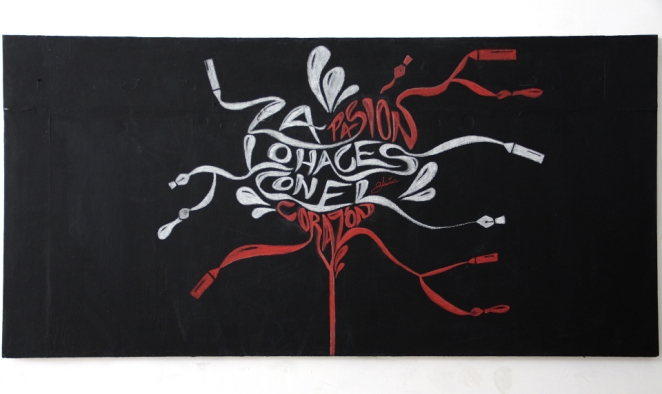
Alejandro Dávila
This trend isn’t just abstract statistics – it’s reflected in myriad personal stories across creative sectors.
Advertising has seen an exodus of talent, from junior designers to veteran creative directors, all seeking more meaningful or flexible work. “Ad-agency professionals are quitting in droves over burnout and a desire for more flexibility,” reported Business Insider, noting many are launching their own companies or going freelance.
Kelsey Wilkins, a San Francisco creative director, left her agency job and quickly found that the freelance life rekindled her excitement. “I was doing interviews at other agencies and wasn’t feeling excited anymore… I was really scared to do it… It paid off for me,” Wilkins said of her leap into self-employment. The appeal of autonomy – choosing projects, controlling one’s schedule, even working from anywhere – outweighed the comforts of a big agency.
Tori Nygren, who founded her own independent studio after stints at global agencies, observes that she’s far from alone: many former colleagues have also abandoned the “cookie-cutter” career path, whether to freelance, join in-house brand teams, or start ventures. “The freedom to define how you want to work is very appealing to many, versus being in a big holding company,” she told Adweek. Some have even turned to a free money earning app to supplement their income during the transition, easing the pressure while building up freelance work.
Other creatives are literally changing their environment to enable a more fulfilling life. Arts publicist Lindsay DeSantis left New York City after eight years of hustle, swapping it for the slower, artsy environs of Santa Fe. “I had a hankering for the opposite… ‘bare feet in the grass’ kind of thing,” she says, describing burnout from the dizzying NYC pace.
Likewise, film director Gillian Zinser moved from New York to Mexico City in 2022 “in search of greater quality of life, lower monthlies, [and] more affordable freedom to create.” For these professionals, relocating away from the expensive creative capitals was key to pursuing passion projects without drowning in overhead costs.
Megan Wray Schertler, a publisher who decamped from NYC to Berlin, explained her reasoning bluntly: “I wanted to anchor myself somewhere where the quality of life was much better and where my entire life doesn’t have to revolve around making money.” In cheaper, smaller cities, she found breathing room to focus on creative work that inspired her, rather than desperately chasing the next rent payment.
This mass creative migration – “a mass exodus from major creative capitals” – accelerated by the pandemic and inflation, suggests that fulfilment isn’t just about the work itself, but the lifestyle around it. Lower costs and less grind can translate into more mental space for creativity.
Then there are those whose personal crises catalyse professional shifts. Jessi Gutch’s story is one of the more dramatic: at just 28, facing an incurable cancer diagnosis, she decided it was now or never to follow her dream of making her own films. “It suddenly gave me a more urgent sense of having a voice that I wanted to use. I didn’t want to make films in the voice of an organisation; I wanted to make my own films,” Jessi writes.
The risk was daunting – as someone immunocompromised during COVID, she needed the safety net of paid sick leave – but a serendipitous grant opportunity allowed her to direct a short film from her unique perspective. The resulting project, The Forgotten C, not only earned critical acclaim (a BIFA nomination) but also, in her words, “saved my life” by giving her purpose at a dark time. Burned out and facing her mortality, she ultimately quit her day job to continue on the independent filmmaker path.
While few cases are as life-and-death as Jessi’s, many creatives have experienced a version of this clarity – a realization that the time to pursue their art is now, not someday far off. Whether it’s surviving an illness, enduring a family loss, or simply emerging from two years of pandemic isolation, these inflection points have led to resolved minds: fulfilment can’t wait.
Not every passion pursuit ends in triumph, of course. Social media has its share of cautionary tales (like the viral story of a young woman who quit her corporate job to work in a flower shop – only to discover the romanticized escape wasn’t so easy in reality). The choice to prioritize fulfilment carries risks: financial strain, irregular income, lack of structure, and for some, the pressure of turning a passion into a livelihood can actually dampen the joy.
But for many who have made the switch, any short-term instability is outweighed by regained enthusiasm and creative freedom. As one illustrator who left a newsroom job to freelance noted after overcoming her initial fears, “I wasn’t able to work on things I wanted … now I can, and I feel like myself again.”
In online forums and interviews, these career-changers often describe a mix of anxiety and exhilaration – anxiety because the safety net is gone, but exhilaration because they’re finally doing work that resonates with their identity.
Broader Implications: Retention, Well-Being, and Redefining Success

This growing movement toward fulfilment-first careers is forcing the creative industry to take a hard look at itself. For employers – from ad agencies to animation studios – it raises urgent questions about talent retention.
How do you keep your best creatives from walking out the door? The old playbook of dangling raises and fancy job titles may not suffice when employees are prioritizing meaning, balance, and mental health. Some forward-thinking agencies have started to experiment with reforms: flexible schedules, sabbaticals for passion projects, opportunities to rotate onto more purpose-driven client work, and more open conversations about burnout.
The goal is to make creative workplaces feel less exploitative and more supportive, so that choosing a staff job doesn’t mean sacrificing one’s soul. It’s a tall order – this is an industry where 12-hour days and “passion-fuelled” all-nighters have long been normalized.
But with so many stories of burnout-fuelled exits, business as usual simply isn’t sustainable. As one industry veteran quipped, “Either the agencies find a way to make these jobs human-friendly, or they’re going to keep losing humans.”
There are also implications for mental health in the creative professions. On one hand, those who leave toxic workplaces or gruelling roles often see a boost in well-being – they can set healthier boundaries when working for themselves, pursue projects that align with their values, and escape office politics and abusive bosses.
The act of asserting control over one’s career can itself be empowering, countering the learned helplessness that often comes with burnout. On the other hand, forging your own path can introduce new stresses: the loneliness of freelancing, financial unpredictability, the pressure to self-motivate.
The creative industries have begun acknowledging the mental health crisis in their ranks, with more resources and peer networks for freelancers and entrepreneurs. The hope is that a cultural shift toward valuing personal fulfilment will also normalize seeking help and setting boundaries, whether one stays inside a company or not.
If the industry truly internalizes the lesson, we may see a future where a “successful” creative career is defined just as much by psychological well-being and creative satisfaction as by awards or promotions.
Perhaps most profoundly, the definition of success and stability in creative careers is evolving. The traditional ladder – climb the ranks, win bigger clients, manage bigger teams – is being complemented (and in some cases replaced) by more nonlinear “portfolio” careers.
A talented graphic designer today might juggle freelance gigs, sell artwork online, volunteer on a social cause campaign, and take on a short-term in-house contract, all in the span of a year. Rather than loyalty to one employer, the emerging ethos is loyalty to one’s own talents and passions, deploying them in varied ways.
Financially, this can mean multiple income streams (which, incidentally, can feel more secure than putting all eggs in one employer’s basket). Creatives are finding that stability can come from self-reliance and adaptability – knowing you can find or create work whenever needed – as much as from a steady paycheck. “We never fully arrive; our goals are amorphous and fluid, and our abilities continue to evolve,” wrote one commentator on creative fulfilment, capturing the idea that a career can have many chapters.
In practical terms, this might look like taking a pay cut to move to a cheaper city and freelance, or leaving a senior role to start over as a novice in a new creative field. Success is becoming more personal: defined by the impact and joy of one’s work rather than its prestige.
The industry is also witnessing new forms of recognition for these unconventional paths. Whereas a résumé gap or a stint of self-employment might once have raised eyebrows, now it’s often seen as evidence of initiative and passion. Creative awards and media coverage increasingly celebrate passion projects and entrepreneurial ventures – not just big-budget corporate campaigns.
This helps validate those who take the road less travelled, proving that stepping away from the establishment doesn’t mean career suicide. In fact, some who left for fulfilment eventually return to traditional companies but on their own terms (for instance, being hired as a specialist contractor or creative consultant rather than a 9-to-5 employee).
The net effect is a more fluid creative labour market, with talent flowing in and out of organizations more freely.
A New Creative Landscape
Gidudu Emmanuel
As financial and political uncertainties persist – be it inflation shocks, layoffs, or trade wars – the creative industries will need to continue adapting to this mindset shift. The trend of choosing fulfilment over stability is a reminder that human priorities can change when circumstances push people to their limits.
For many creatives, the upheavals of recent years have been a catalyst to finally pursue long-held dreams or to design a career that aligns with their values. It’s a courageous move, and not an easy one, but as we’ve seen, it’s yielding powerful outcomes: innovative new businesses and studios, art that might never have been made, and individuals rediscovering the joy in their work.
In the end, this movement is not just about leaving something (the stable job, the big city, the corporate grind); it’s about finding something deeper. It’s about creatives reasserting that their talents and time have purpose beyond profit. It’s redefining what a “stable” career means – perhaps not one of unbroken employment, but one anchored in personal conviction and resilience.
As one creative who made the leap reflected after a year on her own, “I may earn less and I’m not sure what’s next, but I wake up excited to work every day. You can’t put a price on that.” The creative industries have always thrived on passion; now, passion is literally rewriting the career playbook. In these uncertain times, chasing fulfilment has become its own form of stability – a compass by which creatives are navigating the storm, one passion project at a time.