



There are few phrases in the creative industries more deceptively simple than “What do you charge?” It sounds like a request for a number. It is usually a request for an entire philosophy of work, risk, value, time, experience, usage, responsibility and whether or not the person asking has any idea what they are actually buying. That is what makes creative services pricing so slippery, and why how to price creative work remains one of the most commercially fraught questions in the industry.
A client wants certainty. A freelancer wants not to accidentally donate three weeks of their life to a badly scoped logo project. An agency wants margin. Procurement wants tidy columns. Finance wants comparability. The brief says “a campaign” when it really means strategy, messaging, design development, production, cutdowns, versioning, stakeholder therapy and some light emotional erosion around round four of feedback.
So when people talk about pricing creative work without guessing, what they are really talking about is whether a creative business has decided to behave like a business at all. Not in the dreary, soul-draining sense. In the useful one. Clear scopes. Clear assumptions. Clear exclusions. A pricing model that matches the shape of the work. A change process that does not apologise for existing. Boundaries sturdy enough to survive the phrase “while we’re here…”
That matters more now because the old commercial habits are starting to creak. The IPA’s 2025 report The Price Isn’t Right found that agencies are still heavily reliant on time-and-resource pricing, while only 27% of agencies surveyed felt they were paid a fair price and 58% reported little or no progress in reforming commercial agreements.
And that would be bad enough even without AI entering every pricing conversation like an overeager management consultant with no lived experience. McKinsey’s 2025 State of AI research found that 78% of respondents said their organisations use AI in at least one business function, while 71% said they regularly use generative AI in at least one function. Which means clients increasingly assume that “faster” should automatically mean “cheaper,” even when the actual value lies in judgment, direction, taste and getting the thing right.
That is exactly why creative businesses need a better playbook. Not one built on theatrical confidence or LinkedIn pricing sermons, but one built on scope, value and boundaries.
Why Pricing Creative Work Is So Difficult

Ben The Illustrator
Most pricing problems do not begin with the price. They begin with the scope, usually at the moment somebody decides to call something “just a quick project.”
A logo is not always a logo. Sometimes it is a naming conversation, a brand audit, a positioning debate, a stakeholder-management exercise, a visual system, a usage framework, a PowerPoint rescue operation, and a week spent explaining that “clean and modern” is not, in fact, feedback. A website is not always a website. Sometimes it is a content strategy project wearing an interface as a disguise. A campaign is almost never just a campaign. It is a bundle of decisions, dependencies, approvals, assets, formats, timings and hidden expectations pretending to be one line in a budget.
This is why creative work pricing varies so wildly, and why it should. What looks like two wildly different quotes for “the same thing” is often two people pricing entirely different bundles of thinking, process, rights and risk. The number only looks irrational if the scope remains vague enough to be fictional.
The UK government’s project delivery guidance is blunt on this point. It describes scope creep as extra requirements being added in an uncontrolled way, causing work to overrun and costs to exceed the original budget. Dry language, yes, but also an eerily accurate summary of how many creative projects quietly go feral.
So the first rule of creative project pricing is brutally simple: stop pricing before the scope is real.
That means writing down what is being delivered, in what format, for which channels, by when, with how many rounds of revision, with which client inputs, under which approval structure, and with what explicit exclusions. Exclusions matter because if they are not written down, they tend to come back later disguised as assumptions everybody thought were obvious. Nothing destroys margin quite like an assumption nobody priced and everybody feels entitled to.
If that sounds unromantic, good. Margin is often lost in the places people are too polite to define.
The Biggest Pricing Mistakes Creative Professionals Make

Neil Williams
The most common mistake is pricing from panic. Too many creatives still arrive at a fee through a mash-up of hope, nerves and whatever number feels least likely to make the client recoil. That is not a pricing strategy. That is an elaborate way of outsourcing your margin to vibes.
Another mistake is treating labour as though that is all the client is buying. Strategy, brand systems, messaging architecture, concept development, editorial direction, creative judgment and high-stakes decision-making are still routinely priced as though they are simply hours with nicer lighting.
That might have made more sense in a world where effort itself was the obvious unit of account. It makes less sense now. If a strategist gets to the right answer in a day because they have ten years of pattern recognition in their head, that is not a reason to halve the fee. It is the reason they were worth hiring in the first place.
Industry evidence supports that logic. Kantar and WARC have argued that the most creative and effective advertising generates more than four times as much profit, reinforcing the case that strong creative is not decorative overhead but a commercial driver.
Another recurring mistake is confusing a rate card with value. A rate card is not your value. It is your estimating language.
That distinction matters because some creatives treat rate cards as spiritually offensive, as though acknowledging economics somehow cheapens the work. Others treat them as sacred truth and then wonder why every quote feels detached from what the job is actually worth. Both camps are missing the point.
A rate card exists so you do not price from panic. It gives you a cost-aware structure for modelling time, roles, capacity and internal resourcing. The IPA’s remuneration guidance makes the basic logic clear: charge-out rates are generally there to cover salary, overheads and profit. That is not soulless. That is how businesses continue existing into next quarter.
Another mistake is failing to explain pricing to clients in a way that sounds calm rather than defensive. People often ask, how do you explain pricing to clients, or how do you justify creative pricing, as though the answer must involve a speech about artistry. Usually it is much simpler than that. You explain what is included, what assumptions the fee relies on, what is excluded, what rights are being licensed, what the timeline depends on, and what changes the number. In other words, you make the commercial logic legible.
And then there is the favourite industry pastime of throwing rights, usage and ownership into the fee like free parsley. They are not parsley. They are value. If a client wants broader usage, longer term, more markets or exclusivity, that should alter the price.
Start With Scope: Defining the Real Work Before Pricing
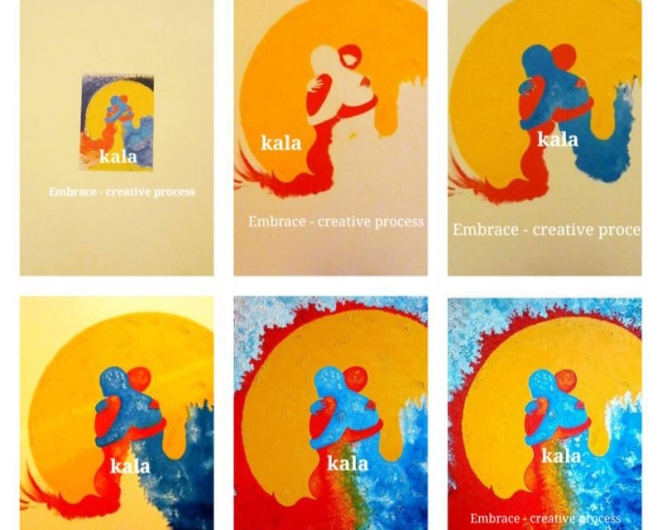
Karolina (Kala) Karmaza
If the useful question is how do you define scope before pricing, the answer is: with more discipline than most people want to hear.
Start with the business problem, not the requested deliverable. What is the client actually trying to change? Awareness? Conversion? Positioning? Internal clarity? Sales enablement? Recruitment? A prettier homepage is often just the socially acceptable wrapper around a much messier problem.
Then define the actual work. What is being made? What is being explored? What must the client supply? Who signs off? How many stakeholders are involved? How many rounds are included? What channels, formats, sizes, languages, territories or adaptations are required? What happens if approvals are late? What should be included in a creative quote? More than most people include, frankly.
A proper quote should include deliverables, assumptions, exclusions, rounds of revision, timeline, approval structure, commercial terms, rights or licensing position, and a process for changes. Not because this is thrilling, but because vague scope produces fake certainty, and fake certainty is one of the fastest ways to wreck a margin.
There is a very dull sentence that ought to be tattooed on more creative businesses: every pricing conversation becomes a scoping conversation eventually.
Usually that moment arrives when the client says something like “Could we also…” or “Now that we’ve seen the first round…” or the truly cursed “while we’re here…” The surface issue looks like feedback. The real issue is that the project has changed shape.
This is where creative teams often sabotage themselves by trying to be accommodating in a way that is commercially suicidal. They tell themselves the extra ask is small, that pushing back feels awkward, that the relationship matters, that they can absorb it. It rarely comes out in the wash. It comes out in write-offs, resentment and the lovely late-project sensation of realising you are paying to do someone else’s additional work.
The cure is not aggression. It is process.
The government’s change-control guidance is extremely sensible here: changes should be captured, assessed for impact, approved and documented before implementation. Public-sector language may not be sexy, but it does understand one timeless truth: uncontrolled change creates overruns and budget problems.
For creative businesses, the equivalent is straightforward. Any out-of-scope request gets written down. The impact on fee, timeline and dependencies gets assessed. The client approves it. Then the work starts.
That process makes relationships better, not worse. It removes ambiguity. It prevents the little theatre in which everybody acts as though they thought something was included when nobody actually priced it. And it turns awkward money conversations into operational ones, which is usually an improvement.
A good scope, then, is not just a list of deliverables. It is a border. It tells both sides where the project begins, what it contains, what assumptions keep the price true, and what happens if reality shifts.
Without that, the quote is just decorative.
The Main Pricing Models for Creative Services
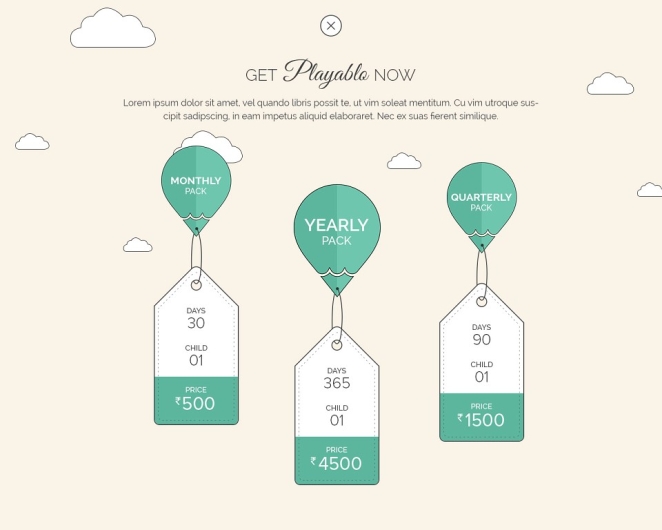
Think Design Collaborative
One of the most useful questions in this area is what is the best pricing model for creative services. The irritating but correct answer is that there is no single best model. There is only the model that best matches the shape of the work.
Time and materials can work beautifully when the project is genuinely exploratory and the variables are still moving. Discovery phases, research-heavy strategy work, iterative experiments and volatile scopes are often better served by a model that admits uncertainty rather than pretending the whole thing can be boxed into one neat number before anybody knows what they are looking at.
So, should designers charge hourly or per project? Sometimes hourly, sometimes per project, sometimes neither. Hourly pricing can be healthy when the route is unclear and active exploration is part of the job. But why can hourly pricing hurt creative work? Because it can reduce strategic thinking to a stopwatch, make efficiency feel commercially self-defeating, and encourage clients to compare visible hours rather than invisible judgment.
Project fees work best where deliverables are well defined, outputs are stable and the shape of the work is genuinely known. The catch is obvious: fixed fee without tight scope is just optimism in a blazer.
Retainers are useful when the real thing being bought is not a single output but ongoing access, continuity and capacity. They make sense for embedded support, recurring content systems, long-term brand stewardship or partnerships where the work keeps evolving but the relationship is durable. They go wrong when clients interpret “retainer” as “all-you-can-eat.”
Licensing and usage-based structures become especially relevant where the value of the work sits partly in how widely or how long it will be used. Too many creative teams leave money on the table here by rolling broad rights into the original fee with the energy of somebody throwing in chips because they are too embarrassed to charge for sauce.
The IPA’s guidance has long acknowledged that there is no single grown-up way to price agency work. Its menu of models includes retainers, project fees, time-based fees, consultancy fees, licensing, output-based arrangements and payment-by-results structures. The point is not to pick the fashionable one. It is to match the model to the work.
A useful way to think about it is this: where outputs are clear but the route is a bit messy, fixed fee with tight assumptions may work. Where the route is unclear and the work is still being discovered, time-based pricing is often healthier. Where the client wants continuity, access and responsiveness, a retainer earns its keep. Where the business impact is significant and measurable, value-based elements start becoming realistic.
The mistake is reaching for one model out of habit and then acting surprised when it punishes you.
How to Price Creative Work Based on Value

Joana Pereira
This is where the conversation gets more interesting, and more uncomfortable. Because once people ask what is value based pricing in design, they are really asking whether creative work should be priced according to effort alone or according to what it changes.
The answer, inconveniently for anyone still clutching an hourly spreadsheet like a comfort blanket, is that value matters.
If the work has the potential to unlock serious commercial upside, reduce risk, create consistency across a business, improve conversion, strengthen brand recall, or help a company get chosen more often, then pricing it like commodity production is not humble. It is inaccurate.
That does not mean every designer should swagger into every client conversation pretending to be a management consultant with a messiah complex. Costs still matter. Capacity still matters. Salaries, overheads and operating reality do not vanish because somebody says “strategic.” But effort is only one layer of the value stack. There is also responsibility, originality, leverage, speed, usage, expertise, decision quality and risk absorbed.
Value-based pricing becomes more viable when the work is high-leverage, the commercial upside is meaningful, and both sides have some shared understanding of what success looks like. That might be brand repositioning work that affects future revenue, campaign architecture that informs multiple channels, or a system-level design piece that saves the client repeated spend later.
At that point, the right question is not only “How long will this take?” but also “What is the consequence of getting it right?”
This is where creative services pricing needs to mature. Clients are not merely buying hours. They are buying judgment. They are buying a clearer answer, a better decision, a sharper position, a more persuasive story, a cleaner system, or a more effective route to market.
AI only sharpens that point. Yes, AI can help with estimating. It can turn sloppy briefs into clearer work breakdowns, surface missing inputs and suggest likely dependencies. But it does not remove the need for human judgment, context or accountability.
And organisations still carry the responsibility when they use these tools. The UK ICO states that using third-party AI systems does not remove a business’s obligations around data protection and governance. NIST’s AI Risk Management Framework similarly treats generative AI as something that requires structured oversight rather than blind enthusiasm.
So when a client asks whether AI should make the work cheaper, the answer is more nuanced than either panic or denial. Automation may reduce some production friction. It does not remove responsibility, taste, originality, rights management, stakeholder handling, brand judgment or commercial risk.
The most useful internal rule is probably the least glamorous one: AI can draft, humans approve, contracts protect.
That is not anti-technology. It is just anti-nonsense.
Rights matter here too. The UK Intellectual Property Office makes clear that the creator is usually the first owner of copyright, unless something different is agreed in writing. Which means usage, term, territory and exclusivity are not admin details floating at the bottom of the quote. They are part of the commercial substance.
So if broader rights are being granted, the price should move. If exclusivity closes off future earning opportunities, the price should move. If the client wants a perpetual global buyout, that is not a tidy little footnote. That is a significantly larger commercial grant.
A practical pricing system, then, looks less like guesswork and more like operating discipline.
First, diagnose the project before pricing it. What is the business problem? What is actually being delivered? Which parts are exploratory and which are fixed? What assumptions keep the fee true? What is definitely not included?
Second, choose the model that fits the work rather than the model you happen to use most often. Time-based where uncertainty is real. Project fees where outputs are genuinely defined. Retainers where continuity is the product. Value-based elements where leverage is meaningful.
Third, build internal pricing logic that covers costs, capacity and profit, but do not stop there. Your outward-facing price should also reflect risk, rights, responsibility and potential upside.
Fourth, formalise boundaries before they are tested. Put revision limits in writing. Name approvers. Set turnaround expectations. Define the change process. Make it obvious what happens when the project shape shifts.
Finally, measure whether the system works. Look at gross margin by project. Look at estimate accuracy. Look at write-offs, scope changes, revision overruns and effective day rate. If none of that is being tracked, you are not really doing pricing. You are just sending numbers into the world and hoping they come back with dignity attached.
The point of all this is not to turn creative businesses into joyless spreadsheet monasteries. It is to stop good work being commercially sabotaged by vagueness, under-scoping and the ancient habit of pretending that being easy to work with means absorbing unpriced chaos with a smile.
Creative work is not random. What is often random is the way it gets bought.
That is why how to price creative work matters so much. It is how studios, agencies and freelancers stop treating every quote like a one-off act of intuition and start treating pricing as part of the craft of running a sustainable business. It is how creative project pricing, creative services pricing and creative work pricing become clearer, more defensible and far less dependent on panic disguised as instinct. Done properly, it gives you a system that protects value, margin and sanity at the same time.