
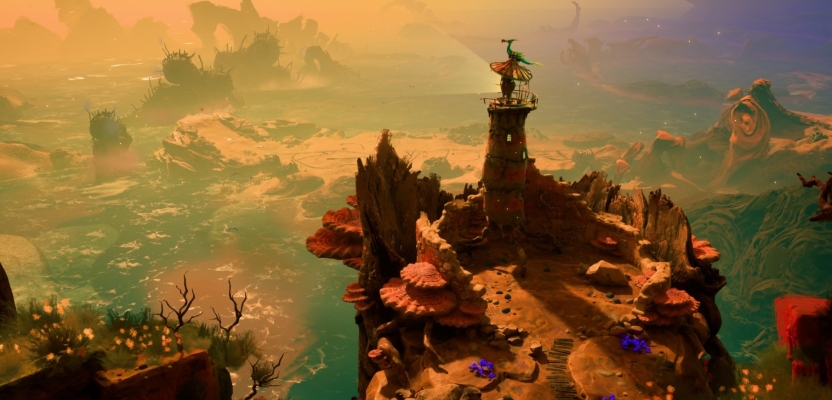

There’s a section roughly a third of the way through Double Fine Productions’ extraordinary new adventure game Keeper where the protagonist (the titular anthropomorphic lighthouse) is separated from his chipper avian friend and cast into a literal graveyard of lighthouse corpses. It’s a softly harrowing part of an otherwise heartwarming experience that quite accurately reflects (pun very much intended) how I’m feeling myself right now. And I really needed it.
This isn’t a magazine about me, so I won’t waffle on about my own personal physical and mental health problems. But I can say that it’s this section of the game (and the period of euphoria immediately after it) that cemented my opinion that this was more than just a game.
It’s a feeling I had earlier this year when playing through the more ambitious Clair Obscur: Expedition 33 and the defiantly odd Death Stranding 2. It’s one that first entered my head 20 years ago when I played Shadow of the Colossus. Games can be more than just fun distractions. Indeed, in the right hands they can feel just as powerful and transformative as any novel, film or illustration.
It’s art, innit.
Games As Art
Film critic Roger Ebert famously once famously declared that no gamer alive would “survive long enough to experience the medium as an art form”. Back then, many in the mainstream still saw video games as adolescent power fantasies or simple toys.
But creators and players knew better. By the late 2000s, a swell of games emerged that challenged the notion of what games could be, blending gameplay with aesthetic and emotional depth in ways that left players moved.
Below, I’ll be highlighting ten definitive examples of games that prove video games are indeed a legitimate art form – each an experience that moved the medium closer to artistic maturity. (And yes, Keeper is doing its part in 2025, but more on that later.)
Myst (1993)
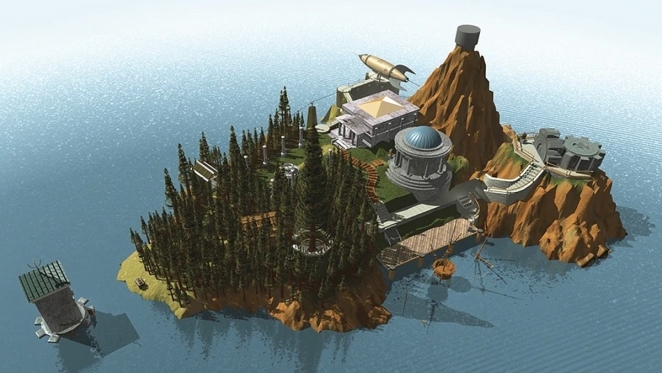
Arguably the first video game to be discussed as legitimate “art” was Myst way back in 1993. This was a point-and-click adventure so atmospheric and visually imaginative that it’s often considered the first true “art game.”
Myst dropped players into a surreal, wordless world of strange machinery and lush landscapes, deliberately evoking a sense of wonder and solitude. The game’s use of immersive visuals and sound to transport the player was ahead of its time, prompting some critics to hail it as more than mere entertainment.
Shadow of the Colossus (2005)
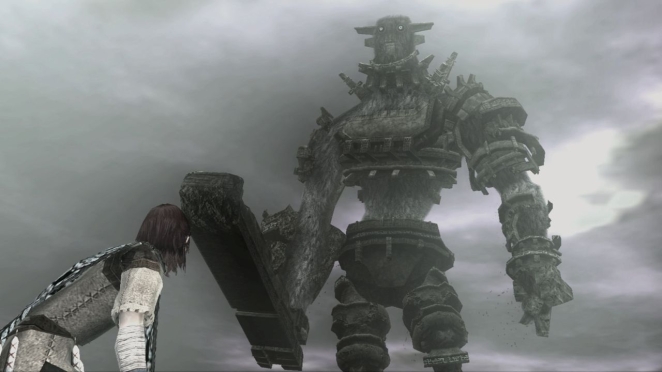
The first time I played Shadow of the Colossus on the PS2, it felt like stepping into an epic painting. As a lone young warrior riding across empty plains to topple gargantuan creatures, I wasn’t just playing a game – I was inhabiting a tragic fable. With minimal dialogue or characters, the game conveyed loss, loneliness, and the moral weight of destroying beautiful giants who aren’t even hostile.
It’s no coincidence this title is often regarded as an important example of “video games as art,” frequently cited for its minimalist landscape design, immersive gameplay, and the emotional weight of its journey. Designed by Fumito Ueda, Shadow of the Colossus trusted players to find meaning in silence and sparse storytelling. In doing so, it proved that even an action game about boss battles could leave a lingering, poetic impression. To this day, scaling a mossy colossus and watching it collapse (knowing my quest might be wrong) stands as one of the most powerful moments I’ve had in any form of entertainment.
Braid (2008)
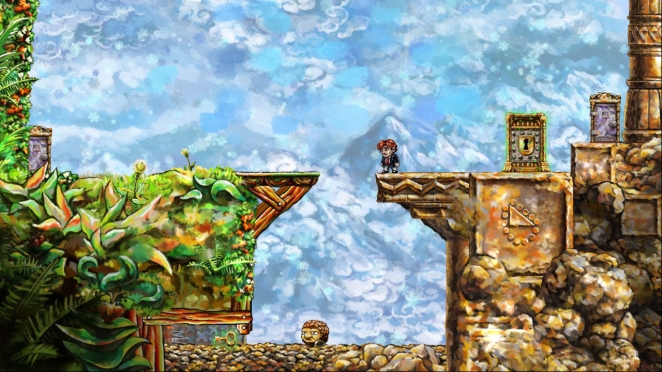
Around the same era, indie game designer Jonathan Blow gave us Braid, a puzzle-platformer that looked superficially like a Mario-esque romp about a guy saving a princess. In reality, it was a mind-bending meditation on regret and obsession, told through time-manipulation mechanics and impressionistic visuals. Each world in Braid introduced a new way to play with time – rewinding mistakes, slowing down reality – all the while peeling back layers of the story. I recall piecing together text snippets between levels that hinted at something deeper, something darker (a twist I won’t spoil here). By the end, the game forced me to re-evaluate everything I had done in a way few novels or films ever have.
Braid is often credited with elevating indie games to an artful new height. It wore its artistic influences on its sleeve: painterly background art, a somber classical soundtrack, and themes that invited interpretation. This was one of the first games that made me stop and ponder the meaning of what I’d just played. It felt akin to finishing a particularly poignant short story. In hindsight, Braid was a harbinger of the “games as art” wave – proof that a small downloadable title could deliver an emotional and intellectual punch far beyond its size. It’s no wonder that after Braid (and its contemporary Limbo), the floodgates opened for experimental indie games in the 2010s.
Limbo (2010)
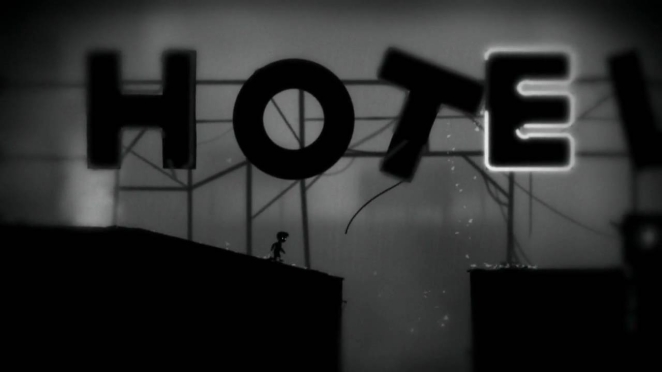
Some art moves you with grand spectacle; Limbo did it with shadows and silence. This indie puzzle-platformer by Playdead dropped me into a monochrome nightmare as a boy searching for his sister in a world of silhouette monsters and deadly traps. There was no dialogue, no exposition, just eerie sound design and stark visuals reminiscent of German Expressionist films. I remember the chill that ran down my spine the first time a giant spider’s leg silently emerged from the blackness. It was terrifying, yes, but also strangely beautiful in its simplicity.
Playing it felt like being inside an animated painting – one that used light and shadow to evoke childhood fears and the fragility of life. The puzzles were clever, but it was the emotional impact that stayed with me. When I finally reached the game’s ambiguous ending, I was left with more questions than answers – the hallmark of thought-provoking art. Limbo proved that even the simplest 2D game, rendered in shades of grey, can deliver an experience as artistically rich as a silent short film. It’s “artsy and stuff,” as one review put it, and I mean that in the best possible way.
Journey (2012)
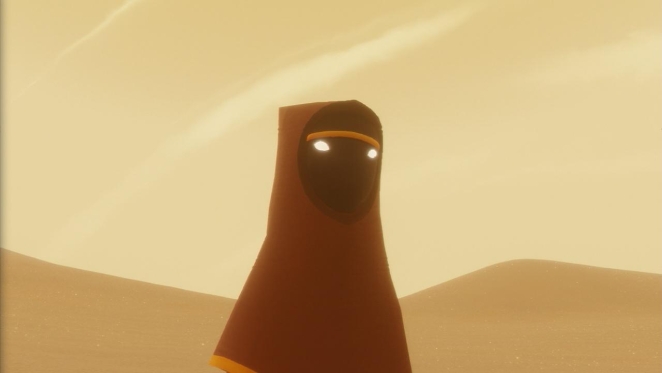
If one game convinced even non-gamers that video games could be high art, it was Journey. I’ll never forget my first playthrough: guiding a robed figure across golden deserts and snow-capped peaks, on a wordless pilgrimage toward a mountain’s light. The music swelled, the sun set, and at one point I found myself sliding down a dune as the sand glittered like gold dust. It was breathtaking. But the real magic was encountering another traveler – a stranger controlled by another player somewhere in the world – and wordlessly cooperating, singing in chirpy musical chimes to each other.
In one roughly 90-minute sitting, Journey managed to make me feel profoundly connected to another human being without a single word exchanged. By the time we trudged through the icy climb and “died” in the snow, only to be reborn in a burst of light, I had a lump in my throat. A video game did that, in under two hours. Creative director Jenova Chen conceived Journey as an explicit rejection of violent, goal-driven conventions – an interactive poem, essentially. The result was a game that literally made people cry and contemplate themes of life, death, and companionship. It’s no exaggeration to call Journey a true work of art.
Return of the Obra Dinn (2018)
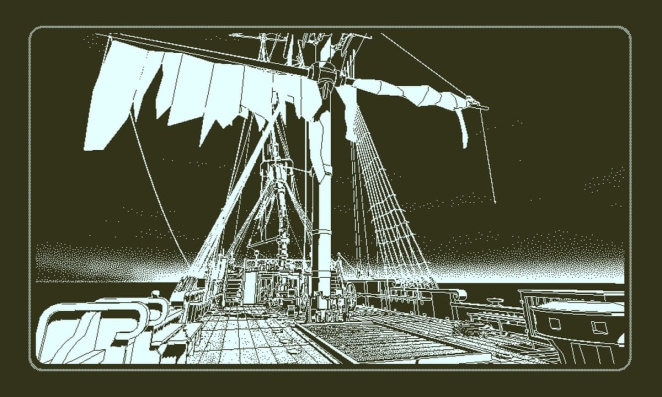
On the surface, Return of the Obra Dinn shouldn’t have worked. It’s an indie detective game with a deliberately old-fashioned 1-bit black-and-white art style (think early Macintosh graphics). There’s no action, no combat – you play as an insurance inspector investigating an abandoned 19th-century ship by magically revisiting the moment of each crew member’s death. Sounds dry, right? And yet, Obra Dinn utterly captivated me with its intricate, deduction-driven narrative and its striking visual presentation.
Obra Dinn is a one-of-a-kind aesthetic and narrative experience – essentially an interactive whodunit novel that looks like an old woodcut illustration come to life. For me, finishing Return of the Obra Dinn felt like finishing a great novel – I had that satisfied, contemplative melancholy that comes after a superb story ends. It’s the kind of experience that proves games can engage the mind and imagination as deeply as any art form, inviting analysis, interpretation, and admiration for its craftsmanship. Lucas Pope, the creator, essentially gave us a masterpiece that straddles game design and fine art – all without using more than two colors on screen.
Disco Elysium (2019)
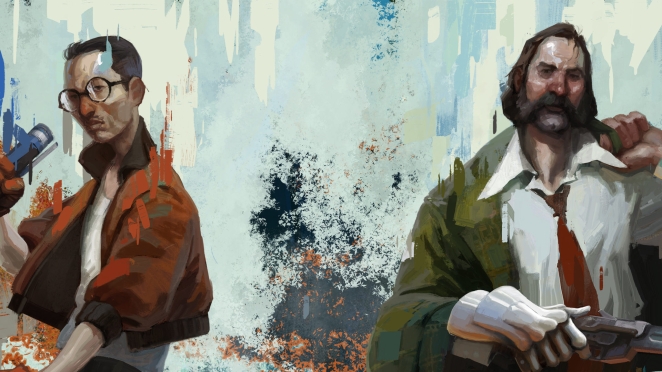
Never have I encountered writing in a game as astonishingly rich and incisive as in Disco Elysium. Calling Disco Elysium a “game” almost feels reductive, it’s more like inhabiting a novel. A drunk, down-and-out detective wakes up with amnesia and a case to solve in a politically charged, crumbling city. From that setup spins out an epic amount of dialogue and prose (the script is literally over a million words long), all delivered through a unique system where different parts of your psyche vie for attention.
It’s no surprise the game swept narrative awards (BAFTAs, Game Awards, you name it) but for me personally, Disco Elysium was art in the way a great interactive theater piece might be. I performed my detective with the choices I made, and the game responded with some of the best writing I’ve seen in any medium this decade. By the end, as I pieced together the final clues of the murder and confronted the bittersweet truth of my own character, I was genuinely moved. It felt like I had lived a life (a messy, tragic, yet oddly beautiful life) within that game. If that isn’t the hallmark of art, what is?
Death Stranding (2019)
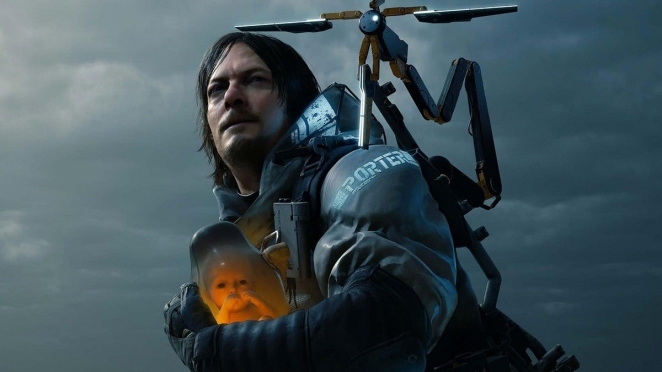
Leave it to Hideo Kojima, one of gaming’s true auteurs, to create perhaps the strangest big-budget game I’ve ever played. Death Stranding (and its 2024 sequel Death Stranding 2, which I eagerly dove into this year) is equal parts breathtaking, baffling, and bold. You play a courier in a post-apocalyptic landscape version of the United States, delivering packages and connecting isolated cities, all while evading ghostly BTs and soothing a BB (a baby in a jar) that lets you sense the dead. Oh, and your tears and rain make things age rapidly. It’s weird, folks. But beneath the weirdness is a deeply heartfelt theme about loneliness and connection.
Not everyone loves the gameplay (some find it slow or frustrating), but I adore that Kojima made a game explicitly about the value of simply helping others. Playing Death Stranding, I often thought about how unusual it was for a high-profile title to eschew constant action in favor of solitude, scenery, and introspection. In one particularly memorable sequence, I spent a solid hour carefully carrying a particularly important cargo, step by step, over rough terrain, because it meant something to me that I deliver it safely. It was Zen-like and stressful all at once – and when I finally made it, I felt a wave of relief and accomplishment that was oddly emotional. The game had, in its own idiosyncratic way, taught me the value of perseverance and empathy. Sure, it also had me fight tar monsters and endure Kojima’s wild sci-fi plot (complete with melodramatic monologues). But it’s the quiet, human moments I cherished.
Clair Obscur: Expedition 33 (2025)
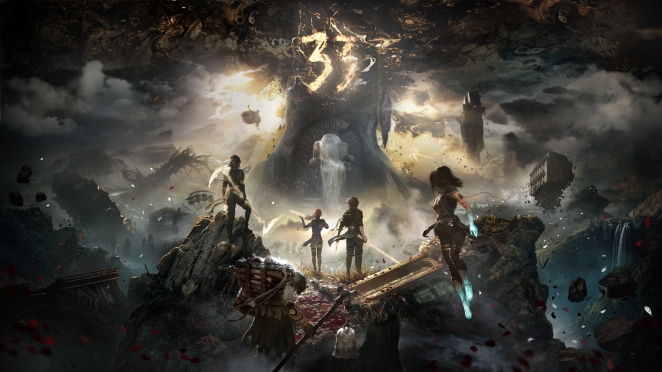
I’d forgive you if you haven’t heard of Clair Obscur: Expedition 33 – it just came out in 2025, and I’ll admit I only picked it up because of rave whispers in the gaming community. I’m so glad I did. This French-developed RPG is, in a word, ground-breaking. Imagine a turn-based JRPG-style game that looks like a dark fantasy oil painting and plays like a mix of classic Final Fantasy and something entirely its own. The setting is Belle Époque meets eldritch horror: antique cities and zeppelins, but also a mysterious being called the Paintress who “erases” people from existence each year. It’s weird, it’s bleak, and it’s absolutely gorgeous to behold.
Clair Obscur is an artistic feast. It uses a muted color palette punctuated by surreal, dreamlike flourishes – fitting for a game literally named after light-and-dark. The creature designs and environments often made me pause just to admire the artwork (and then hit the screenshot button). The whole experience felt like playing through a dark fantasy graphic novel. It’s no surprise the game launched to universal acclaim, with players and critics praising its high-fidelity art direction and storytelling ambition. For me, this game hammered home that the spirit of innovation and artistic risk-taking in games is alive and well in 2025. Indie studios like Sandfall Interactive (the team behind Clair Obscur) are carrying the torch forward, creating interactive works that stand toe-to-toe with any painting or novel in terms of creative expression.
Keeper (2025)
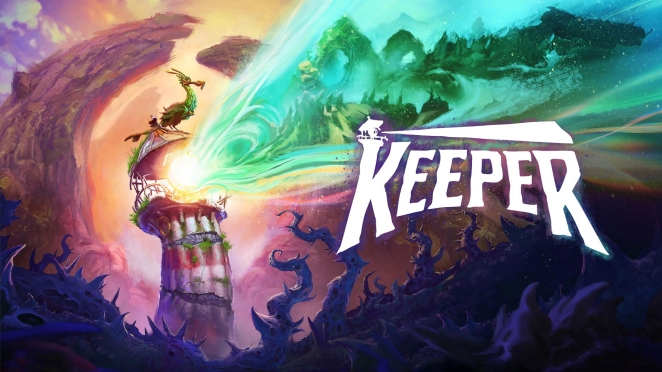
And that brings us full circle to Keeper, the game that saved my Sunday (and inspired this piece). In many ways, Keeper ties together everything I love about the games above. It’s visually inventive, emotionally resonant, and unafraid to be a bit strange. From the moment I took control of that long-forgotten lighthouse – its masonry legs clunking as it walked across a surreal island – I knew I was in for something special. Here was a game telling a story entirely without words, yet saying so much through its imagery and music. A tale of unlikely companionship between a lighthouse and a little seabird, journeying through realms “beyond understanding”, encountering wonders and perils. It felt like a children’s storybook crossed with a psychedelic art film.
Keeper doesn’t spell out its themes explicitly, but I felt them: isolation, rebirth, finding purpose in a world where you might be the last of your kind. As someone dealing with some heavy stuff in my own life, that sequence of descent into darkness and the triumphant climb out (with a little help from my avian friend) was cathartic. It reminded me of Journey’s emotional arc, and of the quiet storytelling in Limbo. And when Keeper delivered its final moments – a wordless yet deeply touching conclusion – I realized I hadn’t just played an enjoyable adventure. I’d experienced a work of art, one that left me with that warm, reflective afterglow I only get from the best creative works.
Hiring Game Artists and Designers on Creativepool
If this has you feeling all inspired, you might be wondering how to get started or find the right talent. The good news is that the gaming industry’s creative community is more accessible than ever. Platforms like Creativepool are a perfect bridge between inspiration and creation, connecting you with the people who can bring your vision to life.
Whether you’re an independent studio, a recruiter for a game company, or a creative director with a brilliant idea, Creativepool can help you hire talented game designers and artists to make it a reality.
Our site is home to some of the world’s best game designers, developers, and gaming artists – you can follow their work, connect with them, and hire them, all in one place. Start by searching Creativepool’s community for the role you need (for example, “Gaming Artists” or “Concept Artist”).
You’ll be able to browse portfolios, see past projects, and read about each creative’s specialties. If someone’s style or experience speaks to you, you can reach out and start a conversation.
For studios or individuals looking to post jobs, Creativepool offers a streamlined way to get your opportunity in front of thousands of creative professionals. It’s as simple as creating a profile and listing your job with the details – the platform’s community spans from established industry veterans to fresh new “gems” ready to make their mark.
By posting a job on Creativepool, you’ll tap into a network of enthusiastic candidates who are actively looking for roles in game design, art, programming, and more. One of the beautiful things about Creativepool’s approach is that it blurs the line between a professional network and a creative community. It’s not just about hiring – it’s about connecting. You might discover an artist whose style ignites a new idea, or a game designer whose past project gives you insight into a gameplay mechanic you hadn’t considered.
So, if you’ve been inspired by games like Keeper, Journey, or Shadow of the Colossus – if you believe in the power of games as art and want to contribute to that legacy – consider reaching out through platforms like Creativepool. You could find the perfect concept artist to sketch your dreamscapes, the narrative designer to give your story emotional depth, or the programmer to build your innovative mechanics.
By hiring a games designer through a community that values creativity, you’re not just filling a position; you’re collaborating in the truest sense, much like those Journey companions helping each other along to a shared goal.
Paul Liam Kerr October 27th, 2025, in the afternoon
Outer Wilds would fit really nicely on this list. It might be the most profound game I've had the pleasure of playing... Look forward to checking some of these out!