
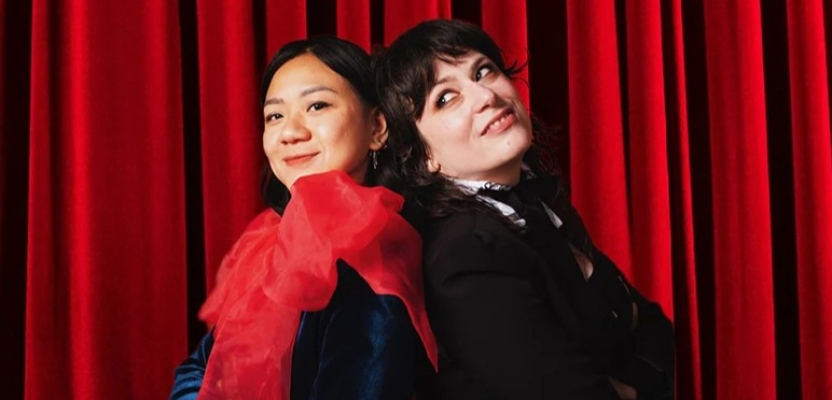

At a time when DEI initiatives are under threat and progress seems to be stalling, Mikaela Dragon and Ruby Norman-Curran are stepping into their new roles as the newly appointed Co-Presidents of SheSays London—a non-profit organization at the forefront of championing gender equality in the creative industries.
Mikaela, a purpose-driven Creative and Design Director with a track record that includes work with global brands like Amazon and The United Nations, and Ruby, an award-winning writer, voiceover artist, and former Creative Director recognized among the Top 50 Influential Neurodivergent Women of the Year, bring a wealth of experience and passion to their leadership. Their appointments mark a decisive stand: in a landscape where companies are pulling back on diversity efforts, Mikaela and Ruby are here to hold ground and hold space for women and non‑binary individuals.
Join us as we delve into their vision for turning challenges into opportunities, reinvigorating the creative community with bold initiatives, and protecting the hard-won gains in gender equity. Please let me know if you’d like to further discuss with Mikaela or Ruby how “injustice has always inspired defiance” in their mission to create lasting progress in the industry.
Ruby mentioned that “injustice has always inspired defiance.” How does SheSays channel this defiance into actionable progress for women and non-binary people in the creative industry?
Injustice has always inspired defiance, but defiance alone isn’t enough. Every International Women’s Day organisations across the UK (including us, this certainly isn’t a criticism) hold panels chock full of inspiring female speakers. All the right things are said… but the next day we go back to regular non-women’s-day and nothing seems to change.
I wonder sometimes if we say these things to the right people? Or just shouting into an echo chamber? It’s why this year at SheSays we are making sure there is a clearly defined role for allies too; inviting them to attend more events, and including clear ways for them to show up in the fight for gender equality, without de-centring women and non-binary people. Change isn’t easy and it requires us all to be pushing in the same direction.
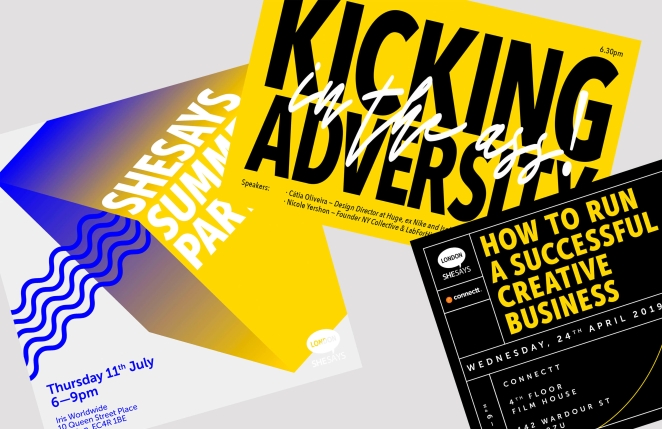
It's easy to feel disheartened when looking at the world right now. It’s overwhelming. And that’s exactly where they want us; feeling overwhelmed, because paralysed, overwhelmed humans don’t enact change. They don’t know where to start, and it all seems pointless anyway. This is why we will be trying to incorporate and celebrate small, easily achievable actions into our campaigns for 2025.
We know we are more powerful when united and that love is just as powerful as hate. I encourage people to look at the way we are being force fed division as proof that someone is scared of what we might achieve with love and unity.
With DEI initiatives being rolled back industry-wide, how do you plan to “hold ground” without compromising the urgency of your mission?
We’re not compromising urgency—we’re channelling it into smarter, more sustainable action. Holding ground means making sure the work being done doesn’t just survive, but strengthens and evolves.
- Equipping individuals to drive change from within—if leadership won’t prioritise DEI, we’ll make sure women, non-binary people, and allies have the skills, strategies, and tools to embed equity at every level of the industry.
- Strengthening our community—this year, we will invest more time and resources in regular IRL meetups and workshops. Our first event at Snap Inc. was a perfect example of our event plan for the year: a practical, solution-focused workshop with a lot of knowledge sharing and beaming with positive energy and laughter. (I got such a good buzz from it for days)
- Expanding allyship—the burden of progress can’t rest solely on women and non-binary folks. We’re actively engaging allies, giving them tangible ways to step up, hold space, and share the load.
- Celebrating every win, big or small—small acts of resistance add up to big change, and we’re making sure they don’t go unnoticed.
Fighting for positive change is exhausting, and it will get harder with the rise of Trump and his ilk, but it is much easier to fight back when you are part of a supportive community. SheSays now boasts more than 90,000 members worldwide, with branches in 55 cities and counting. In times like these, with DEI initiatives under immediate threat, we recognise the urgency of our mission; we can’t afford to take a break right now, but when we are part of a community we can hold space for each other and support each other, so we all have the energy to keep on fighting back against oppression.
Mikaela, you said this year is about being “cheerleaders of defiance.” What does defiance look like in practice for SheSays in 2025?
Defiance in 2025 isn’t just about pushing back restlessly to the point of exhaustion —it’s about not letting go of our progress, moving at our own pace and pushing forward with intention. This year, we’re making every act of resistance louder, more strategic, and more collective.
- Diversify campaign effort —we will split our focus between boardrooms and individuals, helping our members take meaningful action where they have influence. We can’t rely on one group of the workforce to make the changes and hope for the best (we’ve seen how that has turned out so far!). Sustainable changes must come from top down and bottom up, inside out.
- It’s sometimes hard to feel like you are making progress so we will celebrate every act of defiance, no matter how seemingly small, from calling out bias to advocating for underrepresented voices. Pushing for change can be thankless, but we can be a relentless cheerleader for our community.
- Pacing ourselves for the long fight—defiance isn’t just about burning bright; it’s about sustaining momentum.
- This isn’t about fighting harder—it’s about fighting smarter, collectively. And in 2025, SheSays is making sure no one fights alone. We will expand our team so that the workload is shared across and each board member has more support than before. We also prioritise cross-function communication to increase transparency. PLEASE JOIN US IF YOU ARE READING THIS AND FANCY TAKING PART IN OUR FIGHT FOR GENDER EQUALITY !
- More cross-network, partnership collaboration to encourage knowledge sharing across different communities, showcasing new perspectives and talents, and fostering a sense of unity. I’ve met some absolutely incredible talents from different communities and industries and I’d love to introduce them to our Shesays community (we have a content series coming up, but my lips are sealed for now, you will have to wait and see).
Mikaela, you emphasize intersectional gender equity. How can the creative industry address overlapping barriers like race, disability, or neurodivergence alongside gender inequality?
Speaking from my own experience as a woman of colour with ADHD and broad autism phenotype, growing up in Vietnam and then moving to the UK on my own, I know firsthand how these overlapping identities shape our lived experiences. Each of these facets makes me the individual I am today.
I understand the importance of representation and having a supportive network—and that’s exactly what SheSays has been to me. For the past eight years, SheSays has been a family: a community of brilliant role models that has supported me as I’ve grown, both personally and professionally. That’s why Ruby and I are deeply invested in strengthening our community. In times like these, when progress feels under threat, knowing you are not alone is what keeps you going.
If the creative industry is serious about change, it must move beyond surface-level diversity efforts and tackle these overlapping barriers holistically. Here’s how:
- Build equity into leadership & decision-making—It’s not enough to hire diverse talent; we need diverse decision-makers shaping policies, creative output, and workplace culture. At SheSays London, we’ve introduced a new rule: “Nothing about us without us” to ensure that underrepresented voices are truly amplified and that subject matter experts are actively involved in decisions that affect them.
- Design for accessibility & neuro inclusion—From recruitment to workplace culture, we must ensure that hiring processes, meetings, and creative environments are designed for all types of brains and bodies. When we launched our “Believe their Pain” campaign, we created a toolkit with actions that companies of different sizes can take to support their team members with hidden health challenges and disabilities.
- Compensate emotional labour—Too often, marginalised groups are expected to educate others on systemic inequities for free. A classic example is International Women’s Day, so many female talents have been asked to speak for free, from small gatherings to big ticketed events. How is that empowering and celebrating women if you don’t pay them fairly? We are looking into compensating our speakers.
- Move beyond performative allyship— Just changing the companies’ logos to rainbow during Pride won’t cut it anymore. We need to see how brands and agencies advocate for pay equity, create safe reporting structures, actively listen to their employees and implement policies that truly protect marginalised employees.
- Offer equal maternity leave. - I can’t see why it’s not a given in the workplace to start with.
- Foster meaningful, healthy, fair working relationships with freelancers. Agencies rely on freelancers daily yet when it comes to invoice payouts, suddenly there’s a delay?! People’s lives depend on these bills to be paid as agreed. If you expect people to turn up when you need them, turn up when it’s your turn. Simple as that.
- Clarity on salary and career progression—who has time to guess what the “competitive salary” really means?
At SheSays, we believe intersectional gender equity isn’t a box to tick—it’s the foundation of a truly progressive industry. Now is the time to embed these principles into the way we hire, create, lead, and collaborate.
Ruby, as a neurodivergent leader recognized by Women Beyond the Box, how does SheSays ensure its advocacy includes underrepresented voices within the gender equity movement?
Nothing exists in a vacuum and oppression is no different; it’s why SheSays is proudly intersectional, and why we employ a ‘nothing about us without us’ policy on our campaigns - nothing goes out without people from the affected group being involved at some level, so we avoid the trap of speaking ‘for’ people. Whilst there’s always room for improvement, we are lucky that our board is pretty diverse, and we often use our community to help guide us on which topics they would like to see tackled to ensure different voices are heard and supported.
I also think it’s important for people to see themselves reflected in leadership, especially now. SheSays has selected a queer, neurodivergent woman, and a neurodivergent woman of colour for the role of joint President; we have first hand experience of the way intersectionality plays into discrimination, and how this affects career progression, and we hope that by bringing some of our experiences to this role we can make the workplace a more equitable space for everyone.
And by the way, it never feels like the right time to shout I’M QUEER AND NEURODIVERGENT AND A WOMAN. It feels awkward, but sometimes you have to ride out that awkwardness for a good cause …even if your mum is worried that putting it in bold will scare potential employers, and you have to tell her “Good! Maybe it will save everyone time!” because you don’t want to work for someone that would be put off by that.
SheSays now has 90,000+ members globally. How will you leverage this network to combat the erosion of DEI efforts in creative sectors?
Whilst all the branches work individually on their own projects and events, we also work together. The global heads all met online in January to learn from each other’s successes and failures. It’s really helpful to see what is and is not working in different places, to inform an even stronger calendar of events and campaigns going forward.
Even in the simplest terms we are stronger united. 90,000 people fighting for one thing is a lot harder to ignore than one, so we came up with 2025’s mission statement ‘Holding space and holding ground’ together, so all across the globe we are all united in one clear goal.
You’re collaborating with students from UAL’s ‘Creative Shift’ program. Why is engaging the next generation critical to sustaining progress?
A 2023 study showed a gendered, ideological divide in 18-30 year olds, with men becoming more conservative as women become more liberal. It’s clear gender politics is not going away, and we need to equip this generation with the tools they will need to engage with this in a meaningful and empowered way. We’re still pretty far away from a genuinely equitable workplace and frankly we need the next generation to continue the fight for it. Apathy is not an option.
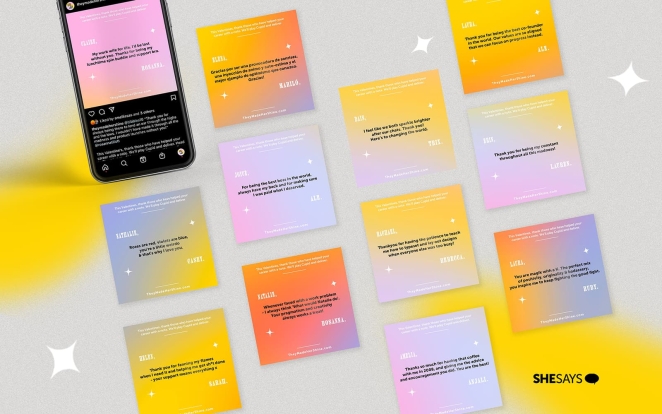
We love working with UAL’s Creative Shift program because the students always open our eyes to new ways of seeing; they’re not tied to how an idea ‘should’ be, and with their broad range of backgrounds and experiences they can’t help but look at an issue in a different way, and that is the beauty of diversity. Someone can answer a question in a way you would never have thought of. And maybe you then show them how to execute it in a way they would not have thought of. It’s very symbiotic.
Ruby mentioned “removing barriers” for allies to join the fight. How can men and institutional leaders actively contribute to SheSays’ mission?
A diverse workplace benefits everyone, including men, but we know that men often feel excluded from the conversation. No one will be surprised to hear that I have attended a lot of DEI events over the last decade of my career, but they might be surprised that I could count the number of men I saw at them on my fingers.
At best it seems men don’t want to take up space from women and non-binary folks, or they’re scared to say the wrong thing, and these are reasonable concerns, which is why I think as SheSays we can offer some helpful and tangible ways for male allies to get involved that still centre women and non-binary people.
The best thing men and institutional leaders can do to actively contribute is take responsibility for their own role, and realise that being neutral isn’t a neutral position. It’s not enough to not be sexist, you have to be actively anti-sexist. It doesn’t have to be big and showy - all acts of defiance are welcome - but we need you to get involved. In the next year SheSays will be running some ‘bring-an-ally’ events - if a female colleague or friend asks you if you want to go, push past those doubts and join us. We want to empower you to empower all of us.
SheSays was founded 18 years ago to fight sexism. How has the nature of that fight evolved, and what makes today’s challenges uniquely daunting?
Eighteen years ago, the fight against sexism was about breaking into rooms where decisions were made, calling out pay gaps, and proving that women and non-binary people deserved a seat at the table. Today, more of us are in those rooms (not enough, if you ask me—but hey, progress!). The barriers, however, have evolved.
- Sexism is more insidious. Biases now show up in hiring, promotions, and leadership opportunities, disproportionately affecting marginalised voices.
- DEI efforts are under attack. Just as we started seeing real progress—brands championing LGBTQ+ talent, accessibility in product design, female artists topping the charts, America Ferrera’s iconic Barbie speech making it to the big screen, and holding space meme thriving on TikTok—reality hit hard. Companies are now “sunsetting” DEI initiatives, enforcing rigid return-to-office policies, and backtracking on inclusivity. It makes you wonder: was it all just a show?
- Burnout is real. The burden of advocacy still falls on those most affected, with little systemic support.
- AI & automation pose new risks. Trained on biased data, they reinforce exclusion in hiring, design, and storytelling.
At the same time, the way we communicate and consume information has drastically changed:
- The creative industry holds unprecedented power to shape narratives—but brands must move beyond performative allyship to real action.
- Fake news and algorithm-driven content fuel misinformation, confusion, fear and disconnection, making progress harder to sustain.
- The workplace is now intergenerational. Gen Z, Millennials, and Boomers work side by side, constantly trying to connect and communicate after Covid reshaped how we work.
Despite these challenges, our fight is far from over. The fight has changed, but so have we. And we’re just getting started. Watch this space.
Amy Dick’s presidency focused on the gender pain gap and leadership diversity. What legacy do you hope to leave as co-presidents?
Each new President builds on the foundations left by the last, and we will honour and build on Amy’s legacy whilst bringing a little of ourselves to the table.
Much as we want to create work that is fun and rebellious (us being both loud, neurodivergent creatives), the most important thing for us is making sure SheSays feels like home for everyone who needs it. If the systems around us won’t change fast enough, we’ll find ways to lift each other up in the meantime.
And yeah, we’re here to shake things up—because being boring has never changed the world.
Mikaela, as a WACL Talent Award winner, how has your own career shaped your approach to advocating for gender equity?
Winning the WACL Talent Award came at a really difficult time in my career—it was a moment of uncertainty, change, and self-doubt. But that’s exactly why it meant so much. It reminded me that sometimes, the smallest vote of confidence can be life-changing. It reinforced why advocacy matters—because having people who see your potential, even when you’re struggling to see it yourself, can make all the difference.
My own career has been anything but linear—I’ve been a copywriter, a designer, an art director, worked agency-side, client-side, and everything in between. That journey taught me that a strong support system isn’t just nice to have, it’s essential.
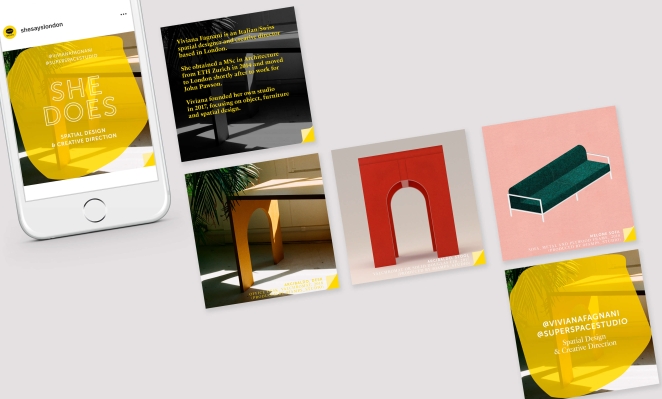
Every step I took, every pivot I made, was made easier because of the mentors, peers, and communities like SheSays, Get Shit Done, Good By Design, Futures, The Other Box, SEA Creative Club, Ad Disableds Chat etc that had my back.
That’s why my approach to gender equity isn’t just about calling for change—it’s about building real pathways for women and non-binary talent to grow, take up space, and lead. It’s about making sure no one feels like they have to navigate this industry alone. If my career has taught me anything, it’s that change happens when we lift as we climb—and I’ll keep doing that every chance I get.
Ruby, you’ve worked at agencies like Wieden + Kennedy and Droga5. How do your creative industry experiences inform SheSays’ rebellious, solutions-driven ethos?
I’ve been lucky enough to work at some disruptive agencies, and worked with some of our industry’s biggest rebels - it’s a different approach entirely. They don’t look at problems to solve, they look at ways to break rules for a purpose. Their eyes light up when they find that little loophole, or the contradiction they can exploit, or that new way of flipping something, or that way to push someone out of their comfort zone. It’s a game to them, it’s fun.
And the best agencies know how to harness that spark of oppositional defiance, how to manage it, package it, and sell it in to a client. I have always found creativity to be a team sport, you need everyone on board from strategy to client to make a brilliant campaign, and I think the team at SheSays has been going from strength to strength so I’m excited to see what comes out this year.
We’re lucky that the SheSays board is full of rebels, so half the job is done for us, but if I’ve learned anything from industry it’s that if you want to make boundary-pushing work, you have to create a safe space for your creatives (and wider team) to push the boundaries. So wish us luck.