

In a world on the brink of an AI revolution, two trailblazers are determined to rewrite the rules. With International Women’s Day setting the stage, Hannah Maude, founder of Fire Up Skills, and Alex Dalman, Managing Partner and Head of Social & Innovation at VCCP, are spearheading an initiative that aims to empower women to lead in the digital age.
In an exclusive interview, they share the vision behind “Women & AI: Future Ready” – an event set for March 13 in London that addresses a staggering 42-percentage point gap in AI skills between men and women. As AI is poised to reshape industries and drive a $15.7 trillion global impact by 2030, Hannah and Alex explain how upskilling is not just an option, but a necessity for ensuring women play a pivotal role in this transformation.
Join me as we explore how their collaboration is turning challenges into opportunities, inspiring a future where diverse expertise powers the evolution of AI across every business function.
Hannah Maude, Founder at Fire Up Skills
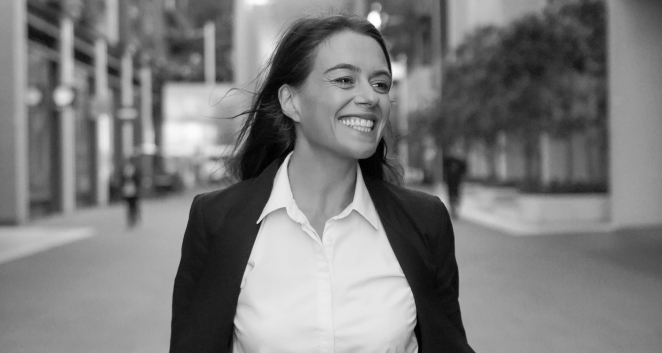
Inception & Vision: What inspired you to launch Fire Up Skills and create the Women & AI: Future Ready event? How does this initiative reflect your vision for closing the AI skills gap among women?
Two years ago on International Women’s Day I read the statistic that 70% of jobs deemed high risk of being lost to automation were held by women. That’s where it began.
I had just spent 2 years working in ecommerce - a role I moved into as the pandemic hit - adapting a traditional organisation to the dramatic shift to online. I then hit 40 and decided to take a sabbatical, and during this time began to upskill in broader technologies - such as AI - that there just was not the time to do in my day-to-day.
How many women aged 40 can take a sabbatical? I don’t have children, most women are doing way too much as it is. So I began events when I got back to Sydney to get my network talking about AI. We had start-ups come and speak to us and we input into the federal government's Responsible AI consultation. These have become bigger quarterly events and my career has shifted into AI education also.
Last July I ran a women & AI event in London and got the best response. The women there were lovely and all asked me when the next one was. So I reached out to some awesome women like Sherifat at Accenture & Alex at VCCP and we got the ball rolling for this all-day event.
My drive is getting the skills to women who we need in the workforce and who need to be working - it is good business sense and the right thing to do. The added benefit is creating a community of women who can support each other through what might end up being a career transition.
Making AI Practical: Your research shows many women find AI training too hypothetical. How are you reshaping these programs to offer tangible, practical applications that empower women to lead AI transformations within their organisations?
I always say the simplest way to start is 1. Get on the tools - but have a purpose so you’re not just using it like Google Search. So for instance, you want to start a side hustle refurbishing classic french furniture and 2. Look at your industry to get a lay of the land.
When I run a workshop or webinar, I take a look across the sector and share what’s going on in AI across the sector. You can see the innovation already happening and it becomes inspirational and tangible. Beauty and Pharma are two sectors I often delve into also to demonstrate what can be done.
We then audit their role or business, this involves the bottlenecks that frustrate them or importantly what are their KPI’s and how can AI help?
I can’t get too excited about people who say how cool AI can summarise my email! But when it comes to how we use AI to innovate our roles and companies, to drive some positive change, now that’s very cool, and I get the feedback constantly that's what women feel too after a session.
Addressing the Skills Gap: With studies highlighting a stark 42-point gap in AI skills between men and women, what concrete steps does Fire Up Skills take to level the playing field, and what outcomes do you foresee emerging from this event?
AI adoption comes first - I want as many women seeing AI as something for them, not for techies or not something they just don’t have time to learn - so whether I run one of my events or one in an organisation, I know every one in attendance will be adopting AI afterwards in some area of their life and work.
Then it’s career coaching. Fire Up Skills is about the career path you need to make during the AI age too. For instance, one of the webinars I run is called ‘the PLAN B’ career and this helps women plot where they might want to transition too and how to get there.
Finally, driving awareness of the opportunity and risk to business leaders. I have looked ahead when many business leaders have not had a chance to see this perspective. It’s like seeing a tsunami coming in and trying to get people off the beach.
I am not just trying to save jobs but I also want to drive business performance - upskilling your people now will add value to the organisation - losing corporate knowledge during job cuts and then hiring in new talent with the in-demand skills makes no sense.
I wrote a report on this earlier in the year: Digital & AI Transformations
Expanding the Role of AI Beyond Tech: In an era where every role is becoming a tech role, how can women leverage their existing business expertise to drive AI innovation, especially in traditionally non-technical areas?
This is where the magic happens! AI is useless without a problem to solve, and being a subject matter expert means you know the frustrations and the opportunities in your domain.
I suggest drilling into your area of expertise and doing the research on how AI can address the specific opportunities you see in your field. This can mean looking at the global market for examples to inspire you, or getting a really clear problem statement and thrashing it out with your technology team or provider. The beauty of AI is that it has democratised technology - ChatGPT, Gemini etc are all free and easy to use.
So to show leadership and learn at the same time, do your own experiments. Research & Development taking too long? Find the AI tools that can help speed up their research time (Notebook LLM as an example) and suggest AI is used in just one part of the workflow. Know there's a performance issue on a certain brand? Use AI as a thought partner to explore the thinking or analyse data (though don’t put data into a public tool!).
This is an age of agency, this kind of initiative shows leadership. And by the way - your personal skills around empathy or communication can really be an advantage at this time too - lean on these as you share your suggestions.
Connecting with International Women’s Day: The event ties in with International Women’s Day themes like ‘March Forward’ and ‘Future Ready’. How do these themes inspire your approach to equipping women with the tools needed for the AI revolution?
I honestly believe we have a unique opportunity to make a dramatic change to women with AI. I want to see women back in the driver's seat of their careers - I worry about burnout and future generations the way things are going. But it won’t happen on its own. We need to look ahead, plan and then make moves. Future Ready is about building the skills to grab at this opportunity, and March Forward means bravely taking steps to lead the future, supporting one another as women do. The two work together perfectly, don’t they?
Future of Upskilling: With predictions that 59% of the workforce will need AI training by 2030, how do you see continuous upskilling transforming careers for women, and what key takeaways do you hope participants gain from the event?
It sounds like hard work but this shift is more of a mindset. One that realises that your unique strengths are paramount, and then keeping on top of the area that you are best suited to is not as intimidating as thinking you need to reskill every year in technology.
Each participant should leave with a long list of ideas they can suggest in their workplace but also a number of directions they can take in the future of work. We are covering many sectors and disciplines in the day from being a solopreneur to working in Data, Education or Ethics. The key takeaway is that they can return to their workplace and show the steps a business can take to begin their AI journey. My hope is whichever step they take, it helps them progress.
Alex Dalman, Managing Partner and Head of Social & Innovation at VCCP
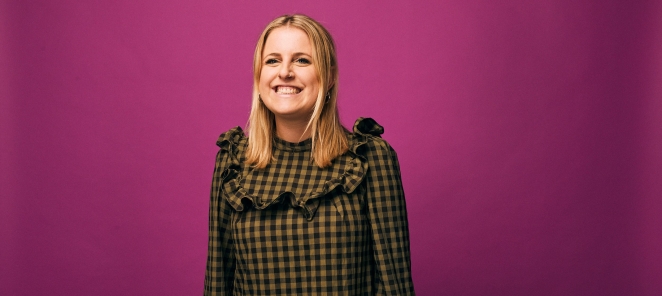
Pioneering AI in Creative Agencies: Can you share the journey behind launching faith, VCCP’s AI creative agency? What were the biggest challenges and breakthroughs in making generative AI accessible for creative campaigns?
2 years on, I never thought I would still be talking about running an AI creative Agency. It is fairly wild to think how far we have come in two years as an industry and the pace of change, but also the stark reality that some of the biggest barriers facing our industry and adoption of the tech still remain - the legalities around some tools, the quality control of the output needed, the costs of actually generating content - those GPUs are pretty pricey!
So 2 years is both a long time since launching, but it also feels like no time at all as the adoption of tools, the technical knowledge needed to use them well and the budgeting of these tools to be used in campaigns is still nowhere near full adoption yet by businesses.
Impact of AI on Creative Innovation: The success of campaigns like O2’s anti-scamming Granny, Daisy is impressive. How do you envision AI transforming creative strategies within the advertising and marketing industries?
That is very kind of you to say, yes the world has really taken to O2’s Daisy in a way that we hadn’t really predicted which was amazing to see. Every type of media picked it up from tech to consumer to meme pages and everything in between, and we think it was because she really captured people’s imagination in just how AI could finally be used for good.
So for future creative strategies using AI, this would be an area to focus on, there is enough doom and gloom out there as it is! Also we think people really warmed to Daisy as she is funny - again we need to bring back more humour done in the right way in advertising even when landing serious messages such as scamming prevention.
Collaboration Across Disciplines: AI is no longer the sole responsibility of IT. How do you foster collaboration between creative and technical teams at VCCP to integrate AI in a way that drives innovative business outcomes?
The best way to drive collaboration is to give equal access to all the tools to all teams so that it is full inclusive, and then it is up to individuals to harness and use them in the right way - the proof is always in the pudding so we encourage everyone to try them out and flex their creative potential with the tools.
Also the future creative will be a technologist too, and the future technologists will be encouraged to think creatively - those core skills and disciplines are coming closer and closer together all the time.
Advice for Women in Non-Tech Roles: What advice would you give to women in traditionally non-technical roles who want to harness AI to create impactful, creative solutions in their fields?
My main advice is you will never know everything there is to know in this space, and neither with the high majority of people out there. Very few people can actually claim they are an expert, and I always try to remind myself that or the whole thing can become too overwhelming.
But what you can do is show willingness to always learn and explore unknown things, and then apply that learning to current challenges and projects.
Driving Parity Through Creativity: In your opinion, how can creative industries serve as a catalyst for achieving gender parity in tech, and what role do upskilling initiatives like Women & AI: Future Ready play in this transformation?
The creative industries have come on leaps and bounds in the last 10 years in terms of gender parity across roles and raising awareness of the Gender Pay Gap, so whilst the current numbers are AI adoption and tech proficiency, are a bit alarming about a new type of gap forming, I have full faith with events like this and organisations all on the course to overcorrect, this gap will be closed quicker than a lot of other industries.
The faith team at VCCP was set up with parity in mind from the start and we continue to encourage equal opportunities across the wider VCCP Group when it comes to working with AI day to day.
Looking Ahead: What future trends in AI do you find most promising for the creative industry, and how should women prepare to seize these opportunities in a rapidly evolving landscape?
We are at peak tools - there are literally 100s and 1000s of them out there, to do just about anything you want - to varying degrees of output of course. Everyone has access to them (if you have a budget for some of them of course!) which means creativity is becoming more and more democratised. But just because everyone now has access, does this mean everything being created is good?
So what we really need to start seeing are the amazing use cases of these tools and combinations of the tools by agencies and brands - it will be the lateral and imaginative thinking, attached to helping solve real world problems, that will be what we hopefully see more of in the near future. At faith we are all about AI for good, and this is what I hope to see much more of in the industry soon.