
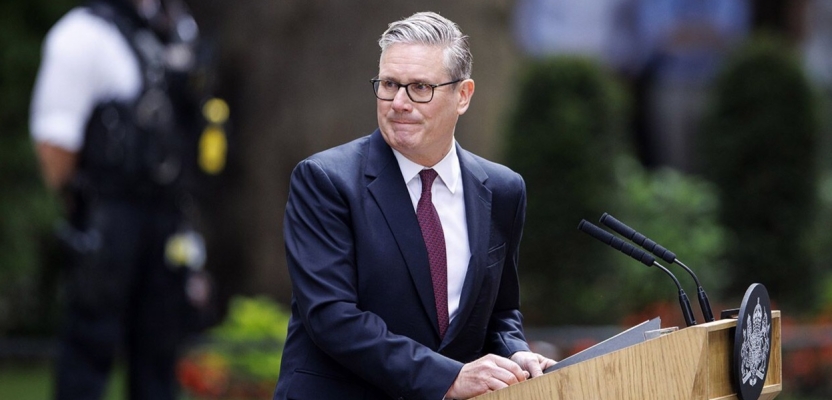

As of the afternoon of 22 June 2026, British politics is once again doing that very British thing of insisting everything is perfectly stable while visibly changing prime minister in real time. Keir Starmer has (finally) announced he’ll step down as prime minister and Labour leader, less than two years after winning a landslide election, while Andy Burnham has been sworn in as MP for Makerfield and is now the frontrunner to replace him.
So, before Westminster has even finished rearranging the nameplates, it’s worth asking what Starmer’s brief government actually meant for the UK’s creative industries, and what a Burnham-shaped future might look like.
Starmer’s creative industries legacy is, in the most Starmer way imaginable, both substantial and oddly difficult to love. It had a plan. It had a sector paper. It had numbers, funding pots, growth targets and a sober sense that creativity isn’t just something nice people do in converted warehouses while wearing interesting trousers.
Under his government, the creative industries were placed inside the UK’s Modern Industrial Strategy as one of the sectors expected to drive long-term growth. That matters. For years, the UK’s creative industries have been treated with a strange mix of national pride and policy neglect. Politicians love standing next to film sets, music venues and shiny cultural exports when they need a bit of soft-power sparkle.
They’ve been rather less consistent about the boring infrastructure that keeps the whole thing alive: skills, finance, rehearsal rooms, regional workspaces, IP protection, production capacity, arts education and actual pathways into paid work.
Starmer’s problem was never only delivery. It was feeling
Starmer, to his credit, did try to correct some of that. The Creative Industries Sector Plan announced a £380 million package aimed at innovation, finance, R&D, skills and regional growth. It also set out an ambition to nearly double business investment in the sector from £17 billion to £31 billion by 2035, while highlighting a sector worth £124 billion a year and employing 2.4 million people across the UK.
There was practical meat on the bone too: a £150 million Creative Places Growth Fund for six regions outside London, at least £50 million for Creative Industries Clusters, £25 million for new UKRI CoSTAR R&D labs and showcase spaces, £10 million for the National Film and Television School to help train 2,000 new film and TV trainees and apprentices, and a £9 million creative careers service. This wasn’t nothing. In fact, it was very much something.
But Starmer’s problem was never only delivery. It was feeling. His offer to the creative industries often felt like a spreadsheet trying to join a band. Sensible? Yes. Necessary? Often. Stirring? Not especially.
The biggest stain on that legacy is AI copyright. The creative sector’s anger over proposals that could allow AI companies to use copyrighted work unless rights holders opted out became a defining trust issue. More than 400 artists and organisations reportedly urged Starmer not to “give our work away”, while the debate exposed a wider fear that government saw creators as an input into someone else’s technology business rather than as rights holders, workers and businesses in their own right.
That tension is the neatest summary of the Starmer years for creativity. His government recognised the economic value of the sector, but didn’t always seem fluent in its emotional and ethical value. It understood growth. It understood investment. It understood global competitiveness. It was less convincing on the messy human question at the heart of every creative economy: who owns the work, who gets paid, and who gets to build a life from talent rather than simply generate training data for somebody else’s machine?
A Burnham-led creative policy would likely care more about connecting culture to infrastructure
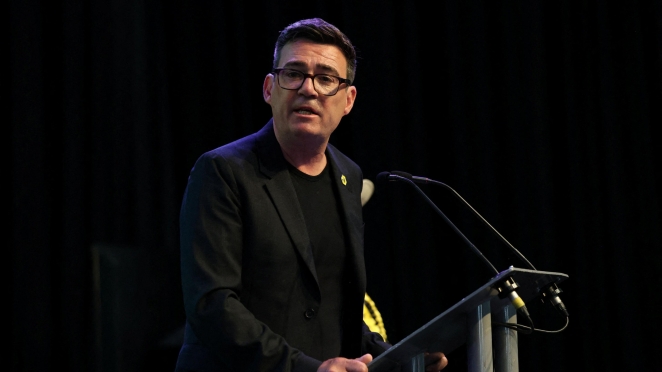
Which brings us to Burnham. His pitch, often wrapped in the language of “Manchesterism”, is rooted in devolution, local delivery and the idea that economic progress should be tied to social progress.
For creative Britain, that could be significant. The sector’s biggest structural problem isn’t that London is too successful. It’s that too many other places are forced to beg for permission to become successful too. Greater Manchester’s own growth plans have explicitly identified creative industries, digital and health innovation as established strengths, with MediaCity, grassroots hubs and major cultural venues forming part of the city region’s creative base.
A Burnham-shaped creative policy would likely care less about announcing national schemes from a lectern and more about connecting culture to transport, housing, education, nightlife, local investment and technical skills. That could be refreshing. The creative industries don’t exist in a vacuum. A runner can’t take an unpaid placement if the train costs a fortune.
A young designer can’t “network harder” if rent has eaten the laptop fund. A theatre can’t nurture talent if the surrounding night-time economy is collapsing. A production cluster won’t thrive if skills funding is designed by people who think “pipeline” is just a word consultants use when they’ve run out of tea.
The danger, of course, is that Burnhamism becomes vibes with a tram map. Devolution is powerful, but it isn’t magic. The creative industries still need national answers on copyright, AI, export support, tax relief, freelance precarity, arts education and the long, slow erosion of entry-level opportunity. If Burnham simply swaps Starmer’s managerial centralism for regional romanticism, the sector will notice.
Starmer’s legacy is that he made the creative industries look economically serious
The best version of a Burnham future would build on Starmer’s sector plan rather than bin it for the drama of a fresh start. Keep the money. Keep the industrial seriousness. Keep the recognition that creative businesses are businesses, not decorative mood boards for national branding. But add a more muscular commitment to local cultural ecosystems, proper skills devolution and creator rights.
In other words, Starmer may have given the creative industries a seat at the industrial strategy table. Burnham’s task would be to make sure the people sitting there aren’t just investors, officials and major institutions, but freelancers, founders, regional studios, venue owners, educators, production crews, designers, performers and the next generation currently wondering whether a creative career is still a viable life choice.
Starmer’s legacy is that he made the creative industries look economically serious. Burnham’s opportunity is to make them feel politically central. That’s the difference between treating creativity as a growth sector and treating it as national infrastructure.
And frankly, after years of being praised, squeezed, scraped, underfunded and then praised again, the UK’s creative industries could do with a government that understands the compliment isn’t the policy.